The Egyptian desert holds a fascinating work of art: the Desert Breath land art installation in El Gouna. This monumental installation attracts art lovers and travelers alike. It is an impressive example of the fusion of art and nature.
Desert Breath was created in 1997 by the art group D.A.ST. Arteam. This group consists of artists Danae Stratou and Alexandra Stratou, and architect Stella Constantinides. Together, they have created a work that pushes the boundaries of traditional art.
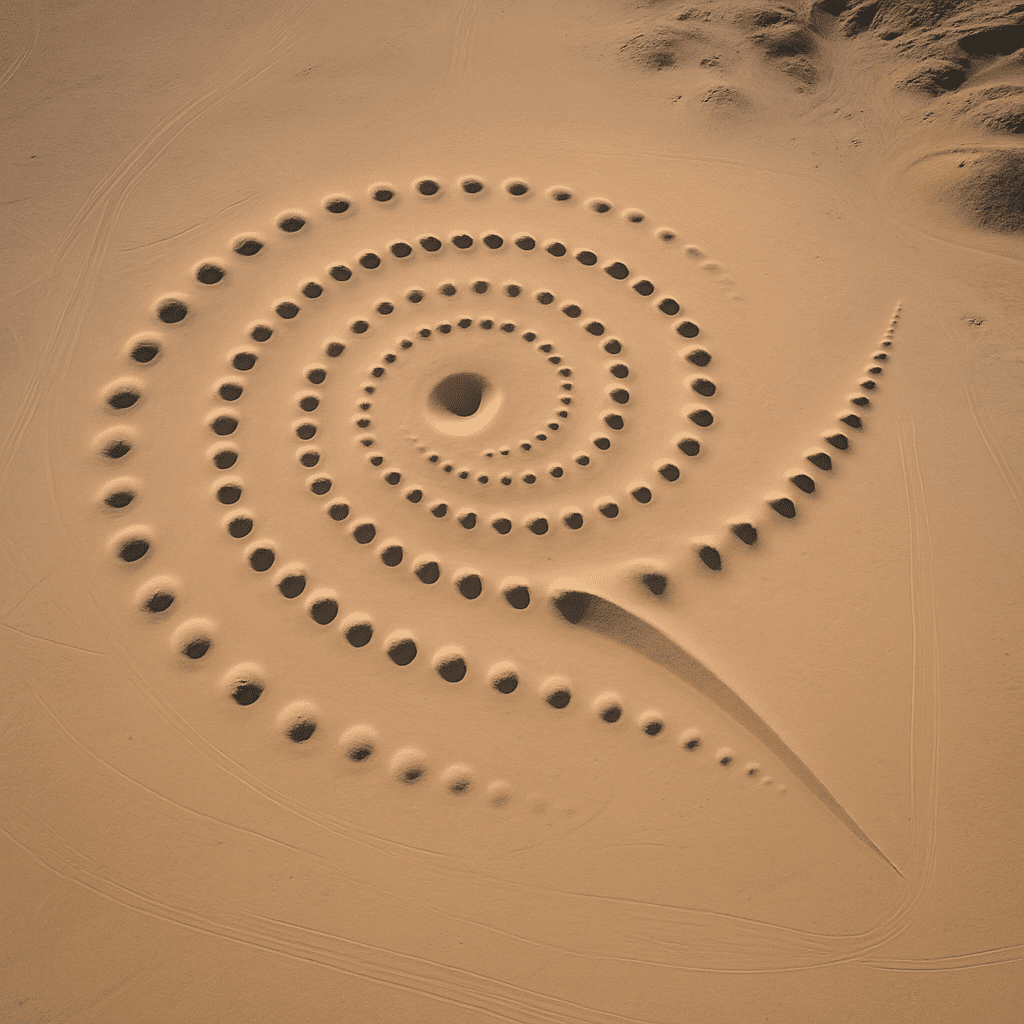
The installation covers an area of 100,000 square meters. It consists of two interacting spirals formed from cones and depressions of sand. These spirals symbolize infinity and the connection between heaven and earth.
Desert Breath is visible from both the air and the ground. This visibility makes it a unique experience for visitors. The installation is an example of the Land Art movement, which emerged in the 1960s.
Land Art uses natural materials and landscapes as its medium. Desert Breath was created with 8,000 cubic meters of sand. This impressive quantity of material demonstrates the project's size and scale.
The installation is an example of the transience of art. Through natural erosion, it is constantly changing. This change is an essential part of the artistic vision.
Desert Breath is located near the Red Sea. This location offers a spectacular contrast to the surrounding desert. The artists wanted to explore the relationship between humanity and nature with Desert Breath.
The installation is a popular destination for tourists and art lovers alike. It attracts thousands of visitors each year. Desert Breath is a symbol of infinity and the cyclical nature of life.
What is Desert Breath? – The Land Art Installation at a Glance
Desert Breath is a massive land art installation that transforms the desert near El Gouna, Egypt, into a work of art. This artistic creation spans an area of 100,000 square meters. It offers a sublime spectacle that impresses both from the ground and from the air.
The installation was designed by the artist group D.A.ST. Arteam. This group consists of Danae Stratou, a visual artist, Alexandra Stratou, also an artist, and Stella Constantinides, an architect. Their common goal was to create an artistic connection between human creativity and the natural environment.
Desert Breath is characterized by the skillful arrangement of two spirals. These consist of a multitude of sand cones and depressions. The spirals interlock, creating an impression of movement and infinity. Viewed from the air, the installation reveals its full geometric splendor.
Central to the installation is the play with natural materials. With approximately 8,000 cubic meters of sand as the primary material, the landscape has been transformed into an artistic statement. These raw materials are sourced from the surrounding desert itself, underscoring the symbiosis of art and nature.
The true meaning and effect of Desert Breath can be summarized in a list:
- DimensionsCovers 100,000 square meters
- Material8,000 cubic meters of sand from the desert
- FormTwo interacting spirals of sand cones and depressions
- SymbolismConnection of heaven and earth, infinity
- VisibilityExperiential both from the ground and from the air
This installation is an outstanding example of the Land Art movement, where landscape and art seamlessly merge. The sheer scale of the work and its ephemerality through natural erosion make it a living process of art. Desert Breath invites viewers to contemplate impermanence, the infinite cycles of life, and our relationship with nature.
The Origin Story: Artist, Vision, and Implementation
In 1997, the artist group D.A.ST. Arteam realized a visionary project in the Egyptian desert. This group is comprised of Danae Stratou, a talented visual artist, Alexandra Stratou, another creative soul, and Stella Constantinides, an architect with an eye for monumental designs. Their collective work culminated in the immense land art installation Desert Breath.
The initial impetus for this project was to build a bridge between human creativity and the inexhaustible beauty of nature. The artists were driven by a fascination with the endless expanse of the desert. They wanted to transform the apparent infinity and transience of this landscape into something tangible, yet ephemeral. This vision was the cornerstone of Desert Breath.
The execution of Desert Breath required significant planning and teamwork. Each sand cone and cavity was carefully hand-sculpted, with particular attention paid to symmetry and balance. This meant that technical knowledge and creative intuition had to go hand in hand to achieve the desired outcome. This collaboration of art and architecture is characteristic of the D.A.ST. Arteam's work.

The choice of the desert region near El Gouna as a location was no accident. The artists wanted to use a place that invites people to contemplative reflection. The untouched nature of the surroundings offered the perfect stage to create a work that seamlessly integrates into nature while simultaneously entering into a dialogue with it. The physical presence of Desert Breath in this barren environment lends it both a timeless and transcendent character.

by Zahra Hosseini (https://unsplash.com/@zhr)
In the realization process, it was important not to disturb the natural environment. Thus, sustainability was a central concern during the implementation. The team placed great importance on the project being shaped by time and the elements. The artists recognized from the beginning that erosion is part of the artwork. This changing aspect of the installation symbolizes the ceaseless cycles of life and the fleeting nature of human existence. Desert Breath is thus not only a work of art but also a living parable about the dynamics of change.
The Structure of Desert Breath: Spirals, Dimensions, and Materials
Desert Breath is a remarkable example of monumental land art. It spans an impressive area of 100,000 square meters in the Egyptian desert. This size allows the installation to present an imposing image from both the air and the ground. The visual impact changes depending on the perspective, underscoring the dynamic nature of the artwork.
The installation consists of two encircling spirals. These spirals are formed from sand cones and the depressions between them. They create a hypnotic pattern that symbolizes the infinity of spirals. These formations connect the elements of sky and earth in a remarkable way. In doing so, they also reflect the natural geometry and symmetry so often found in nature.
Additionally, the artists exclusively use natural materials to create Desert Breath. With 8,000 cubic meters of sand, the installation was shaped by painstaking manual labor. The deliberate decision not to use machines emphasizes the organic aspect of the artwork. The use of sand as a material is itself an expression of transience and change.
Key Features of the Structure of Desert Breath:
- Spiral shapeTwo intertwined spirals.
- Material8,000 cubic meters of sand.
- Size100,000 square meters total area.
- Central pointA water-filled depression.
- Diameter of the spirals30 meters each.
A central element of the structure is the water-filled recess in the heart of the spirals. This water feature lends the installation an additional dimension by capturing the fleeting play of light and reflection. Water, often a symbol of life and movement, enhances the impression of continuity within the rigid framework of the desert.
The immense dimensions and the use of sand as the primary material make Desert Breath one of the most fascinating land art installations worldwide. The simple yet extremely thoughtful structure invites the viewer to contemplate the relationship between space, time, and matter. Desert Breath is not only a feast for the eyes but also an invitation to meditative reflection on the eternal cycles of life, inevitable change, and the interplay between humanity and nature.
Symbolism and Meaning: What Desert Breath Expresses
Desert Breath is more than just an impressive land art installation. It embodies profound symbolic meanings. Central to this are the concepts of infinity and ephemerality. The two spirals, unfurling from a common center, represent infinity. These shapes stand for the eternal cycle of life, where beginnings and endings are synonymous.
This artistic expression embraces the fundamental principles of nature. It connects the heavens with the earth, bridging the immaterial and the physical realms. The choice of spirals as the core element reflects the ubiquitous spiral patterns found in nature, such as in galaxies or seashells. These natural phenomena mirror the universal language of forms woven into Desert Breath.
The installation challenges the viewer to reflect on the connection between humans and nature. It illuminates the fragile balance that exists between human creation and natural erosion. Desert Breath is in a constant state of flux, as wind and weather gradually alter its form. This process underscores the transience of all things, as well as the constancy of change itself.
The movement within the desert through Desert Breath has a meditative quality. Visitors often describe feeling one with the space as they move through the spirals. This meditative dimension invites deeper reflection on one's own existence and a sense of connection to the natural world. It is precisely this connection through art that makes Desert Breath a remarkable work. It intertwines symbolic, aesthetic, and philosophical levels into an impressive experience that goes far beyond mere observation. Desert Breath encourages acceptance of the interplay between permanence and change and the discovery of beauty in the simplicity of the elements.
Desert Breath in the context of the Land Art movement
The Land Art movement emerged in the 1960s as a reaction against conventional art forms. Artists began to use the landscape itself as a medium, creating large-scale works in nature. This art form moves away from the traditional gallery space and celebrates the natural environment. Desert Breath in El Gouna is a prime example of this movement, impressively embodying the principles of Land Art.
The artists of D.A.ST. Arteam consciously chose a desert landscape. This aligns with the fundamental idea of Land Art to use natural materials and the surrounding space. The use of sand to shape the spirals and depressions is typical of Land Art works. In this way, a work of art is created that merges with the landscape and transforms it.
An essential characteristic of the Land Art movement is its ephemerality. Unlike traditional artworks that aim to endure for eternity, Land Art installations are often temporary. They are left to the forces of nature, which alter their form over time. In Desert Breath, the process of erosion by wind and weather is an integral part of the artistic vision. This feature makes an important contribution to the discussion about the permanence and transience of art.
Some main characteristics of the Land Art movement are:
- The use of natural landscapes as a canvas for artworks.
- The integration of art into its natural environment.
- The conscious acceptance of the transience and change of artworks through natural processes.
Land Art thus challenges not only our understanding of art, but also the way we perceive our relationship with the environment. Desert Breath stands as a prime example of how art gains a new dimension in interplay with nature. The installation prompts reflection on the cyclical processes of the Earth and humanity's role within them. With its impressive visual presence and deeply rooted philosophical concepts, Desert Breath has secured a firm place in the history of the Land Art movement.
The Transience of Installation: Art and Nature in Transition
Desert Breath is a vibrant expression of the transience of art, shaped by the continuous change of nature. The installation consists of sand, a material that inevitably changes over time. Wind and weather constantly influence the shape of the spirals and depressions. This unavoidable erosion is an essential aspect of the artistic vision and is intended to symbolize the cyclical nature of life.
The artists of D.A.ST. Arteam welcome natural processes of change. Instead of creating something permanent, they have conceived a work that enters into a dialogue with the landscape. This dialogue is evident in the constantly changing shapes and colors of the installation. Wave-like, the artwork connects with the rhythm of the desert, forming a dynamic balance between creation and destruction.
The fate of Desert Breath is closely linked to nature. This dynamic raises fundamental questions about the permanence of art. As time passes and the elements take their course, a sense of tranquility and meditation remains. Visitors are invited to reflect on impermanence and reconsider their own relationship with the fleeting beauty of nature. Desert Breath thus offers not only a visual experience but also a philosophical reflection on the nature of existence and the traces we leave behind.
Desert Breath as a Destination: Visit, Impressions, and Tips
Desert Breath is more than just a land art installation; it's a unique travel destination. Many people travel from all over the world to experience this impressive work of art in the Egyptian desert. The ethereal beauty of the spirals and depressions attracts visitors, offering them an unparalleled meditative experience. This connection between art and nature leaves a lasting impression and invites inner reflection.
Visitors can view the installation from above or from ground level. Each perspective has its own appeal. From a bird's-eye view, the complete image of the two interlocking spirals is revealed. At ground level, however, the dimensions and the contrast with the surrounding desert sand become more apparent. Plan your visit for early morning or late afternoon, when the light bathes the sand dunes in a golden glow.
For travelers who want to visit Desert Breath, here are some practical tips:
- Best time to travel The cool season, from October to March, offers pleasant temperatures.
- Arrival El Gouna is the perfect starting point. You can easily reach the facility by car from there.
- Equipment: Sunscreen, water, and comfortable shoes are essential for your visit.
- Tours Experienced guides offer deeper insights into the history and symbolism of Desert Breath.
The surroundings of Desert Breath are an adventure in themselves. The proximity to the Red Sea allows you to extend your day at the beautiful beaches of El Gouna. Visitors can also go diving nearby to explore the rich underwater world. These experiences make the region an ideal destination for art lovers and nature enthusiasts alike.
Desert Breath is a place that celebrates the interplay of art and nature. It offers a peaceful escape from the hectic everyday and encourages reflection on the transience and beauty of the moment. A visit there enriches the mind and inspires lasting impressions.
Desert Breath and the Connection of Art, Nature, and Community
Desert Breath is an impressive example of how art, nature, and community can come together in harmony. The monumental land art installation is not only an expression of aesthetic beauty but also a project that connects people across cultural and geographical boundaries. Through its size and location, it challenges the community to explore the relationship between the natural environment and human creativity.
The artist collective D.A.ST. Arteam, consisting of Danae Stratou, Alexandra Stratou, and Stella Constantinides, has created a work with Desert Breath that deeply engages with nature without disturbing it. This balance between human innovation and the Egyptian desert landscape underscores how art can be both a driver of cultural evolution and a promoter of environmental awareness. The artists' collaboration highlights that such projects can only come to fruition through collective effort and the exchange of ideas.
The presence of Desert Breath not only inspires art lovers but also the local community. It fosters education and understanding of the subtle interactions between humans and nature. The installation serves as a starting point for discussions about sustainability and the role of art in society. This connection between art and community is vibrant, dynamic, and of lasting significance. Desert Breath remains a timeless testament to art's ability to bridge different elements of human existence.
by Ajit Sandhu (https://unsplash.com/@ajitsandhu)
Conclusion: Desert Breath as Inspiration for Art and Life
Desert Breath is much more than a land art installation; it is a source of inspiration for many areas of life. It embodies the potential of art to go beyond physical presence and to move thoughts and emotions. The installation shows how creativity and nature can be brought into harmony, and it encourages us to see our own surroundings with new eyes.
The impermanence of Desert Breath reminds us to cherish the beauty of the moment and embrace the changes of time. This monumental art installation inspires us to boldly pursue new ideas and push the boundaries of our imagination. As a symbolic structure, Desert Breath represents the endless possibilities that can arise when humanity and nature collaborate. It remains a shining example of how art can touch and connect us all on a profound level.