
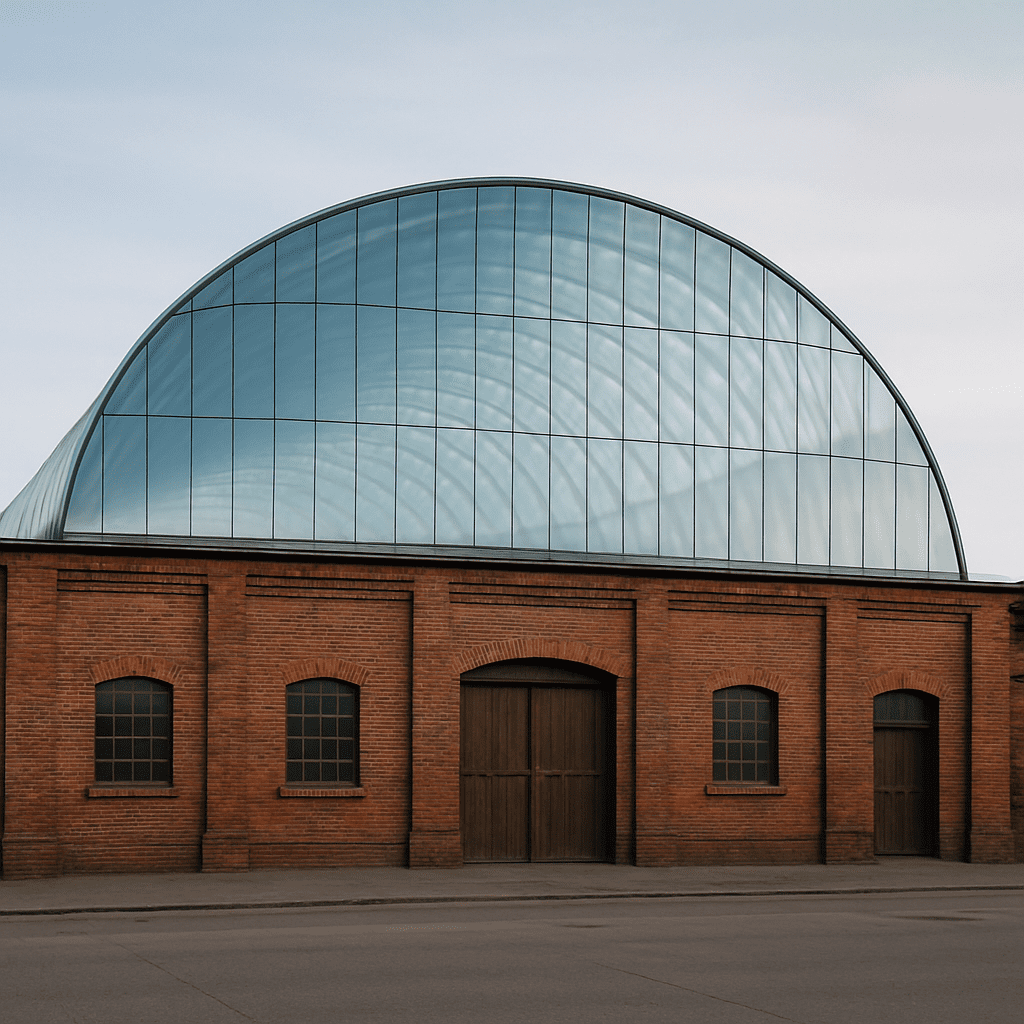
Imagine a vast brick warehouse from the 1960s, once piled high with cocoa and coffee. Resting atop it now is a shimmering wave of glass, weighing as much as 722 Airbus A380s. This stunning contrast forms the Elbphilharmonie, a monument that blends the raw charm of the industrial harbor with futuristic architectural ambition. The original foundation, Kaispeicher A, firmly anchors this massive architectural transformation in the HafenCity.
As urban planners emphasize, the topping out of this robust brick monolith has sustainably redefined the city's entire skyline. The ambitious design by the architecture firm Herzog & de Meuron has not simply placed a modern crown on an old pedestal, but has perfectly merged both elements into a shared public space. Today, this iconic Hamburg landmark serves as a vibrant urban living room, attracting millions of visitors who want to experience the floating viewing platform up close.
Behind the striking facade, an unparalleled acoustic journey awaits in the Great Concert Hall. The inner „white skin“ - a tailor-made suit of 10,000 unique panels that optimally diffuse sound waves - ensures that there are no bad seats in the entire hall. What was once a simple maritime warehouse has thus evolved into a world-class acoustic and visual masterpiece.
How a 1960s cocoa warehouse became a 200,000-ton architectural marvel
When you stand by the water, the building's impressive dual personality immediately stands out. Below rests the massive red brick foundation. This is the converted Kaispeicher A, a robust 1960s cocoa warehouse, now serving as the base for one of the most well-known Landmarks of HafenCity To support the enormous weight of the new structure, engineers drove over 1,700 concrete piles deep into the Elbe riverbed. This was the only way to ensure that the colossal structure would not sink into the soft ground.
Directly above this industrial plinth floats a shimmering crown of „frozen waves.“ The secret behind this illusion of weightlessness lies in the complex construction details of curved glass facade. The exterior resembles a giant puzzle of 1,100 glass elements. Each window panel was individually shaped in extremely hot furnaces to precisely capture the ever-changing sky over the harbor. Some panes curve inward, others outward, creating a seamless and dynamic surface that reflects the incoming light like the water surface of the river below.
Constructing a 200,000-ton structure on an old brick warehouse is a masterful engineering feat. This endeavor required extremely precise structural planning to evenly distribute the immense weight onto the historical brick masonry without damaging it. After admiring this architectural masterpiece on the exterior facade, one's path inevitably leads inside the building.
Through the „Tube“: Why the World's Longest Curved Escalator is the Gateway to the Plaza
Whether you arrive on foot from the Hamburg harbor or use public transport to get to the Speicherstadt, the way inside begins on the ground floor of the historic warehouse. When visiting this landmark, you quickly realize that the entrances are rarely just simple doors. Instead, you're immediately greeted by the „Tube“ – a brightly lit, 82-meter-long escalator that leads like a tunnel directly through the massive brick foundation.
Unlike conventional moving walkways, this technical marvel features a distinct, convex curve. The architects deliberately curved the path so that the destination is not directly visible from the lowest step. Lined with thousands of light-reflecting glass sequins, the tunnel resembles a bright, futuristic kaleidoscope. The installation inevitably slows one's pace, diverts attention from the busy streets, and prepares visitors for the artistic experience that awaits.
This two-and-a-half-minute ride masterfully stages the transition from raw industrial facilities to a modern cultural sanctuary. As soon as the escalator flattens out and spectacular daylight floods the space, the transition is complete. You are now perfectly positioned to fully enjoy the viewing platform 37 meters above the Elbe.
37 Meters Above the Elbe: Making the Most of the Plaza's 360-Degree View
Upon reaching the top, one enters the Plaza, the architectural „seam“ where the historic brick warehouse meets the shimmering glass crown. This expansive terrace connects public and private life. While residents and guests of The Westin Hamburg hotel inhabit the glass tower above, this 37-meter-high deck belongs entirely to the public. Along the outer edge, a breathtaking 360-degree panoramic view unfolds, encompassing the Hamburg harbor, the historic Speicherstadt, and the bustling Elbe River.
For a smooth and unforgettable stay, please keep the following practical tips in mind:
- Secure tickets in advance: Admission to the Plaza's observation deck is generally free on-site, but booking online in advance guarantees entry during peak hours and on weekends.
- Follow the light: The best time to visit the Plaza is just before sunset, when the harbor water and the complex glass facade glow in a warm, golden light.
- Appropriate clothing On the elevated platform, strong maritime winds often blow, which also requires good wind protection on seemingly sunny days.
The sheer scale of an active cargo port becomes immediately apparent the moment you step onto this balcony. Surrounded by the constant roar of container giants and the blare of ship horns, a fascinating question arises: How can such a prime venue accommodate delicate classical performances in such a noisy environment? The ingenious answer lies just behind the heavy hall doors.
The Science of Silence: How the Grand Hall „Floats“ on Giant Springs to Block Harbor Noise
To block out the incessant hum of the massive cargo ships, the main performance hall employs a brilliant architectural trick: it is physically completely separated from the surrounding building structure. Through this technique, known as acoustic decoupling, the 12,500-ton room rests on 362 huge steel springs. Vibrations from ship horns or harbor cranes travel through the storage base, but are absorbed by these special springs, ensuring the sensitive music inside remains absolutely undisturbed.
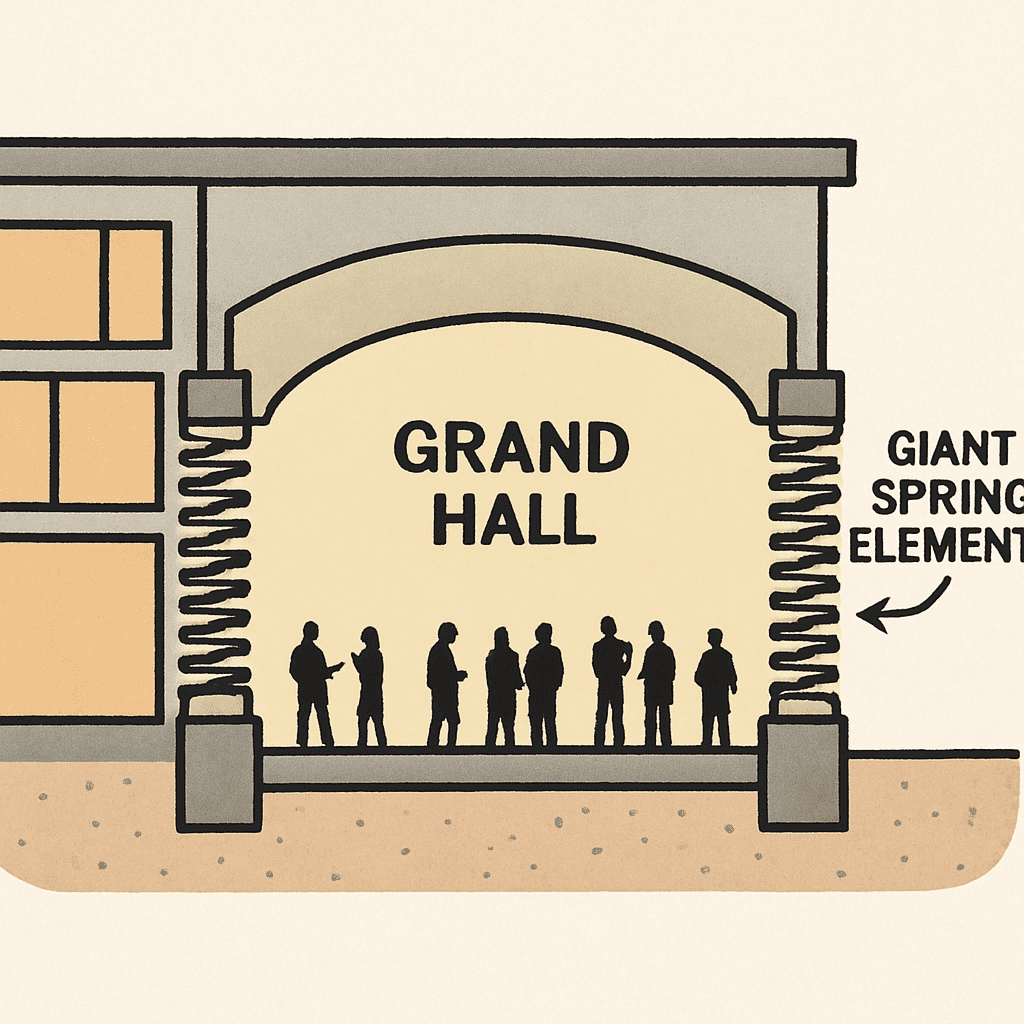
The genius behind this unique soundscape is based on the expertise of Yasuhisa Toyota. The acoustician meticulously adjusted the spaces, establishing a deliberate difference between the acoustics in the Grand Hall and the Small Hall. While the intimate Small Hall utilizes more traditional wood paneling for chamber music, the massive Grand Hall envelops thousands of guests in expansive orchestral resonance.
In the center of the Great Hall, the seats surround the stage in steep terraces reminiscent of ascending vineyards. This so-called „vineyard architecture“ ensures that no one in the audience sits more than 30 meters from the conductor. Fortunately, this intimate atmosphere is very accessible, as ticket prices for orchestra concerts in Hafencity are structured to remain affordable even for everyday visitors.
Although this arrangement elegantly solves the challenge of distance, precisely controlling sound reflection in this massive, cavernous space required another architectural breakthrough. To achieve acoustic perfection on every single terrace, the designers had to line the space with a completely new material.
10,000 Plasterboard: Why the „White Skin“ Guarantees the Best Sound in Every Room
Entering the Great Hall feels like stepping into a giant, futuristic seashell. Walls and ceilings are completely covered with a bright, highly textured surface, the so-called „White Skin“. Unlike conventional, smooth walls that reflect hard echoes, this elaborately milled material acts like an acoustic prism. For example, when a violin string vibrates, the sound waves hit these complex grooves and immediately scatter in countless directions. This process, called sound diffusion, effectively prevents dead spots and envelops the audience equally in music from all sides.
The secret behind this flawless acoustic experience is the use of parametric design. Instead of drawing plans by hand, the developers used complex computer algorithms to calculate the millimeter-precise grooves required for the vast space. Based on Yasuhisa Toyota's acoustic specifications, these digital blueprints helped precisely mill 10,000 unique gypsum fiber panels. Each individual panel functions like a custom-made puzzle piece, mathematically aligned to its position on the wall to perfectly absorb or reflect sound.
Because this carefully crafted and revolutionary surface guarantees first-class sound from every angle, a seat high up in the stands is just as sonically impressive as one directly in the front row.
From sold out to front row: How to secure last-minute tickets in Hamburg
The procurement of Elbphilharmonie Tickets While it may seem daunting at first glance, experiencing an outstanding orchestral concert in HafenCity is surprisingly accessible. While exclusive premium seats can indeed cost €200, budget options start at around €15 and offer the exact same acoustic perfection thanks to the architecture. Even if concerts are completely sold out, the impressive architecture can at least be explored. For international guests and tourists, the question often arises: Are tours also offered in English? Yes, daily bilingual tours offer a fantastic behind-the-scenes look at the building's technical marvels.
Those who absolutely want to hear the hall's excellent acoustics live should know, how to get last-minute concert tickets in Hamburg. This strategy in four practical steps helps you find sought-after spots:
- Online Returns: Regularly check the official website approximately 48 hours before the concert starts to book spontaneously returned seats.
- The box office Arrive at the box office about 90 minutes earlier to snag any unclaimed or canceled tickets.
- Secure Secondary Markets: Check verified fan forums and official resale platforms for face-value resales.
- Student Discounts Under 30s can often purchase last-minute tickets at a significantly reduced price.
The Legacy of a Landmark: Why the „Elphi“ is Hamburg's New Cultural Heart
The Elbphilharmonie has long since established itself as more than just a striking silhouette in Hamburg's skyline. Despite initial construction delays and widely discussed cost overruns, the project has evolved into an undeniable architectural triumph. By combining the Hanseatic city's industrial brick past with a technologically advanced glass future, the building has successfully elevated Hamburg to the global stage as a cultural metropolis.
However, the true magic of this cultural monument lies not only in its flawless acoustics or its imposing facade. It unfolds in its consistent public accessibility. Anyone who rides the curved escalator up to the plaza and enjoys the vast, unobstructed view of the harbor will immediately understand why this breathtaking space was deliberately created for all people.