
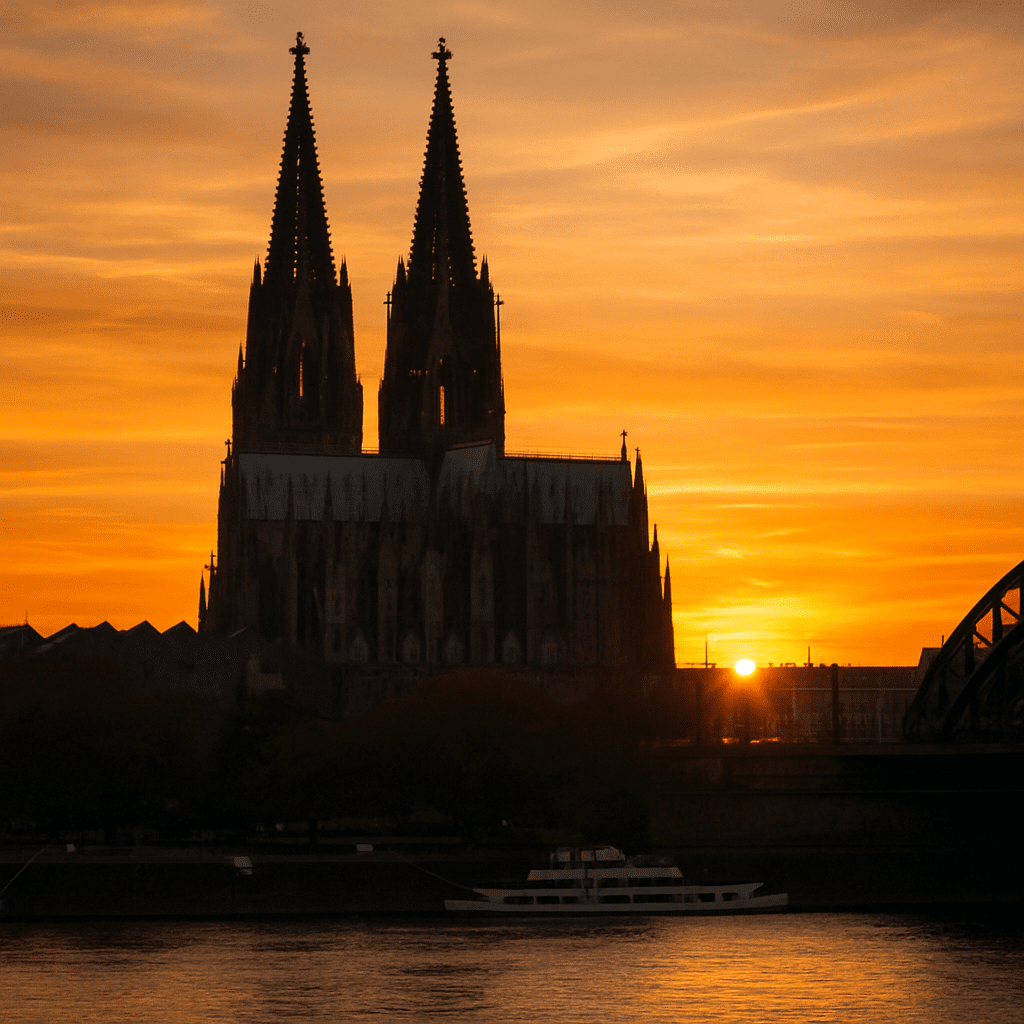
The Cologne Cathedral is a masterpiece of Gothic architecture and a landmark of Cologne. It attracts millions of visitors from all over the world every year. Its impressive size and beauty make it a must-see for any visitor to Cologne.
Construction of the cathedral began in 1248 and took over 600 years. This long construction period reflects the turbulent history of Europe. The cathedral is a symbol of endurance and faith.
Cologne Cathedral is the second-tallest church in Europe and the third-tallest in the world. Its two towers soar 157 meters into the sky. This impressive height makes it one of the city's most distinctive landmarks.
Since 1996, Cologne Cathedral has been a UNESCO World Heritage Site. It is not only an architectural masterpiece but also a significant cultural and religious center. The cathedral houses the Shrine of the Three Kings, which contains the relics of the Three Wise Men.
The Cologne Cathedral is a living testament to the history and culture of Cologne. It uniquely combines art, religion, and history. Visitors can experience the splendor of Gothic architecture here and discover the city's rich history.
History of Cologne Cathedral
The Cologne Cathedral is not only an architectural masterpiece but also a living chapter of European history. The first stone was laid in 1248, during a time of intense religious and political movements. The plan was for a structure that would underscore Cologne's importance as a religious center.
In the Middle Ages, Cologne was one of Europe's most important trading cities. The planned cathedral was intended to reflect this status. However, construction was not without interruptions. Various political conflicts and financial difficulties led to delays.

A striking feature of the building history is the long construction period, which was repeatedly influenced by the changing fortunes of Europe. Work on the cathedral was initially suspended in 1560. Construction only picked up again in the 19th century, mainly due to the emerging nationalist movement in Germany.
The completion of Cologne Cathedral in 1880 was celebrated by Kaiser Wilhelm I. Its completion was considered a symbol of the unity and strength of the German nation. The cathedral also represented the technical skill of its builders.
The Second World War presented another challenge. The Cologne Cathedral suffered damage during the bombing raids on Cologne, but it remained largely intact. This made it a symbol of indestructibility.
Extensive restoration work was carried out after the war. Continuous maintenance measures are still taking place today. These efforts are necessary to preserve the cathedral for future generations and to maintain its architecture in all its splendor.
Cologne Cathedral is not just a witness to history, it also influences it. It is deeply intertwined with the identity of the city of Cologne and reflects the religious and cultural currents through the centuries.
Construction period and architecture
Cologne Cathedral is an impressive example of Gothic architecture. Its construction spanned more than 600 years. This extraordinary building project reflects the perseverance and faith of numerous generations.
Construction originally began in 1248. The beginnings were driven by a grand ideal: to build a monumental cathedral as an expression of power and faith. The cathedral was intended to house the relics of the Three Holy Kings and make the city of Cologne the most important pilgrimage destination in Europe.
With a height of 157 meters, the two striking towers dominate the Cologne skyline. Cologne Cathedral is the second-tallest church in Europe. These massive towers are masterpieces of engineering.
The original builders came from a long line of Gothic architects. They utilized technical innovations of their time, such as the pointed arch vault and flying buttresses. These elements contributed to the structure's grandeur.
However, construction stagnated in 1560. The unfinished plans remained unchanged until the 19th century. This changed when the cathedral became a symbol of national pride. In 1842, King Frederick William IV resumed reconstruction, which was finally completed in 1880.
The cathedral combines Gothic elements with modern 19th-century techniques. The facade is richly decorated with statues and reliefs depicting the lives of Christ and the saints. These decorations are artistically valuable and diverse.
A list of notable architectural features of Cologne Cathedral:
- Tower height: 157 meters
- Length of the nave: 144 meters
- Nave width: 86 meters
- Gothic elements pointed arch window, buttress
- Interior capacity: Space for approx. 20,000 people
The interior of the cathedral is equally impressive. High vaults and massive pillars create an atmosphere of grandeur. Light streams through artfully crafted stained-glass windows depicting scenes from the Bible. These windows are an art historical treasure and date from various eras.
Besides the impressive architecture, the cathedral's bells also play a significant role. St. Peter's Bell, also known as „Dicker Pitter,“ is one of the largest free-swinging bells in the world. It is an acoustic symbol of the city.
Continuous restoration is an essential aspect of the preservation of Cologne Cathedral. Today's stonemasons work on maintaining the facade, while restorers care for the stained glass windows. Their work secures this heritage for future generations.
Cologne Cathedral is not just a church, but a stone-forged document of human history and culture. This magnificent architecture shows the deep roots of religion in society over centuries. The connection of art and engineering makes Cologne Cathedral an incomparable structure.
Meaning and Symbolism
Cologne Cathedral is more than a masterpiece of architecture. It is a symbol of the city of Cologne and all of Germany. As a national landmark, it embodies the identity and history of the region. The cathedral unites religious and cultural meanings that have endured for centuries.
A central symbol of the cathedral is the Shrine of the Three Kings. This golden shrine is said to house the relics of the Three Magi. Its presence made the cathedral an important pilgrimage destination. Believers from all over the world visited Cologne to see the shrine. This significantly influenced the spiritual and economic development of the city.
Architecturally, Cologne Cathedral represents the devotion and faith of countless people. Its high towers reach towards the heavens, symbolizing the connection between heaven and earth. This connection was of immense importance to medieval society. It reflects the deep need for closeness to God and the divine.
During its construction history, the cathedral went through phases of standstill and resumption. These interruptions symbolize perseverance and the unwavering faith of the people of Cologne. The cathedral itself survived the destruction of World War II almost unscathed. This reinforced its status as a symbol of resilience and hope.
Artistic elements within the cathedral are rich in symbolic meaning. Sculptures, reliefs, and stained glass windows tell biblical stories and convey Christian values. These works of art offer deeper insights and invite visitors to reflect. They impressively illustrate the connection between religion and art.
Cologne Cathedral is also a place of meeting and exchange. It attracts people from different cultures and religions. This diversity is a reflection of our globalized world. The cathedral stands for openness and the universal language of architecture. It is a place where past and present meet.
In modern times, Cologne Cathedral embodies the dialogue between tradition and innovation. It reminds us that historical values can endure even in today's world. The Cathedral is a bridge between generations. Its symbolism extends far beyond the religious and is part of a collective cultural memory.
The Cologne Cathedral remains a vibrant symbol. A place where history, culture, and religion are interwoven. These meanings transcend time and make the Cathedral a unique testament to our civilization.
Cologne Cathedral as a UNESCO World Heritage Site
Cologne Cathedral was added to the UNESCO World Heritage List in 1996. This designation attests to its outstanding cultural and historical significance. The status underscores the responsibility to preserve this important structure for future generations. The Cathedral is a unique expression of Gothic architecture and reflects the mastery of medieval builders.
The World Heritage title gives the cathedral global significance. It attracts millions of tourists annually who want to admire the architectural wonder. Inclusion in the UNESCO program helps to protect and preserve the cathedral. This ensures that necessary restoration work is continuously supported to maintain the cathedral's beauty.
Furthermore, Cologne Cathedral is a place of intercultural dialogue. Its recognition by UNESCO strengthens awareness of the exchange between cultures and religions. The cathedral forms a bridge between the past and the present by uniting historical awareness and modern societal values. This status promotes a worldwide appreciation of cultural heritage.
Admission as a World Heritage Site also signifies a commitment to sustainable preservation. The protection of the cathedral requires the cooperation of local and international experts. This ensures that the cathedral continues to remain a living testament to human creativity. Its presence not only promotes cultural understanding but also cultural exchange on a global level.
Artworks and sights in the Cathedral
The Cologne Cathedral is a true paradise for art lovers. Within its majestic setting lies a wealth of artworks and historical treasures. Among the most remarkable is the Shrine of the Three Kings. This is said to house the relics of the Three Wise Men. Artfully designed, it is a significant religious icon of the Middle Ages.
Another highlight is the magnificent stained glass windows of the cathedral. They date from different eras and testify to the great craftsmanship of the glass painters. The windows tell biblical stories and sacred legends in vibrant colors. Particularly impressive is the Richter Window, created by Gerhard Richter in 2007. It brings modern artistic expression into the centuries-old tradition.
Inside the cathedral, numerous sculptures and altars can be found. The depictions of biblical scenes and saints are artistically outstanding. The Adoration of the Magi, an altarpiece by Stephan Lochner, is a masterpiece of late Gothic painting. These works attract not only believers but also art historians from all over the world.
In addition to religious exhibits, the cathedral also houses historical objects. A significant collection of liturgical vessels complements the ornate interior. Among these are precious chalices, monstrances, and reliquaries. These items offer insights into church practices of past centuries and are of inestimable cultural value.
A tour of Cologne Cathedral is also a journey through time. The crypt is another significant site. It preserves the remnants of the early Christian basilica on which the present-day cathedral was built. Visitors can trace the developmental history of the cathedral here. The cathedral thus becomes a living connection between the past and the present.
For visitors, the following attractions in the cathedral are recommended:
- Shrine of the Three KingsA masterpiece of medieval goldsmithing.
- Stained glass windowDifferent eras, especially the modern stained-glass window.
- Adoration of the MagiAltarpiece by Stephan Lochner.
- CryptHistorical Foundations of Previous Buildings.
- Sculptures and altarsBiblical Scenes and Saints.
- Liturgical vesselsValuable chalices and monstrances.
The Cologne Cathedral thus offers not only a spiritual but also a cultural experience. The interplay of art and history makes the visit an unforgettable event. Every stone of the cathedral tells its own story. Every room holds priceless works of art waiting to be discovered.
Practical Information for Visitors
A visit to Cologne Cathedral is an impressive experience. However, before you explore it, you should consider some practical information. The cathedral is open daily, but the times may vary depending on the season. During special events or masses, areas of the cathedral may be temporarily inaccessible.
Admission to Cologne Cathedral is free, allowing everyone to experience the beauty of this Gothic architecture. However, there is a small fee to climb the south tower. The view from the top is spectacular, offering a panoramic vista of the city of Cologne. Keep in mind that the stairs to the tower are narrow and steep. Sturdy footwear is recommended.
The summer months, in particular, bring many tourists to the city, and the cathedral can get very crowded. It is advisable to visit in the early morning or late afternoon to enjoy your visit in a relaxed atmosphere. Guided tours for groups are an excellent way to gain detailed information and hear fascinating anecdotes about the cathedral.
Those who wish to spend a longer time in the cathedral should be prepared for changing temperatures. During the colder months, the interior of the cathedral is cool. A jacket is advisable then. Another aspect is the security checks at the entrance. Please allow extra time for this, as security measures can vary depending on visitor volume.
Opportunities for refreshment are available at the adjacent Domforum. Here, visitors can take a break and quietly process their impressions so far. The forum also offers informational materials and souvenirs. Additionally, there are numerous cafés and restaurants in the immediate vicinity where you can try local specialties.
The Cologne Cathedral offers special programs for families. Children's tours make the visit an exciting adventure for the little ones. These tours are interactive and impart knowledge about the cathedral's history and architecture in a playful way.
Some practical tips for visiting Cologne Cathedral:
- Operating hoursOpen daily, variable hours.
- AdmissionFree, fee for climbing the South Tower.
- Best visiting timesEarly in the morning or late in the afternoon.
- ClothingSturdy shoes and a jacket in cool weather.
- Security controlsAllow for extra time.
- CateringDomforum and surrounding restaurants.
- Children's programsSpecial tours for our little visitors.
In conclusion: a visit to the cathedral requires some planning, but is rewarded with unique impressions. The mix of historical, religious, and artistic aspects makes Cologne Cathedral a versatile destination. Visitors should take their time to discover the details and enjoy the spiritual atmosphere.
Cologne Cathedral Opening Hours and Admission
The Cologne Cathedral is accessible to visitors almost all year round. This reflects the effort to make the cathedral accessible to a broad audience. Nevertheless, it is important to check the exact opening hours, as these can vary depending on the season. Changes may occur, especially on holidays and during special events.
In general, the cathedral opens in the morning and closes in the evening, with opening hours varying slightly on both weekdays and weekends. Visitors looking for a quiet moment in the cathedral should consider the early morning or late afternoon. During these times, the cathedral is often less crowded, allowing for a more immersive experience. Services and devotions can also affect the accessibility of certain areas.
A special advantage for visitors is free admission to the cathedral. This allows many people to enjoy the beauty and majesty of this important church without financial barriers. Only a small fee is charged for climbing the South Tower. The panoramic view is definitely worth the climb and offers a breathtaking view of Cologne.
For detailed information, it is recommended to visit the official website of Cologne Cathedral or inquire directly on-site. The staff there are friendly and happy to help. A planned and well-informed visit will ensure an even more impressive and enjoyable experience. Here are some helpful details summarized:
- General opening hoursOpen daily, different times depending on the day.
- Exhibitions and EventsImpact on the accessibility of individual areas.
- Entrance to the CathedralFree, tower climb for a fee.
- Website and ContactRecommended for current information and special inquiries.
A little planning in advance can make a visit to Cologne Cathedral an unforgettable experience. Take the time to gather the necessary information and enjoy the magnificence of this great cathedral.
Tips for sightseeing
A visit to Cologne Cathedral can be an impressive experience, especially if you are well-prepared. Plan your visit to make the most of your time at this architectural marvel. Here are some practical tips to help make your visit more enjoyable and seamless.
Start your visit as early in the morning as possible to avoid the biggest crowds. This way, you can fully enjoy the impressive architecture and the tranquility of the cathedral. If possible, combine your visit with a guided tour to learn more about the history and significance of the cathedral. Guided tours offer valuable insights into the many artworks and historical milestones of the cathedral.
As Cologne Cathedral is a sacred site, it is recommended to dress respectfully and appropriately. This is not only a matter of respect but also a way to fully experience the spiritual ambiance of the cathedral.
A quick overview of useful tips:
- Arrive earlyAvoid peak visiting hours.
- Book a tourExpand your knowledge of history and artworks.
- ClothingRespectful and appropriate for a sacred place.
A well-planned visit will allow you to fully experience the beauty and spiritual atmosphere of Cologne Cathedral. With these tips, you'll be perfectly prepared to enjoy an unforgettable day in one of the most impressive cathedrals in the world.
Conclusion: Cologne Cathedral as a Living Landmark
Cologne Cathedral is far more than just an impressive structure of stone and glass. It embodies a deep connection between the past and the present, palpable in every corner of the cathedral. With its soaring towers and ornate facade, it remains a symbol of the city of Cologne and of the people who were involved in its construction over centuries.
As a living landmark, Cologne Cathedral attracts millions of visitors from all over the world every year. This pilgrimage site is not only a place of admiration for its Gothic architecture, but also a space for reflection and faith. The breathtaking beauty of its stained-glass windows and the multitude of religious artifacts enhance the cathedral's cultural and spiritual significance.
In the heart of Cologne, the Cologne Cathedral remains a dynamic testament to human endurance, artistry, and faith. It serves as both a silent witness to bygone eras and a vibrant part of contemporary city life. The Cathedral stands as a living proof of history's resilience and its profound influence on the present, continuing to inspire generations of visitors and worshippers. This landmark embodies the essence and the unwavering spirit of the city and its people.