

The Old Stock Exchange in Leipzig is a fascinating building. It stands in the heart of the city on Naschmarkt. This historic building attracts visitors from all over the world.
Built between 1678 and 1687, it is a masterpiece of Baroque architecture. Johann Georg Starcke, a renowned architect, shaped its design. The richly decorated facade is a striking feature.
Originally, the stock exchange served as a meeting place for merchants. It was a symbol of Leipzig's economic boom in the 17th century. Today, it is a venue for cultural events.
The Old Stock Exchange is a protected cultural monument. It was damaged in World War II but restored in the 1950s. Its significance for Leipzig remains unbroken.
Tourists appreciate the stock exchange as a photo opportunity. The magnificent festival hall inside impresses many visitors. The stock exchange is a place for meeting and exchange.
Leipzig's commercial history comes alive here. The Old Stock Exchange connects trade and culture. It is a place of inspiration and learning.
A visit to the Old Stock Exchange is a must for every traveler to Leipzig. It is a place where history and the present meet. Discover the beauty and significance of this unique architectural monument.
History of the Old Stock Exchange
The history of the Old Stock Exchange in Leipzig is fascinating. As early as the late 17th century, Leipzig was a thriving trading center. The need for a representative meeting place for merchants was evident.
Construction of the Stock Exchange began in 1678 and was completed in 1687. It was built under the direction of Johann Georg Starcke, a prominent architect. This underscores the importance attached to the project.
The stock exchange served as a meeting place and for conducting business. Merchants not only exchanged goods here but also news. It was a central hub for trading activities in Leipzig.
The location at the Naschmarkt was ideally chosen. This square was already a busy trading place. The strategic location contributed to the rapid establishment of the stock exchange as an economic and trade center.
Over the centuries, changes occurred that influenced the use and appearance of the stock exchange. During World War II, the building was damaged, necessitating extensive restoration in the 1950s.
The Old Trade Exchange is an important cultural monument today. Its history tells of Leipzig's rise as a trading metropolis. It stands as a testament to an era in which trade and culture were closely intertwined.
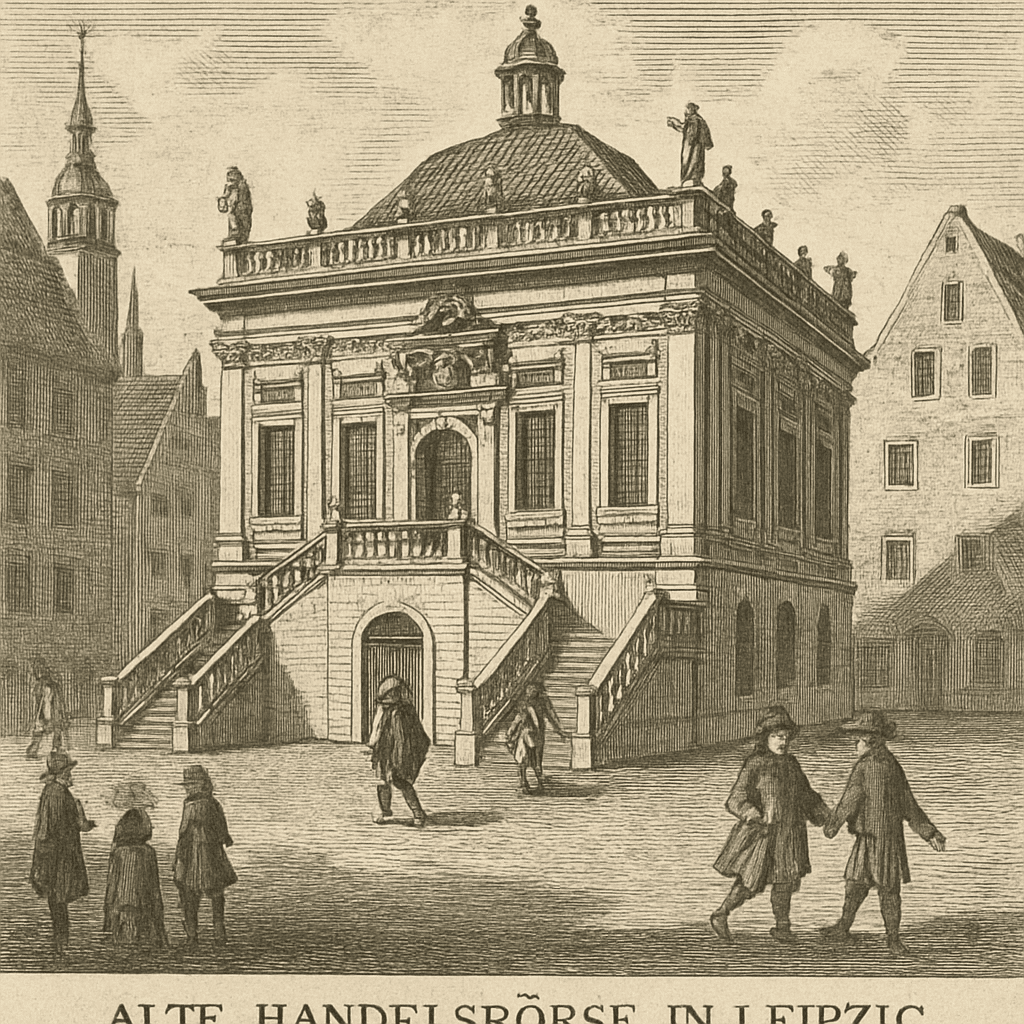
The legacy of the stock exchange is also reflected in its architecture. It is a place where history comes alive. The stock exchange is and remains a symbol of the economic and cultural wealth of the city of Leipzig.
Architecture and Design
The Old Stock Exchange is a masterpiece of Baroque architecture. The design was significantly influenced by Johann Georg Starcke. His artistic vision gave the building its iconic appearance.
A look at the facade reveals the splendor of the Baroque style. Lavish stucco work and detailed sculptures dominate the exterior. These elements bear witness to the craftsmanship and prosperity of the city at that time.
Striking architectural features:
- Stucco decorationsArtistic decorations adorning the building.
- SculpturesMythological figures that represent ancient stories.
- Windows and doorsGenerously designed openings that let light into the interior.
Starcke succeeded in creating a building that combines elegance and functionality. The architecture of the Stock Exchange not only serves aesthetic purposes but also emphasizes its practical utility as a trading venue.
Inside, you'll find a magnificent banquet hall. It impresses with its size and decorations. This room has served as a backdrop for many important events.
by Ralf Knüfer (https://unsplash.com/@textstation)
Not only the building itself is remarkable. Its location on the Naschmarkt also makes the architecture particularly relevant. It was a strategic location for trade and exchange in the city center.
The Old Stock Exchange is considered a landmark and is a prime example of Baroque architecture in Leipzig. Its design is an expression of the cultural and economic importance the city once held.
from Egor (https://unsplash.com/@koshelenok)
The Old Stock Exchange as a Symbol of Trade
The Old Stock Exchange in Leipzig stands as a timeless symbol of thriving trade. In the 17th century, Leipzig experienced an economic boom. The stock exchange quickly became the heart of this development.
Merchants from all over Europe gathered here. They exchanged goods and ideas. Thus, the Old Stock Exchange became an important center of international trade.
The building is a testament to an era when trade and progress went hand in hand. The Baroque architecture reflects the pride and wealth of that time. It was more than a marketplace: a place of cultural exchange.
Today, the Old Stock Exchange commemorates Leipzig's historical role as a trading metropolis. It tells of times when deals were sealed in person. Thus, it remains an important part of the city's collective memory.
It is not only a historical monument but also a living symbol of the connection between the past and present in the realm of trade. Meetings and events continue to be held here, representing new meanings of trade.
Restoration and Preservation
The Old Stock Exchange in Leipzig has overcome several challenges over the centuries. The building suffered significant damage during World War II. However, the importance of the exchange ensured that it was not left to decay.
A comprehensive restoration began in the 1950s. Experts focused on preserving the original Baroque details. The restoration was a joint project of historians and architects.
Thanks to these efforts, the Old Stock Exchange is once again shining in its original splendor. The attention to detail in the restoration of the building is impressive. It was a task that required a great deal of patience and expertise.
Today, the Old Stock Exchange is a protected cultural monument. Its care and preservation are close to the hearts of Leipzig's citizens. The continued existence of the building represents a connection between the past and the present.
The Old Stock Exchange Today: Use and Significance
The Old Stock Exchange in Leipzig is today a vibrant center for cultural encounters. The building has changed its function but retains its historical aura. It is an important part of the city's cultural life.
Inside, there is a magnificent ballroom. This hall is frequently used for various events. Thanks to its acoustics, it is particularly popular for concerts and readings.
Numerous cultural events take place here regularly. These include exhibitions, lectures, and conferences. The stock exchange offers a unique setting for such occasions.
Besides cultural use, the stock exchange is also a popular venue for private celebrations. Weddings, anniversaries, and corporate events benefit from the elegant atmosphere. The historic setting lends a special charm to any occasion.
The Old Stock Exchange is also a symbol of Leipzig's rich trading history. It is a reminder of the city's economic boom times. Many people visit it to experience this connection.
Current use cases:
- Cultural Events
- Conferences and presentations
- Weddings and private parties
- Exhibitions and readings
The variety of uses makes the Old Stock Exchange an indispensable part of Leipzig. It connects the past with today's dynamic cultural scene. Visitors especially appreciate the inspiring atmosphere that the historic building conveys.
The Old Stock Exchange as a Sight
The Old Stock Exchange in Leipzig attracts not only locals. Tourists from all over the world are also enthusiastic about its history. The baroque architecture fascinates many visitors.
Standing at the Naschmarkt, the Stock Exchange is easily accessible. Its central location makes it a popular meeting point. It's ideal for enjoying the beauty of the city after a tour.
The elaborately decorated facade is a magnet for photographers. The artistic stucco work and sculptures offer impressive photo opportunities. It is a must-see for art and history lovers.
Many tour groups stop here to explore its history. Guided tours offer insight into Leipzig's trading history. Additionally, the building's significance within this history is highlighted.
What makes the Old Stock Exchange special:
- Baroque architecture
- Significant Trade History
- Centrally located Naschmarkt
- Photogenic facade and decorations
A visit to the Old Stock Exchange is a unique experience. It offers a nostalgic glimpse into Leipzig's past. At the same time, it emphasizes the city's cultural diversity.
Tips for Visitors
For visitors to the Old Stock Exchange, good preparation is advisable. Its central location in the city center makes it easily accessible. Use public transport or walk.
The best time to visit is in the morning or late afternoon. Then you can explore the building without large crowds. Tours are offered frequently and are highly recommended.
Helpful Tips:
- Learn about lead times.
- Visit the official website for events.
- Photograph the beautiful details of the facade.
- Allow enough time for a tour.
Wear comfortable shoes and let the history of the place inspire you. Take the opportunity to also explore the surrounding Naschmarkt. A visit to the Old Stock Exchange is a fascinating experience.
Conclusion: A meeting place of history and the present
The Old Stock Exchange in Leipzig combines historic charm with modern use. As one of the oldest Baroque buildings in the city, it is a living testament to trading history.
Today, it serves not only as a cultural venue but also as a meeting point for locals and tourists. The architecture inspires, while its history fascinates and connects.
This special place embodies the symbiosis of past and present. A visit hints at the significant role Leipzig played in past trade. The Old Stock Exchange remains a valuable part of the cultural heritage.