

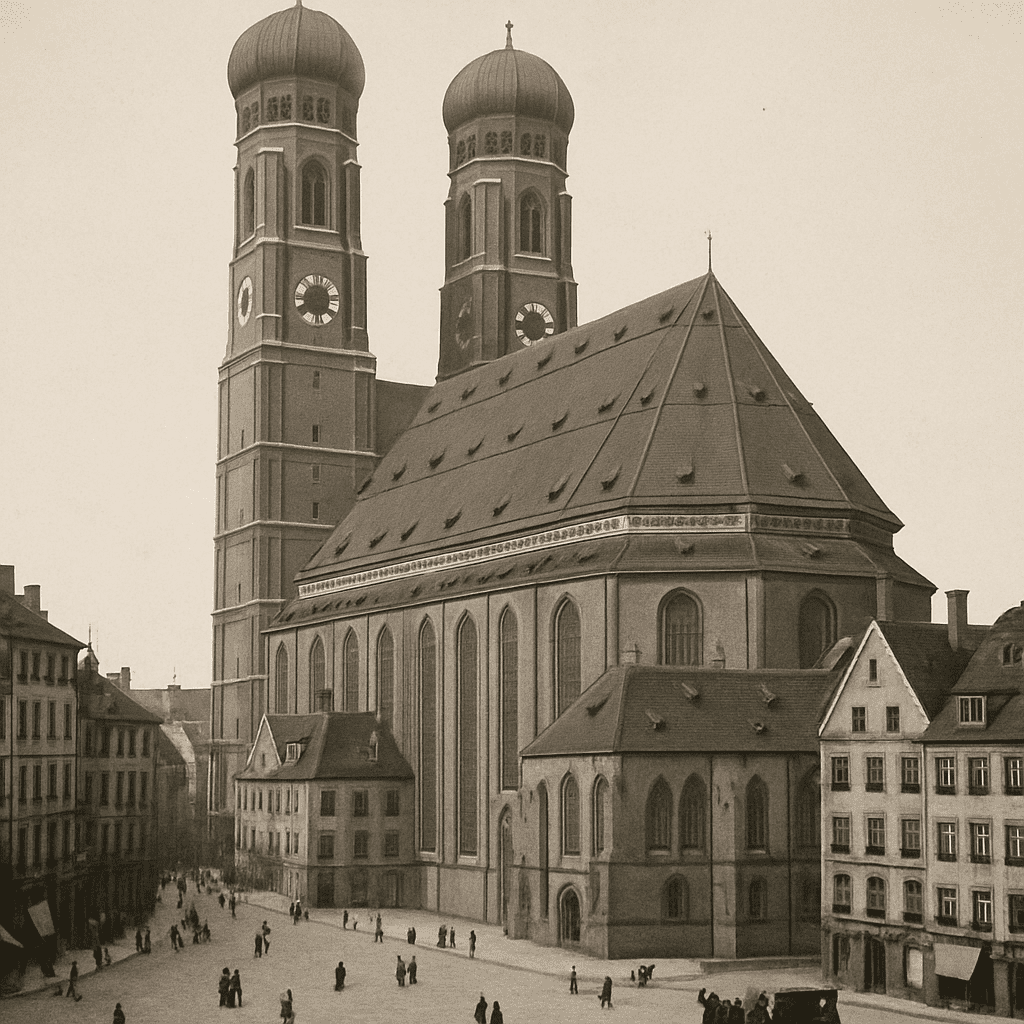
The Frauenkirche in Munich is an impressive landmark of the Bavarian capital. It attracts thousands of visitors annually. This majestic cathedral, officially known as „St. Mary's Cathedral,“ is a masterpiece of late Gothic architecture.
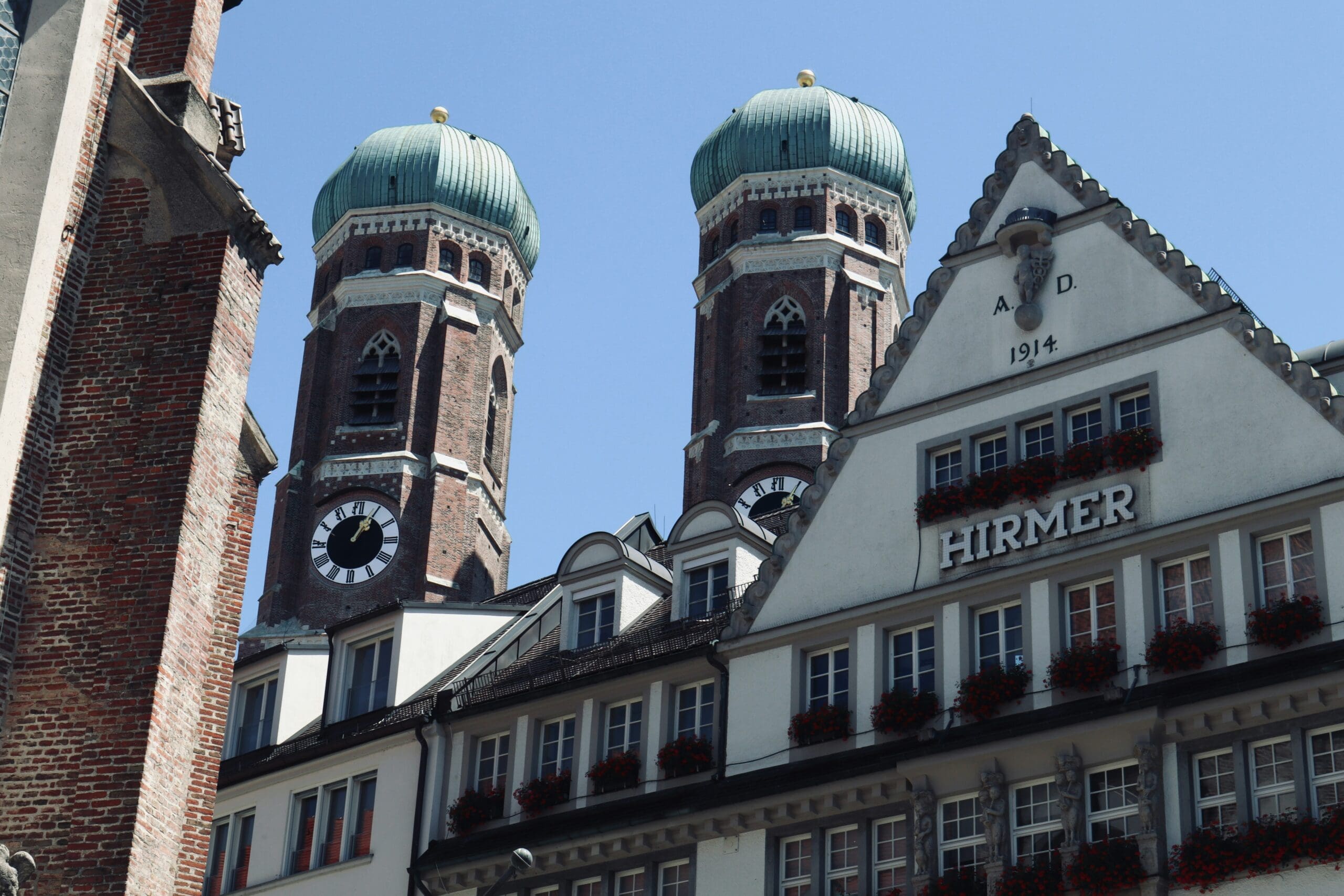
Built in the 15th century, their distinctive onion domes shape Munich's skyline. The towers are 99 meters high and visible from afar. They are a symbol of the city and its rich history.
The Frauenkirche is not only an architectural gem but also a place of great cultural significance. It is the cathedral of the Archdiocese of Munich and Freising.
Inside the church is the tomb of Emperor Ludwig the Bavarian. The church can hold approximately 20,000 people and is a popular venue for religious services and concerts.
The Frauenkirche is a symbol of Munich's resilience. After heavy damage in World War II, it was rebuilt.
Today it is a place of peace and reflection in the bustling city. Visitors can admire the impressive architecture and the rich collection of artworks.
A visit to the Frauenkirche is a must for anyone exploring Munich. It is a place where history comes alive and one can relax and unwind.
History of the Frauenkirche in Munich
The history of the Frauenkirche in Munich begins in 1468. At that time, the foundation stone was laid for what would become one of the city's most significant structures. The construction took 20 years, until it was completed in 1488.
The architect Jörg von Halsbach expertly led the project. Under his guidance, an impressive example of late Gothic architecture was created. The church was built from red bricks, which are widely available in the region.
The Frauenkirche served not only as a place of worship but also played an important role in society. It was the scene of numerous coronations and other important ceremonies.
The significance of the church also extended to the personalities associated with it. Emperor Louis the Bavarian found his final resting place here. Furthermore, over the centuries, the church developed into a cultural center.
Despite the destruction during World War II, it survived as a strong symbol of Munich's resilience. The post-war reconstruction is a testament to the determination of the city's inhabitants.
In the list of historical events, the Frauenkirche has its firm place:
- Foundation laying: 1468
- Completion: 1488
- Architect: Jörg von Halsbach
- Grave of Emperor Louis the Bavarian
- Coronation place of many kings
Architecture and Construction
The Frauenkirche in Munich is a masterpiece of late Gothic architecture. Jörg von Halsbach, an experienced architect, designed the church with impressive symmetry and proportion. The use of red bricks gives the church its characteristic Bavarian charm.
A central element of the architecture are the tall, slender pillars inside the church. These support the massive vault and create an airy, majestic atmosphere. The cathedral is 109 meters long and impresses with its size and elegance.
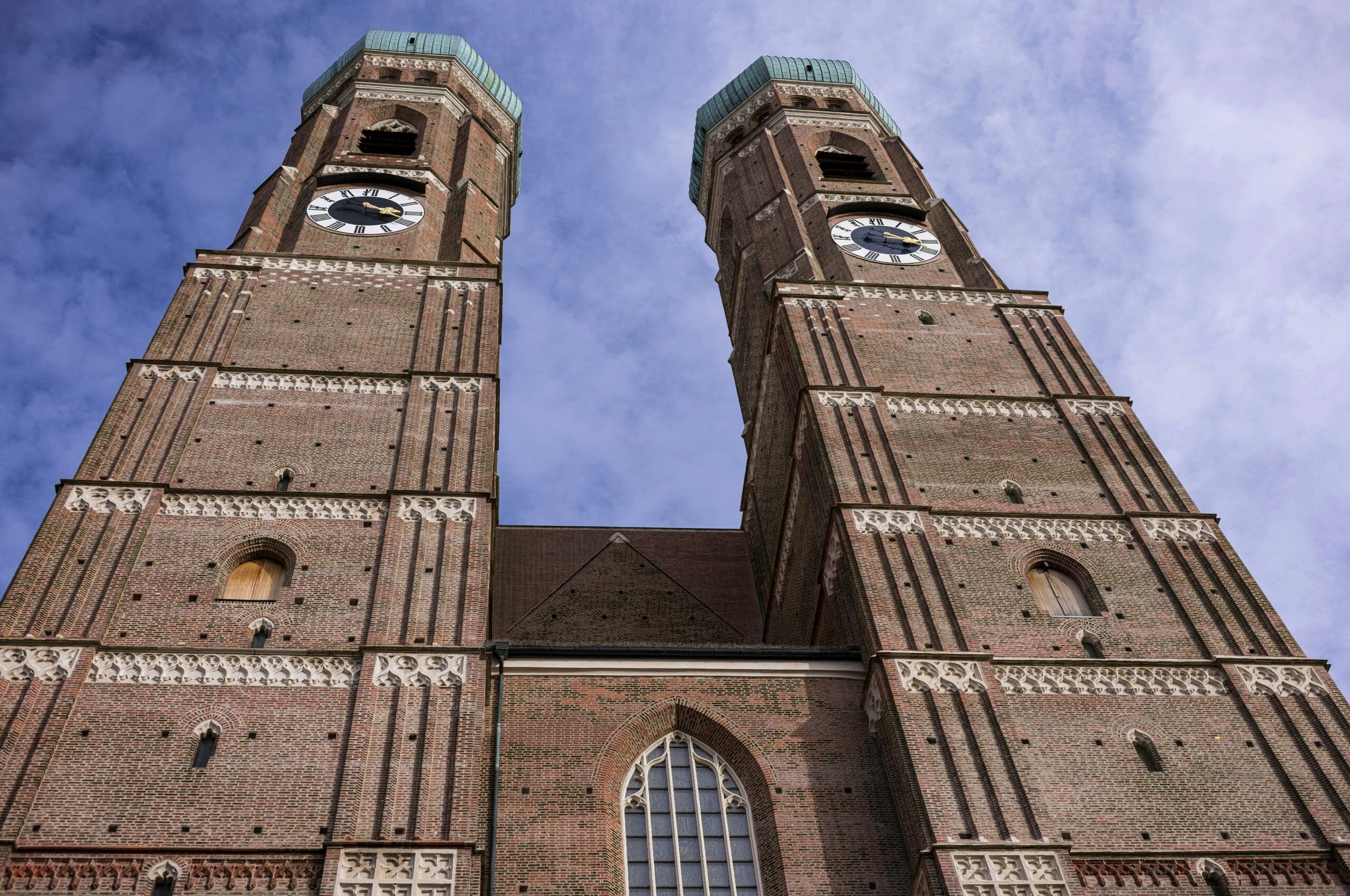
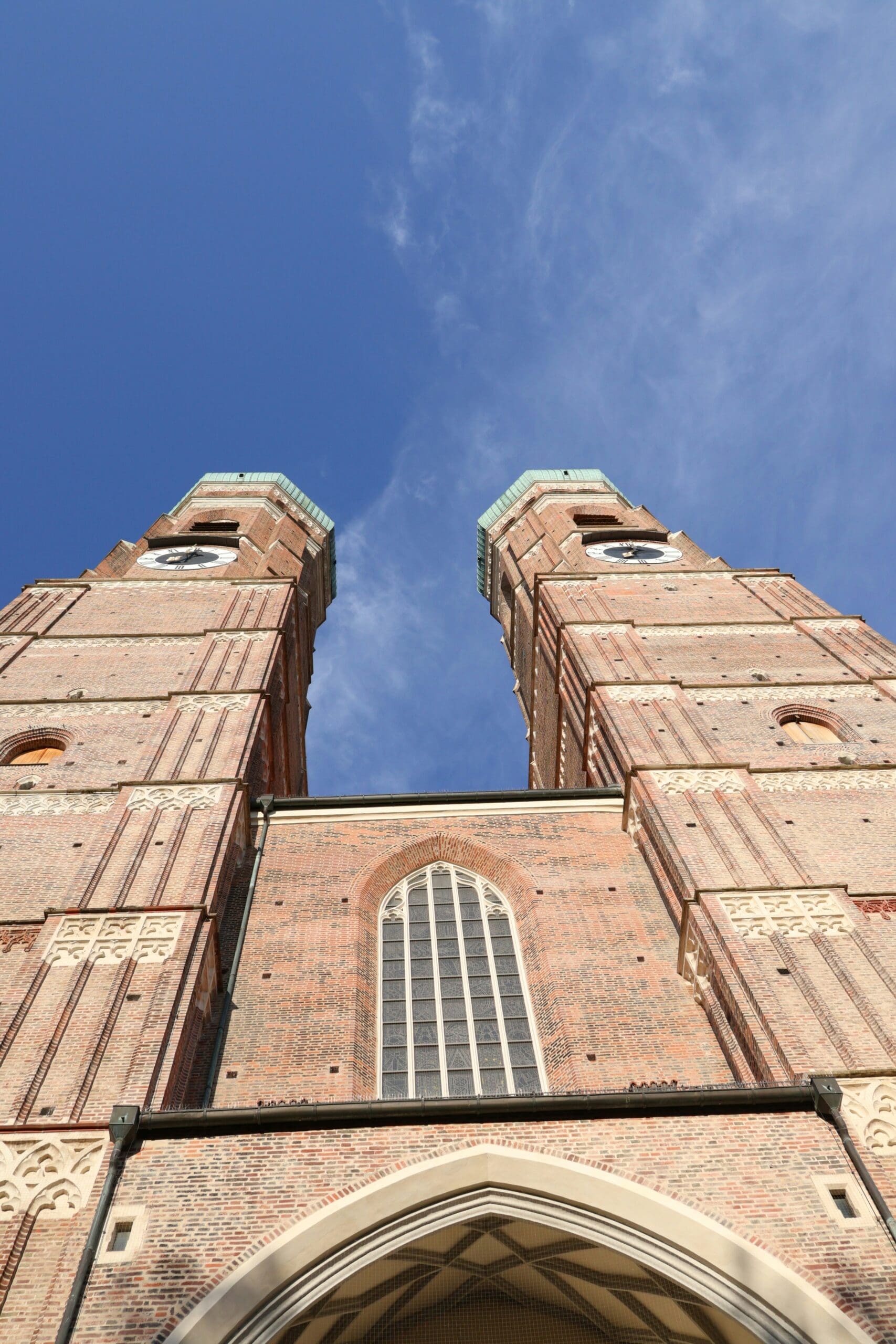
The onion domes that rise above Munich are iconic to the Frauenkirche. They were added later and are a distinctive landmark on the skyline. Each dome is 99 meters high and offers unparalleled views of the city.
A fascinating characteristic is the church's minimalist facade. In comparison to other Gothic structures, it foregoes richly decorated ornamentation and rose windows. This simplicity further highlights the church's exceptional construction.
Notable architectural details of the Frauenkirche include:
- The impressive 22 pillars in the interior
- The soaring Gothic vault
- Two distinctive onion towers, 99 meters high
- The simple Gothic façade of brick
The unique construction of the Frauenkirche makes it an important object of study for architecture enthusiasts. The harmony of its forms and its striking aesthetic underscore its status as an architectural gem.
by Dieter K (https://unsplash.com/@dieter_muenchen)
The Towers of the Frauenkirche: Munich's Landmark
The distinctive onion domes of the Frauenkirche are known far beyond the borders of Munich. They were only added in 1525, after the church's original completion. These towers are one of the oldest examples of characteristic Renaissance architecture in Bavaria.
The towers reach 99 meters in height and decisively shape Munich's skyline. They are visible from almost every corner of the city, a testament to the church's presence and influence. For many, they are the first recognizable buildings when approaching the city.
A visit to the towers offers a unique view over Munich and the surrounding landscape. On clear days, the view extends to the Alps. This view not only attracts tourists but is also very popular with locals.
The onion towers symbolize the religious and cultural significance of the Frauenkirche. They are intrinsically linked to Munich's identity and captivate with their unique architecture and history. No visit to Munich is complete without a glimpse of these impressive structures.
Significant artworks and attractions indoors
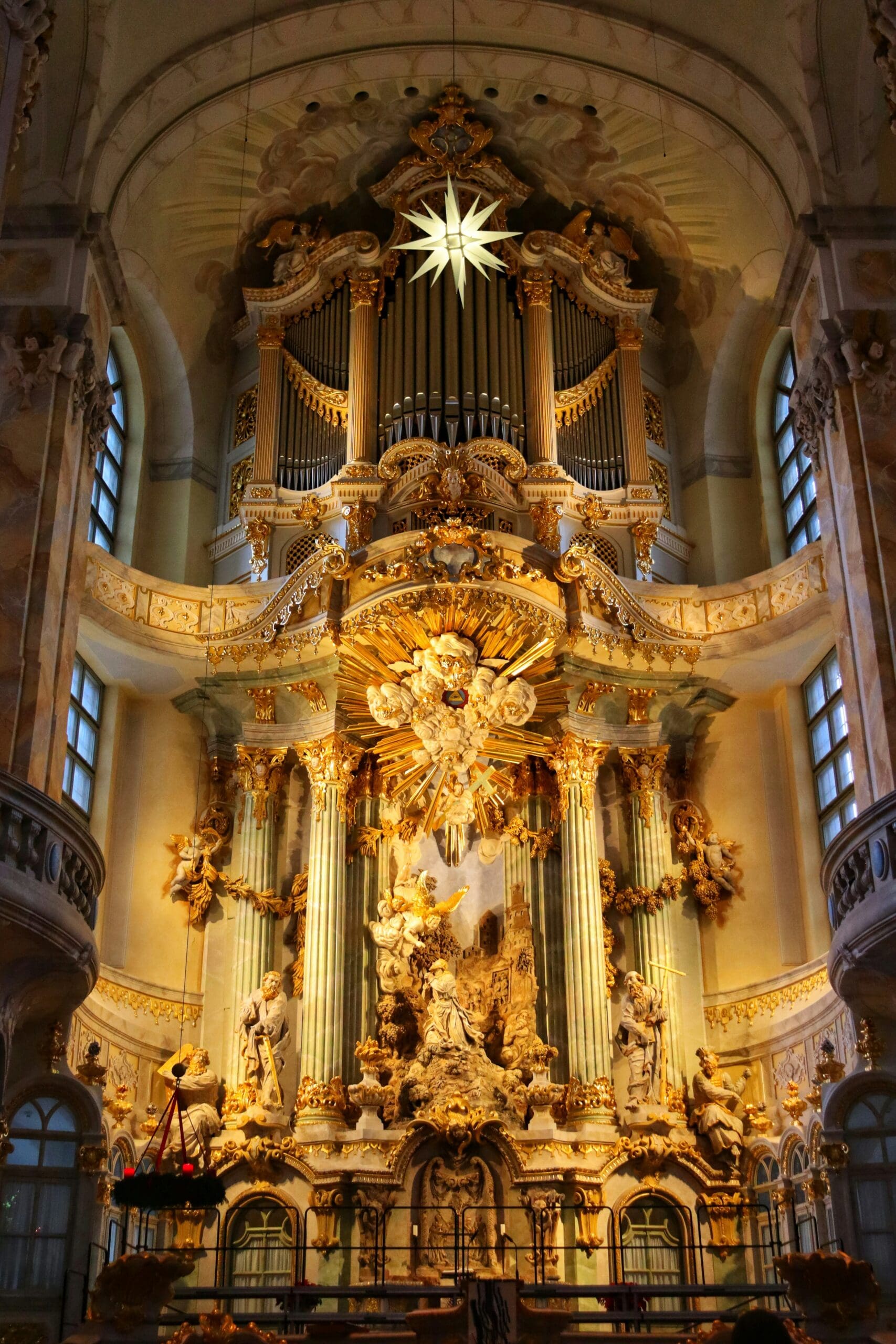
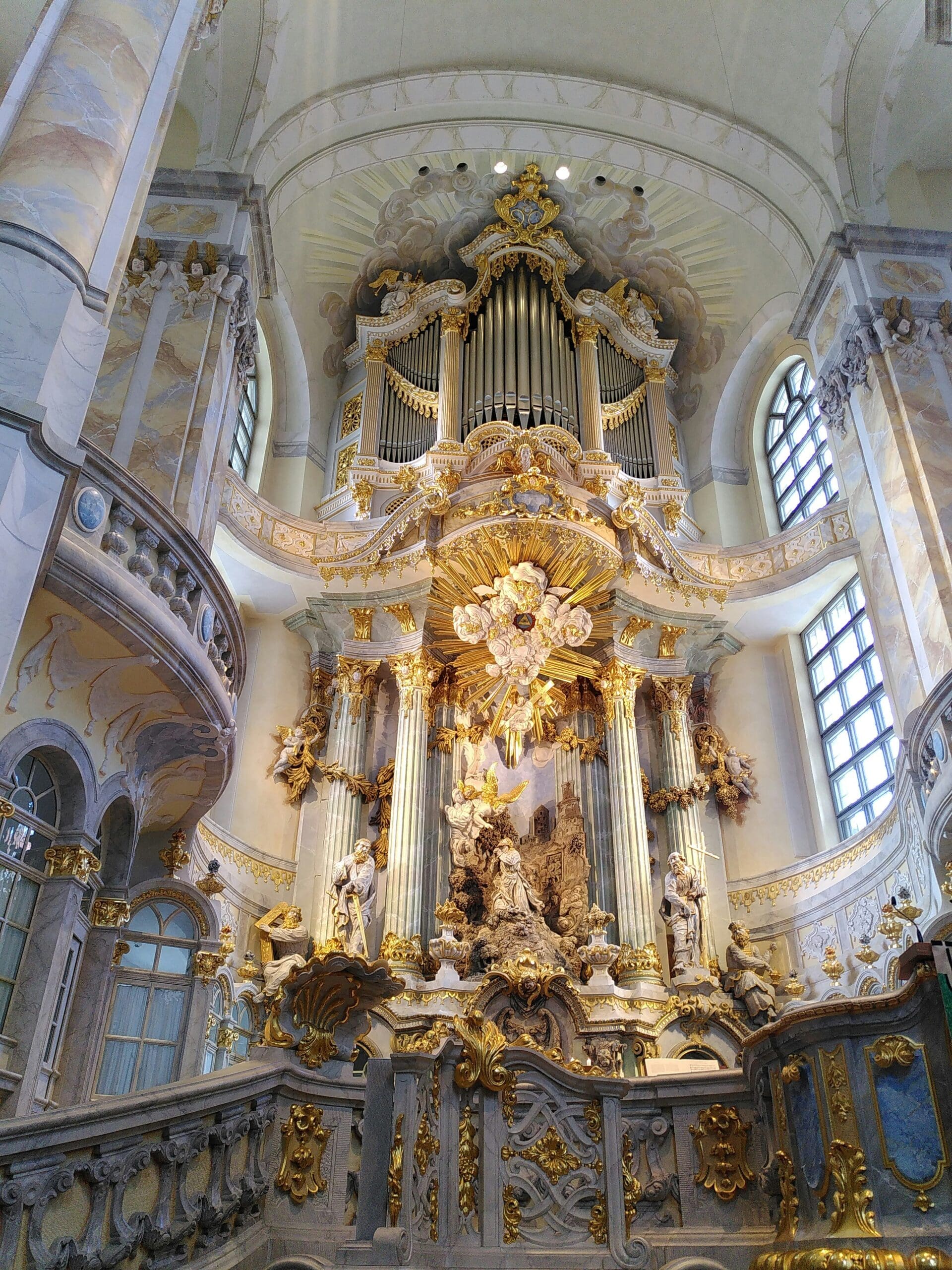
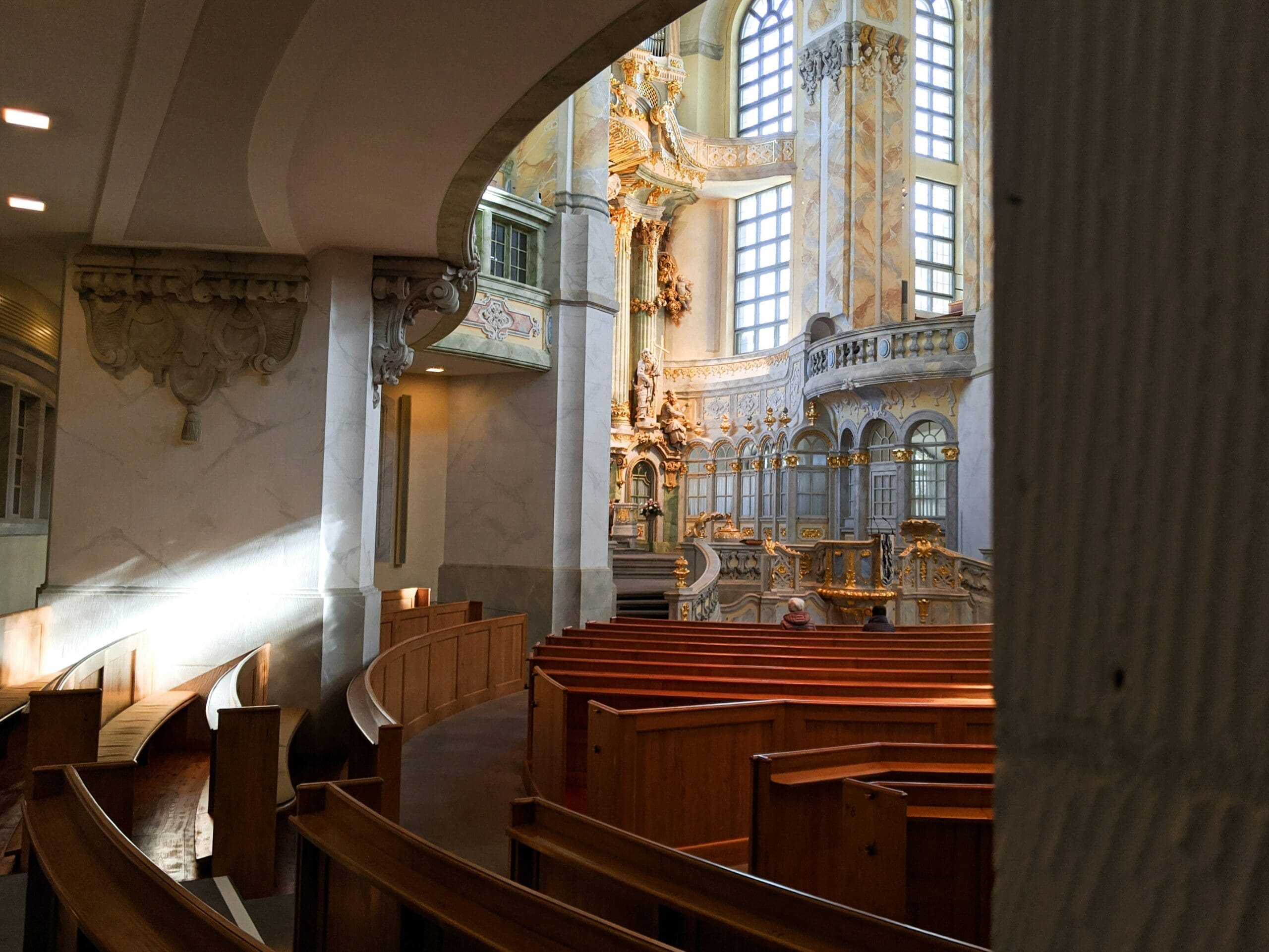
The interior of the Frauenkirche in Munich is as fascinating as its exterior. Visitors are overwhelmed by numerous works of art and architectural details. These works of art are not only expressions of faith but also significant historical artifacts.
A highlight inside is the magnificent tomb of Emperor Ludwig the Bavarian. It is a testament to medieval craftsmanship and of particular historical relevance. The tomb is one of the most visited works within the church.
Other noteworthy elements include the beautiful altars and the impressive stained-glass windows. The windows, in particular, lend a special charm and spiritual atmosphere to the interior. Together with the architecture of the church, they create an inviting and contemplative environment.
Here are some of the most significant works of art and sights:
- Tomb of Emperor Louis the Bavarian
- Artful altars from different centuries
- Impressive Gothic stained glass windows
- Monumental organ with over 4,000 pipes
This collection of artworks makes the Frauenkirche a significant cultural hub. It offers every visitor a rich experience filled with history and beauty.

by Anna (https://unsplash.com/@anna_c_wilhelm)
The Frauenkirche in World War II and Reconstruction
During World War II, the Frauenkirche in Munich suffered extensive damage. The heavy bombings left the once-magnificent Gothic structure in ruins. Nevertheless, a large part of the facade remained, an impressive testament to its robust construction.
After the war, an extensive reconstruction began, which brought the church back to life. This reconstruction symbolized the resilience of the Munich community. Careful restoration work ensured that the church retained both its historical integrity and its spiritual significance.
Today, the Frauenkirche stands as a proud landmark for the reconstruction and renewal of Munich. It connects the past and present by commemorating the destruction while simultaneously serving as a vibrant, active community hub.
by Lexi Laginess (https://unsplash.com/@lexilaginess)
Legends and Myths: The Devil's Footprint
One of the most famous legends of the Frauenkirche revolves around the so-called "Devil's Footprint." According to tradition, the devil made a pact with the church's builder to complete a structure without windows. When the construction was finished, he stepped inside and realized he had been tricked.
To this day, when entering the church, one can see the mysterious imprint of a foot in the floor, known as the devil's footprint. This story fascinates countless visitors and draws them in to discover the imprint for themselves.
- The devil was tricked during the construction of the church.
- His footprint is inside the church.
- Visitors can marvel at the imprint to this day.
by Matthew Chow (https://unsplash.com/@matthewchow)
The Frauenkirche Today: Services, Concerts, and Events
Today, the Frauenkirche is much more than just an architectural masterpiece. It is a vibrant center of community where regular services are held. These are a central part of the Catholic community in Munich.
But the Frauenkirche also offers space for cultural events. Especially popular are the many concerts, where you can enjoy the impressive acoustics of the church. Music lovers will find a wide variety of performances here regularly.
In addition to the regular services and concerts, the Frauenkirche hosts numerous special events:
- Celebration services and religious ceremonies
- Church tours with historical insights
- Concerts with classical and contemporary pieces
by (Augustin-Foto) Jonas Augustin (https://unsplash.com/@augustinfoto)
Visiting the Frauenkirche: Opening Hours, Admission, and Tours
The Frauenkirche in Munich is open daily for all visitors. This allows everyone to explore its impressive architecture and history at their own pace. Whether you come early in the morning or in the afternoon, the doors are open to you.
Admission to the church is free, however, donations are welcome. These donations contribute to the preservation of the significant landmark and help to promote its cultural offerings. The easy accessibility encourages tourists and locals alike to visit this historic site.
To better understand the rich heritage of the Frauenkirche, guided tours are offered. These tours provide detailed insights into the history and secrets of the church. Types of tours include:
- General Church Tours
- Themed architectural tours
- Special guided tours for school classes
by Andreas Haubold (https://unsplash.com/@andreas_haubold)
The Frauenkirche as a Symbol of Munich and Bavaria
The Frauenkirche rises majestically above the rooftops of Munich and is far more than just an architectural masterpiece. It embodies the heart and soul of the Bavarian capital. Its distinctive onion domes are an unmistakable landmark, found on postcards and in travelogues worldwide.
For many people, the Frauenkirche is a symbol of rebirth and resistance. After its severe destruction in World War II, its reconstruction symbolically represented the strength and determination of Munich and Bavaria. It remains a living testament to tradition, community, and the region's deep-rooted faith.
by Paul Kapischka (https://unsplash.com/@kapischka)
Tips for Visitors: Surroundings, Photo Spots, and Cafes
A visit to the Frauenkirche in Munich should be well-planned. The surroundings offer many opportunities to shape your day. To discover the best photo spots, you should walk along Neuhauser Straße and the surrounding squares.
Here are some tips for your visit:
- Photo spots Scenic spots along Kaufingerstraße.
- Cafes: Small bistros near the church for a relaxed break.
- Shopping options: Numerous shops and souvenir stores in close proximity.
A must-do is a coffee with a view of the towers. This is how you can fully experience Munich's relaxed atmosphere.
by avechenri (https://unsplash.com/@avechenri)
Conclusion: Why the Frauenkirche is a must-see in Munich
The Frauenkirche is not only a masterpiece of architecture but also a centerpiece of Bavarian culture. With its rich history and impressive construction, it attracts numerous visitors annually.
A visit to the Frauenkirche offers not only cultural richness but also an oasis of calm in the bustling city. Its central location makes it easily accessible and ideal for exploring Munich's historic old town. Whether you're a culture enthusiast or a tourist, the Frauenkirche is a highlight not to be missed.