
Imagine flipping through an old family photo album and finding a picture of your grandmother in a leather motorcycle jacket. This feeling of surprising transformation perfectly captures the story of Biarritz. What is a glamorous destination today began with much humbler roots.
A wide-angle shot of the Musée Historique de Biarritz, showcasing its unique architecture as a former Anglican church with a striking stone facade.
Instead of a traditional building, the Musée Historique de Biarritz protects its treasures in a breathtaking former Anglican church. One would hardly guess, looking at the vaulted ceilings, that this repurposed space serves as the city's memory. Curators have carefully arranged these everyday artifacts to highlight the city's incredible evolution.
Historical records show that this elegant coastal town once began as a rough, hard-working community dedicated to whaling. In this captivating historical museum, you can walk directly through this dramatic transformation. You will see exactly how Emperor Napoleon III transformed a quiet fishing village into a royal playground about 170 years ago.
This wild journey from harpoons to high society leaves a lasting mark on the modern city. Exploring the top sights in Biarritz feels entirely different when you know its rich backstory. History here isn't just trapped behind glass; it lives in the streets you walk.
Why the Building Itself is the First Exhibit: The Story of St. Andrew's Church
Imagine the greatest exhibit can't fit in any display case because you're already standing inside it. When you enter the Musée Historique de Biarritz, you immediately feel these walls tell their own story. The building was once St. Andrew's Church, a vibrant testament to the British vacationers who left an indelible mark on this French coastal town in the 19th century.
Instead of simply demolishing the disused house of worship, it was given a valuable new life. This idea is called „adaptive reuse“ - a great method for preserving cultural heritage, where old buildings are redesigned for modern purposes. Here, an interesting contrast also emerges regarding city museums versus regional museums: local museums often use historical buildings directly from the neighborhood, making the past immediately tangible rather than hiding it in sterile new constructions.
During your tour, be sure to look for the architectural traces of the original church. Before you examine the display cases, focus your attention on these three preserved details:
- The colorful stained glass windows, which filter the sunlight and bathe the room in warm colors.
- The massive wooden ceiling beams, rising above you like the hull of an old ship.
- The stone memorial tablets on the walls, commemorating significant British families.
This structure forms the absolute perfect backdrop for the treasures inside.
From Whalers to Empresses: The Most Significant Eras of the City's History
If you look out at the sea today, you'll see colorful surfboards and elegant beach promenades, but this place didn't always look like this. If you're wondering which eras are covered in the museum, the tour offers a clear journey through time across four completely different worlds: the rough era of fishermen, the glamorous imperial tourism, the wild Roaring Twenties, and finally, the birth of modern surf culture.
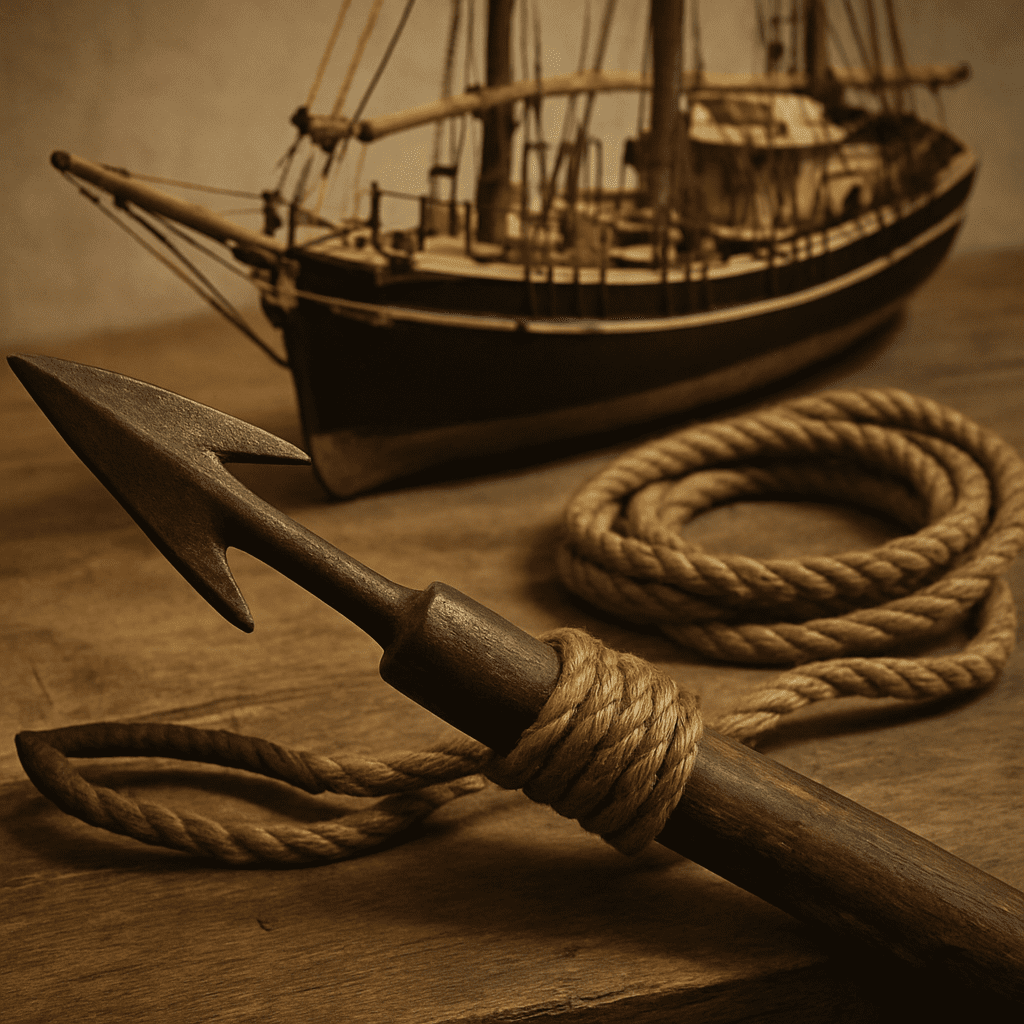
Long before the rich and beautiful arrived, the ocean here was a merciless workplace. A glance at the worn harpoons and thick ropes in the display cases immediately suggests how dangerous the whaling industry was for ordinary people. Back then, the town didn't smell of expensive perfume, but of blubber and saltwater – a stark contrast that makes the dramatic transformation of the maritime economy tangible.
Everything changed suddenly in the mid-19th century due to a single prominent visitor. Empress Eugénie, the wife of Napoleon III, fell in love with the rugged coast and transformed the simple fishing village into the summer centerpiece of Europe. With her began what is known as imperial tourism, where aristocrats from all over the world followed the imperial court to enjoy the healing climate in newly built, opulent palaces.
This rapid development from simple fishing huts to glittering luxury villas is wonderfully vividly captured here. Such vibrant, contemporary documentation of local urban history is rarely presented so accessibly, even when compared to Germany's most significant historical exhibitions. History is not just shown as a flat picture here, but as a deep experience.
However, this fascinating journey through time does not preserve itself. Rough tools rust and delicate imperial letters crumble to dust if they are not handled with the utmost care.
Behind the Scenes: How Archiving and Curation Keep History Alive
Have you ever found a box full of old letters in the attic? If you simply put these on a shelf, you have a simple collection. However, curating art and cultural objects turns it into a real exhibition. A curator essentially acts like a film director: they specifically select those objects that collectively tell a compelling human story.
But before such a find can come into the spotlight, it must be saved from decay. Anyone who wonders how exhibits are archived can imagine this crucial process in three steps:
- Identification (Provenance): First, historians clarify the exact origin and determine who once owned the piece.
- Stabilization Specialists stop physical decay by carefully cleaning or repairing delicate textiles and brittle paper.
- Contextualization The naked object regains its meaning through storytelling, so visitors understand why it is important.
You too can use these archives to delve into your own family history, for example. The best research tips for museum libraries are: Always start your search with specific names or dates and ask the staff directly for historical address books of the region.
This hidden work ensures our shared past never fades.
A Story for All Senses: Interactive Stations and Accessible Entrance
Forget the old museum cliché of hushed whispers and stern „Do not touch“ signs. Modern exhibitions focus on didactic mediation that appeals to all the senses. Interactive learning stations for children and adolescents, in particular, make the past literally tangible, for example, when young explorers feel the weight of a real chainmail shirt or playfully trace historical trade routes.
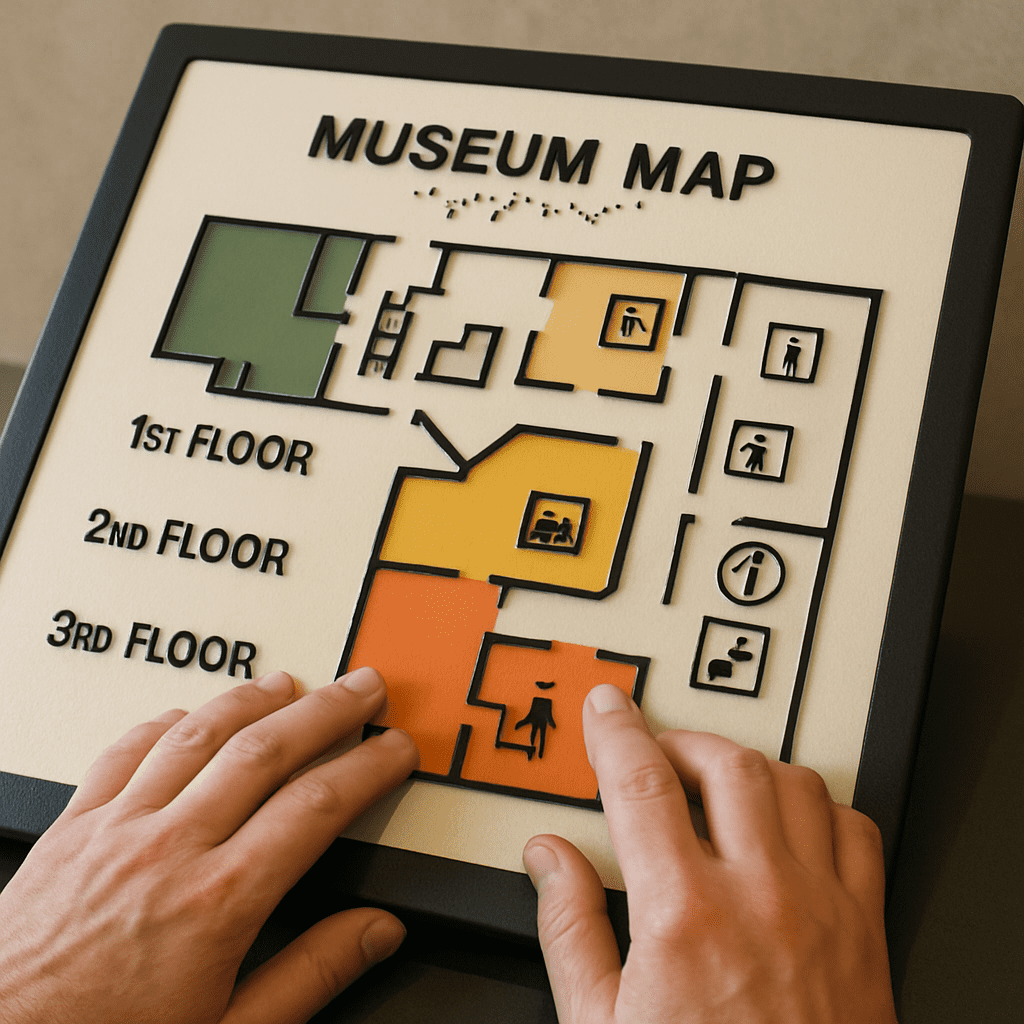
However, this multisensory approach doesn't just help families. Accessible access to historical collections today means much more than just ramps for wheelchairs. It also includes detailed audio descriptions or relief maps, which truly allow every visitor to experience history without barriers.
A direct comparison of analog and digital exhibition concepts shows how differently such mediation channels work:
- Analog A physical object, like a 300-year-old handwritten letter, provides tangible context and inspires awe for the original.
- Digital Interactive screens or immersive audio stations let you hear the voices of the past, making the experience emotionally engaging.
Both approaches merge into a vibrant journey through time at the Musée Historique, one that excludes no one.
Your Guide to the Perfect Museum Visit: Tips for Time Travelers
Do you know the feeling of being completely exhausted after two hours surrounded by hundreds of display cases? A building full of centuries can quickly feel overwhelming. This is exactly where our guide to the perfect museum visit comes in, because the best strategy against this dreaded „museum fatigue“ is the courage to skip things.
Ultimately, the question of what makes a good history museum is easy to answer: It gives you the freedom to set your own pace of discovery. On your next walkthrough, simply try this proven three-step strategy:
- The Highlight Hunt: Select only three main attractions in advance that you will purposefully visit.
- The deep dive Choose a single era to take your time with every detail.
- The conscious pause: Use the museum garden or in-house library to relax and let your experience sink in.
Even the most detailed object description on the wall can never capture every human facet of an exhibit. The true benefits of guided time travel through history lie in the hidden narratives. A guide won't just show you an old sword, but will tell you about the trembling recruit who held it.
Those who do further research in the museum library after the tour make the past their very own personal story.
Preserving the Heritage: Why Your Visit Secures the Future
Biarritz is far more than just a collection of streets—it's a living history. The journey from a rugged whaling port to a glamorous royal resort reveals the DNA of the local culture. With this knowledge, you'll look at the crashing waves with different eyes, sensing centuries of human resilience and reinvention.
This personal connection arises because institutions like the Musée Historique master the didactic presentation of complex historical events. By translating confusing centuries of treaties and trade into relatable human stories, the museum becomes an important community anchor. It proves that the past is not a dusty textbook, but a mirror that shows who we are today.
Preserving cultural heritage goes far beyond a leisurely afternoon visit. Support local heritage by sharing these incredible stories with family, participating in community archiving projects, or simply preserving your own family heirlooms as important artifacts for the future.
On your next cultural excursion to the Musée Historique de Biarritz, a tangible journey into the past awaits you. Enjoy the subtle scent of old parchment, listen to echoing footsteps on creaking wooden floors, and experience history up close.