

Stand on the edge of the balustrade on a clear day, and you're not just looking down on a city – you're seeing the precise meeting point between the shimmering Mediterranean Sea and the rugged Cévennes mountains. Right here, at the highest point of the metropolis, thrones the Peyrou Promenade. According to historical records, this spectacular placement was no accident but a strategic decision to visually assert the power of the French crown over the entire landscape.
Originally conceived as a so-called „Place Royale,“ this expansive esplanade, a flat and open promenade area, served as an oversized bean for King Louis XIV. Today, those who follow French travel tips Visit the Écusson district takes it literally, leaves the narrow streets of the historic Écusson district and steps directly into this sunlit open-air living room. What was once a stern monument meant to leave citizens in awe has long since become a vibrant meeting place.
Every stroll across the plateau immediately reveals why the Promenade du Peyrou forms the core of the urban identity. As soon as the sun warms the golden rock, relaxed picnics seamlessly merge with centuries-old architecture. This stone symbol of political dominance has evolved over the centuries into the true soul of the city.
The Riddle of the Arc de Triomphe: Why Montpellier Built a Gate for an Absent King
Usually, cities build huge gates to protect themselves from enemies, but Montpellier's Arc de Triomphe had a completely different purpose. Looking closer at the architecture, you essentially see a gigantic stone love letter to a monarch who never set foot in the city. The local elites wanted to prove their unwavering loyalty to Louis XIV with this gesture and spared no expense for it.
Even from a distance, the classic triumphal arch symbolism is recognizable, deliberately reminiscent of the majestic structures in Paris. This landmark enriches the historical architectural heritage of Occitania and was simply never intended as a functional city gate. Rather, it was an elaborate political theater designed to firmly anchor the untouchable power of the distant Sun King deep in southern France.
As one approaches the structure, the true message is revealed through artful bas-reliefs. These flat images, carved directly from stone, tell of royal triumphs like a stone history book. They depict not only religious victories but also technological marvels such as the connection of two seas through the Canal du Midi, making it a gateway to a centerpiece of Montpellier's historical monuments.
Those who finally walk through this massive arch leave urban daily life behind and enter a royal bean. The monument functions like a stone red carpet, inevitably drawing visitors' eyes to the absolute center of the entire park. There, the next majestic staging awaits, namely power in bronze: the equestrian statue of Louis XIV as a political statement.
Power in Bronze: The Equestrian Statue of Louis XIV as a Political Statement
As soon as the Arc de Triomphe clears the view, the equestrian statue of Louis XIV immediately captures all attention. It forms the geometric centerpiece of a classical Place Royale—a square architecturally designed solely to present the king as the undisputed center of the world. The majestic equestrian pose serves as a clear political symbol: the ruler guides his powerful horse with playful ease, just as he sovereignly steers the fortunes of his country.
However, this superiority cast in bronze was not inviolable. During the French Revolution, pent-up popular anger erupted in a drastic act of iconoclasm, the deliberate destruction of hated political monuments. The revolutionaries simply toppled the original figure from its pedestal and melted it down to cast cannons from the valuable metal. It wasn't until the 19th century that the monument was restored as a faithful replica, making the site seem today like a stone mirror of French upheavals.
However, for most visitors today, the absolute monarchy is no longer the main focus, but rather the fantastic backdrop that makes this place one of the city's best photo spots. The sprawling complex unfolds its full charm, especially in the warm evening light. However, if you turn your gaze from the statue to the end of the promenade, another masterpiece is revealed, which served the people far more than royal splendor: a masterful construction that finally brought fresh water to the thirsty city.
Water for the Masses: How the Aqueduct Transformed Montpellier
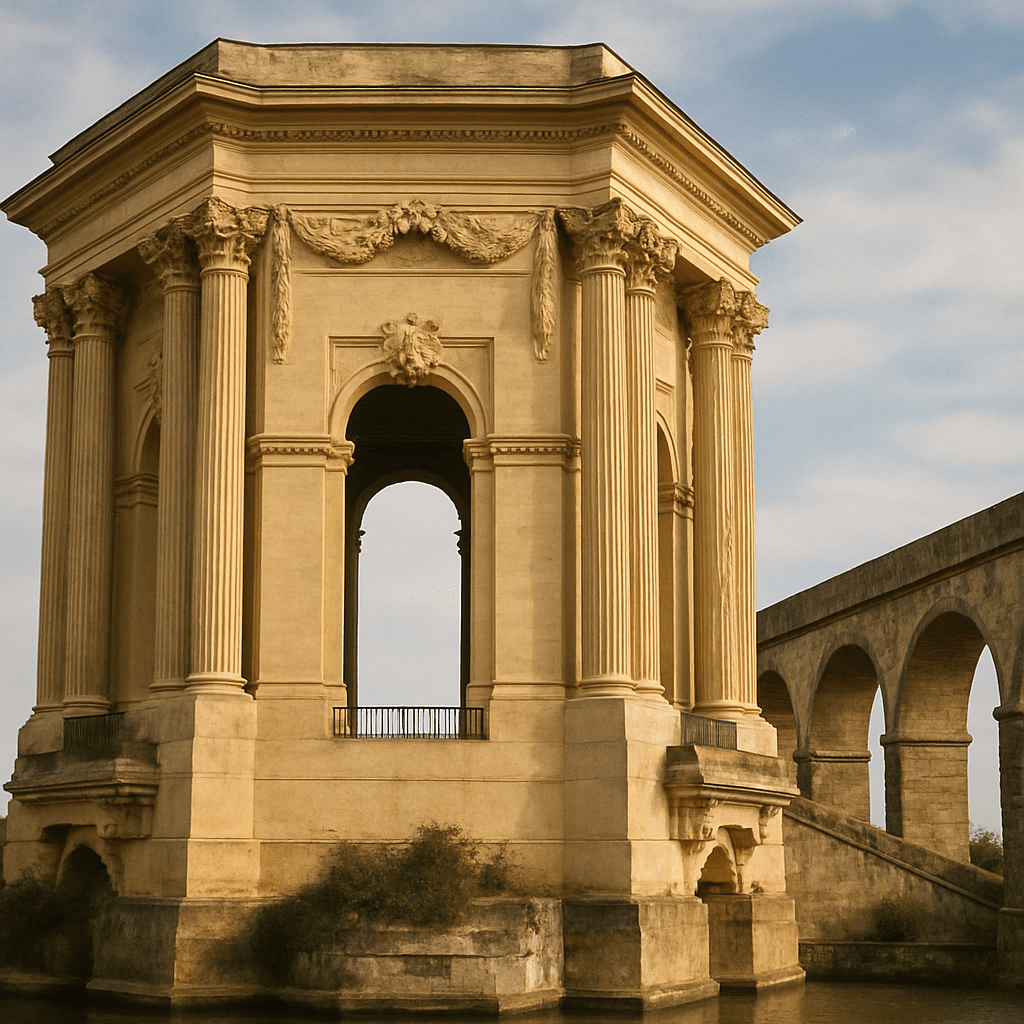
Let your gaze wander from the royal statue over the end of the promenade. There stands a building that, at first glance, appears to be a small, elegant temple, but is actually a masterpiece of urban infrastructure. Until the 18th century, Montpellier suffered from an acute water shortage, making clean drinking water an absolute luxury.
To solve this problem, a facility was designed that combined pure functionality with royal splendor. The Jean-Antoine Giral Water Tower On the edge of the Promenade du Peyrou is a prime example of „hydraulic architecture“ – buildings that manage water while appearing like monuments. Architect Giral skillfully hid the simple water basin behind opulent columns to celebrate the victory of technology over nature.
Behind this stone water tower stretches the impressive Saint-Clément aqueduct, which is strongly reminiscent of Roman models such as the Pont du Gard. So that the life-saving element could reach the thirsty city, it went through three crucial stations:
- The source: The water originated in Saint-Clément, about 14 kilometers outside the city limits.
- The Aqueduct: Over massive stone arches, the cool water flowed with a steady, slight gradient towards the center.
- The reservoir It was ultimately collected in the water tower and distributed to the public fountains with sufficient pressure.
Dusty streets suddenly transformed into bustling squares with gushing water. This feat of engineering drastically improved hygiene, making the park the indispensable social heart of Montpellier. You can still feel this vibrant atmosphere here today, especially when the strict symmetry of history sinks into the golden evening light or the weekend begins with its own distinct rhythm.
Sunday Magic and Sunsets: Experience the Peyrou like a Local
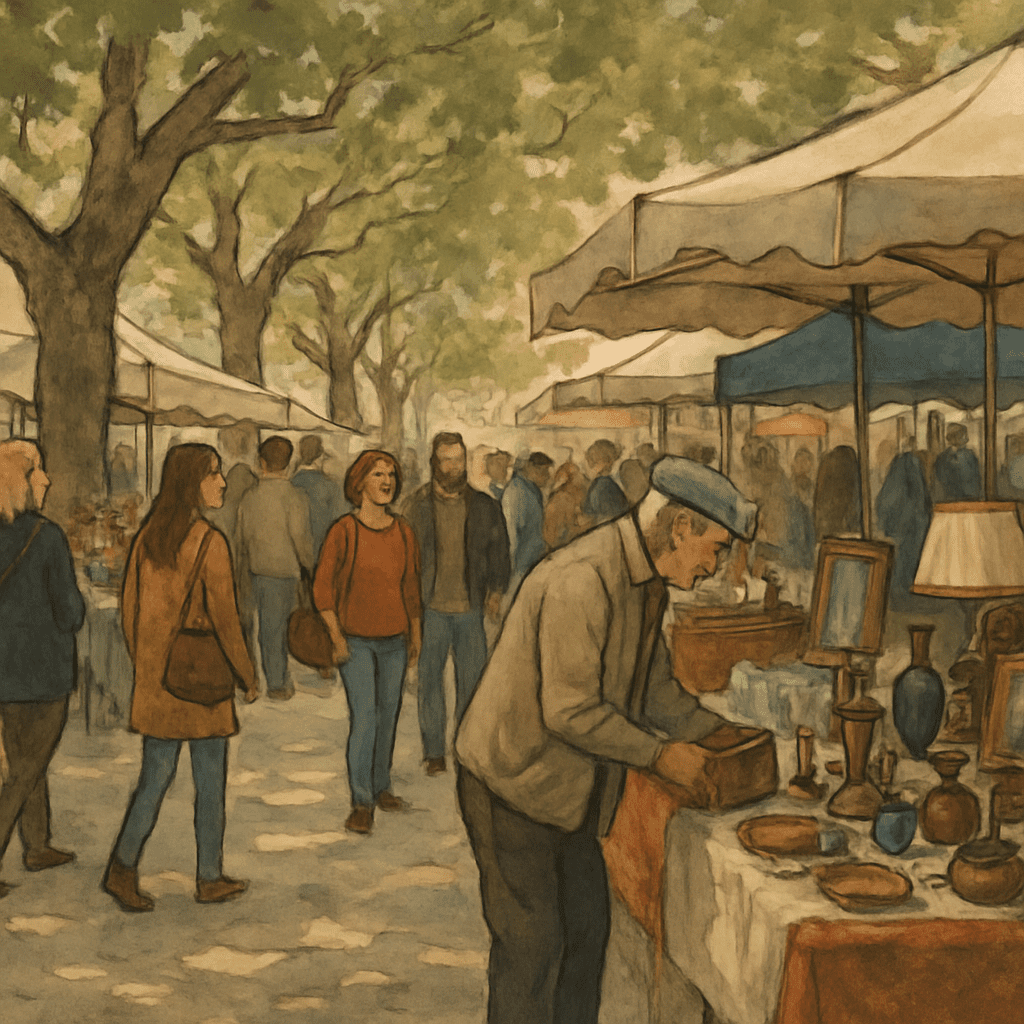
Built as a royal power base, the grounds are now the city's outdoor living room. If you're wondering what to do in Montpellier on the weekend, here's the answer. Every Sunday, the esplanade transforms into a Sunday Flea Market at Peyrou. This traditional flea market attracts treasure hunters who browse for antique furniture or old crockery under the shady plane trees – a slice of real southern French lifestyle.
Strolling past the stalls to the edge of the terraces reveals a spectacular panoramic view over the Cévennes to the sea. On clear days, the view extends to the distinctive peak of Mont Pic Saint-Loup in the north. This very wide horizon makes the park the perfect place to enjoy the sunset. As the evening light warmly illuminates the stones, locals gather here to comfortably wind down the day.
A simple itinerary helps you experience the place like a local:
- Flea market Browse for vintage treasures under the trees in the morning.
- Picnic Relax on the wide lawns with a fresh baguette.
- Golden hour Photograph the sunset at the old water tower.
Plan Your Visit: Practical Tips and the Perfect Tour
Getting there is wonderfully relaxed thanks to Montpellier's efficient tram system. Take tram line 4 directly to the „Peyrou – Arc de Triomphe“ stop to be right at the accessible main entrance. If you prefer to drive, it's best to park in the underground „Parking Pitot.“ This option not only offers shade but also takes you directly to the plateau via elevator, without the hassle of stairs.
Once you arrive, the excursion can be seamlessly combined with other downtown attractions. For your time planning, the contrast between the adjacent botanical garden with its jungle-like exoticism and the royal expanse of the promenade is particularly worthwhile.
A focused, one-hour tour ideally starts at the imposing Arc de Triomphe, proceeds across the wide esplanade directly to the equestrian statue of Louis XIV, and ends at the water tower. From there, you can let your gaze wander over the aqueduct to the mountains. This makes it clear at a glance how monumental architecture was purposefully used as a political statement at this location.
Today, this landmark is a vibrant open-air museum where royal splendor effortlessly blends with the relaxed everyday life of the South of France. The Promenade du Peyrou is the ideal starting point to explore the charming, winding streets of the historic old town with a keen eye for hidden stories.