
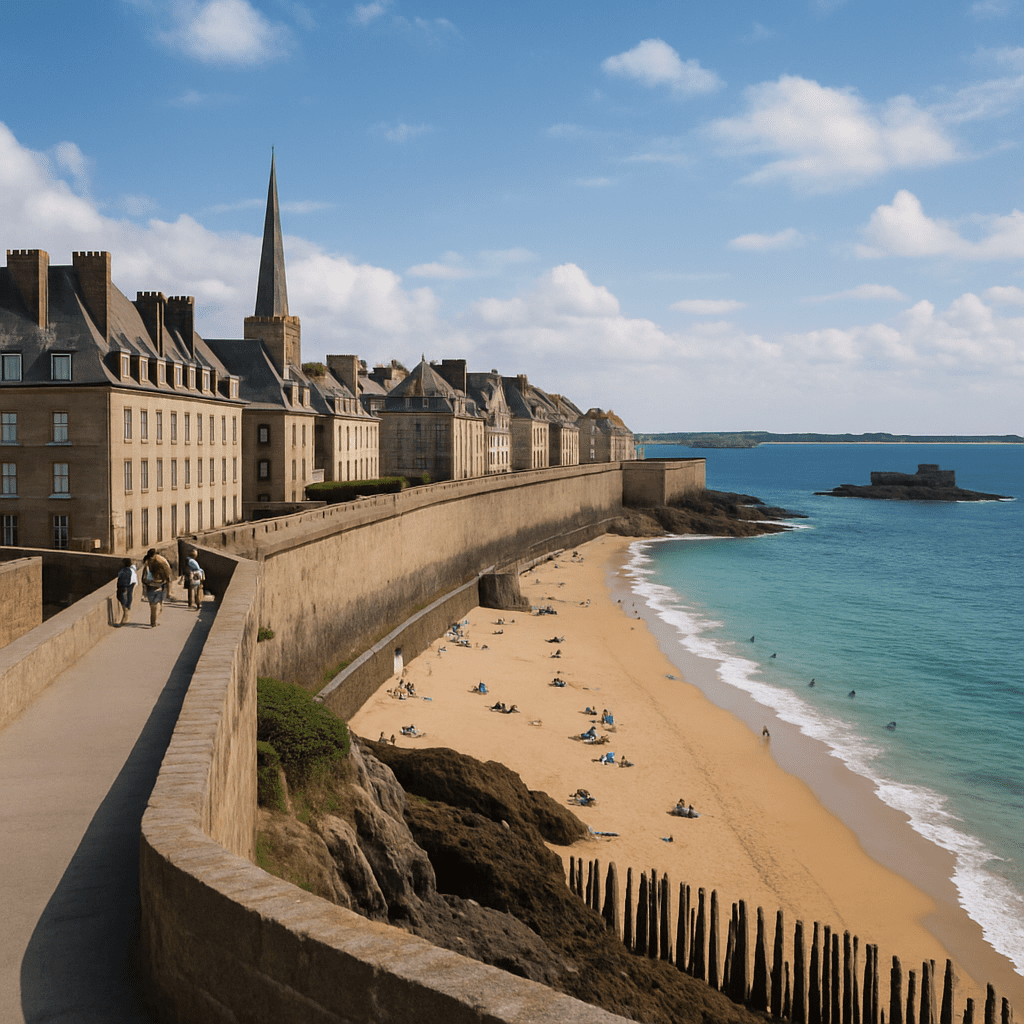
The Ramparts in Saint-Malo are an impressive testament to history and architecture. These historic city walls surround the old town and offer a fascinating glimpse into the past. They are a must-see for every visitor to Brittany.
The walls were originally built in the 12th century and expanded in the 17th century. They extend for a length of approximately 1.75 kilometers. These massive structures are a symbol of the city's defense and protection.
Saint-Malo was once a notorious pirate city. The walls played a crucial role in repelling attacks and protecting the city's inhabitants. Today, they are a popular spot for tourists and locals alike.
A walk on the walls offers a breathtaking panoramic view of the city and the sea. Visitors can admire the beauty of the coast and the offshore islands. The walls are a popular spot for photographers looking to capture the picturesque scenery.
The city walls are not only an architectural masterpiece but also an important part of Brittany's cultural heritage. They are an example of medieval military architecture and attest to Saint-Malo's strategic importance. The walls were built from local granite, which underscores their durability and strength.
During World War II, the walls were damaged but later meticulously restored. Today, they stand as a symbol of the city's resilience and pride. The walls are accessible year-round and offer guided tours that explain their rich history.
Saint-Malo is known for its maritime history and vibrant culture. The ramparts are a place where history comes alive, allowing visitors to experience the connection between the past and the present. They are a vital part of Saint-Malo's identity and a highlight of any trip to the region.
The History of Les Remparts Saint-Malo
The history of the ramparts in Saint-Malo is deeply rooted in the city's past. It began in the 12th century when the first sections of these impressive city walls were built. At that time, Saint-Malo served as a trading and fishing port, whose wealth made the need for effective protection apparent. The city walls played a crucial role in the defense of the city and symbolized the protection and security of its inhabitants.
In the 17th century, Saint-Malo experienced a significant expansion of its walls. These expansions were necessary to counter the increasing threats of pirate raids and international conflicts. During this time, Saint-Malo became a notorious pirate stronghold, often referred to as the „City of Corsairs.“ The walls provided a sanctuary for the city's inhabitants and its corsairs, from which they could defend their ships and control who entered and exited the harbor.
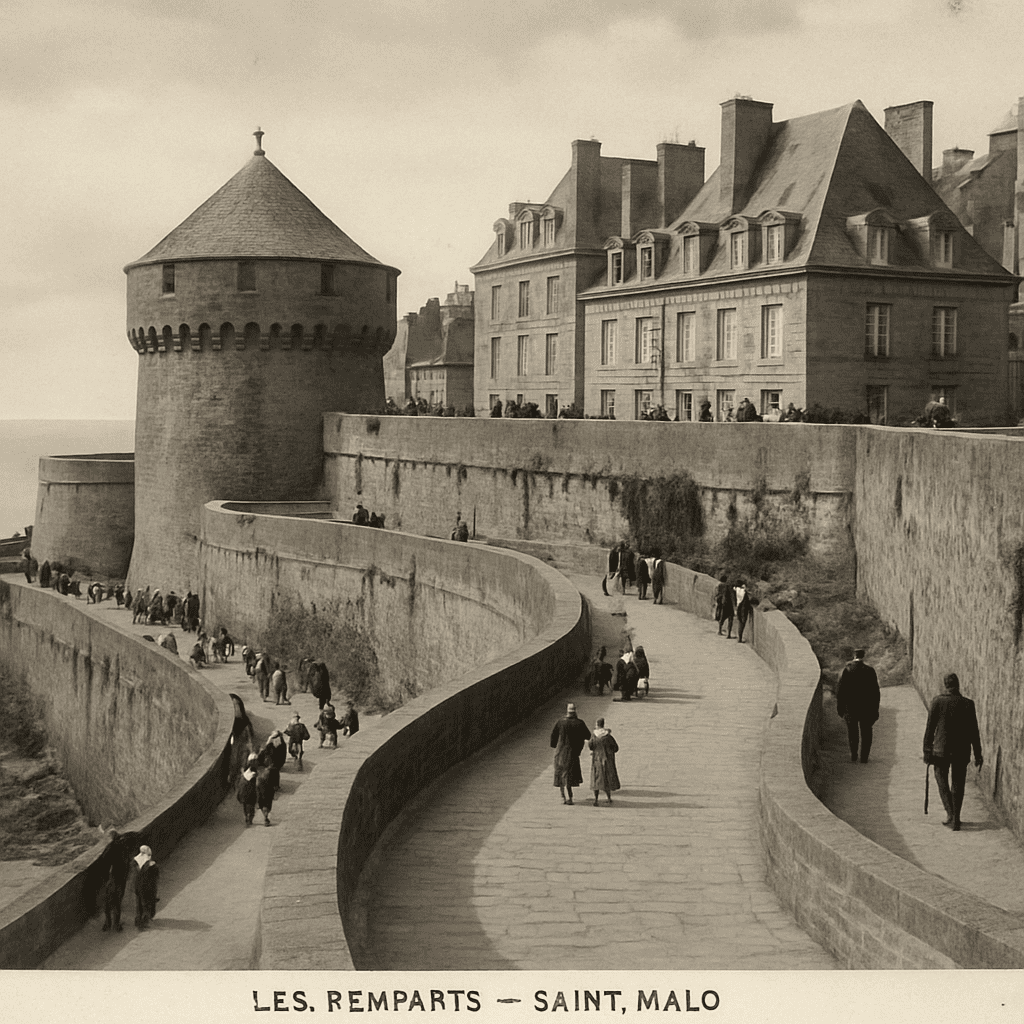
During World War II, the city walls were severely damaged. Despite the devastation, however, the walls rose from the ashes, symbolizing the resilience of the people of Saint Malo. Post-war restoration efforts returned the walls to their former glory, preserving their historic character. These reconstruction projects helped to maintain the cultural heritage and significance of these walls for future generations.
Over the centuries, the walls underwent numerous changes and adaptations. Their strategic location made them a vital element of Saint-Malo's defense mechanisms. The evolution of these ramparts was shaped by shifting military necessities. They were utilized for everything from enemy reconnaissance to protection against the tides of the English Channel.
Today, the walls of Saint-Malo evoke its influential history and its pirate era. They attract thousands of visitors annually who are curious to learn more about its past. History is made tangible here: walking on these historic ramparts means stepping into the shoes of the people who once defended the city.
The history of Les Remparts is impressive, telling of a dynamic and often dramatic past. It reflects the adaptability of the people who have lived in this region for centuries. From wars to pirate adventures to peaceful times, these walls have seen and endured it all. They remain a significant monument in the rich history of Saint Malo and a symbol of the connection between the past and the present.
Architecture and Structure of the City Walls
The architecture of the ramparts in Saint-Malo is both impressive and functional. The walls extend for 1.75 kilometers, majestically encircling the old town. These mighty structures were erected from robust granite quarried in the region. The granite gives the walls a lasting presence that has endured through the centuries, still exuding steadfastness and resilience.
The original constructions began in the 12th century, but numerous extensions and reinforcements were made over the centuries. The walls gradually evolved into a complex defense system. They are characterized by towers and bastions, strategically placed to repel attacks and ensure optimal sea views. This military design reflects medieval engineering prowess and highlights the city's focus on defense.
A remarkable feature of the city walls are the various gates that grant access to the city. Each gate has its own character and purpose, but the most famous is the Porte Saint-Vincent. It served as the main entrance to the city and is today a popular access point for visitors who wish to explore the walls. The gate offers a connection between the lively city and the quiet promenades on the walls.
A list of architectural features of Les Remparts:
- Granite wallsBuilt from local granite, which guarantees longevity.
- WalkwaysServe as walks with spectacular views.
- Bastions and towersStrategic points for defense and observation.
- Diverse gatesEntry and exit points, each with a unique history.
- Extensions in the 17th CenturyAdjustments to meet growing military requirements.
The ramparts extend along the walls, offering visitors spectacular views of the azure sea and the surrounding city. These walkways once served as patrol routes for defense. The artfully designed bastions and towers illustrate the precision of medieval engineering. Today, they are popular spots for strolls and photography, allowing for a close connection between history and natural beauty.
The structure of the walls reflects the importance Saint-Malo once held as a strategic port and trading city. They were continuously adapted to meet evolving technological and military demands. While no longer needed for defense, the walls remain a monumental testament to the city's significance during its heyday.
Overall, the city walls symbolize the pride and resilience of the region. They stand as silent witnesses to the past, telling of the impressive history that permeated Saint Malo. Their architecture is an invitation for anyone who wishes to experience the past and the deep-rooted culture of Brittany.
A Walk on the Walls: What Awaits Visitors?
A walk along the ramparts of Saint-Malo is a unique experience that combines history with breathtaking views. Visitors immerse themselves in a rich past as they stroll along the old fortifications. The atmosphere is both peaceful and inspiring, offering a respite from the hustle and bustle of the city.
At the start of your tour, you should enter the ramparts through Porte Saint-Vincent. From here, you'll have direct access to one of the best viewpoints, offering a 360-degree panorama of the sparkling sea and the city. Below, the vibrant activity of the old town unfolds with its shops and cafés.
The walls are also an ideal spot for photography enthusiasts. The views constantly change as the daylight shifts, especially during the golden hour at sunset. The changing light conditions highlight the ancient architecture and the beauty of the surrounding water. Every step along the walls reveals a new perspective worth capturing.
On your walk, you will pass several information boards that explain important historical details about the walls and their significance. These boards help to develop a deeper understanding of the stories and legends that surround the walls. They offer insights into the lives of the people who once inhabited these ramparts.
Here's a list of what visitors can expect on a walk along the walls:
- Panoramic viewsBreathtaking views of the sea and the city.
- Information panelsHistorical insights and exciting facts along the walls.
- Photo opportunitiesIdeal spots for the perfect picture, especially at sunset.
- Quiet walksA peaceful retreat with a touch of history.
- InputsSeveral entry points, for example, Porte Saint-Vincent.
During the tour of the outer fortifications, you will see the offshore islands in the English Channel. They appear to be scattered like pearls in the water, offering a spectacular backdrop. Here, land and sea meet in perfect harmony, and the natural beauty of Brittany is fully visible.
Whether you stroll alone or join a guided tour that offers insightful information about the architecture and history, the ramparts offer something for everyone. You can enjoy your walk at your own pace, from sunrise to sunset, creating unforgettable memories of the unified beauty of history and nature in Saint-Malo.
The significance of the walls for Saint-Malo and Brittany
The ramparts in Saint Malo are invaluable to the region and an iconic landmark. They are more than just old stones; they are witnesses to the tumultuous history of the city and Brittany. The walls embody strength, resilience, and the city's ability to overcome adversity.
In their function as a defensive structure, the walls of Saint-Malo have protected it from invaders for centuries. As a bulwark against enemies and the forces of nature, particularly the strong tides of the English Channel, they offered the city security and stability. This protection was crucial for Saint-Malo's development as a significant trading and fishing port.
The cultural significance of the walls extends beyond physical protection. They are a living testament to Brittany's heritage, reflecting the region's rich maritime tradition. This connection to the sea is deeply ingrained in Saint-Malo's identity and continues to shape the lives of its inhabitants today. The walls also speak of the piracy for which the city was once notorious and the resulting prosperity.
As a symbol of community and permanence, the walls attract locals and tourists alike. They are not just a reminder of past times, but also a place for meeting and exchange. Here, people come together to experience the city's history and enjoy the view, which has lost little of its charm over the centuries.
The city walls are, not least, a valuable economic factor. Their attractiveness contributes significantly to drawing in tourists who wish to experience the culture, history, and unparalleled views. The walls are thus a central component of Saint-Malo's economy and an important contribution to the region's identity. Their significance is far-reaching and profound, making them an indispensable element of the city and Brittany.
The Ramparts as a Symbol: Pirates, Trade, and Resistance
The ramparts of Saint-Malo are more than architectural masterpieces. They symbolize the multifaceted history of the city, intertwined with piracy, trade, and resistance. These city walls bore witness to a time when Saint-Malo reigned over the seas, known as an independent and prosperous city.

by Matheus Cavaleiro (https://unsplash.com/@matheuscavaleiro)
In the Middle Ages, Saint-Malo was a notorious pirate nest. The city attracted adventurers and captains who had permission to seize goods from enemies under the protection of the French Crown. This privateering brought prosperity and made the city rich. The walls served as protection against rival pirates and foreign invaders.
Besides piracy, trade also played a crucial role in the history of Saint-Malo. Thanks to its strategic location on the English Channel, the city became a significant trading port. The walls not only protected the citizens but also the valuable trade goods that flowed through the harbor. This trade contributed significantly to the economic prosperity of the region.
During World War II, another dimension of the symbolic resistance of the walls became apparent. Although severely damaged, they were quickly rebuilt to demonstrate the city's resilience. This reconstruction symbolized the unwavering will of the inhabitants to preserve their cultural identity and historical significance.
Today, the ramparts stand not only as historical monuments but also as living symbols of Saint Malo's strength and spirit. They are a lasting legacy that connects history and modernity, offering visitors a profound glimpse into the city's past. These walls are an indispensable part of Saint Malo's identity, reflecting both its glorious and tempestuous past.
Practical tips for visiting Les Remparts
A visit to the ramparts in Saint-Malo promises an unparalleled view of the city and the sea. However, here are some tips to make your visit even more enjoyable. The best time to walk along the ramparts is early in the morning or late in the afternoon when the crowds are smaller and the light is particularly beautiful.
Plan your route in advance so you don't miss the most significant sights in and around the walls. There are many access points to the walls, but Porte Saint-Vincent is often recommended as the best starting point. From here, you can begin your exploration and fully enjoy the historic atmosphere.
Please note that the ramparts are accessible year-round. However, the weather in Brittany can be unpredictable. Therefore, it is advisable to wear waterproof clothing and comfortable footwear. A windbreaker or a rain jacket can prove useful, especially when walking along the coast.
Here are some practical tips for your visit:
- Start early to avoid the crowds
- Wear comfortable shoes for the walk
- Don't forget a camera for the spectacular views
- Learn about guided tours to learn more about history
- Enjoy a picnic on the walls to celebrate the view
Another tip is to join one of the many guided tours. These offer valuable insights into the history and architecture of the ramparts and will help you learn more about the fascinating history of Saint-Malo. The tours are often multilingual and offer additional anecdotes not found in guidebooks.
A visit to Les Remparts is complemented by the vibrant setting of Saint Malo. The combination of history, culture, and natural beauty makes an excursion to the ramparts an unforgettable experience. Remember to take your time and savor the atmosphere as you journey through time and immerse yourself in Brittany's rich history.
Other sights around the city walls
Saint Malo offers far more than just its impressive city walls. Around Les Remparts, visitors will find a wealth of other exciting attractions. These sights complement the historical experience and offer insights into the rich culture and history of the region.
Immediately next to the ramparts rises the Château de Saint-Malo. This impressive structure now houses the Museum of Saint-Malo. Here, visitors can explore the history of the city in detail. The museum displays artifacts from its maritime past and provides information about famous personalities of the region.
Very close by is Saint Vincent Cathedral. This impressive Gothic cathedral is a wonderful example of medieval architecture. The colorful stained glass windows and intricate details invite you to marvel and linger. A visit to the cathedral is a perfect complement to a walk on the city walls.
A particularly picturesque attraction is the island of Grand Bé, which is accessible on foot at low tide. Here, visitors can see the tomb of Chateaubriand, a famous French writer. The view from the island of the town and the sea is simply spectacular.
To make the most of your visit, be sure not to miss the following attractions around Les Remparts:
- Château de Saint-Malo
- Cathedral of Saint Vincent
- Grand Bé Island
- Fort National
- Chateaubriand-cut
Fort National is another highlight and is also located near the walls. It is only accessible at low tide and offers breathtaking views of the Breton coast. The fort tells the story of the city's defense strategies and is a symbol of its resilience.
Not to forget is the lively Place Chateaubriand. This square is surrounded by charming cafes and restaurants and offers a relaxed atmosphere. Here you can try regional specialties and end the day in a pleasant way.
With all these attractions in close proximity, Saint-Malo remains a fascinating destination offering abundant historical and cultural experiences.
The Ramparts in Art, Literature, and Photography
The ramparts of Saint-Malo have inspired artists for centuries. Their majestic appearance and historical depth offer rich material for creative expression. Painters like Eugène Boudin and Paul Signac immortalized the walls in Impressionist works. These paintings capture the unique atmosphere and the play of light and shadow that make the city walls an irresistible subject.
In literature, Les Remparts also finds its secure place. Writers like Chateaubriand have incorporated the walls as a symbol of homeland and resistance. Their texts reflect the passionate connection people have to these walls. The narratives combine historical references with captivating stories that ignite the reader's imagination.

by Beata Ratuszniak (https://unsplash.com/@beataratuszniak)
Photographers are also drawn to Les Remparts in droves. The impressive view from the ramparts offers breathtaking photographic motifs. The changing light conditions throughout the day also contribute to this. The rough texture of the granite contrasts with the soft blue of the sea, creating dramatic images. Thanks to their historical significance and natural beauty, Les Remparts remain an irresistible destination for creative minds.
Conclusion: Why Les Remparts Are Among the Top Saint-Malo Attractions
The ramparts in Saint-Malo are more than just a collection of old stones. They embody the city's rich history and offer visitors an impressive glimpse into the past. Whether you're interested in history, architecture, or simply beautiful views, the walls have something to offer everyone.
The ability to walk along the walls and enjoy the panoramic sea views makes it an unforgettable experience. This historic structure embodies both defense and trade, reflecting the city's resilience. For photographers and artists, the walls are an endless source of inspiration.
A visit to Les Remparts is mandatory for anyone exploring Saint Malo. They are among Brittany's most cherished attractions, demonstrating the close connection between land and sea, history and the present. It is this combination of culture and nature that makes Les Remparts a must-see.