
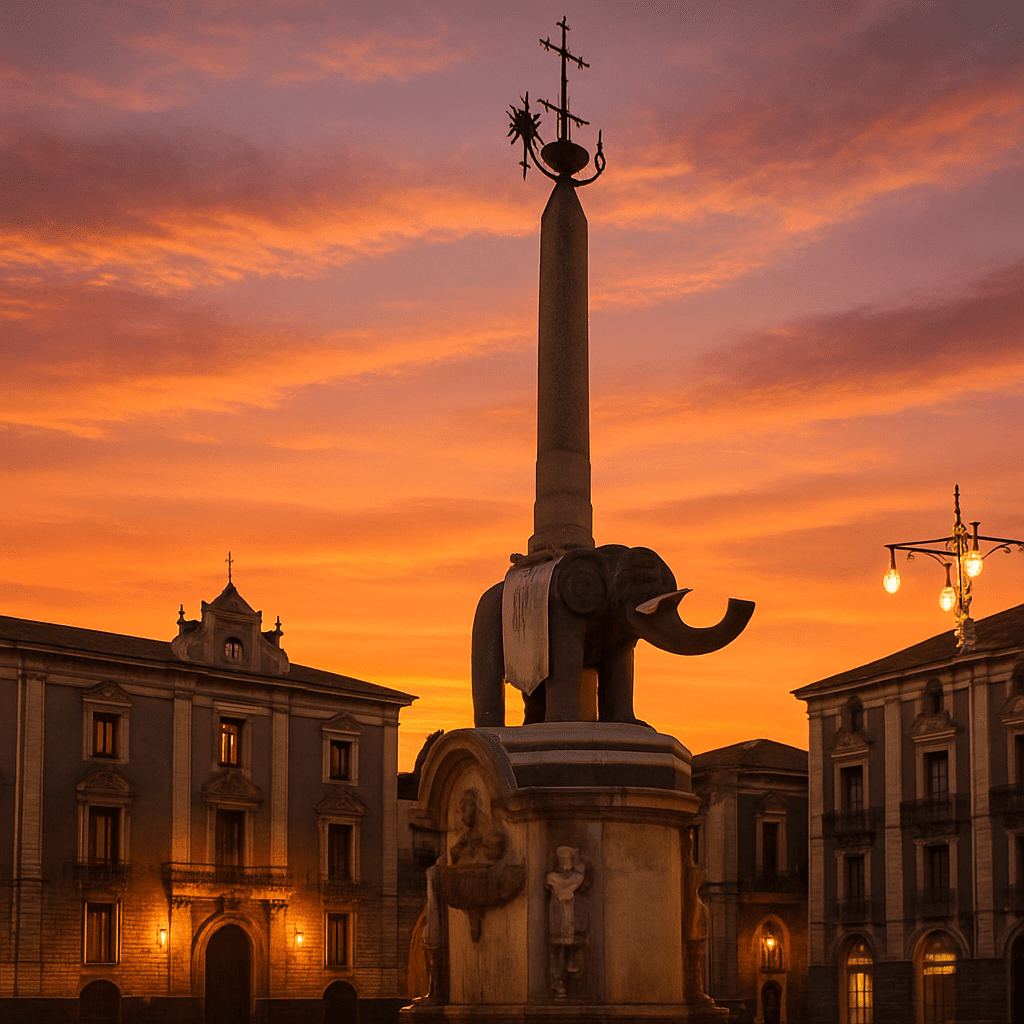
The Elephant Fountain in Catania is a fascinating landmark. It attracts visitors from all over the world. This impressive elephant statue stands proudly in Piazza del Duomo.
The fountain is more than just a work of art. It is a symbol for the city of Catania. Its history dates back to the 18th century.
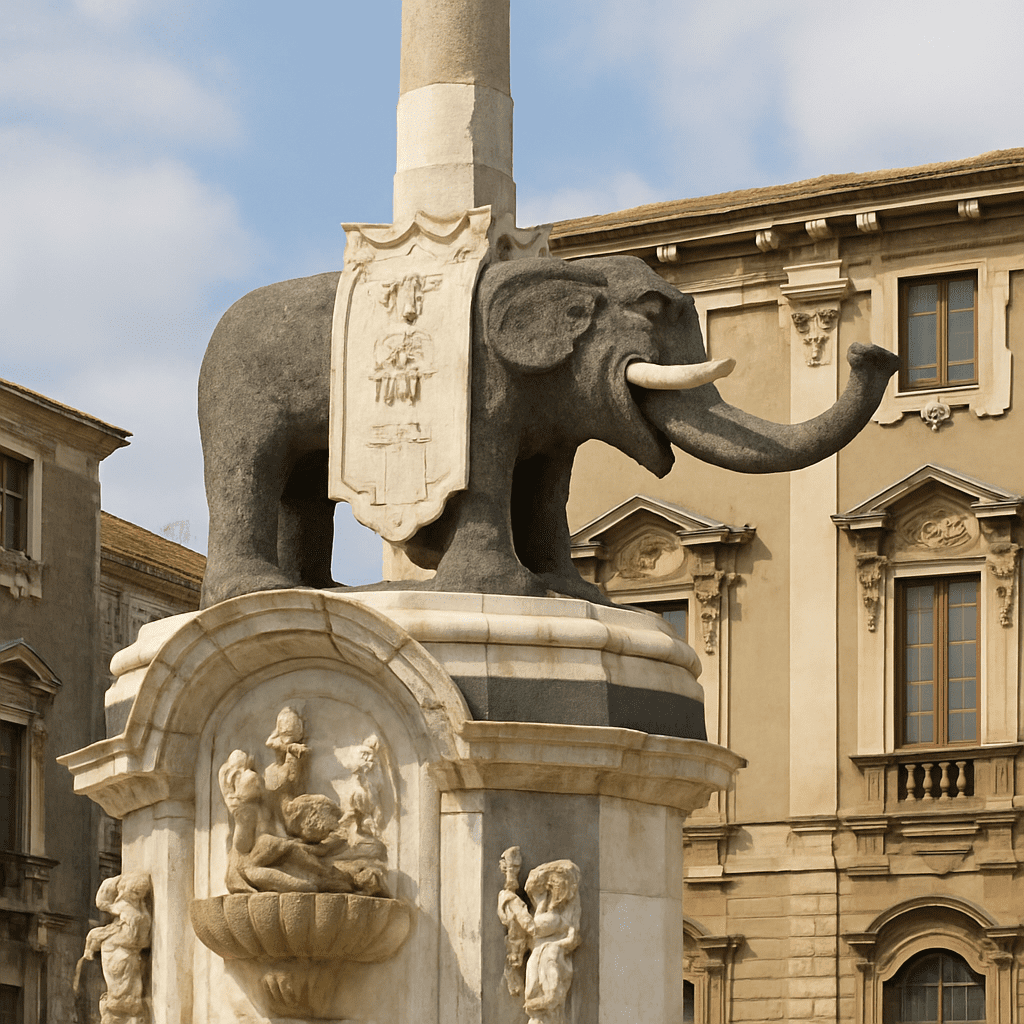
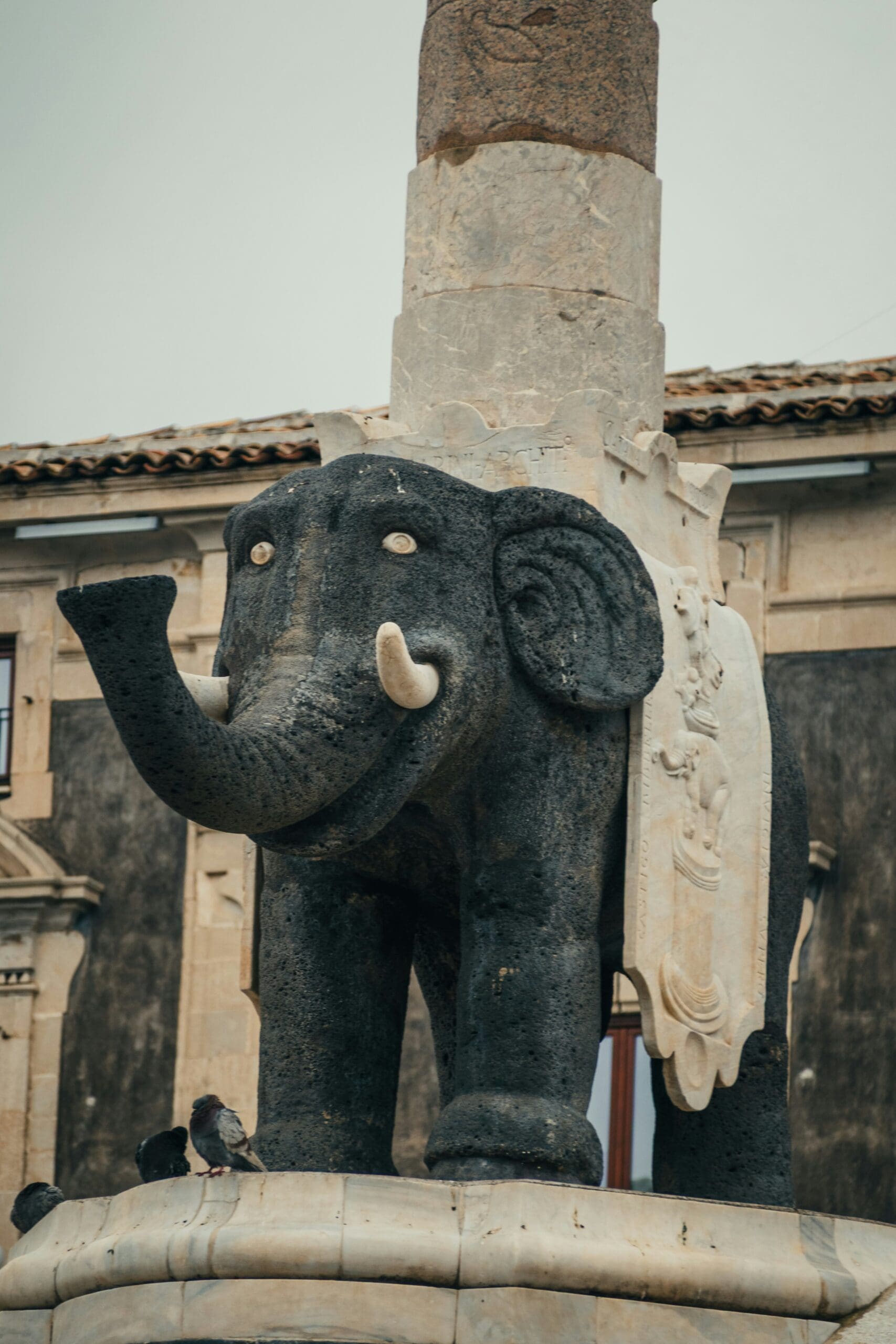
Giovanni Battista Vaccarini designed the fountain. He combined Baroque architecture with local materials. The elephant is made of lava stone from Mount Etna.
The elephant carries an Egyptian obelisk on its back. It is adorned with hieroglyphs. The combination is unique and fascinating.
In the local language, the elephant is called „u Liotru“. It symbolizes strength and protection. The fountain is a popular meeting place.
Tourists and locals love the Elephant Fountain. It is a popular photo spot. Its significance to the city is immeasurable.
The Elephant Fountain is part of the UNESCO World Heritage list. It represents the cultural diversity of Catania. A visit is a must for every traveler.
The Elephant Fountain: Landmark of Catania
The Elephant Fountain proudly presides over the heart of Catania. It is the most iconic feature of the Piazza del Duomo. The statue is crafted from lava stone, a clear nod to the nearby Mount Etna. This elephant is a distinctive symbol of the city and attracts numerous visitors daily.
The significance of the Elephant Fountain runs deep in the city's history. It has shaped the image of the old town since the 18th century. The artistic combination of the elephant and obelisk conveys a majestic aura. Many people view the fountain as an expression of Catania's cultural richness and architectural splendor.
Embedded in urban life, the fountain is more than just a work of art. It functions as a central meeting point for locals and tourists alike. The surrounding area buzzes with activity as cafes and shops liven up the scene. It's a place where history meets modernity.
In addition to its cultural-historical significance, the Elephant Fountain also offers an aesthetic delight. Its Baroque architecture is a testament to the creativity and skill of the time. Tourists from all over the world appreciate its photogenic quality and use it as a backdrop for unforgettable memories.
History of the Elephant Fountain
The Elephant Fountain in Catania is a product of the 18th century. Following the devastating earthquake of 1693, the city's reconstruction began. In this context, the fountain was created as a symbol of renewal and rebuilding. Its creator, Giovanni Battista Vaccarini, was a significant architect of the era.
Vaccarini combined various historical influences in his design. The central elephant made of lava stone is of particular importance. The use of volcanic rock refers to the city's close connection to Etna. These materials were abundant and reflect the local nature.
The fountain is not only a symbol of rebirth but also an example of Catania's resilience. It was built during a time of political and social upheaval. The elephant itself, known as „u Liotru,“ carries an Egyptian obelisk on its back. The obelisk is adorned with hieroglyphs and illustrates the city's cultural diversity.
Key points about the Elephant Fountain:
- Designed by Giovanni Battista Vaccarini
- Built after the 1693 earthquake
- Symbolizes rebirth and resilience
- Combines local materials and historical influences
- The elephant „u Liotru“ carries an Egyptian obelisk
Today, the fountain is admired not only for its aesthetic beauty. It is also a living symbol of Catania's history and cultural identity. As time passes, the Elephant Fountain remains a constant testament to the strength and heritage of this fascinating city.
The Legend of „u Liotru“ - The Magical Elephant
The elephant, perched atop the Elephant Fountain, is known in Catania as „u Liotru.“ This name comes from the legend of a sorcerer named Heliodorus. He lived in the early Middle Ages and is said to have possessed magical powers. Due to his abilities, he gained great renown among the city's inhabitants.
Heliodorus is said to have brought a lava stone elephant to life. With this magical elephant, he is said to have traveled through Catania. Many stories tell of his wondrous journeys through the city and its surroundings. Heliodorus thereby became a mythical figure in local folklore.
The legend of „u Liotru“ has helped make the Elephant Fountain a special landmark. This story connects myth and reality in Catania. It symbolizes the eternal struggle between human creativity and nature.
The elephant is thus more than just a tourist attraction; it is part of Catania's cultural fabric. Its story captivates locals and travelers alike, who seek the mystical and unknown.

by Claudio Schwarz (https://unsplash.com/@purzlbaum)
Architecture and Structure: The Elephant Statue and the Obelisk
The Elephant Fountain in Catania is an impressive example of Baroque architecture. The elephant statue is made of black lava rock from Mount Etna, giving it a distinctive appearance. The dark-colored statue stands out sharply against the surrounding structures, drawing the eye.
The elephant carries an impressive Egyptian obelisk on its back. This obelisk is adorned with hieroglyphs, adding an extra dimension to the structure. In antiquity, such obelisks were symbols of power and eternal life. They connect Catania's architecture with the history and culture of Ancient Egypt.
The combination of lava stone and obelisk makes the fountain stand out from other structures. It is not only the craftsmanship that is admirable, but also the artistic fusion of cultures. This blend represents Sicily's diverse history and the influences from different eras.
Some important architectural features of the Elephant Fountain are:
- The elephant made of lava rock symbolizes strength and protection.
- The obelisk highlights the Baroque with Egyptian elements.
- The harmonious design combines functionality and aesthetic beauty.
The fountain is a wonderful example of 18th-century artistic brilliance. With this work, the architect Giovanni Battista Vaccarini left a lasting impression. Visitors are often amazed by the precise craftsmanship and the cultural symbolism embodied in the fountain.
by Johnyvino (https://unsplash.com/@johnyvino)
Symbolism and Meaning for Catania
The Elephant Fountain is more than just a work of art. In Catania, the elephant, also known as „u Liotru,“ is considered an important symbol of strength and protection. This majestic animal has represented the resilience of the city's inhabitants against natural disasters such as earthquakes and volcanic eruptions for centuries.
The elephant also represents the rebirth and reconstruction of the city, especially after the devastating earthquake of 1693. This resilience and perseverance are deeply rooted in Catania's identity. The citizens see the statue as an embodiment of their own heritage and historical struggles.
Another fascinating element of the fountain is its connection to Africa. The elephant, a typical symbol of Africa, emphasizes Sicily's geographical and cultural proximity to the African continent. This promotes a sense of belonging and cultural diversity within the city.
The fountain strengthens the connection between past and present. The Elephant Fountain reminds residents and visitors that Catania's history is shaped by determination and unity. This statue unites history and culture in an artistic representation and remains an indispensable landmark of the city.
by Maksym Pozniak-Haraburda (https://unsplash.com/@maksymp)
The Elephant Fountain as a meeting point and photo motif
The Elephant Fountain is a vibrant meeting point in the heart of Catania. Its central location in Piazza del Duomo makes it a popular spot for locals and tourists alike. People use the square to meet up, surrounded by Baroque splendor and a lively atmosphere.
The impressive elephant statue attracts many photographers and Instagram enthusiasts. The fountain offers a perfect backdrop for unforgettable souvenir photos. The artistic design and historical significance make every picture unique and special.
In the evenings, when the Elephant Fountain is illuminated, an magical atmosphere is created. This ambiance attracts even more visitors who want to admire the beauty of the fountain and the surrounding buildings. The Piazza del Duomo comes alive, allowing visitors to feel the soul of Catania.
The fountain in the context of the Piazza del Duomo and the Baroque Old Town
The Elephant Fountain proudly presides over Piazza del Duomo, one of Catania's most vibrant spots. This central square is the heart of the city, surrounded by impressive baroque architecture. Here, history and modernity meet, offering visitors a truly special experience.
Piazza del Duomo is lined with a variety of historic buildings. These reflect the city's rich past and cultural heritage. The Elephant Fountain, with its unique design, fits seamlessly into this magnificent setting. It is an outstanding example of Catania's Baroque architectural flourishing.
Within the baroque old town, the Elephant Fountain serves as the focal point for exploration. From here, visitors can discover numerous attractions and cultural highlights of the city. Some of the most notable nearby attractions include:
- The Catania Cathedral
- The Diocesan Museum
- The Palazzo degli Elefanti
The fountain and its surroundings attract countless tourists who wish to experience the history and charm of this special city. The combination of Baroque architecture and lively city life makes Piazza del Duomo a must-see for all visitors to Catania.
by Shana Van Roosbroek (https://unsplash.com/@shanavaro)
Visitor Tips: How to Experience the Elephant Fountain
The Elephant Fountain is a must-see highlight on every visit to Catania. Here are some tips to make the most of your stay. Plan your visit for either early morning or late afternoon. At these times, the square is less crowded and the light is ideal for impressive photos.
Take your time to admire the details of the fountain up close. The intricate stonework and the Egyptian obelisk are particularly noteworthy. A short respite on the nearby benches offers an opportunity to fully soak in the atmosphere of the Piazza del Duomo.
Here are some practical tips for your visit:
- Wear comfortable shoes for long walks.
- Take advantage of nearby cafes for a refreshing break.
- Look into local tours to learn more about the history.
A visit to the Elephant Fountain offers more than just a glimpse of a work of art. It is an opportunity to immerse yourself in the history and culture of Catania.
More sights around the Elephant Fountain
The Elephant Fountain is not the only highlight of the Piazza del Duomo. Around the fountain, a wealth of cultural treasures awaits discovery. Its central location offers numerous opportunities to immerse yourself in the history and architecture of Catania.
Some sights you shouldn't miss are:
- The Cathedral of Catania, a masterpiece of Baroque architecture.
- The Palazzo degli Elefanti, today the city's town hall.
- The Fontana dell'Amenano, another charming fountain nearby.
A walk through the old town reveals the rich history of the Sicilian city. Between historic buildings and charming cafes, you will get to know the true character of Catania.

by Edu González (https://unsplash.com/@eduardean)
Conclusion: Why the Elephant Fountain is a must-see in Catania
The Elephant Fountain, with its impressive elephant statue, is more than just a work of art. It is a vibrant symbol of Catania's resilient and diverse culture. For visitors to the city, it offers a fascinating glimpse into the history and identity of this Sicilian metropolis.
Its central location makes it the ideal starting point for exploring Piazza del Duomo and the surrounding old town. Whether as a photo opportunity or a meeting point, the Elephant Fountain remains an unforgettable part of any trip to Catania. This iconic landmark tells the stories of the past, present, and the vibrant soul of the city.