
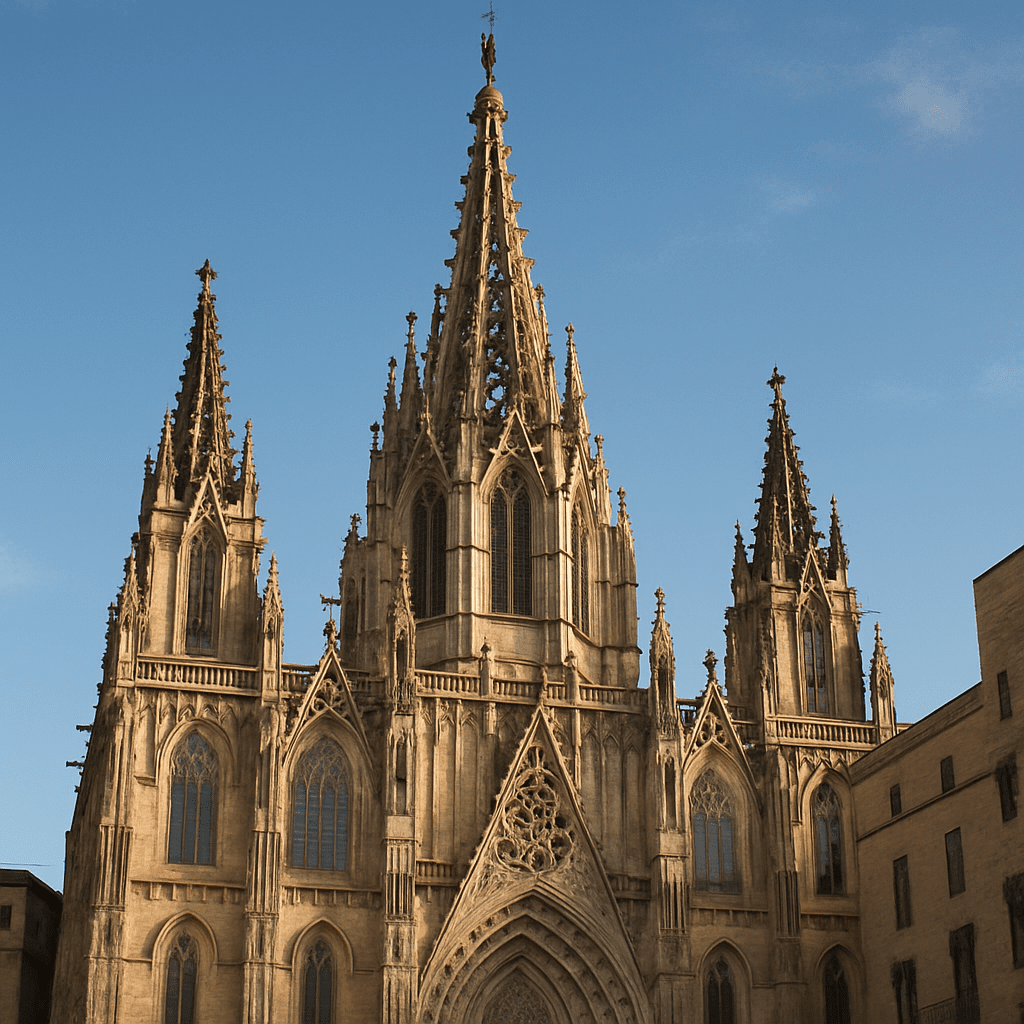
The Barcelona Cathedral is a masterpiece of Gothic architecture. It stands majestically in the heart of the Gothic Quarter. This impressive structure attracts millions of visitors annually.
The cathedral is also known as the Cathedral of the Holy Cross and Saint Eulalia. It is an important religious center in Barcelona. Its history dates back to the 13th century.
Construction began in 1298 and lasted into the 15th century. However, the facade was not completed until the 19th century in the Neo-Gothic style. This long construction period reflects Barcelona's eventful history.
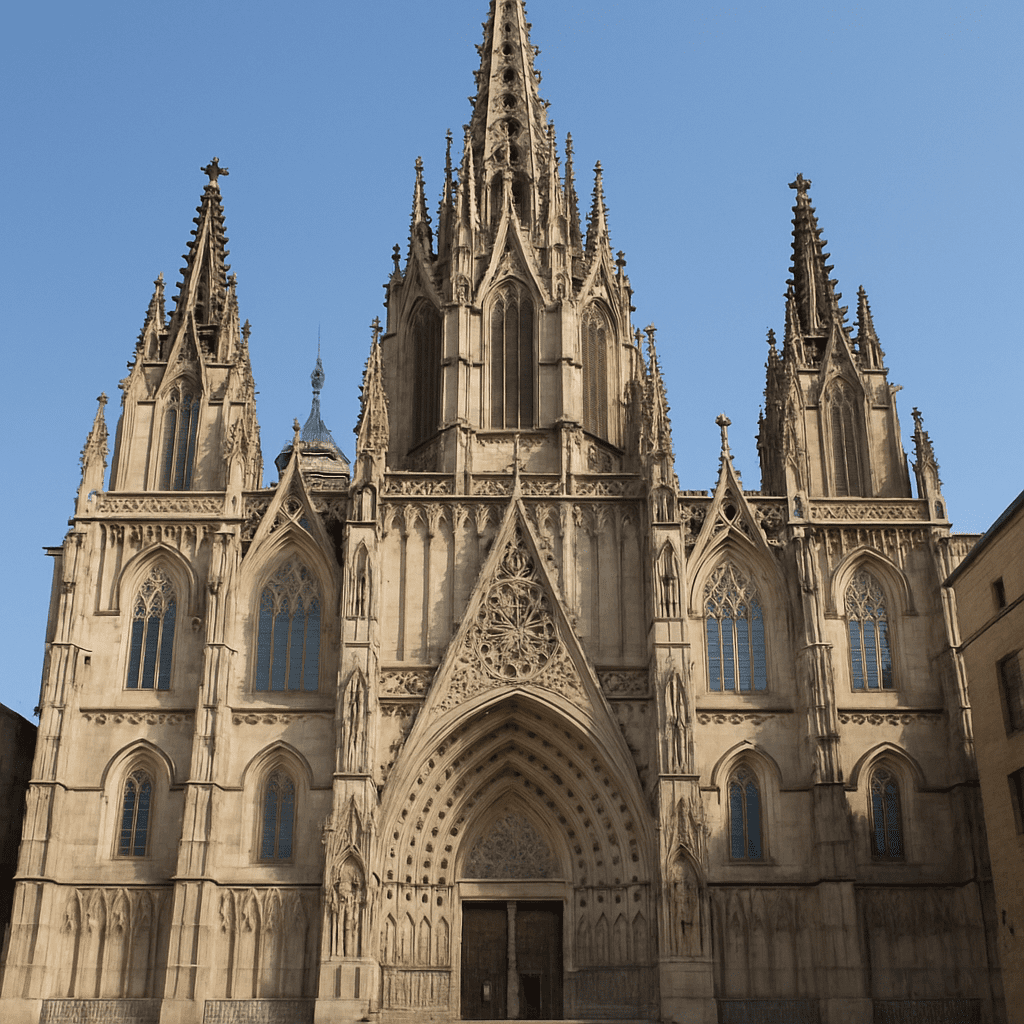
The cathedral is a symbol of Gothic art in Catalonia. It is an outstanding example of medieval craftsmanship. Its Gothic ribbed vault is particularly impressive.
The crypt of the cathedral houses the remains of Saint Eulalia. She is one of the patron saints of Barcelona. This connection to Saint Eulalia gives the cathedral special spiritual significance.
The cathedral cloister is famous for its 13 geese. These symbolize the years in the life of Saint Eulalia. This legend attracts many visitors who want to learn more about the history.
The Barcelona Cathedral is a UNESCO World Heritage site. It is a must-see for any visitor to the city. Its cultural and religious significance is undeniable.
The cathedral is not just a place of worship. It is also a place of peace and reflection. Amidst the bustling city, it offers a sanctuary for believers and tourists alike.
The Cathedral of Barcelona: An Overview
The Barcelona Cathedral is an architectural gem in the heart of the Spanish metropolis. It is located in the heart of the Gothic Quarter, one of the oldest and most historically significant parts of the city. This quarter is known for its narrow, winding streets and medieval buildings, which create a unique, almost magical atmosphere.
The cathedral itself is an outstanding example of Gothic architecture. Its impressive towers and elegant pointed arches rise majestically into the sky. Visitors to the cathedral can observe the fascinating play of light and shadow created by the artfully designed stained glass windows inside.
The cathedral serves as the seat of the Archbishop of Barcelona. It is a significant religious center where masses and other religious ceremonies are regularly held. It is a place of deep spiritual significance for both locals and visitors.
The cathedral's facade, completed in the 19th century in the Neo-Gothic style, stands out impressively from the surrounding buildings. It gives the cathedral a very special appearance and immediately catches the eye of passersby. The artfully designed details and rich embellishments are a testament to the craftsmanship of the builders of that era.
Another remarkable feature of the cathedral is its roof, which offers a breathtaking panoramic view of the city. From here, one can see both the modern and historical aspects of Barcelona, experiencing the unique fusion of past and present in this vibrant city. The Barcelona Cathedral is undoubtedly an essential part of Barcelona's attractions. It seamlessly combines religious tradition with historical significance and architectural heritage.
Historical Background: The Genesis of the Cathedral
The Cathedral of Barcelona has a fascinating origin story that dates back to the Middle Ages. Construction began in 1298 under the reign of King James II, also known as James the Just. He commissioned the construction of a grand cathedral to underscore the growing religious significance and influence of Barcelona.
The construction of the cathedral took several centuries and was finally completed in the 15th century. The lengthy construction phase reflects the dynastic and political turmoil of the time, which impacted progress. Nevertheless, the final result shows impressive continuity and faithfulness to the original Gothic style.
Throughout its history, the cathedral has undergone numerous expansions and restorations. One of the most significant changes occurred in the 19th century. The Neo-Gothic facade was added to harmoniously complement the existing structure. These changes made the cathedral the striking landmark it is today.
The location of the cathedral is no coincidence. It stands on the remains of an early Christian basilica and a later Romanesque church, which in turn was built on a Roman temple. These layers of spiritual structures point to the long and diverse history of the site.
Important Milestones of the Cathedral
- 1298Groundbreaking under King James II.
- 15th centuryCompletion of the main building
- 19th centuryAddition of the neo-Gothic facade
- 1969: Designation as a historical monument
- 1992Restoration work on the occasion of the Olympic Games in Barcelona
The Barcelona Cathedral is not only an architectural masterpiece but also a testament to the political and religious history of Catalonia. It embodies the influences of various eras and stands as a symbol of permanence in an ever-changing world. This blend of religious heritage and historical evolution makes it a remarkable landmark and one of the most important sights in Barcelona.
Architecture and Art: Gothic in its Most Beautiful Form
The Barcelona Cathedral is an extraordinary example of Gothic architecture. Its designs and structures highlight Gothic art in Catalonia. The cathedral impresses with intricate details and magnificent embellishments, which can be admired both externally and internally.
From the outside, the cathedral impresses with its imposing facade. Particularly striking are the artful gargoyles and the numerous Gothic towers that elegantly stand out against the sky. These architectural elements masterfully combine function and aesthetics.
Inside, the building captivates with its tall, narrow naves and countless stained-glass windows. The windows let in colorful light, creating a special atmosphere in the Gothic halls. Many of these windows are decorated with biblical scenes and tell stories from Holy Scripture.
The cathedral also houses a remarkable collection of artworks. Particularly noteworthy are the altars, each of which is a work of art in itself. They are elaborately decorated and depict scenes from the life of Jesus Christ. These artworks were created by master hands and are an expression of the deep faith of medieval society.
Another highlight is the impressive Gothic cross-ribbed vault that adorns the ceiling. This special construction method is not only an architectural masterpiece but also a testament to the craftsmanship of that era. The precise, well-thought-out lines of the vault reflect the complexity and elegance of Gothic architecture.
Architectural features include:
- Soaring, Gothic Towers
- Elaborate gargoyles
- Colorful stained glass windows with biblical depictions
- Magnificent altars
- A magnificent ribbed vault
The art and architecture of the cathedral are not merely an expression of the artistic skill of its builders. They also illustrate the deep religious connection of the society at the time, which is evident in both the love of detail and the monumental design of the church.
The Cathedral of Barcelona stands as a monument to Europe's Gothic era. It showcases how the fusion of architecture and art can not only inspire religious devotion but also serve as a mirror to the cultural and artistic endeavors of an entire epoch. This combination makes the cathedral an unforgettable experience for visitors from all over the world.
The Holy Eulalia and her Significance
The Barcelona Cathedral is not only named after the Holy Cross but also after Saint Eulalia. Eulalia of Barcelona is one of the city's patron saints and an important figure in Catalan history and church.
Eulalia, who lived in the early 4th century, was known for her strong Christian faith, which she did not deny despite severe persecution. According to legend, she was martyred as a young girl during the reign of the Roman Emperor Diocletian. Her steadfast refusal to renounce her faith led to terrible punishments.

by Shino Nakamura (https://unsplash.com/@shinonk)
The significance of Saint Eulalia extends far beyond her role as patron saint. Her story has inspired generations, embodying courage and devotion. Her relics now rest in the cathedral's crypt, making the church an important pilgrimage site.
Every year in February, Barcelona celebrates the festival honoring Saint Eulalia. These festivities are an expression of deep reverence and cultural traditions. The celebrations unite religion and community, attracting visitors from near and far.
Eulalia's heritage in the cathedral is not only shaped by historical and religious aspects. It also represents the identity and spirit of Barcelona's faith. The strength and faith of the city, which are still palpable today, are reflected in its history.
The Cloister and the 13 Geese: Symbolism and Legends
The cloister of Barcelona Cathedral is a masterpiece of Gothic architecture. It lends the building an aura of peace and contemplation. A walk through this area reveals not only artistic brilliance but also deep symbolism.
Particularly fascinating are the 13 geese that live in the cloister. These geese represent Saint Eulalia's age of 13 years before she suffered martyrdom. They are not only symbols of purity and innocence but also a reminder of the deep connection between faith and tradition in Barcelona.
The presence of geese is shrouded in numerous legends that enrich the city's cultural heritage. Among other tales, it is said that Eulalia herself escaped disguised as a goose to evade her pursuers. This strengthens the close relationship between local history and the myths that shape the place.
The following list includes some of the notable aspects:
- The geese symbolize the number of years of Saint Eulalia's life.
- You are an integral part of the Cathedral's traditions.
- Their stories are attributed mystical and historical significance.
The cloister, with its geese, is not just a visual delight. It is also a living part of Barcelona's spiritual and cultural identity. This blend of architecture, nature, and history captivates visitors, making the cloister an indispensable part of a cathedral visit.
The Cathedral Today: Religious Center and Tourist Magnet
The Cathedral of Barcelona has made a name for itself over centuries. Today, it is both an active religious center and a popular tourist attraction. Thousands of visitors flock to this structure daily to experience its beauty and spiritual significance.
As the seat of the Archbishop of Barcelona, the cathedral serves as the focal point for religious ceremonies. Masses and solemn occasions are regularly held here, attracting worshippers from across the region. This continuous use as a place of worship underscores its ongoing significance in the city's religious life.

by Nader Saremi (https://unsplash.com/@nssaremi)
The cathedral is not just a religious site, but also a cultural meeting point. Its rich history attracts people interested in the fusion of art, architecture, and faith. This combination makes the cathedral a fascinating destination that imparts not only spirituality but also knowledge.
A highlight for many visitors is the panoramic view from the cathedral's roof. From here, visitors can enjoy a breathtaking view of the city. This perspective offers another reason to experience the cathedral as a significant sight in Barcelona.
Furthermore, the cathedral houses an impressive collection of artworks and religious artifacts. These exhibits document the rich history and cultural diversity of the region. Thus, the Barcelona Cathedral remains an essential part of the city's travel experience, for both pilgrims and history enthusiasts.
The Cathedral of Barcelona and Sagrada Familia: Two Landmarks Compared
Barcelona is home to some of the most impressive architectural masterpieces in the world. Two of these outstanding structures are the Barcelona Cathedral and the Sagrada Familia. Both are significant landmarks that reflect the city's history and spirit in their own unique ways. However, despite their shared functions as churches, they differ in many aspects.
The Cathedral of Barcelona, also known as the Cathedral of the Holy Cross and Saint Eulalia, is a masterpiece of Gothic architecture. Built between the 13th and 15th centuries, it reflects the religious and cultural traditions of its time. Its neo-Gothic facade was added in the 19th century. This long history makes it a living embodiment of Barcelona's medieval past.
In contrast, the Sagrada Família is a prime example of modern architecture. Designed by Antoni Gaudí, construction began in 1882 and remains unfinished to this day. This basilica combines Gothic and Art Nouveau elements and is often considered Gaudí's masterpiece. It symbolizes Barcelona's artistic renewal and creative ambitions in the 19th and 20th centuries.
Here are some of the main differences between the two landmarks:
- Architectural style:
- Barcelona Cathedral: Gothic with Neo-Gothic Additions
- Sagrada Família: A Unique Blend of Gothic and Art Nouveau
- Completion:
- Barcelona Cathedral: Completed in the 15th Century
- Sagrada Família: Still Under Construction and Unfinished
- Architect:
- Cathedral of Barcelona: Various Medieval Master Builders
- Sagrada Família: Antoni Gaudí and His Successors
Both structures are central points on Barcelona's list of attractions. Barcelona Cathedral offers an insight into medieval art and ecclesiastical power, while Sagrada Familia embodies the innovative spirit of a modern metropolis. Together, they represent the city's rich cultural heritage and architectural diversity, attracting visitors from all over the world.
Practical Tips for Visitors
The Barcelona Cathedral is a must-see for anyone visiting the city. To get the most out of your experience, it's worth knowing a few practical details in advance. The cathedral is open daily, but opening hours may vary depending on the day of the week. Therefore, plan your visit carefully, especially during peak season.
One of the highlights is the breathtaking view from the cathedral's roof. This panoramic view of Barcelona is unparalleled, so you shouldn't miss this opportunity. Entry to the cathedral is often free, but there is a fee for access to the roof and certain attractions inside. Wearing comfortable shoes is advisable, as the climb can be strenuous.
Here are some practical tips for your visit:
- Dress codeAppropriate dress is a must. Shorts and strapless tops are not allowed.
- Operating hoursCheck the varying opening hours, especially on public holidays.
- Tickets in advanceConsider buying tickets in advance to avoid long queues.
In addition, you shouldn't miss some of the special events. For example, it's worth visiting during a fair or a concert to experience the impressive acoustics. Also, don't miss the contemporary exhibitions that often take place in the cathedral's museum. The fascinating mix of history, art, and music makes the cathedral an unforgettable experience.
Conclusion: The Cathedral as the centerpiece of Barcelona's sights
The Barcelona Cathedral is far more than just a structure of stone and glass. It embodies the soul of the city and is a living testament to its rich history. This Gothic beauty stands at the heart of Barcelona, not only geographically but also culturally and spiritually. It tells the story of a city that has evolved over centuries and continues to flourish.
As one of Barcelona's most outstanding sights, the cathedral attracts numerous tourists from all over the world. Its impressive architecture and artfully designed interior make it an unforgettable experience. Visitors come not only to admire its fascinating details but also to immerse themselves in its peaceful and sublime atmosphere. The cathedral remains an important place for believers who find solace and inspiration here.
Compared to the city's other iconic structures, like the Sagrada Família, the Barcelona Cathedral possesses its own distinct charm. It beautifully blends the old with the new, inviting visitors to explore the deep connection between past and present. Anyone visiting Barcelona absolutely should not miss a visit to the Cathedral. It is the centerpiece of Barcelona attractions and a symbol of the city's vibrant history and culture.