

We are all familiar with those massive urban buildings that resemble stone fortresses – much like the familiar main train station you hurry past in the morning. However, some structures are far more than just impressive backdrops; they form the beating cultural heart of a metropolis. Historical records, for instance, reveal that Madrid's famous opera house was not always a place of fine melodies, but even served as an explosives magazine in past times of crisis.
Today, with its velvet seats, the Teatro Real often makes classical music seem like an inaccessible, elitist world. However, don't be intimidated by its majestic appearance, as the grandeur of its architecture serves a deeper purpose: it reflects Spain's long search for its own cultural identity. Like a person whose true character is shaped by setbacks, this theater stands as a tangible symbol of Madrid's remarkable resilience.
No one needs to be a studied expert in art and culture to understand this lively development. On our journey through the 200-year past of this landmark, you will quickly realize that the doors to the opera world are wide open to everyone today.
From Swamp to Palace: Why Madrid Waited 32 Years for its Opera House
Sometimes the most magnificent places emerge where you least expect them. When we stand before the majestic Teatro Real in Madrid today, we have no idea that this spot was once a muddy swampland. Just as modern cities enhance entire neighborhoods with new concert halls today, the Spanish state already used culture back then as a deliberate driver of urban development. An unsightly eyesore was to become the shining center of European music.
However, such a tremendous change rarely happens without drama. The creation of this landmark is a perfect example of how much architecture depends on power and money. Between the first groundbreaking in 1818 and the opening in 1850, the major project struggled with three massive hurdles:
- Empty state coffers: Due to the aftermath of wars, there was simply no budget, which caused the construction site to be completely idle for years.
- Political unrest Constant changes in government meant that no one wanted to take responsibility for the expensive planning.
- Lack of leadership Queen Elizabeth II herself rescued the project as a royal patron—much like an influential investor today who forces a struggling startup to succeed with her vision and resources.
Isabel's iron will finally transformed the swamp into a palace, forever shaping the Madrid skyline. But when a state creates such a monument, one question remains: high culture or popular culture? How the Teatro Real bridges the gap between the elite and the public is shown in its further development.
High Culture or Everyday Culture? How the Teatro Real Bridges the Gap Between Elite and Public
For a long time, opera was considered an exclusive club for the wealthy in formal evening wear. Today, however, the classic distinction between high culture and everyday culture is increasingly blurring. Major opera houses like the Teatro Real are actively working to democratize their audiences and shed the stigma of being purely an elite pastime. You no longer need to dress up for a visit; dark jeans or clean sneakers have long been perfectly acceptable.
Just as accessible access to museums and galleries is socially encouraged today, there are also clever ways into the audience for the seemingly unaffordable opera. Here are three practical tips for an affordable visit:
- Last-minute tickets Many renowned theaters sell leftover tickets at the box office with enormous discounts, often specifically for young adults or students.
- The „Opera Week“: Look out for urban cultural festivals where institutions offer performances for a fraction of the regular price.
- Public dress rehearsals: You can often attend the final dress rehearsal before the big premiere and enjoy the same world-class music in a very relaxed atmosphere.
Once the psychological hurdle of incorrect etiquette or an overly tight budget is overcome, room is left for the actual experience. The lights dim, the orchestra begins, and the magic starts. This brings us directly to the goosebump effect: why classical music and aesthetics enhance our psychological well-being.
The Goosebump Effect: Why Classical Music and Aesthetics Enhance Our Psychological Well-being
It's a familiar moment: a powerful chord rings out, and suddenly the hairs on your arms stand on end. This goosebumps effect from live music isn't just in your head; it's a measurable physical reaction. When the acoustic perfection of an orchestra hits us, the brain releases happiness hormones like dopamine. Unlike listening to a simple playlist, the sheer physical presence of the instruments creates a deep emotional connection that completely blocks out everyday stress for a few hours.

But it's not just our ears that benefit from a cultural visit, as our surroundings shape our inner selves. So-called neuroaesthetics investigates precisely this phenomenon: how our brain reacts to beauty. When we look at magnificent ceiling paintings, our cortisol levels measurably decrease. This positive influence of aesthetics on psychological well-being proves that an artful space functions as a visual haven for the mind. There is a direct aesthetic-psychological correlation, where the mere sight of harmonious architecture releases our inner tension.
Anyone who regularly immerses themselves in these immersive worlds actively strengthens their mental health. The role of the performing arts in personality development is immense, as they playfully teach us empathy. At the same time, the promotion of creativity through active artistic engagement in our minds – for instance, when we mentally participate in a story – leads to greater resilience. Thus, all these splendid settings and orchestras have a measurable societal value. This inevitably raises a practical question: Who actually pays for all this pomp?
Who Pays for the Pomp? Patronage and State Funding in the 21st Century
If we ask ourselves who actually keeps this opulent operation running, a simple comparison helps: culture is a public good, similar to our roads or schools. The question often arises: How does the state sustainably promote cultural education? The answer can be found by looking behind the scenes of major institutions like the Teatro Real in Madrid. There, they no longer rely solely on tax revenue but utilize a clever mix of different funding sources.
This modern financing model functions as a type of public-private partnership and rests on three essential pillars:
- Government Grants Tax revenues form the financial foundation of the operation.
- Ticket sales: The visitors pay directly for their evening experience.
- Private lenders Here, modern models of patronage and private cultural funding intertwine. A patron is comparable to today's Kickstarter backer, just on a grander scale. These are companies or wealthy individuals who, out of passion for the arts, bridge the budget gaps that the state cannot cover alone.
But why do businesses and governments invest millions in a stage? The reason is the enormous economic „return on investment,“ meaning the indirect profit for the region. A well-attended opera house incidentally fills the city's surrounding restaurants, hotels, and taxis. Furthermore, local cultural projects noticeably increase social cohesion because shared experiences connect people. But what happens if we can't even go to the theater? The solution lies in digital transformation, which raises the curtain directly in front of our couch.
Opera in the Living Room: How Digitalization and Virtual Exhibitions Are Revolutionizing Theater
The feeling of comfortably streaming a new series on the sofa in the evening is familiar to all of us. This very principle of effortless availability has now also reached the grand opera houses. When we weigh analog against digital art forms, it's no longer about replacing the genuine live experience. Rather, the Teatro Real is opening its golden gates to the entire world by broadcasting premieres directly to our home screens – a fascinating democratization of art that requires neither an expensive plane ticket nor formal evening wear.
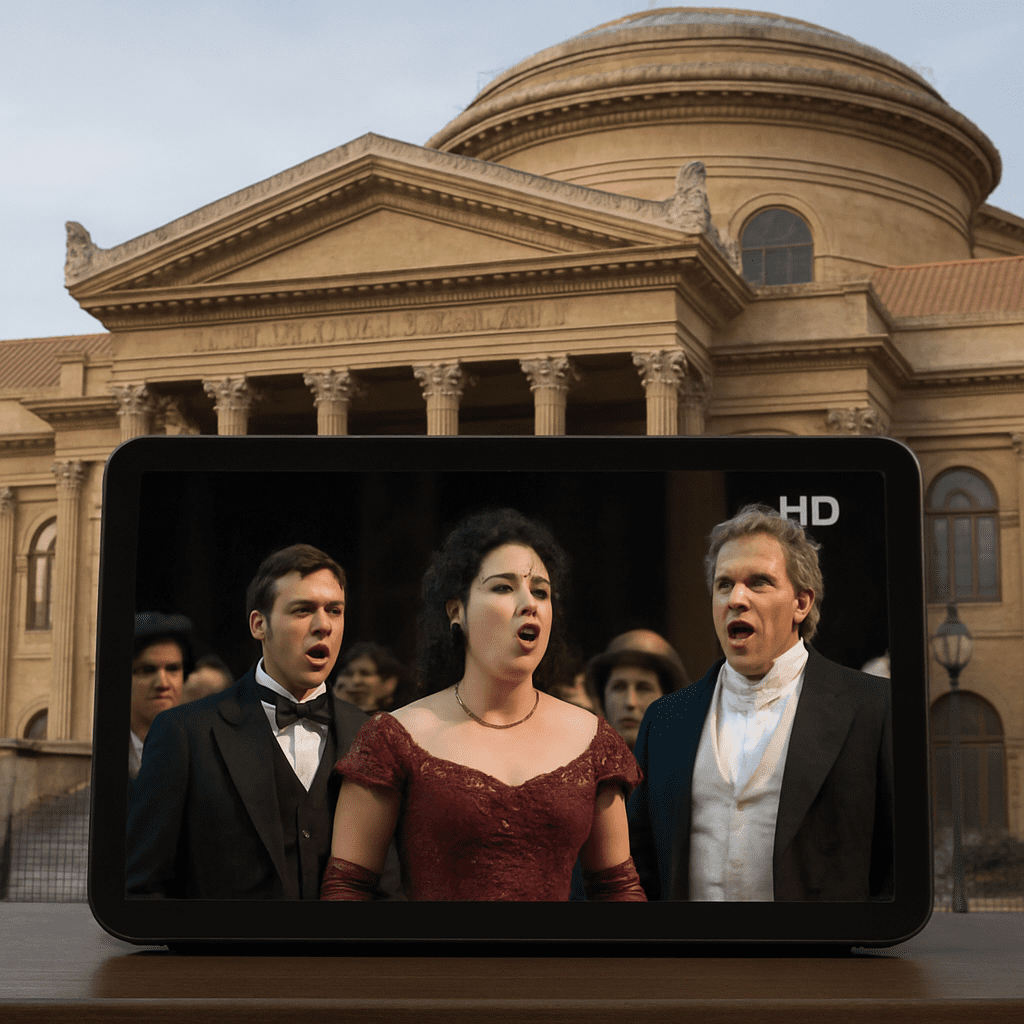
Such platforms are far more than simple video recordings. Through the digitalization of museums and virtual exhibitions, you can now navigate through magnificent settings with a tablet in hand and almost look over the artists' shoulders. These high-resolution formats capture fine details of costumes and facial expressions that often remained hidden even from the front row in the theater.
Furthermore, this modern technology preserves our shared history. Often, the question is discussed: Why is intangible cultural heritage worth protecting? Because singing techniques, centuries-old melodies, and special performances are fleeting, unlike an oil painting. A digital archive permanently freezes these lively, fleeting moments and protects them from being forgotten. This paves the way for you to become part of this global audience yourself. Curtain up for your first visit: Experience culture without barriers or prejudice.
Curtain up for your first visit: Experience culture without barriers or prejudice
Standing before a majestic opera house no longer needs to be intimidating. You now realize that the Teatro Real is far more than an elite stage; it's the beating heart of Madrid's „Landscape of Light.“ Places like this meet the strictest UNESCO World Heritage criteria for heritage protection, not to be locked behind glass, but to keep our shared history accessible and alive for everyone.
Your perfect introduction to the world of fine arts and classical performances can now be easily integrated into everyday life. This simple three-step plan makes getting started easy:
- Research a story: Beforehand, choose just one fascinating anecdote about the play.
- Find a „Budget“ Evening: Take advantage of discounted preview performances to experience top culture without financial pressure.
- Just go: Forget rigid rules, step inside and let the atmosphere wash over you like good music.
When you enter cultural sites with this open curiosity, you immediately feel the true meaning of custom in modern society. You are now perfectly equipped to enjoy cultural experiences lightheartedly and to the fullest.