

Imagine stepping into a house where the walls feel as unyielding as rock, while sunlight streams through the open spaces almost like water. Many are familiar with this captivating backdrop in connection with Money Heist Raquel Murillo, but the real Murillo House is far more than just a dramatically lit series set.
We often perceive modern architecture as cold or uninviting due to the dominance of bare concrete and abundant glass. However, according to architectural psychologists, this particular building proves the opposite by transforming raw building materials into pure comfort. Here, we experience true minimalism as a living sensation, where the conscious renunciation of the superfluous does not feel like a loss but rather liberates the mind and noticeably brightens our everyday mood.
The key to this inviting effect lies in so-called programmatic design. Behind this term is the simple idea that the architecture does not impose itself on the outside, but is precisely oriented towards the daily actions of the people inside. Instead of forcing us into rigid spaces, the house subordinates itself to our real lives, thus masterfully separating a mere backdrop from a truly functional home.
Why Exposed Concrete and Brutalism Define the New Coziness
Imagine a living room wall that carries the gentle grain of wood, but is solid as a rock. That's Raw Concrete, also exposed concrete, which remains completely unpolished after casting. Although it appears Brutalist residential design In conception, often cool. But in reality, the rough textures capture the incoming sunlight and create an earthy, unexpected coziness in everyday life.
Behind this strong aesthetic is a physical principle that noticeably increases your living comfort: thermal mass. Similar to a classic tiled stove, concrete acts as a giant heat sponge. It absorbs heat during the day and slowly releases it at night. When you look at Traditional masonry versus modern concrete, the massive concrete evens out these daily temperature fluctuations much more efficiently than ordinary brickwork.
Such a home not only looks good, it actively works for you. Modern Sustainable concrete house construction methods use this natural storage capacity very specifically. For the daily room climate, raw exposed concrete offers three tangible advantages:
- It stores free solar energy and heats the house in the cool evening hours.
- In the height of summer, the spacious rooms remain pleasantly cool, entirely without a loud air conditioner.
- The constant temperature of the thick walls stabilizes the climate and prevents unpleasant drafts.
However, the best material alone is often not enough to truly bring rooms to life. For raw concrete to unfold its full magic, it needs light and shadow. If large window fronts are missing, clever architectural solutions are required. This inevitably leads us to the question of how to master highlights on narrow plots through the art of vertical openings.
Glimpses of light on narrow plots: the art of the vertical opening
What happens when you want to build your dream home on a plot of land that's barely wider than a driveway? In densely populated cities, narrow spaces often feel suffocating because direct sunlight is blocked by neighboring buildings. The architectural answer for the Maximizing natural light in narrow plots but rather to bravely lift one's gaze upwards, not to desperately search the pages.
This is where the so-called light well principle comes into play, where a central atrium functions like a luminous funnel. Instead of providing conventional exterior walls with small windows, the architect carves out a vertical open space through all floors of the house. Daylight streams unimpeded from the sky all the way down to the ground floor, transforming the cramped, formerly dark zones into bright, breathable living areas.
To optimally distribute this gained brightness, modern designers rely on differences in height instead of solid partition walls. A fascinating tool for this is the cantilever – a level that, like a diving board at a swimming pool, is anchored only on one side and appears to float in space. Such floating structures allow for a fluid Open floor plan design for small footprints, as they structure living and dining areas without blocking valuable light flow.
When open levels and vertical lighting interlock so intelligently, entirely new Spatial layout strategies for multi-story living, where even the smallest floor plans feel spacious. But this light-flooded architecture demands coverings that protect the home from extreme temperatures without shutting out the light again. How to master this delicate balance leads us directly to elevated elegance: insulation and efficiency for large glass facades.

Elevated Elegance: Isolation and Efficiency with Large Glass Fronts
Often we think good insulation means simply wrapping oneself in thick walls. However, with wide views, clever Thermal efficiency of floor-to-ceiling windows the solar heat gain is often more crucial than the pure insulating power of the wall. The enormous glass surfaces capture the winter sun like a magnifying glass and use it as a natural heater, whose rays penetrate deep into the room and pleasantly warm the massive floors.
To prevent this free heat from escaping back into the icy air at night, an invisible technology comes into play. An argon insulation – a heavy gas that acts like a thick down comforter and slows down heat exchange – is situated between the individual panes of glass. At the same time, thermal separation in the window frame prevents frost from creeping inside via the cold metal. This high-altitude building insulation techniques simply interrupt the path of the cold through an invisible plastic core that serves as a bridge blocker.
A look at the Modern residential architecture in Bolivia demonstrates particularly impressively how residential buildings in extreme, cold high-altitude regions can survive using these principles. The following checklist for energy-efficient glass facades illustrates the necessary interplay:
- Triple glazing with an insulating argon filling.
- Window frames with strict thermal separation against cold bridges.
- Precise alignment of the main windows towards the sun to maximize heat gain.
Such thoughtful enclosures transform even inhospitable locations into comfortable refuges for humans. However, while this high-tech glass gently shelters us from the weather, the ground beneath the house demands far more robust lines of defense. How a building with such large windows remains standing unharmed when the earth itself begins to shake leads us directly to the next structural challenge.
Earthquake-Resistant Luxury: The Invisible Strength of Modern Villas
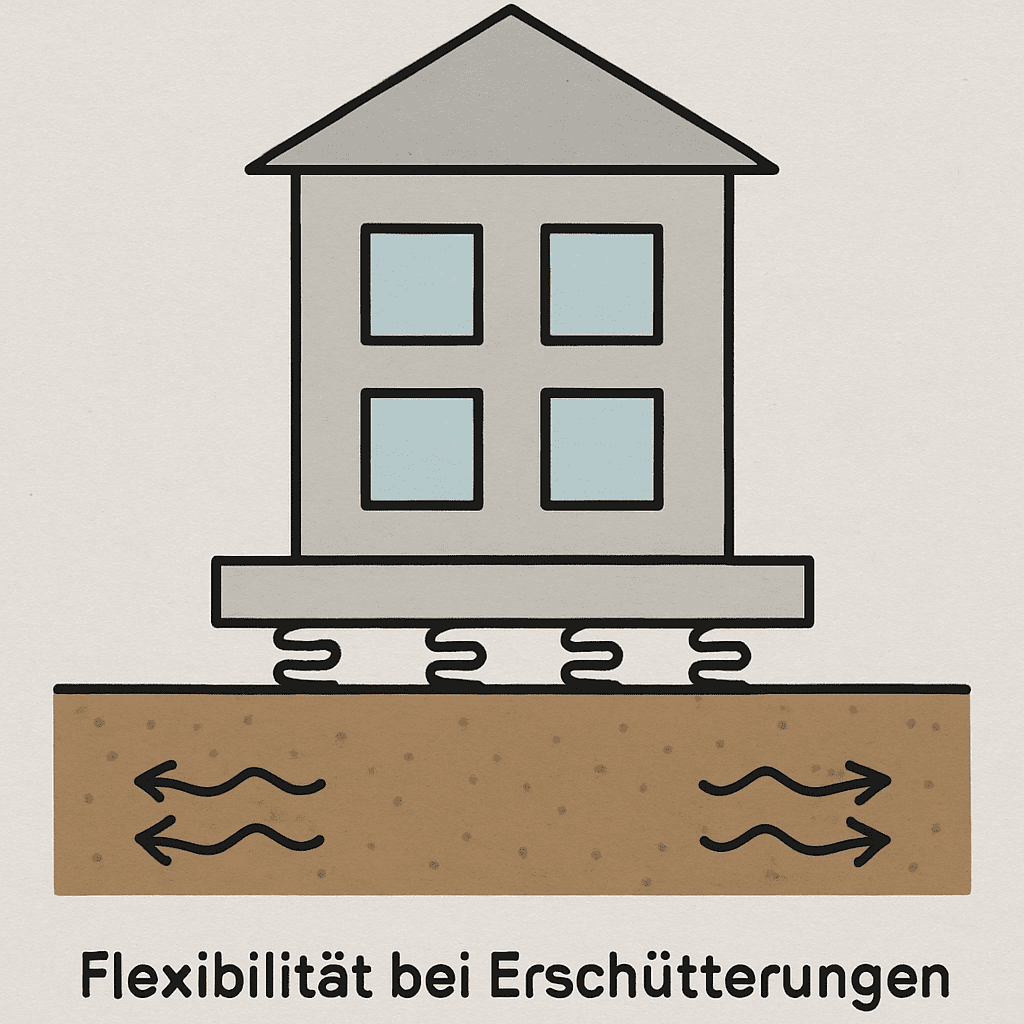
When the ground suddenly begins to shake beneath your feet, it is precisely the rigidity of massive, traditional stone walls that proves fatal: they cannot yield to the enormous forces and crack like a brittle teacup. From the Building earthquake-resistant luxury residences Architects therefore had to rethink fundamentally and abandon the illusion that pure mass automatically means safety. Modern designs, on the other hand, focus on targeted flexibility.
The key lies in the so-called skeleton construction – a framework of columns and beams that supports the building like a human skeleton. Correspondingly, Contemporary South American architectural styles This scaffolding is often cast from concrete with a hidden network of flexible steel rods inside. This steel gives the hard material its „ductility“, a life-saving deformability. This allows the house to bend slightly during sudden tremors like a strong tree in the wind, instead of breaking immediately.
This invisible force deep within the structure simultaneously frees the entire architecture, which, when Luxury apartment living versus single-family homes also proves to be an advantage. Since the exterior walls no longer have to support a heavy roof load, they can be completely replaced by the aforementioned wide glass fronts. The pure statics here become a visible design element instead of a hidden protective shield, which allows for light-flooded, open spaces in the first place. How this clever symbiosis of safety and lightness can be used for your own home is shown by your path to a minimalist living dream: Lessons from the Murillo House.
Your Path to a Minimalist Dream Home: Lessons from the Murillo House
What if the living room didn't consist of four walls, but of three walls and a boundless view? The Murillo House is an active experience that shapes our sense of space. The most profound lesson of this building lies in the power of reduction to the essential. It doesn't take a huge footprint to live well; it simply takes a space that values natural light and functional design.
These principles can be directly applied to one's own environment. Whether for urban renovation projects in La Paz or the redesign of one's own apartment: the secret is authenticity. Those who find the courage to leave surfaces „raw“ – and invest in high-quality interior materials for modern architecture, such as natural wood – can significantly increase the visual impact of a space.
The design of minimalist, urban living spaces is best achieved in a structured way. These five planning steps will help:
- Reduce visual clutter so that natural light becomes the main decoration.
- Expose a raw surface, like unpainted wood, to create authentic warmth.
- Arrange seating to frame a window and showcase the view like a work of art.
- Limit colors to natural tones that highlight the textures of the materials.
- Pull furniture slightly away from the walls to give the room breathing room.
Take the first step and watch the atmosphere in the room instantly change. With each instance of simplicity taking hold and the superfluous giving way, the everyday home further transforms into a grounded, peaceful retreat.