
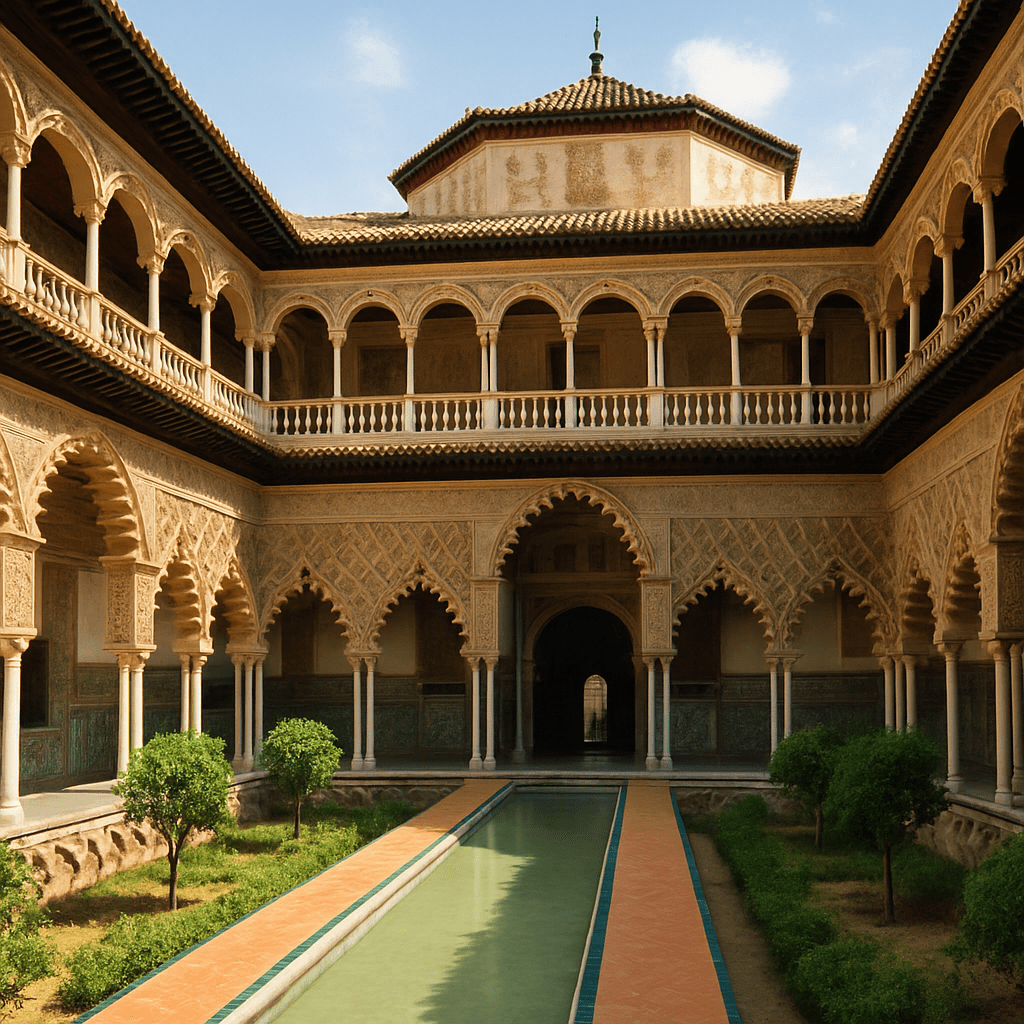
The Royal Alcázar of Seville is a true jewel of Spanish architecture. It is not only an impressive example of Moorish craftsmanship but also a living testament to the rich history of Andalusia. As a UNESCO World Heritage site, it attracts thousands of visitors annually who wish to experience its beauty and cultural significance.
This palace complex, originally built as a Moorish fortress in the 10th century, has undergone many transformations over the centuries. Each era has left its mark, resulting in a fascinating blend of Islamic, Gothic, Renaissance, and Baroque elements. This architectural diversity makes the Alcázar a unique place that reflects the cultural fusion in Andalusia.
The Alcázar is not only an architectural masterpiece but also a place of peace and beauty. Its ornate gardens and courtyards invite visitors to linger and offer an oasis of relaxation amidst the bustling city of Seville. Particularly the Patio de los Leones, one of the most famous courtyards of the palace, captivates visitors with its intricate design.
Besides its architectural splendor, the Royal Alcázar is also a place of vibrant history. It served as a residence for various kings and was the scene of significant historical events. Today, it is a popular tourist destination and a must-see for any visitor to Seville who wants to experience the grandeur of bygone eras.
The palace has also found its place in modern pop culture. It served as a filming location for the famous series „Game of Thrones,“ which further increased its recognition. The Royal Alcázar of Seville is thus not only a historical site but also a source of inspiration for artists and filmmakers worldwide.
History of the Royal Alcázar of Seville
The Royal Alcázar of Seville has a long and fascinating history, deeply rooted in Andalusia's past. Originally built as a fortress by the Moors in the 10th century, it served as a symbol of power during a time of intense cultural and religious tension. This early phase of its history is still reflected today in the complex's Moorish architecture.
Over the centuries, the Alcázar underwent numerous extensions and renovations, transforming it into the artful palace we know today. One of the most significant renovations took place during the reign of Peter I of Castile in the 14th century. Peter had the palace remodeled in the Mudéjar style, which combines Christian and Islamic architecture. This period was characterized by a unique cultural fusion that made Andalusia a center of artistic and architectural innovation.
During the reign of the Almohads and later the Christian kings, the Alcázar became an important political and religious center. The Christian kings used the palace for diplomatic gatherings and as a royal residence. This connection to significant historical events is a fundamental reason for the Alcázar's current status as a UNESCO World Heritage site.
In the 16th and 17th centuries, further architectural changes occurred, introducing Renaissance and Baroque elements into the palace's design. These stylistic additions bestowed upon the Alcázar a harmonious aesthetic that visitors can still admire today. During this period, the Alcázar was not only a seat of power but also a cultural center where art and music flourished.
In the 20th century, the Alcázar was finally recognized as a historical monument, ensuring its preservation and protection. This recognition helped highlight the palace's significance as a cultural heritage of Spain. Today, the Alcázar stands as a symbol of Andalusia's history and culture, inviting visitors from around the world to immerse themselves in its rich past.
Important Eras and Renovations of the Alcázar:
- 10th centuryOriginally built as a Moorish fortress.
- 14th centuryRenovations under Pedro I in the Mudéjar style.
- 16th and 17th centuriesIntroduction of Renaissance and Baroque elements.
- 20th centuryRecognition as a historical monument and protection by UNESCO.
Architecture and Building Styles: A Unique Fusion of Cultures
The Royal Alcázar of Seville is an impressive example of architectural diversity and cultural fusion. It combines various styles from different eras, making it an architectural masterpiece. Its architecture is not only a testament to past rule but also a bridge between different cultures that met and exchanged ideas in Andalusia over centuries.
The original Moorish architecture of the Alcázar is characterized by detailed stucco work and intricate tile mosaics. These elements are typical of Islamic architecture of that era and offer insight into the technological and artistic expertise of the Moors. In particular, the Arabic inscriptions and geometric patterns distinguish the Alcázar from other palaces, giving it a unique identity.
In the 14th century, the Mudéjar style came to the forefront, representing a fusion of Islamic and Christian influences. This unique combination is visible throughout the Alcázar, evident in its intricate wooden ceilings, arcades, and décor. The Mudéjar style stands as a prime example of diverse cultures coexisting peacefully in this region and remains an essential component of Andalusian architecture.
With the rebirth of the Renaissance in the 16th century, architects integrated new elements that emphasized elegance and symmetry. These features complemented the palace's existing structure, creating a harmonious composition. This included ornamental facades and elaborate garden designs, reflecting the sophisticated interest in geometry and nature during the Renaissance period. Baroque accents were also added later, contributing to the palace's opulence.
The different styles are skilfully combined, creating a visual continuity that captivates the visitor. The Alcázar shows how architectural styles evolved over centuries, while simultaneously preserving their heritage. This continuous change tells a story of conquests, collaborations, and innovations. The Alcázar is therefore not just a building, but a living museum of history and architecture.
Key architectural features of the Alcázar:
- Moorish architectureStucco work, tile mosaics, Arabic lettering.
- Mudéjar styleCultural fusion, wooden ceilings, arcades.
- RenaissanceSymmetry, geometry, garden designs.
- BaroqueOpulent facades, decorative elements.
The most important palace areas and courtyards
The Royal Alcázar of Seville impresses with a variety of palace complexes and courtyards that reflect its rich history and architecture. Each area has its own significance and charm, captivating visitors. The rooms and courtyards of the Alcázar offer a glimpse into the lives and culture of past rulers, making it a fascinating place.
One of the highlights of the Alcazar is the Hall of Ambassadors or the Hall of Ambassadors. This magnificent room served as an audience hall and is known for its impressive dome and rich decoration. The golden dome lends the hall a majestic character that underscores the power and wealth of the kings. The walls are adorned with intricate arabesque patterns inspired by Islamic art.
The Courtyard of the Maidens, or the Courtyard of the Maidens, is one of the palace's central courtyards and a perfect example of the Mudéjar style. This courtyard is surrounded by a series of elegant columns and features a long, reflective water channel. The architecture is a fine fusion of Islamic and Christian styles, transporting the visitor to another era. Legend has it that this courtyard was once the scene of royal receptions and festive events.
Another noteworthy area is the Lion Court, or Court of the Lions. This courtyard is known for the lion statues that adorn the corners of the fountain. The courtyard connects different parts of the palace and offers a tranquil retreat to admire the intricate tilework and arcades. The symmetry and design of the courtyard invite you to pause and soak in the atmosphere.
Furthermore, it impresses with Hall of the Infants through its historical significance. This area contains numerous relics from different eras that offer a glimpse into royal life. The Sala de los Infantes is known for its intricate ceiling paintings and ornate woodwork, which exemplify the craftsmanship of the artisans of that time.
The Royal High Chamber is the private royal residential area of the palace and is only accessible to visitors on special guided tours. The rooms are rich in history and provide an impression of what the life of the royal family was like over the centuries. A visit to this exclusive area offers a special perspective on the royal traditions and heritage of the Spanish monarchy.
Important Palace Areas and Courtyards of the Alcázar:
- Hall of AmbassadorsImpressive dome, arabesque patterns.
- Courtyard of the MaidensMudéjar style, reflective water channel.
- Court of the LionsLion statues, ornate arcades.
- Hall of the InfantsCeiling painting, historical relics.
- Royal High Chamber: Private Royal Area, exclusive tours.
The Gardens of the Alcázar: Oases of Peace
The gardens of the Royal Alcázar of Seville are a breathtaking retreat that combines both history and nature. These gardens are not only a place of peace and beauty, but also a living testament to the architectural and landscaping sophistication of past centuries. Visitors can experience the connection between nature and culture here.
A walk through the Gardens of the Alcázar reveals the artful design of plants and water features, typical of Islamic garden art. Water features and small ponds are strategically placed to promote peace and tranquility. The gentle splashing of the water creates a peaceful atmosphere, disconnecting from the hustle and bustle of Seville.
The Garden of the Nymphs is one of the highlights, captivating with its mythological sculptures and well-tended flowerbeds. This area of the garden invites visitors to lose themselves in the world of ancient myths and to enjoy the splendor of nature. The colorful flowers and the scent of orange blossoms create a sensual experience that appeals to all the senses.
Another attraction is the Labyrinth Garden, a place full of mysteries and discoveries. It symbolizes the path of life with its confusing paths and unexpected turns. This garden area is ideal for families and offers fun and adventure for young and old alike. Getting lost in this labyrinth is a playful way to explore the splendor of royal garden art.
Besides these characteristic areas, the Maria de Padilla Baths as an impressive example of clever water management in the Alcázar. These underground water reservoirs, surrounded by shade-providing foliage, offer not only historical insights but also a cool retreat on hot summer days. The reflection of light on the water conveys a sense of peace and weightlessness.
The Cloister Gardens attract with an impressive selection of trees, including orange and pomegranate trees, which underscore the region's Mediterranean character. These gardens are perfect for a peaceful stroll or simply for sitting on a bench and enjoying the surroundings. They combine the vibrant history and natural beauty that make the Alcazar so unique.
Important Gardens of the Alcázar
- Garden of the NymphsMythical sculptures, blooming flowerbeds.
- Labyrinth GardenAdventurous trails, family fun.
- Maria de Padilla BathsHistoric water feature, cool retreat.
- Cloister GardensMediterranean trees, orange blossom scent.
The Alcázar as a UNESCO World Heritage Site
The Royal Alcázar of Seville has been a proud member of the UNESCO World Heritage List since 1987. This prestigious designation acknowledges the palace's exceptional cultural significance and rich history. Recognition as a UNESCO World Heritage site elevates the Alcázar to the status of an international cultural treasure, cherished for its remarkable architecture and historical importance.
The Alcázar is an outstanding example of the fusion of various architectural styles found within its walls. This fusion demonstrates the influence of Islamic, Christian, and Jewish cultures. The palace is a symbol of the peaceful coexistence and mutual influence of these cultures over the centuries. This cultural diversity and its associated history make the Alcázar a special heritage of humanity.
The recognition by UNESCO also helps to ensure the preservation and protection of this unique site. It ensures that future generations have the opportunity to experience the beauty and historical value of the Alcázar. UNESCO's support for conservation measures is crucial for maintaining the palace in its authentic state while promoting tourist accessibility.
Reasons for UNESCO World Heritage recognition:
- Cultural diversityIntertwining of Islamic, Christian, and Jewish influences.
- Architectural significanceUnique blend of styles from different eras.
- Historical significanceTestament to peaceful multicultural coexistence.
- Conservation measuresSupport for preservation and accessibility for future generations.
The Alcázar in Pop Culture: Filming Location and Inspiration
The Royal Alcázar of Seville has inspired not only historians and architects but also filmmakers and artists. Its impressive architecture and fascinating atmosphere make it an ideal filming location. One of the most famous productions that used the Alcázar as a backdrop is the popular television series „Game of Thrones.“ Parts of the series, particularly the scenes of Dorne's Water Gardens, were filmed in the beautiful gardens and courtyards of the Alcázar. This lent the series an authentic and majestic setting that enthralled viewers worldwide.
Not only series, but also films have discovered the Alcázar as a filming location. The unique scenery offers unparalleled visual splendor, attracting many filmmakers. In addition to films and series, artists and writers are also inspired by the beauty and historical richness of the Alcázar. Many works of literature and art are directly or indirectly influenced by the palace's charm and mysticism.
Famous Productions and Inspirations:
- „Game of Thrones“: Used as a backdrop for the Water Gardens of Dorne.
- Artistic inspirationInfluence on art and literature worldwide.
- Further film productionsPopular setting for historical and dramatic films.
Practical Tips for Visitors
A visit to the Royal Alcázar of Seville is an unforgettable experience. To make the most of your visit, good planning is important. As the Alcázar is one of the most visited attractions in Seville, it is recommended to purchase tickets online in advance. This not only saves time but also secures your access, especially during peak season. On the Alcázar's website, you will find various ticket options, including discounted rates for students and seniors.
To fully experience the impressive architecture and history of the Alcázar in all its depth, you should join a guided tour. These tours are offered in multiple languages and provide insights into the details of the Moorish and Gothic design. Alternatively, you can also use audio guides, which offer comprehensive information about the individual areas of the palace. Be sure to allow enough time to enjoy not only the palaces but also the spectacular gardens at your leisure.
Opening hours and best times to visit:
- Operating hoursThe Alcázar is open all year round, with the exception of some holidays. Typically from 9:30 AM to 5:00 PM.
- Best timesEarly morning or late afternoon are the best times to avoid crowds.
Regarding preparations, visitors should wear comfortable shoes. While the Alcázar is generally accessible, its extensive gardens and courtyards involve a fair amount of walking. Additionally, it’s advisable to bring a hat or sun protection, as the sun in Seville can be intense. However, many areas of the palace and gardens offer pleasantly shaded spots for rest and relaxation.
What not to miss at the Alcázar:
- Löwenhof (Lion Courtyard)One of the most famous courtyards with impressive architecture.
- Gardens of the AlcázarPerfect for relaxing and enjoying nature.
- Throne roomOne of the most magnificent rooms with historical artifacts.
When planning your visit, consider the weather forecast to make the most of your outdoor time. Months with less rain offer a better opportunity to experience the gardens in full bloom. Spring and autumn are particularly pleasant for visiting the Alcázar, as the weather is mild and agreeable.
The Alcázar is located in the heart of Seville and is easily accessible by public transport. Various bus lines and a tram stop nearby. If you are arriving by car, public parking is available in the surrounding area, but using public transport is recommended to avoid downtown traffic.
Another highlight is the souvenir shop at the palace exit. Here you will find unique mementos of your visit, as well as a selection of books and crafts that reflect the history and culture of the Alcázar. A little tip: Take your time to browse the offerings and choose a special souvenir to remember your visit.
Frequently Asked Questions about the Royal Alcázar of Seville
The Royal Alcázar of Seville is a fascinating destination. However, many visitors have questions before their visit, which we would like to answer here. This information will help you plan your stay optimally and appreciate the impressive history and architecture of the Alcázar.
Do I have to buy tickets in advance?
It is highly recommended to book tickets online in advance. On-site queues can be long, especially during peak season. Purchasing a ticket in advance will save you valuable time that can be better spent exploring the palace and gardens.
What languages are offered for the tours?
Guided tours are offered in multiple languages, including Spanish, English, French, and German. These tours provide deep insights into the history and architectural features of the Alcázar. Alternatively, audio guides are also available in various languages, allowing you to enjoy the tour at your own pace.
Are there discounts for specific groups of people?
Yes, there are discounted admission prices for students, seniors, and children. These discounts can be selected when purchasing tickets online. Valid identification must be presented upon entry to receive the discounts. Please note that children under six years of age receive free admission.
How much time should I plan for the visit?
It is recommended to allocate at least two to three hours for visiting the Royal Alcázar. This time will allow you to leisurely explore both the palace buildings and the expansive gardens. If you join a guided tour, the visit might take a bit longer, especially if you plan to take photos or engage in additional activities.
What are the highlights of the Alcázar that I should see?
Here are some of the most important areas visitors shouldn't miss:
- Löwenhof (Lion Courtyard)Known for its exquisite design.
- GardensInviting for walks and relaxation.
- Chapel of the Kings (Capilla de los Reyes)A place of quiet devotion.
- Throne roomImmerse yourself in the splendor of royal history.
The Royal Alcázar is worth visiting not only for its stunning architecture but also for its rich cultural influences. Its history is reflected in every corner, and a visit becomes an unforgettable experience. If you have questions that were not answered here, it is worthwhile to visit the official website of the Alcázar or ask for more information at the visitor center.
Conclusion: Why the Royal Alcázar is among Seville's Top Attractions
The Royal Alcázar of Seville is an unparalleled treasure of architecture and cultural history. Its complex construction history, dating back to the 10th century, is a testament to the cultural and historical fusion of Moorish and Christian heritage. This impressive symbiosis of styles and eras attracts thousands of visitors year after year. The Alcázar is not only an architectural masterpiece but also living history. It is unique that this palace continues to be used as a residence for the Spanish royal family during visits to Seville.
A highlight are the magnificent gardens that surround the palace grounds. They offer an oasis of tranquility and at the same time reflect the artistry of landscape architects from centuries past. The Lion Courtyard and the Throne Room are just a few of the spectacular areas within the palace that will amaze visitors. These courtyards and halls showcase the masterful craftsmanship that is evident in every detail of the buildings. The intricate tile work and ornate stucco decorations are also a highlight for every visitor.
The Alcázar is more than just a sight to behold – it's a living monument that takes visitors on a journey through time. As a UNESCO World Heritage site, the Alcázar plays a significant role in preserving our cultural heritage. Its integration into pop culture, including as a filming location for the successful series „Game of Thrones,“ has further enhanced its appeal. This blend of historical significance, breathtaking architecture, and pop culture influence makes the Royal Alcázar an essential destination for any visitor to Seville. It is a place where history and the present coexist harmoniously, and exploring it leaves unforgettable impressions.