
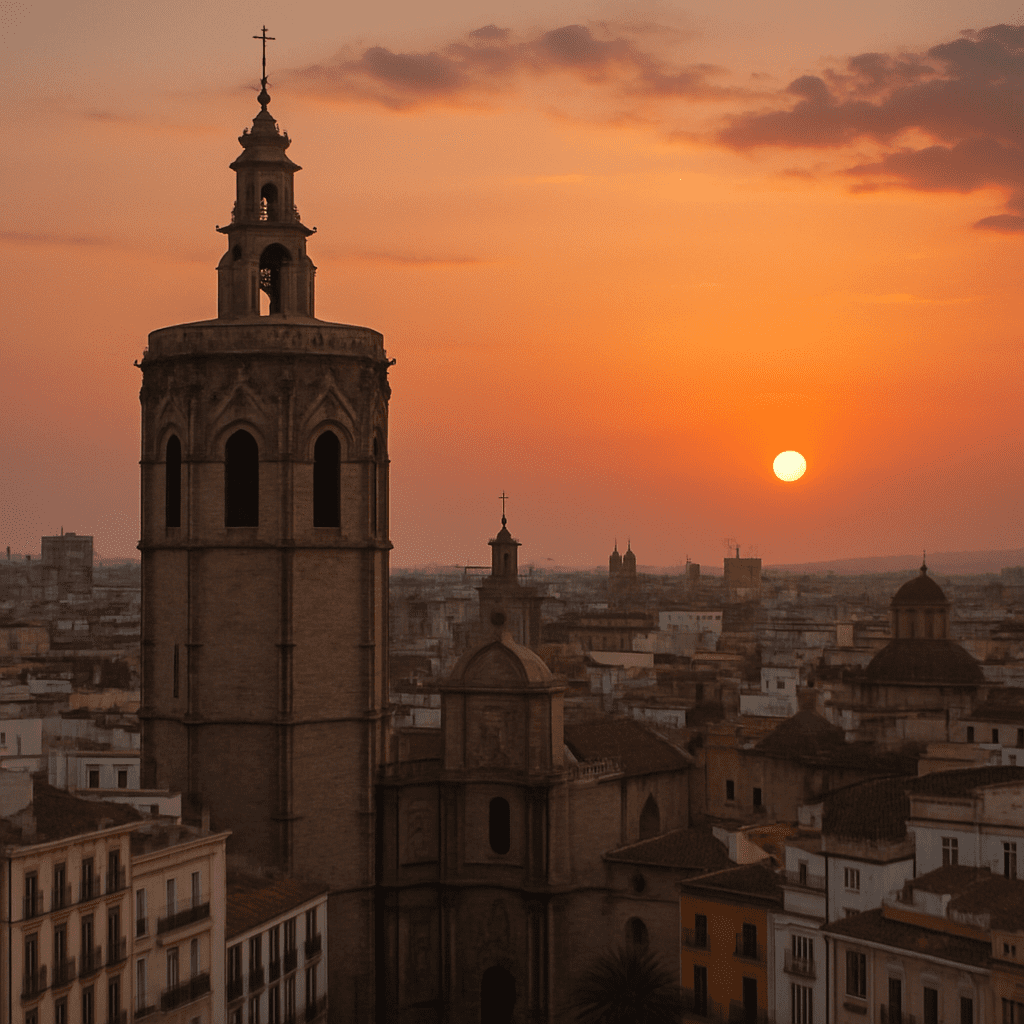
The Miguelete Tower is a fascinating landmark in Valencia. It rises majestically over the city, attracting visitors from all over the world. Its history is closely linked to the Cathedral of Valencia, also known as „La Seu.“.
The construction of the Miguelete tower began in 1381. After almost half a century, it was completed in 1429. The tower is an outstanding example of Gothic architecture in Spain and impresses with its octagonal shape.
The name „Miguelete“ is derived from the large bell „Miguel“ that hangs in the tower. This bell is not only a technical masterpiece but also a symbol of the city. The tower itself is 51 meters high and offers a breathtaking view.

The climb to the tower's viewing platform has 207 steps. From there, you have an impressive view over Valencia. This view is a highlight for many tourists and a must-see for any visitor to the city.
The Miguelete Tower is not only an architectural gem but also an important part of Valencia's history. Designed by architect Andrés Juliá, it stands as a testament to medieval building techniques. The tower has witnessed many historical events throughout the centuries.
The Cathedral of Valencia, to which the Miguelete Tower belongs, was built on the remains of a mosque. This reflects the region's rich and diverse history. The tower is an example of the fusion of religious and civil architecture.
Today, the Miguelete Tower is a popular tourist destination and a symbol of the city. It is an important part of Valencia's skyline and a place where you can experience the city's history and culture firsthand. The tower is a significant cultural heritage site and a place where the connection between the past and the present can be felt.
The Genesis of the Miguelete Tower: Historical Background
The construction of the Miguelete Tower is deeply rooted in the history of Valencia. In the 14th century, the city experienced significant growth and a drive for architectural splendor. Valencia wanted to distinguish itself through the construction of a monumental bell tower.
Construction began in the year 1381. A Gothic style was chosen, which was very popular in Europe at the time. The architect Andrés Juliá, known for his visionary designs, was selected. His design for the tower reflected both religious significance and urban ambition.
The choice of location was of strategic and symbolic importance. The tower was to be built directly adjacent to the existing Cathedral of Valencia, which had been erected on the remains of an old mosque. This underscored the city's Christian identity after its reconquest from the Moors.
The construction process spanned several decades and demanded enormous skill from the craftsmen. The construction of the tower was a challenge, requiring technical sophistication and artistic precision. Stonecutters, carpenters, and blacksmiths worked hand in hand to raise the bell tower.
The different phases of the structure were documented in a list:
- 1381-1396Foundation stone laying and construction of the lower section.
- 1396-1414Completion of the middle floors.
- 1414-1429Construction of the upper floors and installation of the „Miguel“ bell.
In 1429, the Miguelete Tower was completed. Its completion marked a high point of Gothic architecture in Spain. The tower represented not only an architectural achievement but also a symbol of civic pride.
In the following centuries, the tower remained a central point of urban life and cultural identity for Valencia. Its origin story reflects the city's aspiration for greatness and influence. Today, the Miguelete Tower continues to be a popular attraction, a reminder of Valencia's rich history.
Architecture and Construction: A Masterpiece of Gothic
The Miguelete Tower is a prominent example of Gothic architecture. This era is characterized by high ceilings, pointed arches, and intricate craftsmanship. The tower embodies all these qualities in its unique structure.
A notable feature is the octagonal shape of the Miguelete tower. This shape is typical of Gothic architecture and offers both aesthetic and functional advantages. It provides the structure with stability and a balanced silhouette.
The tower is entirely constructed from limestone, a typical building material of the era. The stone was meticulously worked to highlight the finest details. This craftsmanship is particularly evident in the delicate stonework and the artfully designed balustrades.
The inner structure of the tower is also impressive. The 207 steps, winding spirally to the observation deck, are a masterpiece of medieval engineering. Each step is crafted with particular care to make the ascent safe and pleasant.
An essential element of Gothic architecture is light. The Miguelete Tower features elegant window openings that illuminate the interior of the tower. These openings are designed in the form of pointed arches and contribute to the characteristic Gothic aesthetic.
In addition to its architectural beauty, functionality also played a significant role. The tower served as a guardian over the city, a means of communication, and a place for spiritual rituals. The architecture harmoniously integrated all these functions.
The architectural style and construction method of the tower can be summarized in a list of historically significant features:
- Octagonal shapePromotes stability and aesthetic value.
- Gothic pointed archesSymbolizes Gothic elegance and span.
- Limestone materialPopular for durability and machinability.
- Window openingsThey illuminate the interior of the tower and emphasize Gothic forms.
- 207 stepsExcellent medieval engineering.
- BalustradesFine stonework as aesthetic highlights.
The sophistication of the Miguelete Tower has made it an architectural landmark. The combination of Gothic form and function has helped the tower endure through the centuries. Despite its age, the tower stands proudly and magnificently in Valencia.
Overall, the Miguelete Tower is a testament to medieval architectural art. It combines structural intelligence with artistic brilliance. Every visitor can experience the grandeur of Gothic architecture through this unique tower, whose construction and grace have endured through the centuries.
The Significance of the Miguelete Tower for Valencia
The Miguelete Tower is more than just an architectural masterpiece; it is a significant symbol for Valencia. Its presence on the city's skyline is unmistakable and attracts thousands of tourists annually. For many residents, the tower is the epitome of cultural identity and pride.
Historically significant and deeply rooted in the city's history, the Miguelete Tower reflects Valencia's developments and challenges. It has witnessed eras of change and renewal, thus becoming a living testament to the city's past and resilience.
The religious significance of the tower should also not be underestimated. The bell tower served for a long time as the center of religious activities and is closely linked to the traditions of the Valencia Cathedral. During local festivities, the bells of the Miguelete tower ring to gather and inspire the faithful.
As a tourist attraction, the Miguelete Tower is essential. Its impressive architecture draws visitors who want to experience Gothic beauty up close. The view from the top offers an unparalleled panoramic vista of Valencia, which always fascinates visitors.
The tower has not only cultural and religious but also economic significance. The constant stream of tourists supports local businesses and has a positive impact on the city's economy.
In the modern world, the Miguelete Tower continues to function as a cultural landmark, connecting residents and visitors alike to Valencia's rich history. Its role as a link between the past and present underscores its ongoing relevance as a symbol of resilience and inspiration.
The bell tower and the famous bell „Miguel“
At the heart of the Miguelete Tower lies the bell chamber, a significant part of this impressive structure. The bell chamber is not only an architectural highlight but also an important cultural aspect. It plays a central role in the history and function of the Valencia Cathedral.
The most famous treasure of the bell tower is the bell „Miguel.“ It is the largest and by far the best-known bell in the tower. This massive bell gives the Miguelete Tower its name and has been an integral part of religious life in Valencia for centuries. Every celebration is accompanied by its characteristic sound.
The casting of the bell „Miguel“ is a testament to craftsmanship. It is a masterpiece from the 16th century and impresses with its sheer size and sonority. In addition to its musical use, the bell holds historical significance for the city and is an integral part of many traditional ceremonies.
In addition to „Miguel,“ the belfry houses a collection of other bells, each with its own history and function:
- „Vella“An old bell that is rung for special occasions.
- „Catarina“A bell used for masses and celebrations.
- „Angelus“Traditionally used for the Angelus prayer.
- „Vincent“A unique bell, named after the patron saint of Valencia.
These bells are more than just instruments. They embody the city's cultural and religious heritage and contribute to Valencia's unique soundscape. Visiting the bell tower is not only an acoustic experience but also a journey into the past, showing how deeply tradition is rooted in Valencia.
The ascent: 207 steps to the best view of Valencia
Climbing the Miguelete Tower is not just a physical challenge, but also a journey into the past. The 207 steps spiral upwards. Each step on the stone staircase bears witness to the history and craftsmanship of bygone eras.
The staircase is narrow and steep, typical of medieval construction. This can be a challenge, especially during busy visiting hours. Nevertheless, the ascent is an experience enriched by the exciting atmosphere and the historic surroundings.
The view from the platform is breathtaking. Once at the top, a panoramic view of Valencia unfolds, stretching from the hills to the sea. This view rewards everyone who has conquered the 51 meters with a sight of the city's diverse architecture.
While climbing the Miguelete tower, you can admire the excellent craftsmanship of past eras. The architectural details, such as the stonework and arches, are impressive. They highlight the masterful skill of the medieval builders who created the tower.
The tower's platform invites visitors to pause and enjoy the beauty of their surroundings. It not only offers breathtaking scenery but also instills a sense of connection with Valencia's history. The silence above the city allows one to mentally travel back to earlier times.
The Miguelete Tower is not just an architectural gem, but also a place for reflection. Whether history buffs, architecture enthusiasts, or tourists – every visitor will be impressed by the view and the special atmosphere. The ascent is more than just a visit; it's a truly memorable experience.
The Miguelete Tower Through the Ages: Restorations and Preservation
The Miguelete Tower has undergone numerous transformations over the centuries. Its history is marked by restorations aimed at preserving its original splendor. These works are essential for maintaining the tower as a significant architectural landmark.
Over the years, external influences such as weather and pollution have taken their toll on the tower. These factors require regular maintenance. Modern techniques are used to protect the building structure and preserve the tower's historical authenticity.
One of the most significant restoration projects took place in the 20th century. This extensive work aimed to ensure the stability of the tower and preserve it for future generations. The restoration included a thorough analysis of existing damage and the use of traditional materials.
Here is a list of notable restoration measures carried out on the Miguelete Tower:
- Cleaning and Conservation of StoneRemoval of deposits and protection against erosion.
- Static securingUse of structural reinforcement techniques.
- Renewal of damaged elementsReplacement of damaged parts, taking into account the original technology.
- Protective measures against weather influencesInstallation of protective devices on sensitive parts of the tower.
In addition to physical restoration work, digital documentation also plays an important role. These records help preserve the history of the tower and facilitate future conservation projects. The use of technologies such as 3D scanning has contributed to the precise capture of architectural details.
The ongoing maintenance of the Miguelete Tower demonstrates the City of Valencia's commitment to preserving its cultural heritage. Visitors who tour the tower today can experience the results of this work firsthand. The tower remains a living symbol of history and craftsmanship, cared for with diligence and dedication.
The Miguelete Tower as a Symbol and Cultural Heritage
The Miguelete Tower rises majestically over Valencia and is much more than just an architectural marvel. It embodies the identity and pride of the city's inhabitants, who affectionately call it „El Miguelete.“ The tower is an integral part of the city's history and its cultural landscape, making it a symbol of Valencia.
As part of the Cathedral of Valencia, the Miguelete Tower represents an important religious center. For centuries, it has attracted faithful believers and visitors from all over the world. Its bell tolls have accompanied the city through many significant events and religious festivals, making the tower an irreplaceable part of urban life.
The tower's architecture is a prime example of Gothic style, while also reflecting Valencia's cultural development. Its octagonal shape and intricate stonework document the craftsmanship of past generations. The tower is not only an architectural masterpiece, but also contributes to the city's architectural diversity.
The Miguelete Tower's status as a UNESCO World Heritage site underscores its global significance. This recognition helps preserve the tower internationally as an important cultural heritage. Visitors who climb the tower not only experience the history of Valencia but also a piece of worldwide cultural heritage.
The Miguelete Tower is a meeting place for locals and tourists alike. Its platform offers one of the best views of the city, inviting reflection on Valencia's past and present. The tower connects people of different cultures and generations, remaining a vibrant symbol of the city and its history.
Visitor Tips: Opening Hours, Admission, and Experiences
A visit to the Miguelete Tower is a must for any traveler to Valencia. The tour begins with a challenge: climbing 207 steps. These lead to a breathtaking view that makes the climb worthwhile. It's good to know that the tower is open year-round, but the opening hours vary depending on the season.
It is advisable to check the exact opening hours in advance. Normally, the tower is accessible on weekdays from 10 AM to 6:30 PM. On weekends, these times may vary slightly depending on religious ceremonies and events in the cathedral. Arriving early will help you avoid long waiting times, especially during peak tourist season.
The admission price for the Miguelete Tower is affordable. Children, students, and seniors often receive discounts. This accessibility fosters a wide audience, from curious schoolchildren to more seasoned history buffs. The tower itself is not accessible to wheelchairs, so visitors with mobility issues should plan carefully.
Experiences at a glance:
- Take many photosThe view offers a perfect opportunity for panoramic shots.
- Pay attention to the detailsEach level of ascent reveals Gothic architecture and masonry masterpieces.
- Explore the cathedralCombine the tower visit with a tour of Valencia Cathedral.
- Take your timeExperience the atmosphere of the historical ambience in peace.
- Plan aheadConsider local holidays and special events.
A visit to the Miguelete tower is not just an architectural experience. It is a journey into Valencia's past, offering unique perspectives on this historic city.
Conclusion: The Miguelete Tower as a bridge between the past and present
The Miguelete Tower is far more than just an architectural masterpiece. It is a living testament to Valencia's rich history and a symbol of the fusion of tradition and modernity. Its Gothic forms and careful design reflect the artistry of past generations. At the same time, it continues to attract many visitors today who are enchanted by its imposing stature and the breathtaking view of Valencia.
With its iconic status in the city's skyline, the Miguelete Tower embodies Valencia's historical depth and cultural dynamism, a place where the past and present harmoniously converge. Tourists and locals alike flock to soak in the atmosphere and immerse themselves in the stories embedded within the tower's stones. Every detail, from its distinctive bells to its viewing platform, serves as an invitation to experience history firsthand.
The tower not only contributes to Valencia's cultural identity but also inspires future generations. As a bridge between eras, it demonstrates how historic structures can be sustainably integrated into the modern urban landscape. The Miguelete Tower remains a significant landmark, preserving Valencia's uniqueness while celebrating the timeless beauty of Gothic architecture.