The Third Millennium Bridge in Zaragoza is an impressive example of modern architecture. It was built for Expo 2008 and is now a landmark of the city. This bridge not only connects the Delicias and Almozara districts, but also tradition and modernity.
With a length of 270 meters and a width of 43 meters, it is one of the longest arch bridges in the world without intermediate supports. Its design comes from the renowned architect Santiago Calatrava, who is known for his innovative and aesthetically pleasing structures. The bridge is a masterpiece of engineering and a symbol of Zaragoza's modernization.
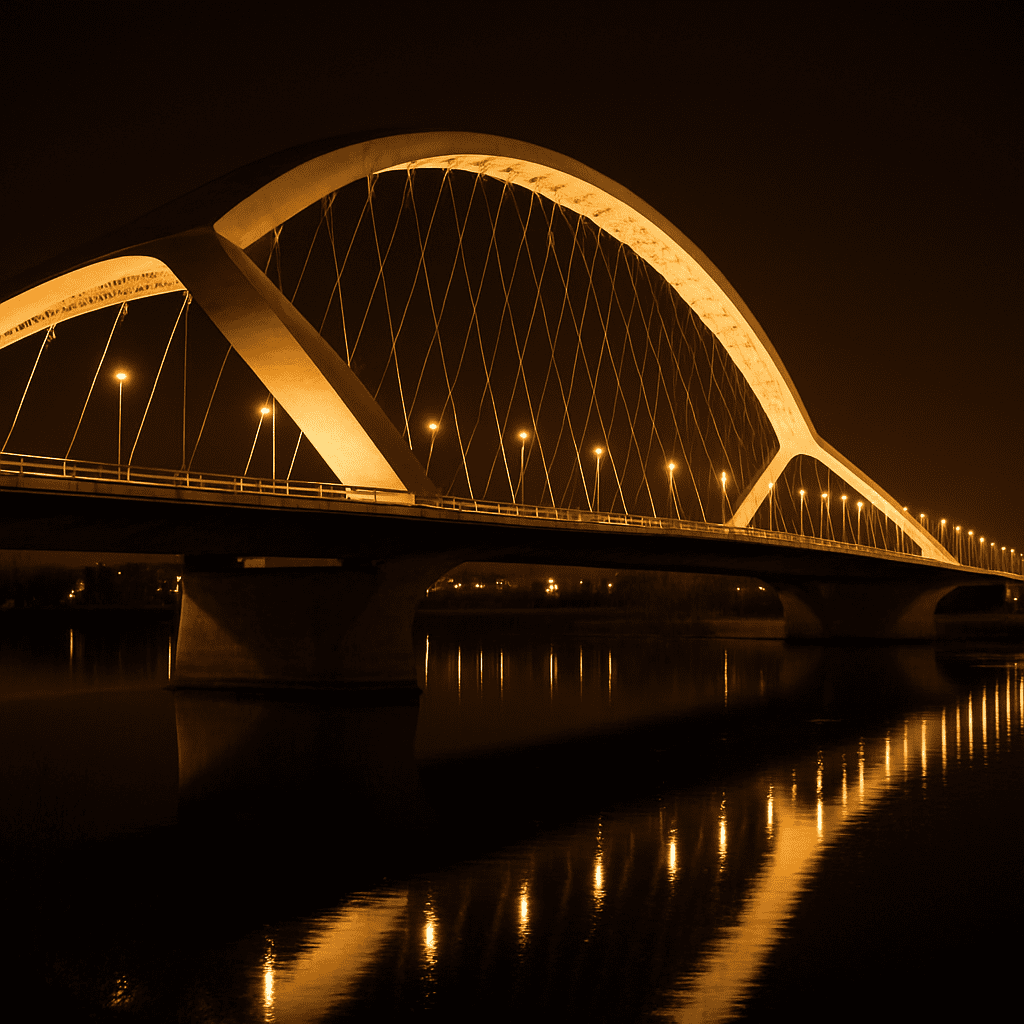
The Third Millennium Bridge is not only an important transportation hub but also a popular tourist attraction. Tourists and locals alike appreciate the impressive views of the Ebro River and the city. Especially at night, when the bridge is illuminated, it offers a spectacular sight.
The bridge was designed with the goal of being both functional and aesthetically pleasing. It features three lanes in each direction, as well as pedestrian and bicycle paths. This combination of functionality and design makes it a prime example of modern bridge architecture.
Another remarkable feature of the bridge is its sustainable construction. It was built using eco-friendly materials and serves as an example of the integration of art and engineering. The bridge is a symbol of Zaragoza's innovative spirit and creativity.
The Third Millennium Bridge is a key component of the city’s infrastructure and a symbol of the city’s forward-looking spirit. It represents the connection between the past and the future and serves as an example of the use of modern technologies in bridge construction. This bridge is a significant element of the city’s identity and a symbol of Zaragoza’s cultural and economic importance.
The Third Millennium Bridge: A Landmark of Zaragoza
The Third Millennium Bridge has quickly become a landmark in Zaragoza. Its striking form and elegant presence attract visitors from all over the world. It is not only a vital transportation hub but also an architectural highlight that captivates tourists and locals alike.
In addition to its practical function as a traffic connection, the bridge offers a unique viewpoint. From here, you have a breathtaking view of the Ebro River and the city panorama. These perspectives underscore the bridge's importance in the urban space and give it a prominent role as a tourist attraction.
The bridge’s significance extends beyond its physical presence. It symbolizes Zaragoza’s architectural and technical innovation. With its futuristic appearance and flowing lines, it reflects the city’s dynamism and modernity. The bridge is a shining example of how traditional heritage and contemporary design can blend harmoniously.
A visit to the Third Millennium Bridge also offers insights into the evolution of urban design in Zaragoza. The bridge stands as a testament to ambitious urban planning, which culminated in Expo 2008. This event was a turning point in Zaragoza's urban development, and the bridge is a lasting legacy of that era.
Here are some of the bridge's impressive features:
- Designed by Santiago Calatrava, one of the leading architects of our time.
- Spans the Ebro River and connects the Delicias and Almozara neighborhoods.
- It offers space for vehicles, pedestrians, and cyclists, making it a multifunctional structure.
- It was completed in three years, a testament to the efficiency and dedication of those involved.
- Spectacularly illuminated at night, which gives it an even more impressive appearance.
In this context, the Third Millennium Bridge plays a central role not only as a physical link but also as a symbol of Zaragoza’s transition into a new era. It stands as a shining example of the fusion of art, technology, and urban development.
Architecture and Design: A Masterpiece by Santiago Calatrava
The Bridge of the Third Millennium is a prime example of Santiago Calatrava's creative genius. As one of the most respected architects of our time, Calatrava is known for his ability to harmonize art and engineering. His designs are often as functional as they are aesthetically pleasing.
The bridge in Zaragoza is characterized by its curved shape and organic lines, which blend harmoniously into the landscape. This architectural elegance is supported by the use of modern materials and construction methods. It represents the symbiosis of advanced engineering and visionary architecture.
A key feature of the design is the bridge’s impressive length. At 270 meters, it spans the Ebro River without any intermediate supports. This technical achievement reflects Calatrava’s unwavering commitment to pushing the boundaries of what is possible in bridge engineering. The bridge is not only structurally sound but also an aesthetic masterpiece.
Calatrava’s design philosophy emphasizes the importance of functionality without neglecting aesthetic elements. This is particularly evident in the integrated pathways for pedestrians and cyclists. This multifunctional use underscores the goal of creating a sustainable urban infrastructure that is both practical and visually striking.
Here are some prominent design features of the bridge:
- Use of steel and concrete to create a durable and sturdy structure.
- An innovative solution for a bridge without intermediate supports, designed to respect the natural environment.
- Integration of walking and biking paths to promote sustainable mobility.
- Special lighting designs that create a spectacular scene at night.
- A curved design that looks both modern and timeless.
Santiago Calatrava's work on the Third Millennium Bridge in Zaragoza is a shining example of the fusion of functionality and aesthetics. In a world where modern bridges are not just functional structures but also cultural icons, this project stands out as a masterpiece of contemporary design. The bridge remains a symbol of innovation, coupled with a respect for the natural and urban environment in which it stands.
Technical Specifications and Construction: Innovation in Bridge Engineering
The Third Millennium Bridge in Zaragoza is a prime example of modern bridge engineering. The technical features of this bridge are a testament to the advanced engineering expertise that has been brought to life in the city. With a length of 270 meters, it is considered one of the longest arch bridges in the world without intermediate supports.
The construction of the bridge began in 2005 and was completed in 2008, in time for the Expo in Zaragoza. The construction process utilized state-of-the-art techniques and materials to ensure both stability and aesthetics. The use of steel and concrete forms the backbone of the bridge, providing its remarkable load-bearing capacity.
The bridge has three lanes in each direction. Additionally, it offers spacious pedestrian and bicycle paths to promote non-motorized traffic. This multifunctional use demonstrates the commitment to improving urban traffic flow while simultaneously protecting the environment.
A key feature of the bridge is its cable-stayed design. This design makes it possible to span greater distances without disrupting the riverbed. This is particularly important for preserving the Ebro River and its surroundings. By using sustainable materials, the bridge also serves as an example of environmentally friendly construction.
Here are some of the bridge's technical highlights:
- Total length: 270 meters
- width: 43 meters
- Lanes: Three in each direction
- Materials: Steel and Concrete
- Construction periodThree years (2005-2008)
- Special features: Tension-based construction, sustainable materials
The Third Millennium Bridge is not only an essential part of Zaragoza’s urban infrastructure, but also an innovative project that inspires the future of bridge construction. The integration of technology and design demonstrates how cutting-edge construction projects can be both functional and beautiful. Such structures are a clear indication of how advanced engineering can positively influence the urban landscape.
The Role of the Bridge in Zaragoza's Cityscape and Transportation System
The Third Millennium Bridge plays a central role in Zaragoza’s transportation network. It connects the Delicias and Almozara neighborhoods, making it a key transportation hub. This connection greatly facilitates daily commuting and helps reduce traffic congestion in the city center.
One of its most important functions in the urban landscape is the promotion of mobility. The bridge supports traffic flow through its wide architecture, which smoothly accommodates vehicular traffic. Additionally, the pedestrian and bicycle paths ensure that people can explore the city safely and quickly without relying on motorized transport.
In addition to its transport function, the bridge also stands out with its significant presence in the urban landscape. It is more than just a functional structure; it is an architectural landmark. The bridge's curved shape attracts both locals and tourists. Especially at night, when the bridge is illuminated, it is a spectacular sight that enriches Zaragoza's skyline.
To summarize the main roles of the bridge, here is a list of the key areas of influence:
- Transportation linkFacilitates commuter traffic between Delicias and Almozara.
- MobilityPromoting non-motorized transport through safe pedestrian and cycling paths.
- Aesthetic landmarkImpressive architecture attracts tourists and locals.
- Night skyLighting at night improves the urban landscape.
- Urban modernizationSymbolizes the growth and modernization of Zaragoza.
Through its strategic location and impressive design, the Third Millennium Bridge is not just a piece of present-day infrastructure, but also a symbol of Zaragoza's dynamic future. It demonstrates how thoughtful design and functionality can contribute to a city's appeal and efficiency.
The bridge as a tourist attraction: tips for visitors
The Third Millennium Bridge in Zaragoza has established itself as one of the city's top attractions. It draws travelers not only because of its technical elegance but also due to its cultural significance. For visitors looking to make the most of their visit, there are a few things to keep in mind.
A daytime visit to the bridge allows for a thorough appreciation of its architectural intricacies. Its design reflects both innovation and the heritage of Zaragoza. During the day, the construction details and the complexity of its curved lines are most visible. It's the ideal time to observe the unique structure up close and capture photos from various vantage points.
But the bridge's attraction doesn't end at sunset. At night, it transforms into a luminous spectacle. Strategic lighting highlights the bridge's silhouette against the dark sky. Therefore, an evening stroll or bike ride across the illuminated bridge is a recommended activity. This sight not only attracts tourists but is also a favorite among professional photographers.
For architecture enthusiasts, it is useful to learn about the bridge's history. With Santiago Calatrava as the architect, the bridge embodies modern engineering and design. Many visitors find it worthwhile to book tours or guided walks that offer detailed information about the bridge's creation and significance.
Here are some tips for visitors to best experience the bridge:
- Optimal timesVisit the bridge during the day and at night for different experiences.
- Photo opportunitiesUse the surrounding viewpoints for impressive photos.
- History ExplorationLearn about the architectural and historical significance.
- ActivitiesTake a walk or rent a bicycle.
- Local explorationCombine the bridge visit with nearby attractions.
In any case, the bridge remains a highlight of any trip to Zaragoza. It offers a perfect blend of functionality and aesthetic enjoyment that inspires both visitors and locals alike. For anyone who appreciates modern engineering and Zaragoza's cultural heritage, it is a must-see.
The bridge in the context of Expo 2008 and urban development
The Bridge of the Third Millennium was built as part of Expo 2008, a significant milestone for Zaragoza. This Universal Exposition served as a catalyst for numerous infrastructure projects in the city. Expo 2008„s theme was “Water and Sustainable Development," which perfectly aligned with the bridge's role over the Ebro River.
The construction of the bridge was not only an architectural masterpiece but also promoted urban integration. The connection between the Delicias and Almozara districts is a prime example of how targeted architecture can improve urban mobility. In the course of the Expo, Zaragoza's urban landscape was significantly modernized, and the bridge was a central element of this transformation.
Another aspect of Expo 2008 was sustainability. The bridge reflects this concern by using environmentally friendly materials while also meeting aesthetic requirements. It illustrates how modern construction can combine ecological responsibility with design innovation. These qualities have made it a symbol of Zaragoza's sustainable urban development.
The Universal Exposition ushered in an era of growth and modernization in Zaragoza. The bridge is a lasting legacy of this event, contributing significantly to urban development from both an architectural and functional perspective. Here are some of the impacts of Expo 2008 on Zaragoza:
- Infrastructure DevelopmentExpansion of transport routes and urban connections.
- Sustainability initiativesFocus on environmentally friendly construction projects.
- Urban renewalRevitalization and redesign of central areas of Zaragoza.
- Tourist attractionIncreased international attention and visitor numbers.
- Cultural influencesPromoting art and design in urban planning.
Overall, Expo 2008 marked a turning point in Zaragoza's trajectory toward becoming a modern metropolis. The Third Millennium Bridge is one of the most visible manifestations of this progress. As a connecting element and an architectural marvel, it highlights the significance of the Expo and its long-term impact on urban life.
Modern Bridges Worldwide: Classification and Comparison
The Third Millennium Bridge in Zaragoza is an excellent example of modern bridge architecture. It stands in line with some of the most impressive bridges worldwide, which impress with both their technical and aesthetic features. These modern bridges embody innovation and creativity in engineering and offer new perspectives on architecture.
A comparison with other famous bridges like the Millau Viaduct in France or the Akashi Kaikyo Bridge in Japan shows how different design approaches can be. While the Millau Viaduct, with its elegant pylons, is the tallest bridge in the world, the Akashi Kaikyo Bridge impresses as the longest suspension bridge. Both illustrate how engineers overcome challenges using advanced technologies.

The Third Millennium Bridge is characterized by its arch structure without intermediate supports, making it one of the longest of its kind. Compared to other arch bridges like the Lupu Bridge in Shanghai, Santiago Calatrava's design stands out for its curved lines and sophisticated integration into the urban environment. This approach demonstrates the diversity of possible solutions in bridge construction.
At the intersection of function and aesthetics, these modern bridges share common characteristics. They all utilize innovative materials, optimize load-bearing capacity, and offer remarkable visual experiences. Here is a list of features that define modern bridges:
- Innovative MaterialsUse of steel, concrete, and composite materials.
- Aesthetics and DesignFuturistic and appealing architectural designs.
- Technological InnovationsUse of the latest construction and engineering techniques.
- Functional VersatilityCombination of road, rail, and pedestrian paths.
- SustainabilityEnvironmentally friendly approaches and energy efficiency.
The Third Millennium Bridge is in constant communication with these developments. It symbolizes the architectural and technical brilliance that gives modern bridges their unique character. Its placement in a global context shows how regional developments are part of a larger pattern of progress.
Conclusion: Symbol of Zaragoza's Innovation and Future
The Third Millennium Bridge in Zaragoza is more than just a transportation route. It represents a city's ability to turn visions into reality. Its bold design and technical intricacies demonstrate how tradition and innovation can coexist in harmonious balance. As part of Expo 2008, it became a symbol of Zaragoza's modernization and growth.
This bridge embodies urban dynamism and the ability to adapt to modern demands. It serves not only practical purposes but also inspires with its elegant forms and successful integration into the urban landscape. This not only attracts tourists but also strengthens the sense of community among residents and seamlessly connects different parts of the city.
Zaragoza looks to the future with this bridge. It shows how thoughtful architecture can enrich urban space. At the same time, it illustrates the importance of infrastructure projects that are not only functional but also aesthetically pleasing. As a symbol of progress and innovation, the Third Millennium Bridge stands as a lasting legacy for future generations.