
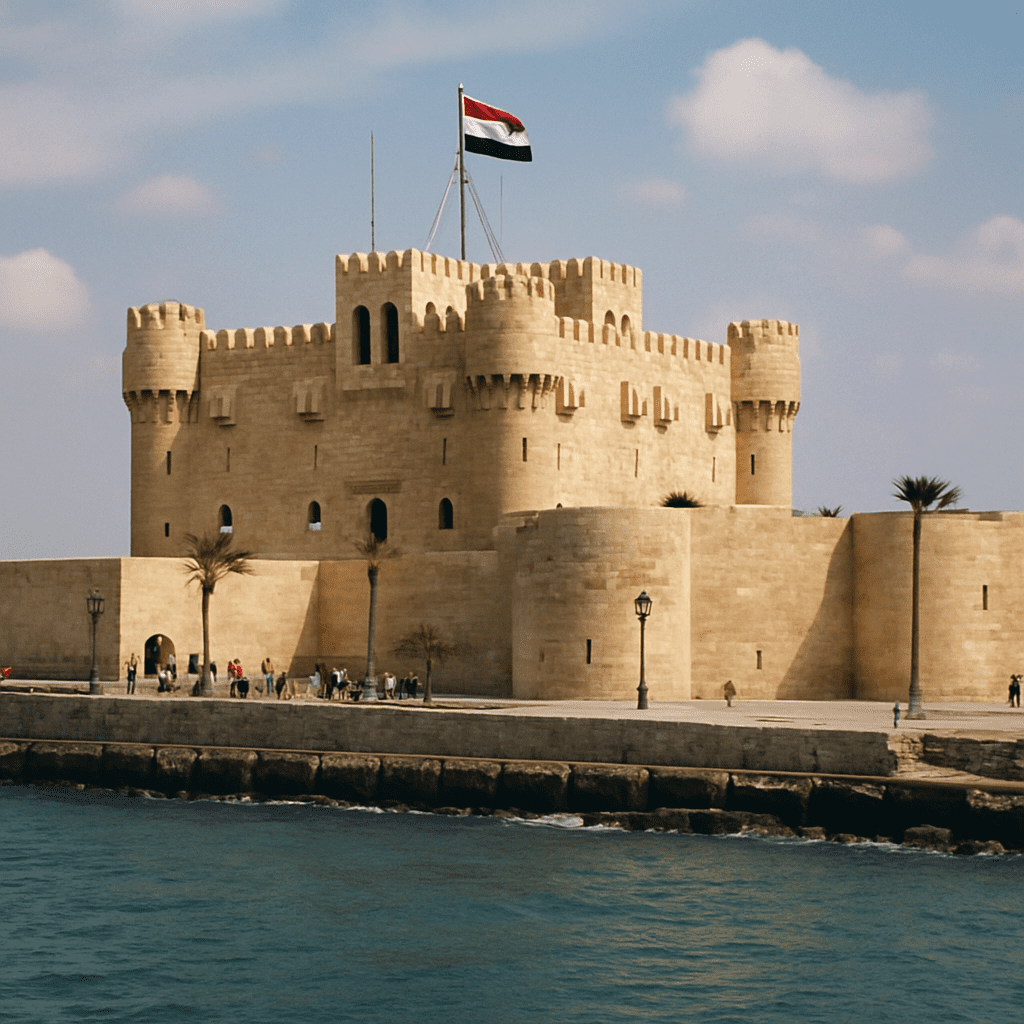
The Citadel of Qaitbay is an impressive structure on the Mediterranean coast of Alexandria, Egypt. It was built in 1477 by Sultan Al-Ashraf Sayf al-Din Qaitbay. This fortress stands on the ruins of the ancient Lighthouse of Alexandria, one of the Seven Wonders of the Ancient World.
The citadel served as a defensive fortress against attacks from the sea. Its strategic location allowed it to overlook the port of Alexandria. The citadel's architecture is an outstanding example of Mamluk architecture.
During Ottoman rule, the citadel played an important role. It was restored in the 19th century by Muhammad Ali. This restoration helped preserve its historical value.
Today, the Citadel of Qaitbay is a popular tourist destination. It offers panoramic views of the Mediterranean Sea and the city of Alexandria. Visitors can explore the citadel and learn about its history.
The citadel has a square shape with high walls and towers at each corner. Inside, there are several rooms, including a mosque and a museum. These rooms offer insights into the history and significance of the citadel.
The Citadel was damaged during the British bombardment of Alexandria in 1882. In the 20th century, it was restored again to preserve its historical significance. Today, it is a symbol of the Mamluk military strength and architectural prowess.
The Citadel of Qaitbay is a UNESCO World Heritage site. It attracts thousands of visitors from all over the world annually. For anyone visiting Alexandria, the citadel is a must-see.
The History of the Citadel of Qaitbay
The Citadel of Qaitbay has a rich and deeply rooted history that dates back to the 15th century. Built on the ruins of the Pharos of Alexandria, one of the ancient world's wonders, it was a masterpiece of architectural engineering. Sultan Al-Ashraf Sayf al-Din Qaitbay ordered its construction in 1477. His aim was to protect Alexandria from potential naval attacks.
This fortress was an essential part of Egypt's defense strategy in the Middle Ages. Its architecture reflected the Mamluk tradition, known for its robust and artistically designed structures. The citadel quickly became a symbol of security and power along the Mediterranean coast. It played a crucial role, not only militarily but also culturally.
With the rise of the Ottoman Empire, the citadel gained new significance. During Ottoman rule, it continued to serve as the city's primary defense. The Ottomans valued its strategic position and robust construction. Numerous renovations were carried out during their reign to adapt the fortress to new military requirements.
The history of the Citadel experienced a significant turning point in the 19th century. Muhammad Ali, considered the founder of modern Egypt, carried out extensive restorations. These works helped preserve the ancient structures while breathing new life into the fortress. His vision was to maintain the Citadel's historical value for future generations.
Despite all protective measures, the citadel suffered heavy damage in 1882. The British bombardment of Alexandria caused considerable devastation. Fortunately, its cultural significance was soon recognized, and restoration efforts were initiated once again. To this day, restorations have helped preserve the citadel's historical heritage.
Below are some of the key moments in the history of the Citadel of Qaitbay:
- 1477: Construction by Sultan Qaitbay
- Ottoman PeriodDefense and Reconstruction
- 19th centuryRestoration by Muhammad Ali
- 1882Damage from British bombing
- 20th century: Further restoration work
- TodayRecognition as a UNESCO World Heritage Site
Through the centuries, the Citadel of Qaitbay has undergone many transformations. Despite numerous challenges, it has never lost its historical significance. Each phase of its history adds another chapter, making the fortress a living history book. It is a place where the past and present meet, and it remains a proud testament to the rich history of Alexandria.
Architecture and Structure of the Fortress
The architecture of the Citadel of Qaitbay is an impressive example of Mamluk construction, which is both robust and functional. The citadel has a square base, reinforced by powerful walls and towers at each corner. This design provided optimal protection against attacks and allowed for the surveillance of the surrounding area. The strategically placed main entrance leads through a winding path that made it difficult for attackers to advance.
A remarkable feature of the citadel is the use of limestone from the ruins of the ancient Pharos. This highlights the connection between the ancient and medieval history of Alexandria. The careful use of natural stone demonstrates the craftsmanship of the builders of that era. Inside the fortress, there are numerous rooms and corridors that served both practical and defensive purposes.
Another notable aspect of the citadel is the integrated mosque, located in the upper section of the main tower. This mosque served as a spiritual center for the garrison and is an example of the fusion of religious and military architecture. The mosque's well-preserved details, such as the intricate mosaics and the courtyard, offer insights into Mamluk sacred architecture.
The fortress was not only a bulwark but also an architectural masterpiece. There are many elements typical of medieval military architecture. These include embrasures, designed for defensive purposes, as well as battlements and crenellations, which offered soldiers protection and at the same time a good view of the surrounding terrain. These defensive mechanisms were essential for protecting the fortress from attackers.
In summary, the architecture of the Citadel of Qaitbay is impressive and functional. Its robust structures are a testament to the advanced building practices of the Mamluks. Visitors to the citadel can walk through its historic rooms and be transported back to a time when the fortress was actively used for military purposes. It is a wonderful example of the fusion of military architecture and cultural significance.
Here is a summary of the citadel's architectural highlights:
- Quadratic formStructures that offer protection and make attacks difficult.
- Limestone from PharosUse of ancient materials.
- Integrated MosqueConnection of religious and military architecture.
- Arrow slits and battlementsDefensive architectural features.
- Historical RoomsInsights into garrison life.
The Citadel of Qaitbay is thus far more than just a military fortress. It is a place that harmoniously unites history and architecture, representing an impressive testament to medieval building art.
The Citadel as a Historical Site and Symbol
The Citadel of Qaitbay is more than an architectural masterpiece. It is a symbol of Alexandria's strength and resilience. Since its construction in 1477, it has served as the city's shield. Its massive walls are witnesses to many historical events that have shaped Egypt. The citadel embodies the constant vigilance of a city that was considered the key to the Mediterranean for centuries.
This fortress is a significant part of Egypt's cultural heritage. It represents the golden age of Mamluk rule and its influence on the medieval world. Its walls tell stories of military sophistication and strategic planning. Every element of the citadel was built with a specific purpose, making it a fascinating testament to history. It embodies an era of action and diplomacy in which Alexandria played a central role.

Today, the Citadel of Qaitbay is a cherished tourist attraction, drawing numerous visitors annually. Its location by the sea not only offers breathtaking views but also provides a tangible sense of Alexandria's maritime significance. The fortress stands as a living museum of the past, inviting visitors to trace the footsteps of historical figures and events. Historians, architecture enthusiasts, and tourists alike immerse themselves in the captivating atmosphere of bygone eras.
As a symbol of the connection between past and present, the Citadel is a place where history comes alive. It recalls the changing powers that have shaped this region. In a world of constant change, the Citadel remains a constant reference point. It embodies the essence of Alexandria's identity as a crossroads of different cultures and times. The Citadel of Qaitbay is not just a historical monument, but an eternal landmark of human creativity and resilience.
The Citadel of Qaitbay Through the Ages
The Citadel of Qaitbay has undergone numerous transformations over the centuries. Built on the ruins of the ancient Lighthouse of Alexandria, once one of the Seven Wonders of the World, it was erected in 1477 by Sultan Al-Ashraf Sayf al-Din Qaitbay. Originally conceived as a fortress to repel naval attacks, it played a crucial role in Alexandria's defense. The citadel offered protection from invaders and secured the city's vital harbor.
This fortress was a strategic stronghold during Ottoman rule in Egypt. The Ottomans used the Citadel to solidify their control over the region. In the 19th century, the Citadel underwent extensive restoration under Muhammad Ali. Muhammad Ali recognized the strategic value of the fortress and prioritized its repair. These restorations helped preserve the Citadel and solidify its status as a significant historical monument.
Over time, the citadel was damaged multiple times, including during the British bombardment of Alexandria in 1882. Fortunately, it underwent further restoration in the 20th century, aiming to preserve its historical and architectural value. Today, the citadel stands as an important example of medieval military architecture, testifying to Alexandria's historical significance as a cultural and economic hub.
The following is a list of the most significant periods in the history of the Citadel:
- 1477Erbauung durch Sultan Qaitbay.
- 1517–1805Usage during Ottoman rule.
- 19th centuryRestorations by Muhammad Ali.
- 1882Damage from British bombing.
- 20th centuryRestorations for preservation.
Today, the citadel is not only a monument to the past but also a living testament to ongoing renewal. It symbolizes the resilience of a structure that has withstood wars and political change. The Citadel of Qaitbay tells the story of Alexandria and offers insights into the dynamics of a region whose influence extends far beyond the Mediterranean. It is a landmark that evokes glorious times and celebrates the connection between architecture and history.
The Citadel as a sight in Alexandria
The Citadel of Qaitbay is one of Alexandria's most famous landmarks, attracting thousands of visitors annually. Its imposing presence right on the Mediterranean Sea makes it a must-see for tourists exploring the city. In addition to its historical significance, the citadel offers visitors breathtaking views of the sea and the cityscape. This unique combination of history and nature makes it an essential stop on any Alexandria itinerary.
The architecture of the citadel also fascinates anyone interested in historical buildings. The mighty stone walls, towers, and courtyards bear witness to the defensibility and architectural mastery of the Mamluk era. During a walk through the citadel, visitors immerse themselves in the past and gain insights into the life and challenges of that time. The well-preserved structures offer an excellent opportunity to study and appreciate medieval architecture.
But the citadel is more than just a historical building. It offers a variety of experiences that both locals and tourists can enjoy. Cultural events such as concerts and exhibitions are frequently held in the citadel, enriching the city's cultural offerings. These events make the citadel a vibrant meeting place where one can experience the pulsating cultural life of Alexandria. Such events connect the historical aspects of the place with modern life.
A visit to the Citadel of Qaitbay is a journey into Alexandria's rich history and dynamic present. Visitors can embark on a tour of the fortress's various sections, including the mosque and the museum. The museum offers valuable insights into the citadel's history and Alexandria's significance throughout the centuries. It's the perfect place to learn about the fortress's strategic importance and military functions.
Here are some key attractions of the Citadel for visitors:
- Panoramic viewBreathtaking views of the Mediterranean Sea and the Alexandria skyline.
- Architectural detailsThe impressive Mamluk architecture of the walls and towers.
- Historical MuseumInsight into the history and functions of the citadel.
- EventsCultural events that celebrate the city's cultural life.
- Quiet areasPlaces of peace and relaxation with a view of the sea.
For every visitor to Alexandria, the Citadel of Qaitbay is an unmissable sight. It offers not only a rich and fascinating history but also a vibrant connection to the present day. Visiting the Citadel allows for a deeper appreciation of the cultural diversity and historical significance of this magnificent city. It is an experience that enriches both the mind and the senses, fostering a profound understanding of Alexandria's place in Mediterranean history.
Significance for Alexandria and the Mediterranean
The Citadel of Qaitbay plays a central role in the historical and cultural heritage of Alexandria, as well as the entire Mediterranean region. It was not only an important military stronghold but also served as a symbol of Mamluk power and architectural prowess. Its strategic coastal location gave Alexandria the ability to repel threats from the sea and protect its vital port, thus strengthening the city as a center of trade.
The strategic importance of the citadel is inextricably linked to the history of the Mediterranean. Over the centuries, the region has been a melting pot of different cultures, and control of the sea route was of crucial importance. The citadel represents military strength and an understanding of the need to secure such trade routes. This role remains of great significance today, as it offers insight into the geopolitical dynamics of the past.
The architecture and construction of the citadel reflect the innovation and technical expertise of the era. The fortress is an excellent example of Mamluk architectural artistry. Its strong walls and tower structures demonstrate the importance of monitoring and protecting the coast of Alexandria. These facilities are testaments to the innovative capacity of the builders of that time and their ability to develop defense strategies for the country.
Beyond its defensive role, the Citadel of Qaitbay has become a symbol of Alexandria's cultural identity. Today, it attracts visitors fascinated by its blend of spectacular architecture and deep-rooted history. The citadel functions as a living museum, preserving the region's rich past. It stands as an example of continuity and tradition, reminding us of Alexandria's enduring significance in the cultural and historical landscape of the Mediterranean.
Practical Information for Visitors
The Citadel of Qaitbay in Alexandria is a remarkable tourist attraction. A visit to the citadel not only offers insight into the region's rich history but also provides an opportunity to enjoy breathtaking views of the Mediterranean Sea. Plan your visit carefully to make the most of this impressive site.
The citadel is open year-round, but the best time to visit is between autumn and spring. The temperatures are more pleasant during these months, contributing to a more enjoyable experience. Regardless of when you decide to visit, don't forget to bring comfortable shoes. You'll be doing a lot of walking and navigating various surfaces.
When visiting the Citadel, you should also explore the museums and exhibitions inside. These offer fascinating exhibits on the history of the fortress and its role in Alexandria's defense. A walk through the various rooms and corridors brings the past to life and provides a deeper understanding of the historical events that took place here.
Here are some practical tips for your visit:
- Operating hoursOpen daily from 9:00 AM to 5:00 PM.
- Admission PricesAdults pay about 60 EGP, reduced tickets for school children and students.
- Visit durationPlan at least two hours to thoroughly explore the fortress.
- ToursAvailable on-site; it is recommended to book a guided tour for deeper insights.
- Photo opportunitiesDon't forget your camera, as the terrain offers numerous photogenic views.
- Access optionsBuses and taxis are common means of transportation in Alexandria, with easy access to the Citadel.
A visit to the Citadel of Qaitbay promises an unforgettable experience filled with cultural discoveries. Whether you are a history buff, an architecture enthusiast, or simply an avid explorer, this citadel will undoubtedly leave a lasting impression on you.
Conclusion: A must-see for any visitor to Alexandria
The Citadel of Qaitbay is far more than just a historic monument; it is a testament to Alexandria's diverse and rich history. Its impressive architecture, combined with the commanding view of the Mediterranean Sea, makes it an essential part of any visit to this fascinating city. It embodies the military and architectural prowess of the Mamluks, while also offering a glimpse into the past and its significance for today's tourism.
For visitors, the Citadel offers a window into Egypt's dynamic history, providing insights into strategic defense mechanisms and cultural backgrounds. A tour through the Citadel not only offers spectacular views but also impressively connects the history of the Mamluks and Ottomans. Visitors will learn why this site is not just an architectural gem, but also a significant national landmark. Anyone visiting Alexandria should not miss the opportunity to explore this unparalleled attraction. The Citadel of Qaitbay is not just an attraction; it is an experience that enriches and inspires every visitor.