
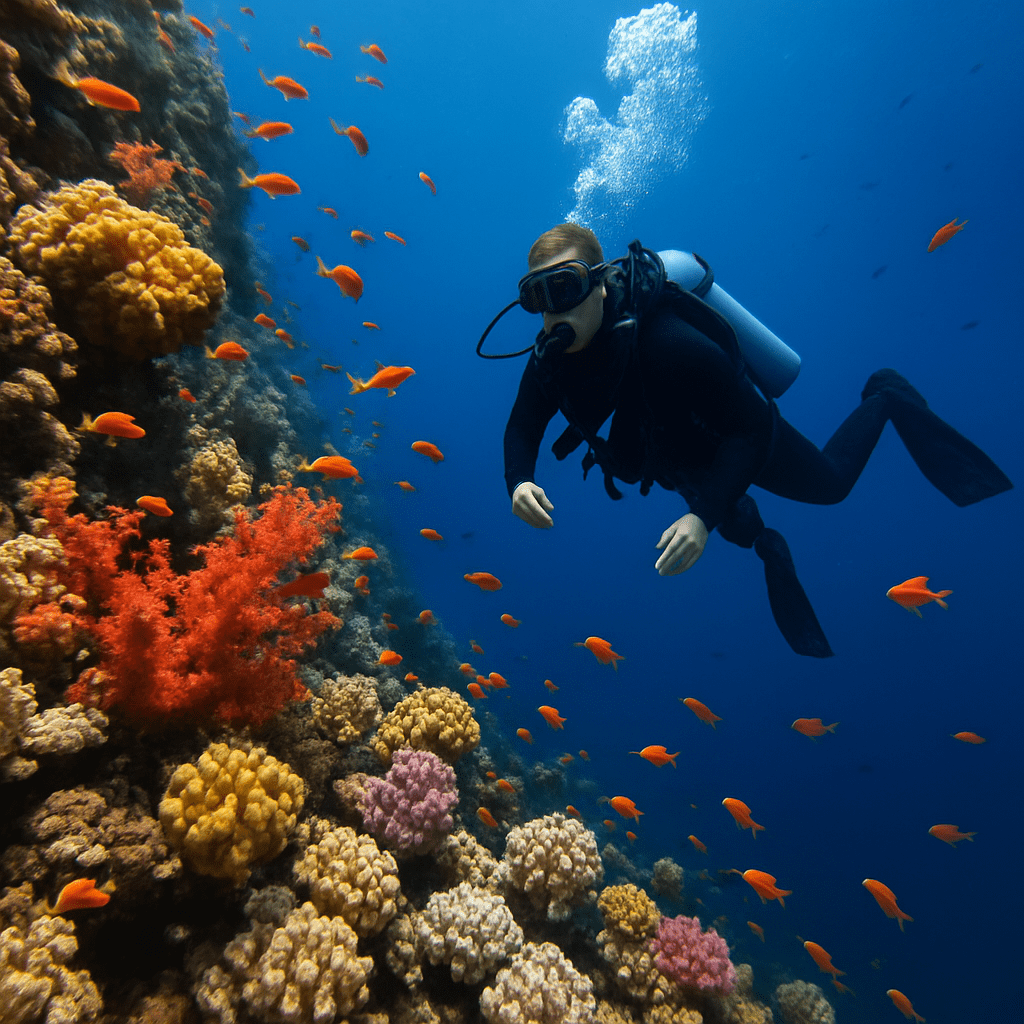
The Blue Hole in Dahab is a fascinating natural wonder that attracts divers and adventurers from all over the world. This impressive underwater cave is located on the coast of the Red Sea in Egypt and is known for its breathtaking beauty and diversity of marine life. With a diameter of approximately 130 meters and a depth of around 100 meters, the Blue Hole offers a unique opportunity to explore the wonders of the underwater world. Internationally, the spot is also known by the English names „blue hole dahab,“ „egypt dahab blue hole,“ or „dahab the blue hole.“.
The Blue Hole is not only a popular diving destination but also a place full of myths and legends. Many stories surround its creation and the challenges it presents to divers. The „Arch,“ a famous dive within the Blue Hole, reaches a depth of 56 meters and is known for its spectacular underwater landscape. However, despite its beauty, the Blue Hole also harbors dangers, making it one of the most dangerous dive sites in the world.
The region around Dahab is a paradise for divers, offering numerous dive schools and equipment rentals. Besides the Blue Hole, there are other fascinating dive sites like the Canyon and The Bells, which are also worth a visit. The visibility in the Blue Hole is often excellent, making it ideal for underwater photography. The variety of corals, fish, turtles, and occasional dolphins makes every dive an unforgettable experience.
Safety precautions are crucial to minimize the risks of diving in the Blue Hole. Experienced dive guides and careful planning are essential to ensure a safe diving experience. Diving conditions can change rapidly, so it is important to heed weather forecasts and follow the instructions of the dive guides. Numerous memorial plaques serve as a reminder of divers who have lost their lives there, underscoring the importance of caution and respect for nature.
Dahab itself is a charming town known for its relaxed atmosphere and natural beauty. The local culture and hospitality contribute to an unforgettable travel experience. In addition to diving, the region also offers opportunities for other activities such as snorkeling, windsurfing, and desert safaris. The best time to dive at the Blue Hole is between March and May, and again from September to November, when water temperatures are pleasant and visibility is optimal.
Getting to Dahab is usually done via Sharm El Sheikh Airport, followed by about an hour's drive. The region offers numerous accommodations geared towards divers and adventurers. Dahab's local cuisine is inspired by Egyptian and Bedouin culture, featuring a variety of dishes to discover. The spectacular sunsets and tranquil atmosphere make Dahab an ideal place to relax and enjoy the beauty of nature.
The Blue Hole is an important part of the Red Sea's marine ecosystem and a symbol of the challenges and beauty of technical diving. The local government and environmental organizations are working to protect the Blue Hole and its surroundings. Sustainable practices and the protection of the marine environment are crucial for the future of this unique natural wonder. Divers, tourists, and the local community share the responsibility for preserving the natural beauty of the Blue Hole.
Overall, the Blue Hole in Dahab is a must-visit for any diver wishing to experience the wonders of the Red Sea. It offers a unique opportunity to explore the geological and biological marvels of this fascinating underwater world. Diving in the Blue Hole is an unforgettable adventure that attracts divers from all over the world. The region around Dahab offers a variety of experiences suitable for both adventurers and those seeking relaxation. The Blue Hole is a place where the magic of the Red Sea reveals itself in all its diversity.
What is the Blue Hole in Dahab?
The Blue Hole in Dahab is a world-renowned destination for divers and underwater adventurers. This impressive natural phenomenon is a circular underwater cave, also known as a sinkhole. With a diameter of approximately 130 meters, it is deep yet easily accessible from the Red Sea coast, making it a popular spot for divers of all skill levels. The depth of the Blue Hole reaches about 100 meters, offering a breathtaking scenario for underwater exploration.
This Blue Hole is surrounded by myths and legends that romanticize its origin story. Some believe it was formed by a meteorite impact, while experts have determined its structure is the result of geological processes that create karst sinkholes. This fascinating blend of science and lore makes the Blue Hole even more mystical and appealing to history buffs and adventurers alike.
A key feature of the Blue Hole is its vibrant underwater world. The conditions it offers are ideal for the development of rich biodiversity. Brightly colored corals and a variety of fish teem in its depths. Marine life such as turtles and sometimes even dolphins often join them. This makes the Blue Hole not only an exciting place for technical dives but also an intact marine habitat valued for its ecological diversity.
List of the main features of the Blue Hole:
- Diameter of 130 metersOffers a vast area for divers.
- Depth of about 100 metersSuitable for both recreational and technical diving.
- Access: Directly accessible from the shore, ideal for beginners.
- Rich biodiversityHome to corals, tropical fish, and occasional sea turtles and dolphins.
- Geological structureCreated by natural geological processes as karst funnels.
Geology and Formation of the Blue Hole
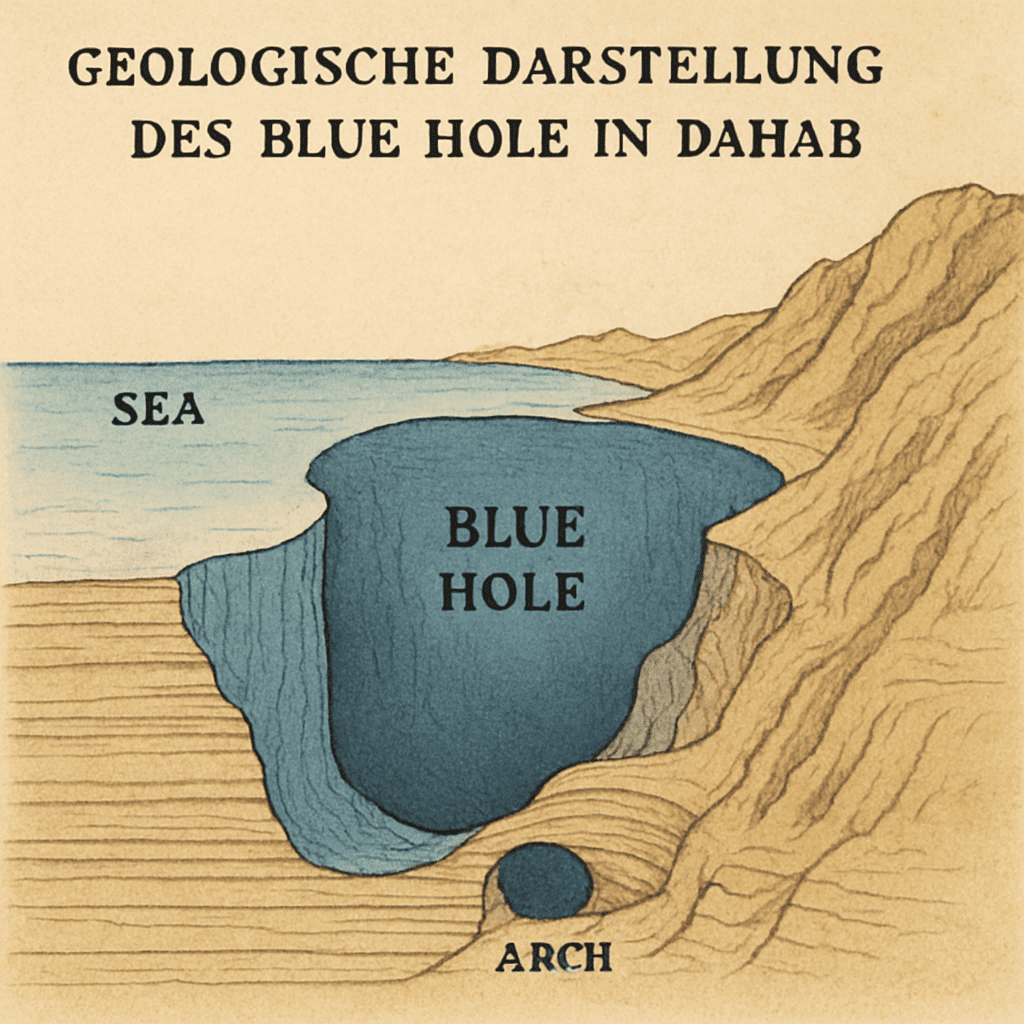
The Blue Hole in Dahab is an impressive example of the geological processes that form through erosion and the decay of limestone. These processes lead to the formation of karst sinkholes, which often occur in areas with abundant calcareous rock. Over millions of years, infiltrating water has eroded the limestone, creating what we see today as the Blue Hole. This geological development is fascinating and gives the dive site its unique character.
With a diameter of about 130 meters and a depth of 100 meters, the Blue Hole presents an enormous challenge for geologists and marine researchers. Scientists are particularly interested in the stability and formation of such deep water-filled caves. The Blue Hole also contains unique geological structures, including a so-called „arch,“ a deep tunnel structure located at around 56 meters. These natural formations are not only a challenge for divers but also an exciting area of research for scientists studying the effects of climate change and erosion on marine habitats.
Furthermore, the Blue Hole is a prime example of the harmonious interaction between the forces of nature that shape rocks and the living organisms that inhabit these structures. The limestone layers surrounding the Blue Hole are rich in fossils, bearing witness to the past presence of ancient creatures. These fossils offer valuable insights into the region's long geological history. Each layer of limestone tells a unique story of millions of years of Earth's history.
The Fascination for Divers: Why is the Blue Hole so Popular?
The Blue Hole in Dahab is a mecca for divers from all over the world. It attracts both beginners and experienced divers who appreciate the challenges of diving at extreme depths. A major reason for its popularity is the extraordinary underwater landscape that the Blue Hole offers. The turquoise water channels and the clarity of the water create a spectacular backdrop. These conditions are ideal for those who want to photograph and experience the diversity of marine flora and fauna.
Another incentive for divers is the opportunity to participate in dives that are difficult to find in other parts of the world. The Blue Hole offers technically challenging dives that test the skill and knowledge of divers. In particular, the „Arch“ is a fascinating but also demanding dive, which is undertaken by well-trained and experienced divers due to its depth and specific conditions. Many divers are attracted by the thrill, the esoteric challenges, and the associated prestige.
The unparalleled biodiversity is another reason why the Blue Hole is so popular. The habitats of corals, fish, and other marine life make every dive a unique experience. Divers have the opportunity to immerse themselves in this vibrant underwater world, so different from anything on the surface. The combination of natural beauty, a sense of adventure, and the chance to see rare marine creatures makes the Blue Hole an essential destination for divers. These aspects make diving in the Blue Hole a varied and rewarding experience.
In summary, why the Blue Hole is so popular with divers:
- Breathtaking underwater landscapes and clear visibility.
- Technically demanding dives such as the „Arch“.
- Unique biodiversity and rare marine life.
- Prestigious diving experience and thrill.
- Opportunity for underwater photography.
The most famous dives in the Blue Hole
The Blue Hole in Dahab offers numerous diving opportunities, but some dives are particularly noteworthy. One of the most famous is the „Arch.“ This underwater cave reaches a depth of about 56 meters and presents a real challenge for divers. The „Arch“ is not only deep but also surrounded by myths and stories that attract divers from all over the world. The dive begins in the Blue Hole and leads through a natural arch out into the open sea, offering a breathtaking experience.
Another notable dive is „The Bells,“ a deep descent along the reef wall that leads into the Blue Hole. Divers appreciate this entry due to its dramatic topographic features. The descent along the reef wall offers a fascinating encounter with the Red Sea's underwater world. The play of light from the sun's rays penetrating the water creates a mystical ambiance that makes the dive unforgettable.
Besides these iconic dive spots, there are other exciting locations within the Blue Hole. The „Canyon“ is known for its impressive rock formations and offers divers the opportunity to navigate through narrow passages and under natural overhangs. This environment not only provides a sense of adventure but also the chance to experience a variety of marine life up close. The marine biodiversity in these areas is remarkable, which is why these dives are particularly cherished.
In addition to these famous dives, there are many other places to explore. Here is a list of the most notable dives in the Blue Hole:
- The ArchDeep dive through a spectacular underwater arch.
- The BellsVertical entry that leads along the reef wall into the Blue Hole.
- CanyonNarrow passages and overhangs with rich biodiversity.
- Reef divingExploring the colorful and vibrant reef walls.
- Drop-offsDescending dives with exciting changes in water depths.
Each of these dives offers unique experiences waiting to be discovered by adventurous divers. The diversity and beauty of the dives in the Blue Hole in Dahab make it a must-visit for anyone looking to explore the fascinating depths of the Red Sea.
Diving Safety: Risks and Precautions
Diving in Dahab's Blue Hole can be both exciting and challenging. Due to its depth and unique geological structure, there are specific risks divers must be aware of. One of the biggest dangers is so-called nitrogen narcosis, which can occur at depths of around 30 meters. This phenomenon affects a diver's judgment and can lead to dangerous situations. Recognizing one's own physical limits and avoiding excessive depth are therefore essential.
Furthermore, the Blue Hole is known for currents that are not always predictable. These currents can become problematic, especially for inexperienced divers. Therefore, it is advisable to always stay close to your diving partner and to carefully observe the environmental conditions. Studying the dive plan and obtaining up-to-date information on weather conditions are important preparatory measures before venturing into the depths. Similarly, being accompanied by an experienced dive guide is a measure that can mitigate many risks.
Adherence to safety protocols and proper equipment also contribute to risk mitigation. Before each dive, scuba gear should be thoroughly checked and emergency procedures memorized. Particular attention should be paid to the correct use of the depth gauge and monitoring air reserves. Observing ascent rates and safety stops are other important factors that ensure safety while diving. Below is a list of essential precautions:
- Education and experienceEnsure you are sufficiently trained and have diving experience.
- Buddy SystemNever dive alone and always stay close to your buddy.
- Security BriefingListen carefully to the dive master's instructions.
- Equipment inspectionThoroughly check your equipment before every dive.
- Emergency plansDo you know the correct measures in case of panic or emergency?.
- Flow conditionsCheck the current currents and weather conditions.
- Respect depth limitsNever exceed your planned depth and avoid overly ambitious dives.
- Ascent ratesFollow the recommended ascent rates to avoid decompression sickness.
The Blue Hole in Dahab remains a fascinating destination for divers, despite its challenges. With the right preparation, mutual support, and respect for the forces of nature, divers can safely enjoy the impressive underwater landscape. Ensuring personal safety not only contributes to a better experience but also helps preserve the diving legends surrounding the Blue Hole.
Flora and Fauna: The Underwater World of the Blue Hole
The Blue Hole in Dahab is not only known for its depth and geological structure, but also for its rich underwater world. The clear visibility in the Blue Hole, often exceeding 30 meters, allows divers to fully experience the diverse biodiversity. Numerous marine creatures teem in the colorful coral gardens that surround the Blue Hole. The corals form the basis of the ecosystem, providing shelter and food for many species.
One of the highlights of the Blue Hole are the colorful reef fish that glide through the water in schools. These include angelfish, parrotfish, and the fascinating boxfish, which add color to the coral reefs. Larger marine life such as barracudas and occasional reef sharks glide majestically through the deep waters. Sea turtles are also spotted from time to time, providing unforgettable encounters for divers. The occasional sightings of dolphins are particularly spectacular, making dives a special experience.
Besides the diverse fish population, the Blue Hole is also home to a remarkable variety of invertebrates. From luminous sea anemones to whimsical-looking nudibranchs, the waters are teeming with life and movement. The presence of various species of starfish and sea urchins contributes to the astonishing biodiversity. This diversity of flora and fauna makes the Blue Hole one of the most significant diving destinations in the Red Sea. Here is a list of some notable marine creatures that divers can encounter in the Blue Hole:
- Reef fishAngelfish, parrotfish, clownfish
- Large sea creaturesBarracudas, reef sharks, sea turtles
- InvertebratesSea anemones, sea slugs, starfish, sea urchins
- Special VisitorsDolphins that occasionally swim nearby
For nature lovers and photographers, the Blue Hole offers countless opportunities to capture the fascinating underwater world. However, it is important to treat the habitat with care and respect to preserve the beauty of this unique environment. Mindful diving and refraining from touching or collecting marine life help protect the delicate reef structures and their inhabitants. The preservation of this vibrant diversity is of utmost importance for the ecological balance and the continued fascination of the Blue Hole.
Dahab and Surroundings: Activities and Attractions
Dahab, once a small fishing village, has evolved into a paradise for adventurers and those seeking relaxation. The Red Sea town offers a picturesque setting of turquoise waters and golden beaches, contrasting with the arid mountains of the Sinai Peninsula. Its relaxed atmosphere attracts travelers from all over the world. But Dahab has much more to offer than just the Blue Hole. The region boasts a variety of activities that will thrill every adventurer. From water sports like windsurfing and kitesurfing to land adventures like desert safaris and mountain biking—Dahab is an Eldorado for outdoor enthusiasts.
The surroundings of Dahab are home to some of Egypt's most spectacular landscapes. In addition to the popular diving spots, you can also discover cultural and natural attractions here. Visit the nearby St. Catherine's Monastery, one of the oldest Christian monasteries in the world, located at the foot of the majestic Mount Sinai. A hike up Mount Sinai at sunrise offers breathtaking views and an unparalleled spiritual experience. Furthermore, the region's colorful canyons, such as the Coloured Canyon, invite you to unforgettable exploration tours.
Dahab's diverse charms leave nothing to be desired. The local cuisine is a delight for the palate, inspired by Egyptian and Bedouin traditions. Numerous cafés and restaurants by the sea offer fresh seafood and traditional dishes. For travelers looking to expand their experiences, there are plenty of opportunities. Here are some activities and sights you shouldn't miss in and around Dahab:
- Water sportsWindsurfing, kitesurfing, snorkeling
- Country adventureDesert safaris, mountain biking, hiking in the Colored Canyon
- Cultural attractionsSt. Catherine's Monastery, Mount Sinai
- RelaxEnjoy the relaxed atmosphere and local cuisine in beachside cafes.
Dahab is not just a place to explore the depths of the sea, but also to experience the diverse facets of the desert and culture. The blend of adventure and relaxation makes Dahab a unique travel destination, well worth more than just a fleeting visit. The warmth of the local population and the beauty of nature create memories that will last long after returning home.
Practical tips for traveling to the Blue Hole
A trip to the Blue Hole in Dahab promises unforgettable experiences. To help you enjoy your trip to the fullest, here are some practical tips to keep in mind. The best way to get there is via Sharm El Sheikh Airport, which is well-connected by international flights. From there, Dahab is about a one-hour drive away. Rental cars or organized transfers are a convenient way to reach your destination safely.
Conscientious preparation is essential for diving at the Blue Hole. Before you enter the water, ensure you have appropriate diving equipment and have completed any necessary diving courses. Many local dive centers offer specialized courses tailored to the challenges and specifics of the Blue Hole. Your safety should always come first. When possible, hire an experienced dive guide to minimize risks.
The local area offers numerous accommodation options, from budget-friendly hostels to luxurious resorts specifically designed for divers. Therefore, careful planning of your accommodation is recommended to ensure an enjoyable and stress-free time in Dahab. The best time to visit the Blue Hole is from March to May and from September to November, when the temperatures are pleasant and the underwater visibility is ideal. Here are some additional practical tips for your travel planning:
- ArrivalSharm El Sheikh Airport, followed by a car ride to Dahab
- Diving educationPrevious diving courses, hire experienced dive leaders
- AccommodationSelection from budget-friendly hostels to luxurious resorts
- Best time to travelMarch to May, September to November
- Other equipmentSun protection and suitable clothing for warm and cool evenings
These practical tips will help you have a smooth and enjoyable trip, giving you the freedom to fully focus on your adventure at the Blue Hole. The beauty and challenges of the Blue Hole await your discovery. Enjoy your time in Dahab as you experience its unparalleled blend of adventure, relaxation, and natural wonders.
Sustainability and Protection of the Blue Hole
The Blue Hole in Dahab is not only an impressive diving spot but also an important ecological resource. Protecting this natural beauty is crucial for its preservation. In recent years, the local government, in cooperation with environmental protection organizations, has taken initiatives to reduce the impact of diving tourism. One of the main measures is the introduction of stricter rules for divers, which aim to preserve the Blue Hole's sensitive ecosystem.
Another important aspect of protection is educating visitors about the ecological significance of the area. Dive schools and tour operators offer programs that inform about environmentally friendly behavior and the importance of marine environment conservation. The local community also plays a crucial role. Many residents of Dahab are actively involved in projects aimed at protecting the Red Sea and its inhabitants.
To promote the sustainability of the Blue Hole, various measures and practices have been introduced:
- Regulation of diving activitiesLimiting the daily number of divers and enforcing dive times.
- Education and enlightenmentTraining programs that raise awareness of the dangers of pollution.
- Waste disposal initiativesRegular cleaning campaigns both on land and under water.
- Protecting coral reefsPromoting „no-take“ zones and protecting sensitive reef areas.
- Cooperation with NGOsParticipation in global projects for the conservation of marine ecosystems.
- EcotourismDevelopment of sustainable tourism strategies that prioritize the protection of the environment.
These measures are essential to preserve the Blue Hole for future generations. The collaboration between the local population, authorities, and diving communities has already shown positive results. Through continuous commitment and innovative approaches, we can ensure that the Blue Hole in Dahab remains a jewel. Every visitor can contribute through environmentally conscious behavior and by supporting local efforts. The goal is a harmonious coexistence of humans and nature that will permanently preserve the charm of the Blue Hole.
Conclusion: The Blue Hole in Dahab — A must for adventurers
The Blue Hole in Dahab is more than just a dive spot; it's a landmark of Egypt's natural and adventurous attractions. This unique underwater cave in the Red Sea, with its mysterious depth and fascinating biodiversity, attracts thousands of divers from all over the world year after year. For many divers, the Blue Hole is at the top of their dream dive destinations list. It offers an almost magical connection between the beauty of nature and the challenge of diving.
However, besides its allure as a diving paradise, the Blue Hole also demands the necessary respect and mindfulness from all who visit it. While the deep blue cavern offers an unparalleled backdrop for incredible adventures, it also serves as a reminder that nature can be both magnificent and unforgiving. Thanks to efforts in sustainable tourism and the protection of surrounding ecosystems, the Blue Hole remains an unparalleled natural wonder. It is a place where the spirit of adventure and respect meet in a wonderfully fascinating way, and a must-visit for anyone wishing to explore the depths of the Red Sea.