

The Bridge of Avignon, also known as Pont Saint-Bénézet, is a fascinating structure in southern France. It is located in the picturesque city of Avignon, which is known for its rich history and culture. Originally built in the 12th century, the bridge was an important trade route.
Today, only four of the original 22 arches remain. These remnants attract numerous tourists annually. The bridge spans the Rhône River and offers a breathtaking view of the surrounding landscape.
The bridge is not only an architectural masterpiece but also a symbol of the Provence region. It is a UNESCO World Heritage Site and a popular motif in art and literature. Discover the fascinating history and significance of this unique structure.
The Story of the Bridge of Avignon
The Bridge of Avignon was built in the 12th century during a dynamic period of medieval architecture. It played a crucial role in trade and the connection between the city of Avignon and the opposite town of Villeneuve-lès-Avignon.
Initially, the bridge consisted of 22 majestic arches. This structure boldly spanned the wide Rhône River. However, nature repeatedly showed its destructive power. Several times, the bridge was severely damaged by strong floods.
In the 17th century, a devastating flood once again forced the abandonment of reconstruction. Finally, only the four arches, which we can admire today, remained. Despite these limitations, the bridge remains an impressive testament to its time.
Important facts about the bridge:
- Originally built in the 12th century
- Connects Avignon with Villeneuve-lès-Avignon
- File made of 22 sheets, only 4 preserved today
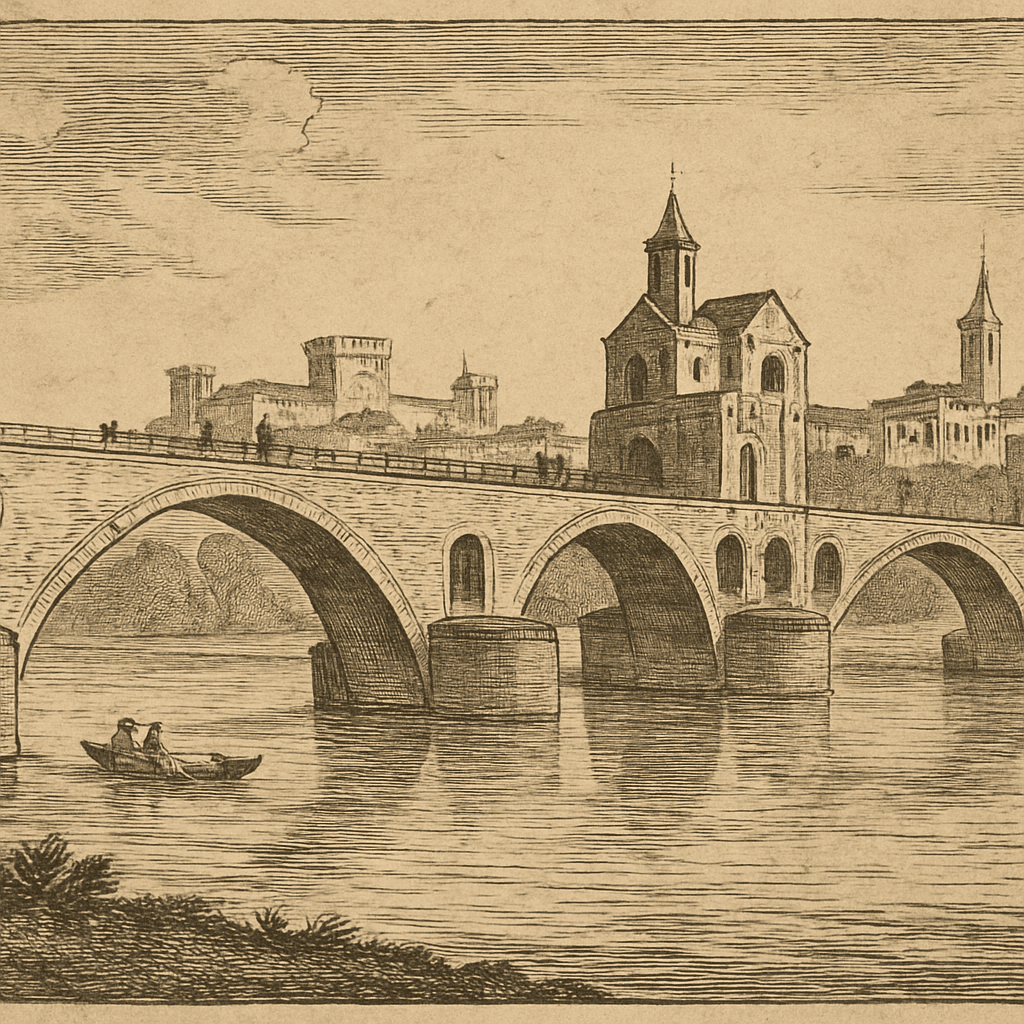
The bridge was part of the Via Agrippa, an important Roman trade route. It served as a significant connection along the Rhône. Its importance extended far beyond the borders of France.
For centuries, it has also been a symbol of engineering achievements. The bridge embodies the challenges and inventive spirit of the Middle Ages. Its history is deeply rooted in the regional identity of Avignon and remains an impressive testament to past centuries.
The Legend of Bénézet and the Building of the Bridge
The construction of the Bridge of Avignon is deeply intertwined with the legend of Bénézet. A shepherd boy from the surrounding area is said to have been divinely inspired to build the bridge. This miraculous event set the city's historical narrative in motion.
Bénézet stepped before the skeptical citizens of Avignon and preached his vision. At first, they chuckled at his enthusiasm. But when the young shepherd lifted and placed a stone of superhuman size, mockery turned to astonishment.
The local citizens and clergy saw this as a sign of divine will. Thus began the ambitious construction project in the Provence region. The legend gave the bridge a symbolic meaning that went far beyond its architectural function.
The Chapel of Saint-Bénézet, built on the bridge, serves as a lasting reminder of the young shepherd. Visitors are invited to discover the mysticism and mythological origins of the bridge. This legend remains a living part of regional folklore and attracts tourists from all over the world.
Architecture and Peculiarities of the Avignon Bridge
The Bridge of Avignon, also known as Pont Saint-Bénézet, is an impressive example of medieval engineering. Originally built in the 12th century, it spanned the Rhône River with 22 arches. Today, only four arches remain, yet its architectural charm is preserved.
The bridge's distinctiveness lies in its location. It does not run entirely over the Rhône but ends abruptly in the middle of the river. This incompleteness speaks of the Rhône's destructive power and the challenges of medieval bridge construction.
A notable architectural aspect is its adaptation to the natural conditions of the region. The bridge combines functionality with aesthetic style. This gives it a timeless elegance that fascinates both historians and architects.
Notable features include:
- The remaining four arches
- The Chapel of Saint-Bénézet
- The picturesque views of Avignon and the Rhône

by feinschliff (https://unsplash.com/@feinschliff)
The Avignon Bridge is not just an engineering feat. It is an artistic structure that reflects the history of the Provence region. Visitors can stroll along the bridge and enjoy the views of the city, making it an unforgettable part of any trip to Avignon.
The bridge through the ages: destruction and preservation
The Bridge of Avignon has a turbulent history. Originally built in the 12th century, it served as an important link between Avignon and Villeneuve-lès-Avignon. However, the constant floods of the Rhône took a heavy toll on the bridge.
Over the centuries, the bridge was repeatedly destroyed and rebuilt. The biggest challenge was the flooding, which washed away parts of the bridge. This constant threat eventually led to the bridge being abandoned in the 17th century.
Despite the destruction, significant parts of the bridge remained intact. The remaining arches stand as monumental witnesses to past times. Their impressive stability and aesthetics continue to attract visitors to this day.
Conservation efforts have helped protect the remaining structures. The bridge remains an important architectural heritage of the region. It tells the story of the challenges and perseverance of the people who once built and used it.
The Bridge of Avignon as a UNESCO World Heritage Site
The Bridge of Avignon was declared a UNESCO World Heritage site due to its cultural and historical significance. This recognition highlights its importance as an outstanding example of medieval architecture. It also represents a significant part of the history of the Provence region.
The bridge is a symbol of the cultural exchange and trade routes of the Middle Ages. Its designation as a World Heritage site underscores the need to preserve such significant structures for future generations. World Heritage status has drawn attention to the preservation efforts and the history of the bridge.

by Roelf Bruinsma (https://unsplash.com/@roelf)
As a UNESCO World Heritage site, the bridge of Avignon attracts numerous visitors annually. Tourists and history enthusiasts come to experience the impressive architecture and the eventful history of the bridge firsthand. This recognition has further strengthened Avignon as a cultural center.
The Bridge of Avignon in Folk Song and Culture
The bridge of Avignon is known worldwide through the French folk song „Sur le Pont d'Avignon.“ This song contributes to the romanticization of the bridge and spreads its fame beyond national borders. It tells of people dancing and celebrating on the bridge.
The song has the bridge deeply rooted in popular culture. Artists, writers, and musicians have drawn inspiration from this legend. The bridge appears in paintings, literary works, and music, thus remaining alive in modern culture.
Some cultural influences of the Bridge of Avignon:
- Inspired numerous paintings
- Mentioned in poems and novels
- Appears in movies and music videos

by Ryan Klaus (https://unsplash.com/@ryankphoto)
For many visitors, the cultural stories surrounding the bridge are an additional incentive to visit it. The embedding in art and culture contributes to the bridge's fascination and appeal. These cultural references make the Avignon Bridge an integral part of the region's identity.
The bridge as a tourist attraction: tips for visitors
The Bridge of Avignon is a must-see for anyone who wants to explore the beauty of Provence. It not only offers historical insights but also breathtaking views of the surrounding area. A walk across the bridge is an unforgettable experience.
Visitors can easily reach the bridge on foot as it is located near the city center. The best time to visit is either early morning or late afternoon when the light makes the stones glow in warm tones.
For history enthusiasts, a visit to the small museum on the bridge is essential. It provides information about the history and legends surrounding this bridge. This makes the visit even more lively and educational.
Here are some tips for a successful visit:
- Wear comfortable shoes
- Don't forget the camera
- Explore the Saint-Bénézet Chapel as well.

by Ryan Klaus (https://unsplash.com/@ryankphoto)
After visiting the bridge, it's worth exploring the surrounding cafes. They offer local specialties and are ideal for reflecting on the history you've experienced. The bridge is an ideal place to enjoy the connection between history, culture, and nature. For every traveler, it is an experience not to be missed.
The Bridge of Avignon and its significance for the region
The Bridge of Avignon is more than just a historical structure; it is a living symbol of the Provence region. It bears witness to the eventful history and the cultural diversity that characterizes Avignon. Its existence is a reminder of the times when the city was an important trading center.
In addition to its historical significance, the bridge plays an important role in today's tourism. It attracts thousands of visitors from all over the world every year, thereby strengthening the local economy. The Bridge of Avignon is an indispensable part of Avignon's cultural identity and serves as a magnet for culture enthusiasts.
For the residents of Avignon, the bridge is a symbol of connection. It not only connects geographical points but also people and cultures. Its sight inspires locals and travelers alike and is an impressive heritage that the region proudly shares with the world.
Conclusion: The Bridge of Avignon as a Symbol of Provence
The Bridge of Avignon stands as a timeless symbol of Provence, embodying the region's rich history and cultural diversity. It serves as a reminder of bygone eras and connects people across generations.
With its impressive architecture and rich history, the bridge remains an enduring landmark. It invites visitors to discover the beauty and magic of Provence, and represents a constant bridge between the past and the present. The Bridge of Avignon is not just a structure, but a living cultural heritage.