
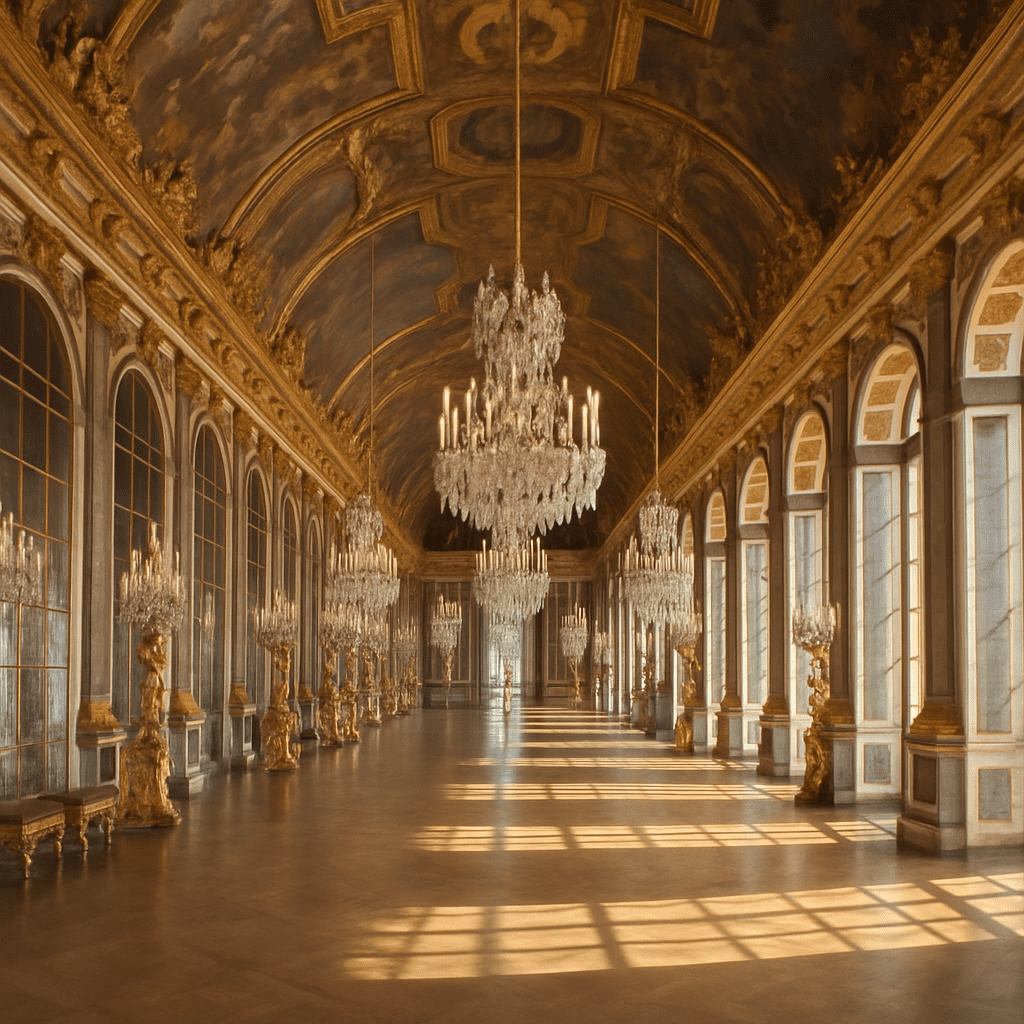
The Hall of Mirrors, also known as the Galerie des Glaces, is the heart of the Palace of Versailles. It is one of the most famous sights in France. This magnificent hall attracts millions of visitors each year.
The Hall of Mirrors was built between 1678 and 1684. The architect Jules Hardouin-Mansart designed it at the behest of Louis XIV. The hall is a masterpiece of Baroque architecture and a symbol of the power of the French monarchy.
With a length of 73 meters, the Hall of Mirrors impresses with its size. It contains 357 mirrors that reflect light and visually enlarge the room. These mirrors were an expensive and innovative addition at the time.
The ceiling frescoes in the Hall of Mirrors were designed by Charles Le Brun. They depict the achievements of Louis XIV and are an example of artistic mastery. The frescoes tell the story of the king's reign and military successes.
The Hall of Mirrors served as a reception room for foreign dignitaries. It was the scene of important historical events. The Treaty of Versailles, which ended World War I, was signed here in 1919.
The hall's architecture is an example of the fusion of art and functionality. The symmetry and proportions of the space are impressive. The Hall of Mirrors is a prime example of the splendor of French absolutism.
Visitors can see the Hall of Mirrors as part of a guided tour of the Palace of Versailles. The hall offers a breathtaking view of the Gardens of Versailles. It is a must-see for anyone exploring the sights of Versailles.
The Hall of Mirrors is not only an architectural masterpiece but also a place where history comes alive. It symbolizes the cultural heyday of France under Louis XIV and is an important part of the country's cultural heritage.
The Hall of Mirrors as the centerpiece of Versailles
The Hall of Mirrors at Versailles is no ordinary room. It is the magnificent centerpiece of the palace and captivates visitors from all over the world. Its monumental architecture and rich history make it unique among the many Versailles attractions.
As the hub of power in the 17th century, the Hall of Mirrors played a central role in the daily life of the French court. Social life reached its peak here. From opulent balls to diplomatic receptions, the hall was the place to be seen.
The significance of the Hall of Mirrors extends beyond its architectural beauty. It reflects the political and cultural ambitions of Louis XIV. The king had the hall built to demonstrate his claim to power and France's cultural superiority.
A comprehensive list of features and peculiarities highlights why the Hall of Mirrors is so significant:
- VIP reception areaPlace for state visits and diplomacy.
- Symbol of PowerRepresentation of France's strength under Louis XIV.
- Cultural CenterVenue for balls and artistic performances.
- Historical significanceSite of important treaties, such as the Treaty of Versailles.
- Unrivaled artistryMasterpieces of Decoration by Charles Le Brun.
The Hall of Mirrors impresses not only with its size but also with its harmony and elegance. Each mirror and each painting was carefully selected to create a total work of art. This attention to detail represents the high standards of perfection of that era.
Another remarkable feature of the Hall of Mirrors is its position within the grand Royal Apartments of Versailles. The hall connects the King's and Queen's apartments, thus forming a central axis of the palace. This placement underscores its significance as a focal point for court life.
Special attention deserves the innovative use of mirrors. They were a luxury item and testified to immense wealth. The mirrors reflect the sunlight streaming through the opposite windows, creating a fascinating interplay of light and shadow. This brilliant achievement by the 17th-century builders makes the Hall of Mirrors an unforgettable experience for every visitor.
History and Creation of the Hall of Mirrors
The Hall of Mirrors, also known as the Galerie des Glaces, holds a fascinating history within its walls. Its construction began in 1678 and lasted until 1684. This architectural marvel is the result of the vision of Louis XIV, the Sun King, who saw art as a means to demonstrate his power and reign.
Louis XIV commissioned Jules Hardouin-Mansart, one of the most renowned architects of the time, to design this magnificent room. Mansart, who had already played a significant role in the construction of Versailles, ensured that the Hall of Mirrors reflected the grand splendor of the Baroque style. Together with Charles Le Brun, the talented painter, they masterfully utilized their artistic and architectural talents.
The construction of the Hall of Mirrors was part of the expansion of Versailles, which was transformed from a hunting lodge of Louis XIII into a magnificent palace. Louis XIV intended Versailles to be a symbol of his absolute power, and the Hall of Mirrors was to be the centerpiece of this monument. The entire layout of the palace was designed to lead the visitor towards the radiant focal point of the Hall of Mirrors.
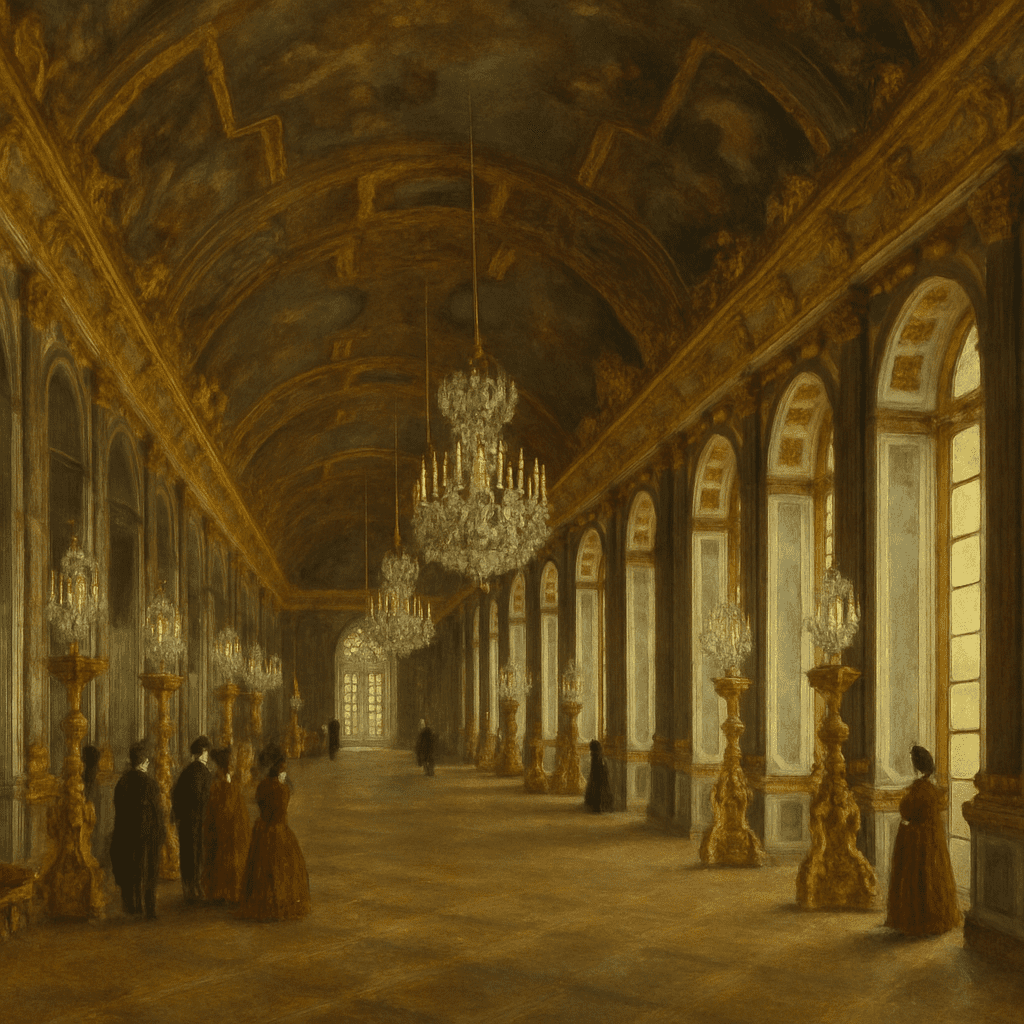
During construction, Louis XIV set new standards for luxury and opulence. Mirrors were extremely expensive and rare in the 17th century. Nevertheless, the king decided that a total of 357 mirrors should be installed in the Hall of Mirrors. These reflections enhanced the natural light, creating an illusion of space and abundance.
An important aspect of the Hall of Mirrors' history is its role as a political and diplomatic center. Kings and diplomats met here to settle crucial state affairs. The room became the scene of numerous diplomatic successes and helped to solidify France's cultural dominance in Europe.
The hall also witnessed significant historical events that influenced world politics. The most famous is the Treaty of Versailles, signed here in 1919, which ended World War I. This event underscores the historical importance of the Hall of Mirrors, which remains a symbol of both the splendor and the tragic moments of history to this day.
The creation of the Hall of Mirrors, therefore, stands not only for architectural brilliance but also for France's influence in Europe. The Hall of Mirrors tells of a time when art and politics were inextricably linked. Its impressive beauty and rich past make it an indispensable part of history and a must-see for any visitor to Versailles.
Architecture and Design: A Masterpiece of Baroque
The Hall of Mirrors in the Palace of Versailles is a prime example of Baroque architecture. This style is known for its opulence and attention to detail. The hall is an impressive 73 meters long, emphasizing its monumental grandeur. This length gives the room a majestic aura and captivates visitors.
A key feature of the Hall of Mirrors is the symmetrical arrangement of the mirrors and windows. They are positioned opposite each other, creating a fascinating play of light and reflection. The mirrors reflect the light from the windows, which face the garden side of the palace. This design makes the hall both a functional and artistic masterpiece.
Jules Hardouin-Mansart designed the Hall of Mirrors with the aim of reflecting the grandeur and power of France. The architecture emphasizes both horizontality and verticality, creating a harmonious balance between monumental elements. These technical subtleties contribute to the hall's unparalleled elegance.
Unique is the use of mirrors in the Hall of Mirrors, which were considered a luxury product in the 17th century. They were manufactured at the Saint-Gobain manufactory and represented a technical innovation. At that time, the production of large mirrors was a particularly demanding undertaking.
Key Architectural Features of the Hall of Mirrors:
- Symmetrical arrangement of 357 mirrors and 17 windows
- Custom crystal chandeliers that illuminate the entire length of the hall
- An opulent marble finish that adds luxury and richness to the room
- Gilded stucco decorations and ornate fireplaces
- Arches and columns that create visual continuity and structural elegance
- Magnificent ceiling frescoes by Charles Le Brun depicting themes of heroic and mythological stories
The Hall of Mirrors incorporates the best elements of the Baroque: drama, movement, and emotionality. Every detail of architecture and design enhances the theatrical effect. This space is not only an architectural masterpiece but also a symbol of Louis XIV's artistic ambitions.
The use of gold in the stucco work and frames lends the hall a sense of power and authority. These golden accents run through the entire decoration and harmonize with the light effects created by the mirrors. The play of light and color gives the room a distinctive Baroque feel.
In conclusion, the architecture of the Hall of Mirrors is a complex interplay of art and functionality. Its design reflects not only the aesthetics of the Baroque era but also the political significance and cultural ambitions of the French monarchy. In every corner, one can discern the care and artistic vision that went into this remarkable masterpiece.
The Mirror: Innovation and Symbolism
The mirrors in the Hall of Mirrors at Versailles are a prime example of technical sophistication and aesthetic innovation. In the 17th century, large mirrors were an expensive luxury item and a rare work of art. Their production required advanced techniques that only a few manufactories mastered. At Versailles, this luxury was put on display, symbolizing the wealth and power of the king.
The selection of 357 mirrors in the hall was no accident. Each mirror is precisely positioned to capture light and reflect the splendor of the room. This arrangement creates an optical illusion of spaciousness and dazzling brightness. The reflections enhance the effect of the natural light streaming in through the opposite windows.
The Saint-Gobain manufactory, one of the leading glassworks of the time, produced these mirrors. Their manufacturing techniques were considered groundbreaking and allowed for the production of mirrors of remarkable size. This innovation was a sign of technical superiority and aesthetic taste at the time.
Symbolic meanings of mirrors in the Hall of Mirrors:
- Power and WealthThe mirrors symbolize France's wealth and global power.
- InnovationThey represent the progress and technical skill of the craftsmen.
- Cultural HeritageMirrors are an iconic element of French cultural heritage.
- Light and EnlightenmentThey stand for the Enlightenment and the pursuit of knowledge at that time.
- ReflectionMore than physical reflection, they mirror France's influence and nobility.
The mirrors in the hall are not merely decorative; they carry a deeper meaning. They represent Louis XIV's cultural and political ambition to showcase France's splendor and glory. This symbolic significance extends far beyond their simple function, underscoring the king's intention to establish his realm as the leading nation in Europe.
The use of these mirrors transformed the palace into a monumental symbol of royal ambitions. They served as windows into a world of opulence and artistry. Each mirror was a testament to the Sun King's influence and artistic foresight. This made the Hall of Mirrors not only an architectural masterpiece but also a cultural phenomenon that solidified the standing of Versailles and France as a whole in world history.
The Ceiling Frescoes of Charles Le Brun
The ceiling frescoes in the Hall of Mirrors were created by the renowned artist Charles Le Brun. They are considered masterpieces of Baroque art and add a very special dimension to the splendor of the hall. Le Brun's work on the frescoes was a tribute to the glorious reign of Louis XIV, also known as the Sun King.
Le Brun's frescoes are not just decorative; they tell a story of triumph and grandeur. They depict the military achievements and political successes of the king. Through these artistic representations, visitors are inevitably transported back to the era of absolute monarchy and royal glory. The frescoes are known for their dynamic compositions and vibrant colors, which bring the ceiling to life.
The central composition of the ceiling is a monumental work that demonstrates Louis's influence in Europe. In the central medallion scene, the king confidently reigns over the powers that oppose him. This depiction conveys the unstoppable nature and splendor of his rule. Each fresco is carefully coordinated to emphasize the king's greatness and claim to power.
Charles Le Brun left behind an artistic legacy with his frescoes, celebrating the high art of the Baroque. They are not only visually stunning but also a manifesto of royal ideology and ambitions. Every brushstroke testifies to the careful planning and the desire to make Versailles the most impressive symbol of absolutist rule and Baroque art. Le Brun's artworks leave visitors in awe and are an indispensable part of the historical and aesthetic allure of the Hall of Mirrors.
Significant Events in the Hall of Mirrors
The Hall of Mirrors at Versailles is not only an architectural marvel but also the scene of many historical events. One of the most notable moments was the signing of the Treaty of Versailles in 1919. This event officially ended World War I and was a symbol of peace after a long period of conflict.
The hall also served as a reception room for foreign dignitaries and diplomats. These prestigious occasions underscored France's role as a cultural and political center of Europe. Louis XIV skillfully used the hall to demonstrate the power and influence of his empire. Such meetings conveyed impressions of wealth and decadence that were hard to surpass.
by Hennie Stander (https://unsplash.com/@henniestander)
Every year, a series of official ceremonies and balls took place in the Hall of Mirrors. These events were not only social highlights but also strengthened the cohesion of the French nobility. The splendor of the hall lent these events an incomparable elegance and made them unforgettable.
Special events in the Mirror Hall include:
- The Coronation of Louis's Heirs
- Important diplomatic receptions
- Royal Weddings and Celebrations
- Staging of plays and masquerades
- Announcements of new political alliances
These events left lasting memories and cemented Versailles' reputation as the ultimate symbol of royal splendor. At the same time, the Hall offered a platform for showcasing royal power on these occasions.
The Hall of Mirrors remains a significant place in European history. It offers a vibrant glimpse into the past, commemorating the diplomatic, social, and cultural developments that took place within its walls. Today, it continues to attract historians and visitors alike, providing a fascinating connection between the past and the present.
Restoration and preservation of the Hall of Mirrors
The Hall of Mirrors is a jewel of baroque architecture that requires special care. Over the centuries, it has undergone numerous restoration projects. These measures are crucial to preserve the original splendor and magnificence of this iconic space. Maintaining the hall demands precision and dedication, as every aspect of its architecture must be treated with meticulous attention.
The most important restorations took place in the 20th and 21st centuries. These projects were supported by the French government, which is committed to preserving cultural heritage. Modern techniques and materials were used to preserve the historical details. Special care was taken with the ceiling frescoes and the delicate mirrors.
One of the biggest challenges in restoration is to recreate the original condition of the hall as accurately as possible. Restorers must study old techniques and recipes to ensure authenticity. This includes using materials appropriate for the 17th century, as well as maintaining original colors and textures.
The efforts to preserve the Hall of Mirrors are of great importance for future generations. Thanks to these endeavors, the hall remains a living example of the art and architecture of the past. Visitors can continue to experience the Hall of Mirrors in all its splendor, underscoring its status as one of the most significant attractions in Versailles. The restoration work is not only a tribute to the craftsmanship of bygone eras but also a testament to France's commitment to preserving its rich historical heritage.
The Hall of Mirrors as a tourist attraction
The Hall of Mirrors is undoubtedly one of the most fascinating attractions at the Palace of Versailles. It draws millions of visitors from all over the world each year. Due to its historical and architectural significance, the hall is one of the highlights of any palace tour. Visitors get a glimpse into the opulent world of the French court here.
A walk through the Hall of Mirrors is an unforgettable experience. The 357 mirrors that adorn the entire length of the hall reflect the light, creating a breathtaking ambiance. This extraordinary combination of light, art, and elegance is endlessly fascinating. Visitors can immerse themselves in history and experience the splendor of past centuries.
The following aspects make the Hall of Mirrors a special attraction:
- Impressive 17th-century architecture
- Historical significance through the Treaty of Versailles
- Breathtaking view of the Gardens of Versailles
- Opportunity to marvel at the artistic mastery of Charles Le Brun
A visit to the Hall of Mirrors offers more than just a glimpse of its impressive architecture. It is also an opportunity to explore the achievements and ambitions of the French monarchy. The frescoes on the ceiling tell stories of Louis XIV and his military successes. This turns the visit into a journey through European history, set in an impressive atmosphere.
To experience the hall in its full splendor, it is recommended to visit it at the beginning or end of the day. The crowds are often smaller at these times. The hall also offers special events and guided tours that provide additional insights into its significant role within the castle.
Tips for Your Visit: Making the Most of the Hall of Mirrors
A visit to the Hall of Mirrors, also known as the Galerie des Glaces, is an absolute must on a trip to Versailles. To get the most out of this experience, you should plan your visit well. Arriving early can help you avoid the crowds. Mornings or late afternoons are the best times to enjoy the hall's magic without a large throng.
The castle offers guided tours that provide detailed information about the history and architecture of the Hall of Mirrors. These can be particularly helpful in understanding the artistic mastery of Charles Le Brun and the technical sophistication of the mirror installation. A guided tour can enrich the visit and offer valuable insights that one might otherwise overlook.
Some practical tips to make your visit unforgettable:
- Book in advanceAvoid long lines with online tickets.
- Take a guided tourLearn more about the historical and cultural significance.
- Bring a cameraHolding onto the impressive mirrors and frescoes.
- Plan for sufficient timeExplore not only the hall, but the entire castle.
- Wear comfortable shoesThe exploration can take several hours.
Don't forget to also visit the picturesque gardens of Versailles, which offer a breathtaking view from the Hall of Mirrors. Visiting the palace provides an opportunity to delve deep into French history and experience the splendor of Baroque architecture up close.
Conclusion: A must-see among Versailles attractions
The Hall of Mirrors at the Palace of Versailles is more than just an architectural gem; it is a significant symbol of French history. With its breathtaking beauty and impressive craftsmanship, the Galerie des Glaces attracts millions of visitors annually. It is a shining testament to the power and splendor that the French monarchy exuded in the 17th century.
Anyone visiting Versailles should not miss the Hall of Mirrors. It is not only one of the most important sights but also a place where history comes alive. The ornate ceiling frescoes and innovative mirrors showcase the cultural and artistic golden age achieved under Louis XIV. Visitors are inevitably captivated by the majestic atmosphere of the hall.
The Hall of Mirrors is a melting pot of art, history, and architecture, making a visit to Versailles an unforgettable experience. The significance of the Hall of Mirrors extends far beyond its visual splendor, offering everyone who enters the opportunity to immerse themselves in France's glorious past. Whether you're a history buff or simply fascinated by magnificent design, a visit to the Hall of Mirrors is an absolute must.