
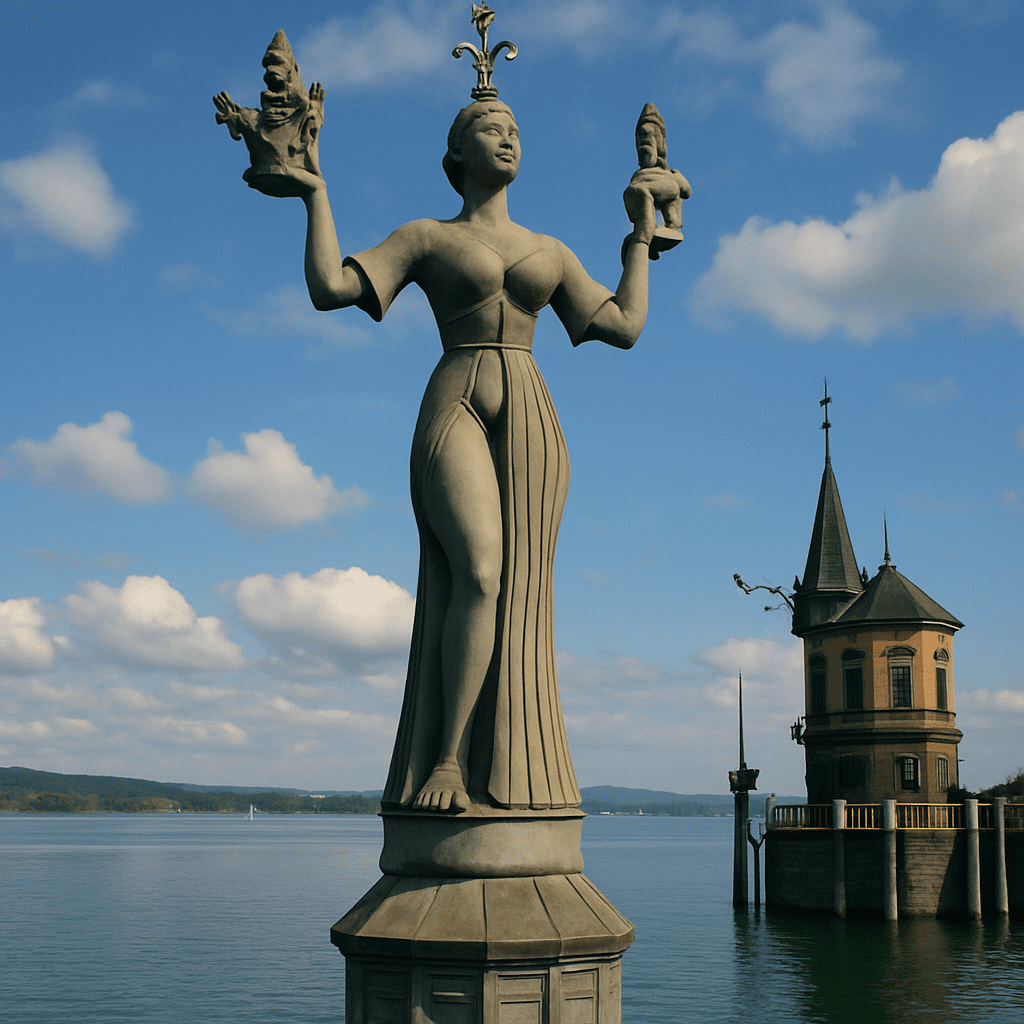
The Imperia in Constance is more than just a statue. It is a symbol of history, art, and culture. This impressive sculpture stands at the entrance to Constance's harbor and attracts thousands of visitors each year.
The nine-meter-high statue was created in 1993 by Peter Lenk. It is made of concrete and weighs approximately 18 tons. The Imperia rotates 360 degrees on a pedestal every four minutes.
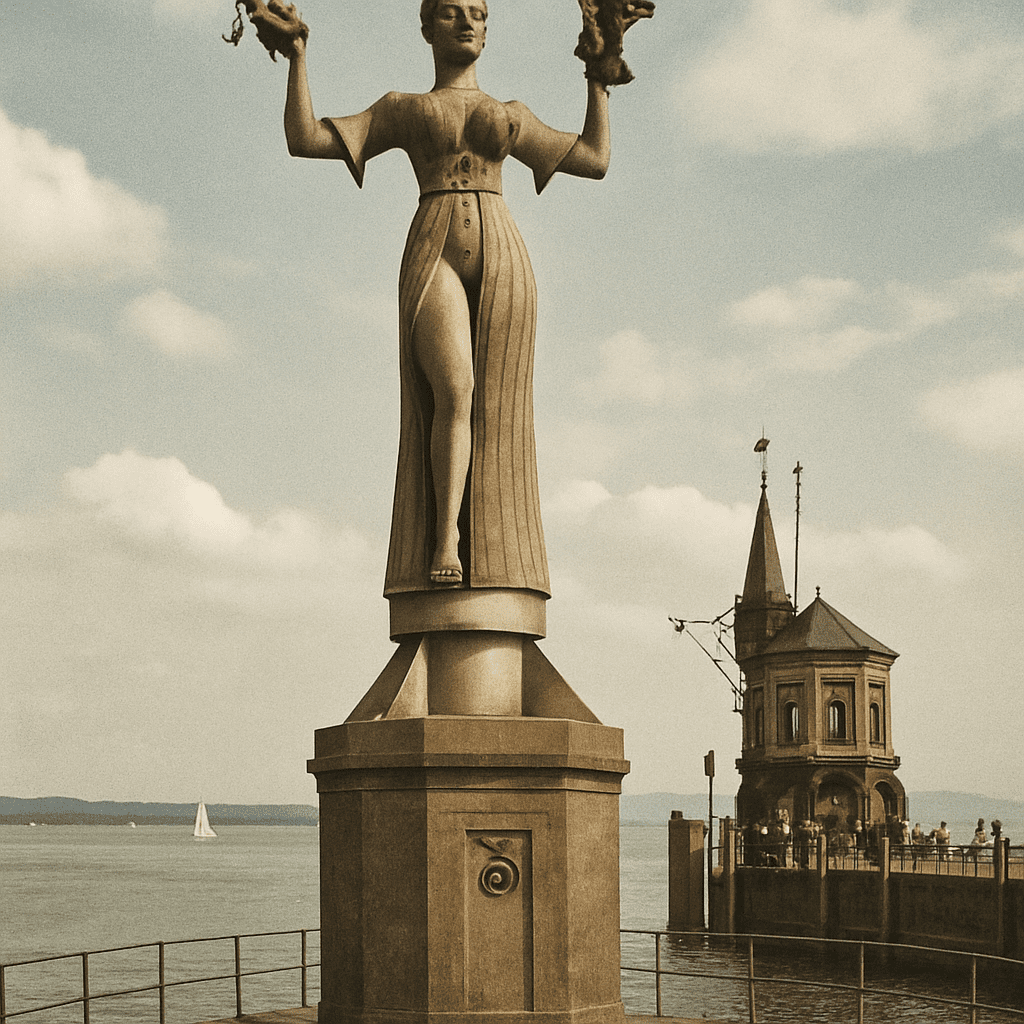
The statue depicts a courtesan holding two naked male figures on her hands. These figures symbolize Pope Martin V and Emperor Sigismund. The depiction is a satirical allusion to the power dynamics during the Council of Constance.
The Council of Constance took place between 1414 and 1418. It was a significant church meeting that aimed to restore the unity of the Church. The Imperia commemorates this historical event and the political intrigues associated with it.
The erection of the statue was initially controversial. Nevertheless, it has developed into one of Konstanz's most famous landmarks. It is a popular photo motif and a symbol of emancipation and the role of women in history.
Peter Lenk is known for his provocative and satirical works of art. The Imperia is an example of modern public art. It uniquely combines history and art.
The Imperia is not just a landmark of Constance, but also an important part of Lake Constance's attractions. It is a symbol of the region's cultural identity and an expression of artistic freedom.
The Imperia: Landmark on Lake Constance
The Imperia in Konstanz is an outstanding example of the fusion of art and history. Its prominent location on Lake Constance makes it an unmissable landmark. The statue is visible from various points along the coast and attracts numerous curious glances daily.
What makes the Imperia particularly remarkable is its ability to captivate attention not only visually but also thematically. The statue's rotation every four minutes speaks to the transience of power and the continuous cycles of history. Its presence is therefore more than just a visual delight – it encourages reflection.
The choice of figures held by the courtesan is of significant importance. They not only symbolize two historical figures but also represent the political and ecclesiastical power struggles of the time. Such details make the Imperia a living history book in sculptural form.
The Imperia is more than just a tourist attraction. It is a cultural monument that preserves local stories and makes them accessible to international visitors. The statue acts as the guardian of the harbor, welcoming both boats and visitors with its timeless charm. No other place on Lake Constance offers such a blend of historical heritage and artistic expression.
Reasons to visit Imperia:
- Symbol for the Council of, and its history
- Unique artistic design by Peter Lenk
- Rotating mechanism that conveys a sense of dynamism
- Magnificent viewpoint over the harbor of Konstanz
- Significant role in local and regional culture
A visit to the Imperia is akin to a journey into the past. It tells stories of power, church, and intrigue that are deeply rooted in the history of Lake Constance. Its ability to critically engage with its own past sets it apart from other monuments.
In conclusion, the Imperia in Constance is a must-see for any visitor to the region. Whether you are a history buff or an art lover, this monumental sculpture offers something for everyone. It remains a vibrant example of how art can enrich public spaces and a proud landmark on Lake Constance.
History of the Imperia Statue
The story of the Imperia statue begins in the early 1990s when artist Peter Lenk first adorned the shores of Constance with his provocative artwork. Lenk, known for his sharp humor and critical portrayals, found the history of the Council of Constance to be the perfect canvas for his satirical vision. The historical context of the council, which took place from 1414 to 1418, provided ample material for his creativity.
The Council of Constance was a significant event in the ecclesiastical and political history of Europe. Its aim was to end the Great Schism within the Catholic Church. During this time, several popes competed for supremacy, leading to a power struggle that threatened the unity of the Church. These power struggles and intrigues are reflected in the depiction of the Imperia.
Imperia herself is inspired by a literary figure from Balzac's work. She depicts a courtesan balancing the two smaller figures of Pope Martin V and Emperor Sigismund on her hands. These two men represent the ecclesiastical and secular powers of the Middle Ages, and the satirical portrayal comments on their often questionable morals. Lenk's work provocatively shows how women can hold influential positions of power despite their marginalized roles.
Initially, the erection of the Imperia was not without controversy. Many residents and church representatives considered the daring depiction inappropriate. The statue was first erected without official permission, which led to heated debates. Despite the controversies, however, the Imperia soon gained recognition as a significant work of art and was eventually accepted by the city of Constance.
Since its unveiling in 1993, the Imperia statue has not only gained cultural value but also tourist significance. Its history attracts history buffs and culture enthusiasts from all over the world. It stands as a symbol of the connection between art and history and is an outstanding example of engaging with the past through modern art.
Imperia is more than just a work of art today; it is a living part of Konstanz's identity. The statue reminds both locals and visitors that power and authority often have questionable foundations. In its unmistakable way, it tells the story of the Council of Constance and invites us to reflect on the complex dynamics of power. This keeps it one of the most fascinating sights in the region.
Artists and origin story
Peter Lenk is the creative mind behind the impressive Imperia statue in Constance. Born in Nuremberg in 1947, the artist is known for his satirical and often provocative artworks. Lenk regularly engages with social and political issues in his work and enjoys challenging established norms. His art encourages viewers to reflect on the themes presented and to foster debates.
The idea for Imperia arose from Lenk's fascination with the Council of Constance and the historical circumstances of this gathering. During the council, significant church decisions were made that continue to have an impact today. Lenk wanted to reflect this historical event and the power struggles involved in his art. The challenge was to create a work of art that would appeal to both the society of that time and contemporary society.
The creation of the Imperia statue was not a smooth process. Initially, Lenk encountered resistance from the city council and the church. The provocative depiction of power dynamics and the image of a courtesan angered many. However, Lenk remained steadfast, convinced of the expressiveness of his design. Finally, he found support from private sponsors who enabled the realization of the project. Despite lacking permits, Lenk placed the nine-meter-high statue in the harbor of Constance.
After its unveiling in 1993, the Imperia quickly became one of the city's most famous attractions. In addition to its cultural significance, the Imperia is also an example of artistic freedom and expression. It shows how art can be used as a means to reflect on and discuss historical and societal issues. Today, the Imperia is not only a landmark of Konstanz, but also a monument to the influence of art on public discourse.
Peter Lenk has created a lasting legacy in Constance with the Imperia statue. His ability to combine social criticism with art is impressively demonstrated by this work. The Imperia remains a symbol of artistic engagement with history and an outstanding example of how art can break through the boundaries of the everyday to reveal deeper truths.
Symbolism and Meaning of the Imperia
The Imperia statue in Constance is much more than just an impressive work of art. It is a powerful symbol that carries diverse meanings. First, the figure of the courtesan embodies the power dynamics and social structures of the Council of Constance. Her calm posture and the two male figures in her hands reflect the satirical critique of the hypocrisy and corruption associated with the ecclesiastical and secular power of this meeting.
Imperia holds two tiny male figures in her hands, representing Pope Martin V and Emperor Sigismund. This depiction is symbolic of the subjugation of male power by a female figure. This raises questions about the role of women in history and emphasizes themes such as emancipation and gender equality. The Imperia thus becomes a symbol of female strength and intelligence, which is often underestimated in a male-dominated world.
The statue's rotation every four minutes enhances its dynamic significance. This rotation symbolizes the constant change of the world and the unstoppable shift in power. The statue's movement serves as a reminder that times change and power relations are not static. This metaphor is underscored by the gentleness of the rotations, which stand in stark contrast to the weight and permanence of the concrete statue.
Another important aspect of the Imperia is its role as an artistic manifesto. It exemplifies how art can make historical and socio-political themes understandable and tangible. Lenk succeeds in connecting the past with the present while simultaneously pointing to social injustices. Through its satirical nature, the Imperia prompts the viewer to critically reflect on power and authority and to question existing structures.
In summary, the Imperia in Constance represents several significant themes and questions:
- Satirical critique of power and hypocrisy
- Emancipation and Gender Equality
- Dynamics and Changes in Power Relations
- Artistic Freedom and Protest Through Art
- Connection between past and present
This symbolism makes the Imperia a significant monument in Konstanz and one of the most unique attractions on Lake Constance. It guides the viewer into the depths of history, encourages reflection, and shows how art can enrich social discourse. Its significance goes beyond mere aesthetics and offers diverse insights into topics that remain highly relevant today.
Controversies and public discussion
The erection of the Imperia statue in 1993 was by no means uncontroversial. When Peter Lenk came forward with his proposal to create a satirical depiction of prominent clerical and secular dignitaries, it met with divided opinions. A main point of criticism was that the statue mocked the respected historical figures who played a role in the Council of Constance. Many citizens and religious institutions found the portrayal of the figures to be disrespectful and provocative.
Another point of discussion was the unrequested installation of the statue. Erected without official permission, some viewed this as an illegal appropriation of public space. Others saw it as a strong expression of artistic freedom and even a bold act against rigid bureaucratic structures. The debate surrounding the Imperia reflected how art can cross boundaries and stimulate societal discussions.
Despite initial resistance, the statue quickly gained popularity. Its impressive symbolism and artistic execution attracted more people than anticipated. Proponents argued that the Imperia had become a fascinating talking point, drawing in both tourists and locals and generating positive attention for the city. Ultimately, the Imperia became an accepted and valued addition to Constance's attractions.
The discussion surrounding Imperia also raised larger questions. How far can art go to address grievances and injustices? To what extent should art favor respectful depictions, and where is provocation justified? Such questions remain relevant today and show that Imperia is not only a monument but also a living part of the social discourse in Konstanz. The statue has proven that controversies in art can often foster dialogue and create space for new perspectives.
Imperia as a Tourist Magnet: Constance Attractions & Lake Constance Highlights
The Imperia statue has quickly established itself as an indispensable landmark in Konstanz. Its spectacular appearance and the rotating movement, which allows visitors to enjoy a 360-degree view in four minutes, make it a fascinating sight. Tourists from all over the world come to experience the mixture of history, satire, and art. Its proximity to the harbor of Konstanz also offers a great opportunity to view the statue from different angles.
Konstanz offers numerous sights, but the Imperia is undeniably a highlight. The harbor itself is an ideal starting point for further explorations around Lake Constance. Boat tours, offering visitors breathtaking views of the region, begin here. The connection of art and nature is particularly impressive and contributes to the charm of the entire area.
The attractions around Lake Constance are diverse and attract tourists year-round. Besides the Imperia, there are other cultural treasures to discover:
- The historic old town of Konstanz
- Sea Life Konstanz
- The State Archaeological Museum
- The Flower Island of Mainau
- The Wollmatinger Ried Nature Reserve
These and many other attractions make the region a first-class travel destination. However, for many, the Imperia statue remains the distinctive landmark that leaves them with lasting memories of Konstanz.
The statue's artistic significance and provocative depiction contribute to the city's cultural identity. It not only invites awe but also encourages reflection. Thus, the Imperia is more than just a simple photo opportunity; it's a memorable cultural experience.
As a tourist magnet, Imperia fulfills an important role in regional tourism. Its sheer size and striking symbolism attract both the curious and art enthusiasts alike. The statue successfully symbolizes the connection between history and modernity, culture and entertainment, thereby contributing significantly to the cultural landscape around Lake Constance.
Visitor Tips: Experience the Imperia
To fully enjoy the Imperia in Konstanz, plan your visit carefully. The best time to see the statue is in the early morning or late afternoon. At these times, the light reflects spectacularly off Lake Constance, offering ideal photo opportunities. The peaceful atmosphere also allows you to quietly observe the statue's slow rotation.
A visit to the statue should definitely be combined with a stroll through the harbor of Constance. The harbor not only offers breathtaking views of Lake Constance, but also numerous cafés and restaurants. Here you can enjoy the local cuisine and familiarize yourself with the maritime flair of the region. Especially in summer, the lively activity enlivens the surroundings and offers a magnificent backdrop.
When planning your visit, also consider the option of booking a guided tour. Many providers offer informative tours that explain the history and significance of the Imperia in the context of the Council of Constance.
Some tips to make the most of your visit:
- Book earlyGuided tours book up quickly, especially during peak season.
- Wear comfortable shoesThe surroundings invite leisurely walks.
- Have camera readyThe Imperia offers countless perfect photo opportunities.
- Observe the weatherSunshine really brings out the statue.
- Read literature beforehandBackground knowledge about the Council of Constance enriches the visit.
One last tip: Don't miss the opportunity to take one of the Lake Constance boat tours. From the boats, you'll have a unique view of the Imperia and the surrounding landscape. This perspective gives you a sense of the statue's size and significance, which appears even more impressive from the water.
In summary, Imperia in Konstanz offers not only a deep insight into history but also an experience for all the senses. Plan enough time to discover the numerous facets of this unique attraction at your leisure.
Conclusion: Imperia as a Symbol of Art, History, and Identity
The Imperia statue in Konstanz stands not only as an impressive work of art but also as a strong expression of the connection between art and history. It symbolizes the power and influence exerted during the Council of Constance, while simultaneously highlighting the role of women in historical and social contexts. The statue serves as a reminder of how art can mirror societal conditions and points to the complex power structures of past times.
Furthermore, the Imperia is a remarkable example of Konstanz's cultural identity. Its presence in the harbor is not only a draw for tourists but has also established itself as an integral part of urban life. It contributes to the city's cultural diversity and stands as a lasting testament to the freedom of artistic expression. Additionally, the story of its controversial erection draws a parallel to often conflicting views on public space and its use.
The Imperia thus remains a powerful symbol of cultural continuity and artistic heritage on Lake Constance. Its depiction of Pope and Emperor in the hands of a courtesan offers a provocative yet instructive perspective on historical events. As an unforgettable landmark, it successfully unites past and present, art and history. It reminds visitors that art not only serves to beautify but also to stimulate social discourse and contribute to cultural education. A visit to the Imperia is therefore more than just a tourist attraction – it is a personal invitation to reflect on the roles of power and freedom in our world.