
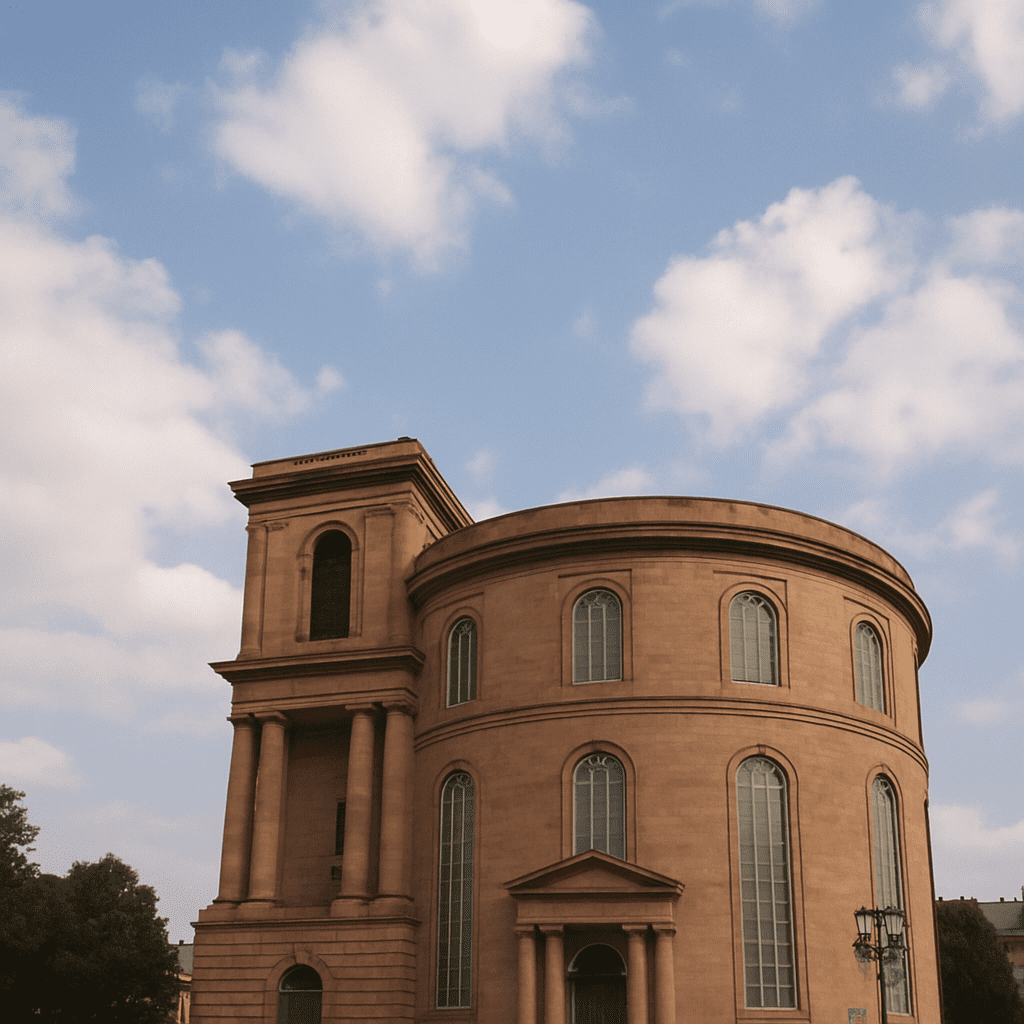
The Frankfurt Paulskirche is a significant landmark in Frankfurt am Main. It stands in the heart of the city and attracts numerous visitors annually. Its historical importance and architectural beauty make it a must-see for anyone interested in German history.
Built between 1789 and 1833, St. Paul's Church is a symbol of democracy and freedom. In 1848, Germany's first freely elected National Assembly convened here. This assembly marked a turning point in German history, making St. Paul's Church a place of national significance.
The architecture of St. Paul's Church is neoclassical and impresses with its simple elegance. Its round form was unusual at the time of construction and still attracts attention today. Despite severe damage in World War II, the church was rebuilt and shines with new splendor today.
Today, St. Paul's Church serves as a venue for exhibitions, concerts, and political events. It is a living monument that celebrates the achievements of democracy. The simple interior decoration emphasizes the importance of the events held here.
A well-known event that took place in St. Paul's Church is Martin Walser's speech. This speech is an example of the significant political and cultural events that occur here. St. Paul's Church is a place where history comes alive and dialogue is fostered.
As one of Frankfurt's most important sights, St. Paul's Church attracts tourists from all over the world. It is a popular destination for anyone interested in German history and culture. Guided tours offer deep insight into the history and significance of this unique place.
The Paulskirche is not just a historic building, but also a symbol of Germany's unity and freedom. It is a place of remembrance and a reminder of the democratic values rooted in its history. Its central location in Frankfurt's old town makes it easily accessible and an important part of the Frankfurt skyline.
In St. Paul's Church, the past is connected with the present. It is a place of inspiration and courage, embodying the values of the Enlightenment and human rights. As a living testament to German history and culture, it is an important site for conveying history and culture to future generations.
History of St. Paul's Church in Frankfurt
The history of Frankfurt's St. Paul's Church is deeply rooted in the development of German democracy. Construction of the church began in 1789, a significant year in European history, with the French Revolution as its backdrop. Over several decades, the church was erected with great care and neoclassical beauty.
The construction of St. Paul's Church was finally completed in 1833, and it initially served as the main church for the citizens of Frankfurt. Its completion coincided with a period of political and social upheaval in Germany. These circumstances contributed to St. Paul's Church becoming a symbol of the burgeoning movements for unity and freedom.
The most famous moment in the history of St. Paul's Church came in 1848. In that year, the first freely elected national assembly on German soil convened within its walls. This assembly aimed to draft a constitution that would secure the unity and freedom of the German nation. Although these endeavors ultimately failed, St. Paul's Church remained a powerful symbol of democratic aspirations.
The significance of St. Paul's Church as a center for democratic aspirations grew steadily. Over the years, it hosted numerous political and cultural events. This diversity contributed to St. Paul's Church becoming a vibrant place for meeting and discussion in Frankfurt.
A dark chapter in the history of St. Paul's Church was World War II, during which it was heavily damaged. The air raids on Frankfurt left only a ruin of the once proud church. After the war, however, it was restored as one of the first major buildings in the context of post-war reconstruction in Germany.
The reconstruction of St. Paul's Church was completed in 1948, exactly one hundred years after the first National Assembly. This reconstruction symbolized a renewed commitment to the democratic past and the achievements of citizens. The decision to keep the church simple was a deliberate statement: the focus was on commemorating the democratic values of the 1848 era.
The history of St. Paul's Church is closely intertwined with the history of Germany and Europe. It stands as a living monument to freedom and democracy and is an integral part of the cultural heritage. Throughout its long history, it remains a place of remembrance, warning, and hope.
Architecture and Reconstruction
The Frankfurter Paulskirche is a prime example of Neoclassical architecture. With its distinctive round shape, it breaks away from the typical characteristics of its time. This form, rather unusual for church buildings of the 18th century, gives the structure a remarkable presence. The simplicity of the design underscores the importance of the site as a meeting place for significant events.
A striking feature of St. Paul's Church is the large hall construction in its interior. This was designed to accommodate a broad audience. The architecture was intended to support the gathering of people and serve as a platform for public debate. The lighting from large windows creates a bright and inviting atmosphere.
During World War II, St. Paul's Church suffered considerable damage from air raids. The destruction was extensive, and only the outer walls remained. The reconstruction of the building presented a significant challenge. The decision to rebuild St. Paul's Church was more than an architectural undertaking. It was a symbolic project that embodied the rebirth and protection of democratic values.
The reconstruction, which was completed in 1948, deliberately eschewed architectural pomp. A major priority was functionality. The understated interior design was intended to focus attention on the assemblies and events held in St. Paul's Church. The decision for a simple design reflects a respectful return to the fundamental principles of democratic assemblies.
Key Features of the Architecture and Reconstruction of St. Paul's Church
- Neoclassical architecture with a round base
- Large hall construction for assemblies
- Large windows for natural lighting
- Simple interior design after reconstruction
- Symbolic Reconstruction for Democratic Values
The reconstruction of St. Paul's Church did not merely result in the restoration of a historic structure, but also in a modern interpretation of its original intentions. This reinterpretation stands as a lasting testament to Germany's resilience and commitment to forging a new identity following the ravages of war. The emphasis on simplicity and functionality highlights the historic assemblies that took place within its walls, ensuring St. Paul's Church continues to serve as a vital forum for dialogue and democracy.
St. Paul's Church as a Symbol of Democracy
The Frankfurt St. Paul's Church is a cornerstone of German democratic history. It is inseparably linked with the events of the revolutionary year 1848. Within these walls, the country's first freely elected National Assembly met to debate a liberal constitution. This gathering marked a turning point and laid the foundation for parliamentary processes in Germany.
The year 1848 is considered the birth of the German democracy movement. Delegates gathered in St. Paul's Church to shape the country's future. This assembly brought together people from diverse political and social backgrounds. Their task was to draft the constitution for a united German state through heated discussions. Despite its short-term political effects, its legacy remains vibrant in German history.
The significance of St. Paul's Church as a symbol of democracy was further enhanced by its reconstruction after the destruction of World War II. The rebuilding underscored Germany's commitment to restoring and preserving democratic values. This decision highlighted the importance these ideals retained even in the post-war era. The architecture was kept simple to focus attention on Enlightenment ideas and the political legacy.
Today, St. Paul's Church is far more than a memorial site. It is a place for lively encounters and the active exchange of democratic values. Public events are regularly held here, reviving the spirit of 1848. Discussions, award ceremonies, and exhibitions foster dialogue and contribute to political education. Here, the importance of democracy and freedom continues to be celebrated and promoted.
As part of the UNESCO World Heritage, Frankfurt's St. Paul's Church embodies a historical commitment. Its role constantly reminds us of the achievements and responsibilities that come with democratic ideals. It is not only a symbol of the pursuit of freedom, but also of the continuous struggle to preserve and strengthen democratic processes worldwide. St. Paul's Church thus remains a living monument, connecting the past with the future.
Significant Events and Speeches in St. Paul's Church
The Church of St. Paul in Frankfurt has witnessed numerous significant events throughout its long history. Its walls have hosted many debates and speeches that influenced Germany's political landscape. Since 1848, the church has served as a stage for pivotal historical moments. This institution stands as a witness and enabler of social progress.
Besides the National Assembly of 1848, many other occasions were of great significance. The Paulskirche has served as a venue for high-profile political speeches. Prominent figures, including heads of state and intellectuals, have spoken here. These speeches have often sharpened awareness of democracy and human rights and contributed to a deeper understanding of historical and political issues.
A striking example is the awarding of the Peace Prize of the German Book Trade. This award ceremony attracts international attention and honors individuals who have made a significant contribution to peace. The Peace Prize is awarded in St. Paul's Church and underscores Frankfurt's role as a city of dialogue and understanding. The speeches of the award recipients inspire the audience and promote intercultural exchange.
Here is a selection of other important events in St. Paul's Church:
- Speeches by German presidents addressing the guiding principles of German society.
- International conferences that focus on global challenges and solutions.
- Awards that honor significant contributions in the fields of art, science, and politics.
- Commemorative events that reflect important moments in German and European history.
Despite its age, St. Paul's Church remains an active platform for important socio-political discussions. Permanent exhibitions and conferences ensure that the church continues to be dedicated to the preservation and promotion of the democratic idea. St. Paul's Church is a place where past and future, words and deeds come together.
The Martin Walser Speech in Frankfurt's Paulskirche
Particularly noteworthy is the speech by author Martin Walser, which took place in St. Paul's Church in 1998. This speech was part of the awarding of the Peace Prize of the German Book Trade. Walser's words triggered a broad societal debate and underscored the role of St. Paul's Church as a venue for controversial and groundbreaking discussions. His statements on memory culture and the question of guilt struck a raw nerve of the nation.
Walser's speech addressed how to deal with Germany's past and the necessity of learning from history. He advocated for reconciliation with the past without forgetting it. These statements were made at a time when the national memory was being discussed. Through his direct address, Walser provoked a broad reaction in the media and the public. His words show how St. Paul's Church can serve as a stage for significant societal debates.
The controversy surrounding the speech made it clear that the engagement with history is far from over. It underscored the importance of open dialogue and nuanced perspectives within society. Martin Walser's speech remains a lesson in how literature and the art of language can influence societal processes. The Paulskirche continues to embody its function as a place of political, social, and cultural resonance.
The Paulskirche Today: Usage and Significance
Today, St. Paul's Church in Frankfurt presents itself as a versatile center for cultural and political events. It is far more than just a historic building; it is a dynamic place that bridges the gap between past and present. This connection between historical heritage and current relevance constitutes its special charm.
As a popular venue, St. Paul's Church attracts visitors from all over the world. Numerous events regularly take place there, highlighting the building's significance. The range of events is enormous, from exhibitions and readings to political forums. Each event contributes to underscoring the democratic values that St. Paul's Church symbolizes.
Another important feature of St. Paul's Church is its use as an educational center. Guided tours and workshops offer insights into German history and the legacy of democracy. Students, schools, and history enthusiasts come here to learn more about the role of St. Paul's Church over the years. These educational initiatives are crucial for raising awareness of the importance of democracy.
St. Paul's Church is not only of interest to tourists but also an important meeting place for the local population. It facilitates encounters and dialogues that overcome cultural barriers. This strengthens the sense of community and cultural exchange within Frankfurt's population and beyond. The church is thus a place of inclusion and diversity.
Here is a list of today's uses and meanings of St. Paul's Church:
- Venue for exhibitions and cultural events
- Venue for political debates and forums
- Educational center with guided tours and workshops on history
- Platform for award ceremonies such as the German Book Trade Peace Prize
- Place of encounter and cultural exchange
As a symbol of reconstruction and democracy, St. Paul's Church remains invaluable to Frankfurt and the surrounding area. Despite its history, the church has retained its resilience and spirit of innovation. It continues to inspire people and remains a vibrant monument that promotes the values of democracy and peace. In the present day, St. Paul's Church is an important part of Frankfurt's identity, and its heritage is carefully maintained and passed on.
St. Paul's Church as a Frankfurt landmark
The St. Paul's Church in Frankfurt is one of the city's most remarkable sights. Its historical significance and architectural uniqueness attract numerous tourists annually. Centrally located in the old town, St. Paul's Church is easily accessible and an ideal starting point for exploring Frankfurt's history.
Visitors to St. Paul's Church are drawn not only by its impressive architecture but also by the rich cultural heritage it houses. The simple yet elegant interior provides the perfect setting to reflect on the important events that took place here. Its symbolism as the „cradle of German democracy“ makes it a significant cultural heritage site.
The St. Paul's Church offers a variety of guided tours and informational events that highlight its significance. These programs are particularly valuable for history enthusiasts and educational travelers. They shed light on both the political and cultural aspects of the building, offering deep insights into its role in shaping German democracy.
Among the main attractions of St. Paul's Church are:
- The historical exhibition on the German National Assembly of 1848
- Contemporary artworks and historical documents
- Tours of the Paulskirche's architecture and history
- Regular events and readings
- The impressive Peace Prize of the German Book Trade
The Church of St. Paul is not only a place of learning but also a meeting point for cultural exchange. International visitors and locals meet here to experience the cultural diversity of Frankfurt. This makes it an important part of the city's cultural and tourism landscape.
Beyond the classic sights, St. Paul's Church offers a unique opportunity to delve into German history. Its significance as an iconic building and its role as a cultural and historical center make it a must-see for any visitor to Frankfurt.
Conclusion: The Frankfurt St. Paul's Church as a living monument
The St. Paul's Church in Frankfurt stands as an impressive symbol of German democracy and freedom. Its historical significance as the venue for Germany's first freely elected national assembly in 1848 makes it a unique cultural monument. Despite the destruction of World War II, it shines today in its rebuilt splendor, showcasing the resilience and renewed rise of German values.
Furthermore, St. Paul's Church serves as a vibrant hub for conferences, exhibitions, and political events, continuing its rich tradition of dialogue and exchange. It is not only a place of remembrance but also of hope and inspiration for future generations. As an indispensable part of the Frankfurt skyline, it embodies the past and present, constantly reminding us of the continuous renewal and progress of democratic ideals. St. Paul's Church remains a living testament to the achievements and challenges that have shaped the path of the German nation.