
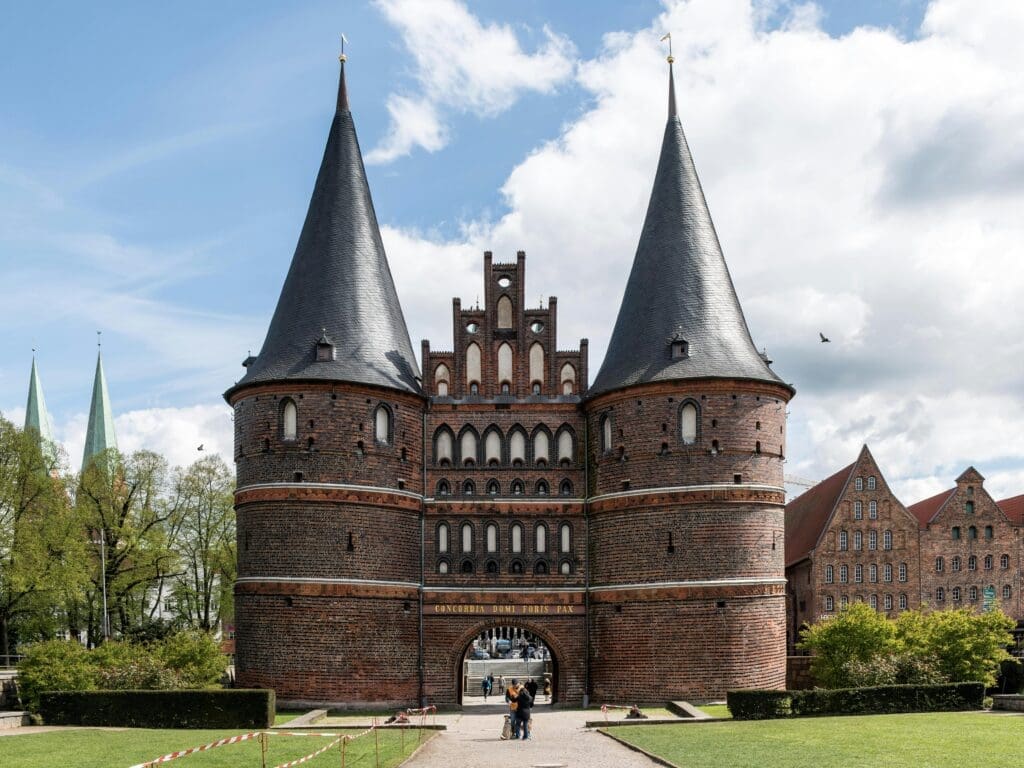
The Holstentor is Lübeck's most famous landmark. It attracts thousands of visitors annually. Its impressive architecture and rich history make it a must-see for any visitor to Lübeck.
Built in the 15th century, the Holstentor is a masterpiece of Brick Gothic architecture. It stands proudly at the entrance to Lübeck's Old Town. This Old Town is a UNESCO World Heritage site and is known for its well-preserved medieval structures.
The Holstentor was once part of the city fortifications. It served as a defensive structure and city gate. Today, it houses a museum that illuminates the history of Lübeck and the Hanseatic League.
The inscription „CONCORDIA DOMI FORIS PAX“ adorns the gate. It means „Harmony within, peace without.“ These words reflect the historical significance of Lübeck.
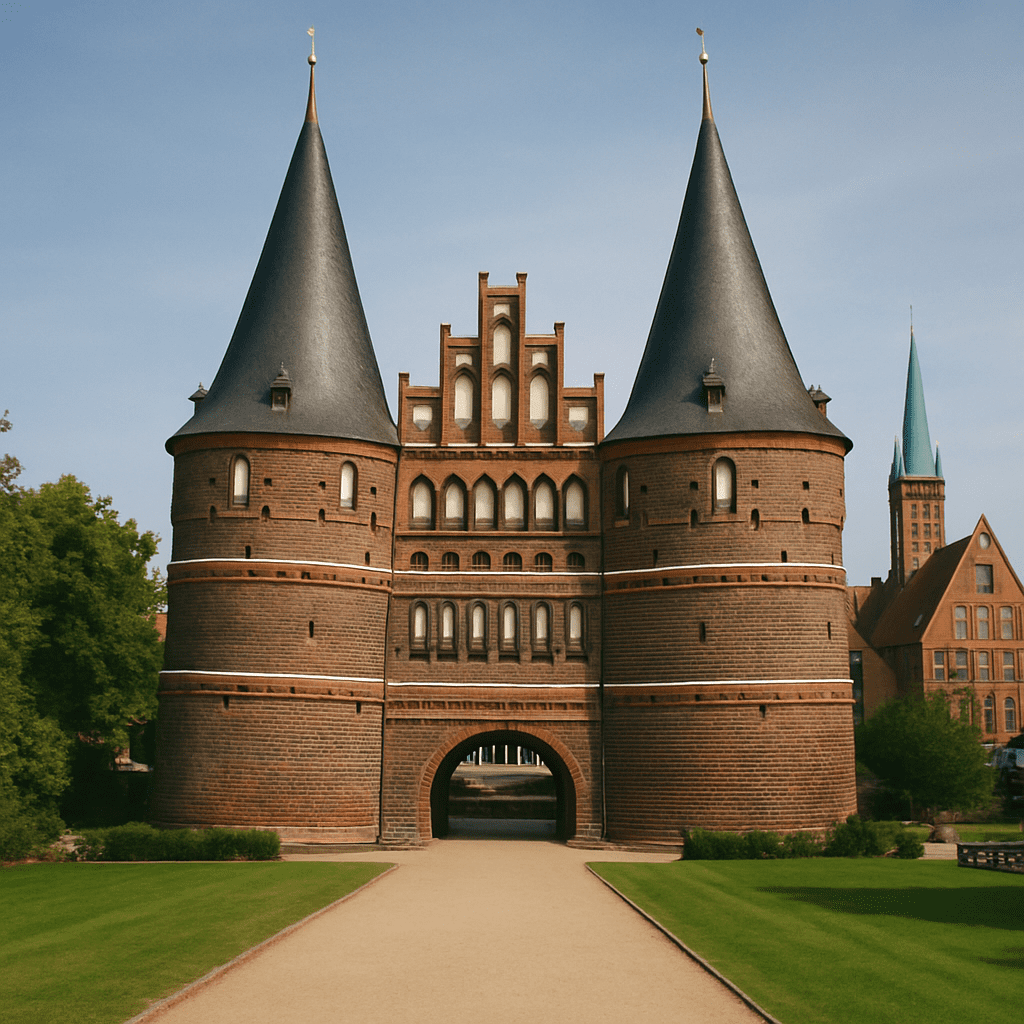
The towers of the Holstentor are slightly tilted. This architectural feature gives it a distinctive appearance. It is a symbol of the defensiveness of the Hanseatic era.
The Holstentor is not just an architectural masterpiece. It is also a symbol of Lübeck's economic and political power in the Middle Ages. It is a popular photo subject and a must-see for tourists.
Lübeck offers many sights, but the Holstentor remains a highlight. It is an important part of the city's cultural heritage. Visitors can experience Lübeck's history and beauty up close here.
The Holsten Gate: Symbol of the Hanseatic City of Lübeck
The Holstentor is more than an impressive structure. It embodies the glorious past of the Hanseatic city of Lübeck. In the Middle Ages, Lübeck was one of the most important cities of the Hanseatic League. The Holstentor was the proud symbol of its economic and political significance.
Lübeck became a trading center due to its strategic location. The Holstentor marked the entrance to this flourishing city. It reminded merchants and travelers of Lübeck's power and influence. The city was widely known as the „Queen of the Hanseatic League.“.
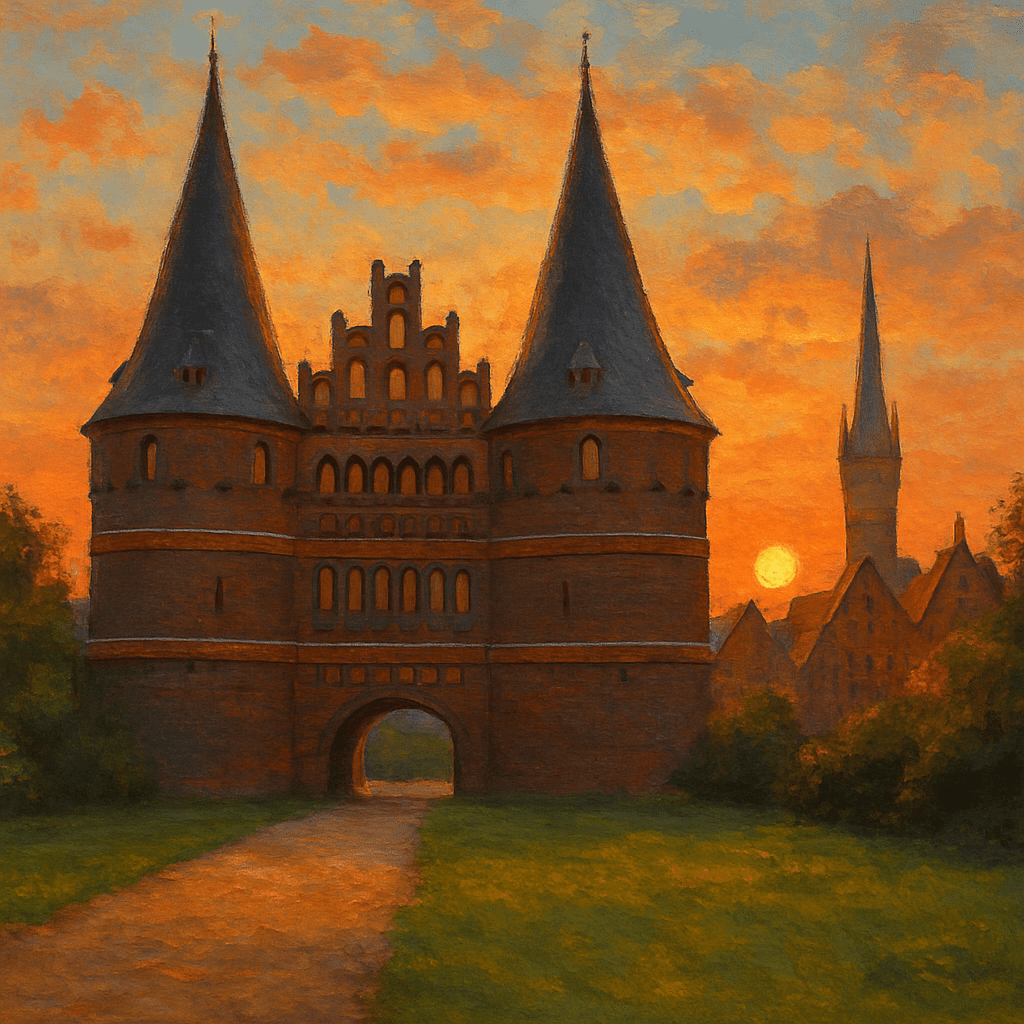
The architecture of the Holsten Gate is testament to the engineering prowess of the Hanseatic era. Brick Gothic is presented in its finest form. The slender towers and the central gate arch are impressive masterpieces of this epoch.
Today, the Holstentor continues to stand as a symbol of Lübeck's proud history. It reminds visitors of the golden age of the Hanseatic League. As a part of Lübeck's identity, it remains unforgettable. Visitors can feel the spirit of history as they walk through the gate. Every visit to the Holstentor is a journey into the past and an experience that resonates long after.
History and Construction of the Holsten Gate
Construction of the Holstentor began in 1464. Completion took several years, and it was finished in 1478. It was built as part of Lübeck's medieval fortifications. These walls protected the city from intruders and enemies.
The Holsten Gate replaced an older gate that was no longer adequate. Construction was influenced by Hanseatic cities, which were fortifications of particular importance. The strong wall structure and towers were strategically planned to repel attacks.
The gate consists of two mighty towers and a central archway. This construction offered effective defense against sieges. The foundations could efficiently withstand enemy attacks.
Over the centuries, the Holstentor has served various roles. It functioned not only as a defensive structure but also as a symbolic entrance to the city. The changing uses shaped its function and significance over time.
In 1945, extensive restoration work was carried out to save it from decay. This work kept its historic structure intact and preserved its heritage for future generations. Today, the Holstentor embodies the historical development and architectural tradition of Lübeck. It remains a symbol of the preservation of medieval structures and defensive art.
Architecture and Special Features: Brick Gothic to Perfection
The Holstentor is an outstanding example of Brick Gothic. This architectural style is typical of Northern Germany and the Hanseatic cities. The use of brick was widespread in this region.
The striking feature of the Holsten Gate is its construction with red bricks. This gives the building its distinctive appearance. The use of brick demonstrates the craftsmanship of the builders at that time.
The design of the Holstentor's facade is particularly impressive. Ornamental patterns and decorations can be found everywhere. These details are characteristic of Brick Gothic and reflect the aesthetic.
Notable architectural features of the Holstentor include:
- Two mighty round towers that appear slightly tilted
- A high, curved gable that forms the central element
- Arrow slits and oriels, which give the gate a defensive character
These elements make the Holstentor an architectural masterpiece. It embodies both practicality and beauty. Its symmetrical structure and decorative design continue to fascinate visitors to this day.
In summary, the Holstentor is a prime example of the artful use of brick in medieval architecture. It is a living testament to the design possibilities of that era and an important part of Lübeck's historical heritage.
The Holstentor as part of the Lübeck city fortifications
The Holstentor was an essential part of Lübeck's medieval city fortifications. It served as one of the main gates to protect the city from attackers. Its strategic location made it a key point of defense.
The mighty towers of the Holsten Gate bear witness to the defensiveness of that era. The thick walls and limited access routes offered protection from invaders. It was not just an entrance, but also a bulwark against enemies.
The construction of the Holstentor in the 15th century represented a significant advancement in urban planning. Its well-thought-out design protected Lübeck for centuries. Today, the Holstentor serves as a reminder of the Hanseatic city's rich history and strategic importance. It is a proud remnant of once imposing fortifications.
The inscription „CONCORDIA DOMI FORIS PAX“ and its meaning
The Holstentor bears the Latin inscription „CONCORDIA DOMI FORIS PAX“. These words can be translated as „Concord within, peace without“. This message reflects the desire for harmony within the city walls and peace with the outside world.
The inscription is symbolic of Lübeck's political and economic stability in the Middle Ages. The city was an important hub of the Hanseatic League and strove for peaceful trade. The words on the Holstentor underscored this aspiration to present Lübeck as a bastion of harmony and security. They remain an important symbol of the city to this day.
Evolution of Use: From City Gate to Museum
Over the centuries, the Holstentor has taken on many roles. Originally conceived as a city gate, it primarily served for defense and control of city traffic. Its massive walls and towers stood as the first obstacle for attackers. This underscores the strategic importance of the city of Lübeck in the Middle Ages.
Over time, the function of the Holsten Gate changed. It also served as a prison at times. The thick walls offered ideal conditions for the secure keeping of prisoners. This use shows how versatile the structure was employed to serve the city.
In the 19th century, the gate and its function underwent another transformation. With the decline of military threats, it lost its defensive function. Instead, thoughts turned to the cultural significance and preservation of the structure.
Today, the Holstentor houses a museum dedicated to the history of Lübeck and the Hanseatic League. Visitors can experience exhibitions on trade history, urban development, and the Hanseatic League. Thus, the Holstentor is more than an architectural masterpiece. It is a vibrant mediator of the past and a part of Lübeck's vibrant present.

by Wolfgang Weiser (https://unsplash.com/@hamburgmeinefreundin)
The Holsten Gate Museum: Insights into Lübeck's History
Today, the Holstentor is far more than just a historical monument. It houses a fascinating museum that offers visitors deeper insights into Lübeck's rich history. The Holstentor Museum attracts history enthusiasts from all over the world and brings the past to life.
The museum's exhibitions focus on various aspects of Lübeck and Hanseatic history. From the golden age of the Hanseatic League to everyday stories, there is much to discover. Visitors can marvel at original artifacts that illustrate medieval life. The museum offers interactive opportunities to deepen knowledge playfully.
Here are a few museum highlights:
- Development of the Hanseatic League and Lübeck's Role
- Historical Ship Models
- Documentation of medieval trade
- Exhibits on the history and development of the city
These exhibitions help to develop a deeper understanding of the Hanseatic city's past. In addition to the exhibition itself, the museum offers additional information on the restoration and preservation of the Holsten Gate. This makes it clear how important this landmark is for the cultural heritage of the city. The Holsten Gate Museum thus makes a valuable contribution to the preservation and communication of Lübeck's history.
The Holstentor and the Old Town of Lübeck: UNESCO World Heritage Site
The Holstentor is more than just an impressive structure; it is an integral part of Lübeck's Old Town. This Old Town, an example of medieval city planning, was declared a UNESCO World Heritage Site in 1987. This recognizes the historical and cultural value of the area worldwide.
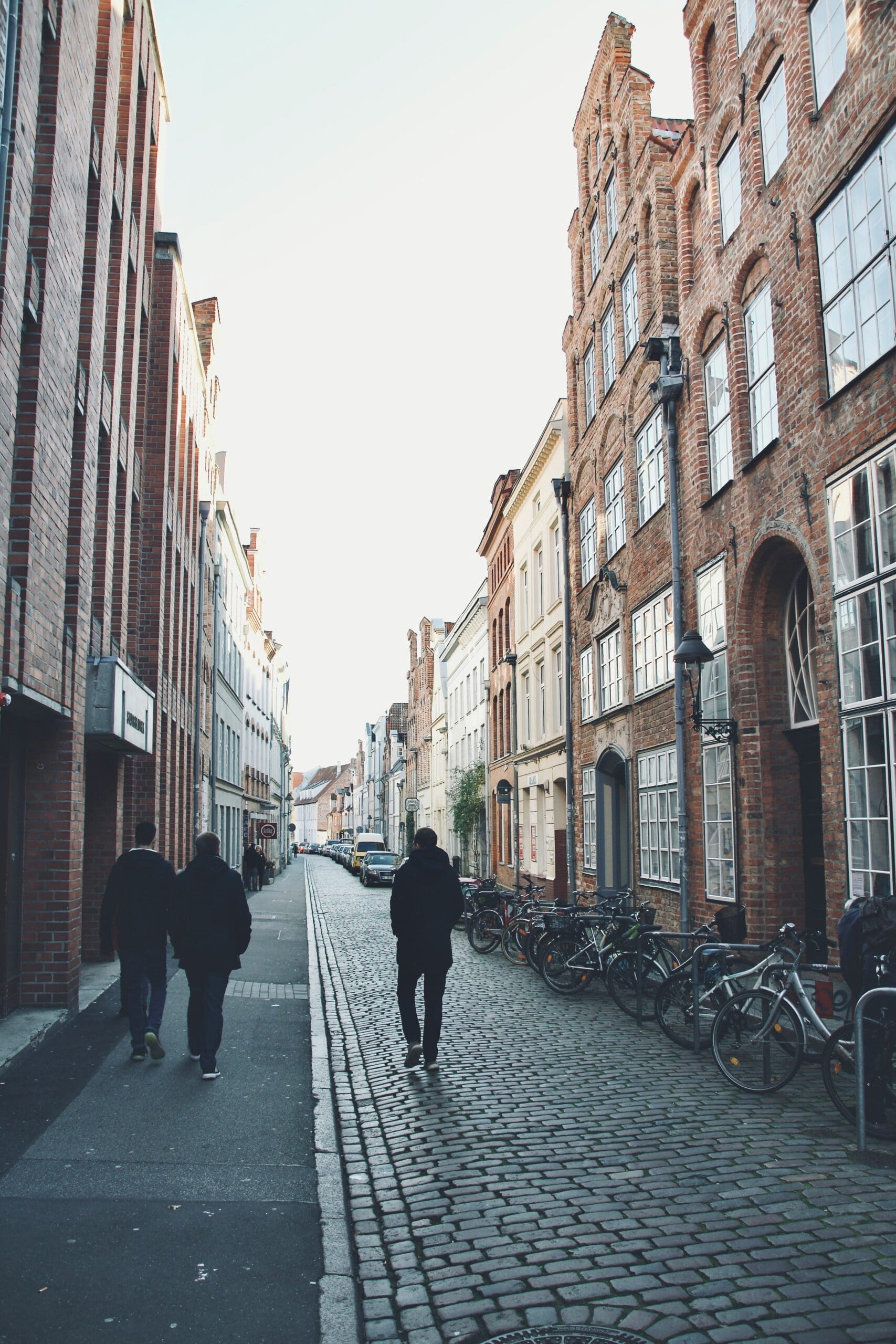
The old town is surrounded by water and retains a variety of historical buildings and streets. The Holstentor, as the gateway to the old town, is an iconic landmark. It symbolizes Lübeck's heyday during the Middle Ages, when the city served as an important trading center of the Hanseatic League. This connection of architecture and history makes the Holstentor unique.
from Stock Birken (https://unsplash.com/@stockbirken)
This offers visitors the chance to immerse themselves in the past and experience the city's cultural diversity. Preserving the Old Town allows visitors to get a feel for the history that is manifested in the streets and buildings. The Holstentor, as part of this heritage, bears witness to Lübeck's proud and influential history.
The Holstentor as a photo motif and tourist magnet
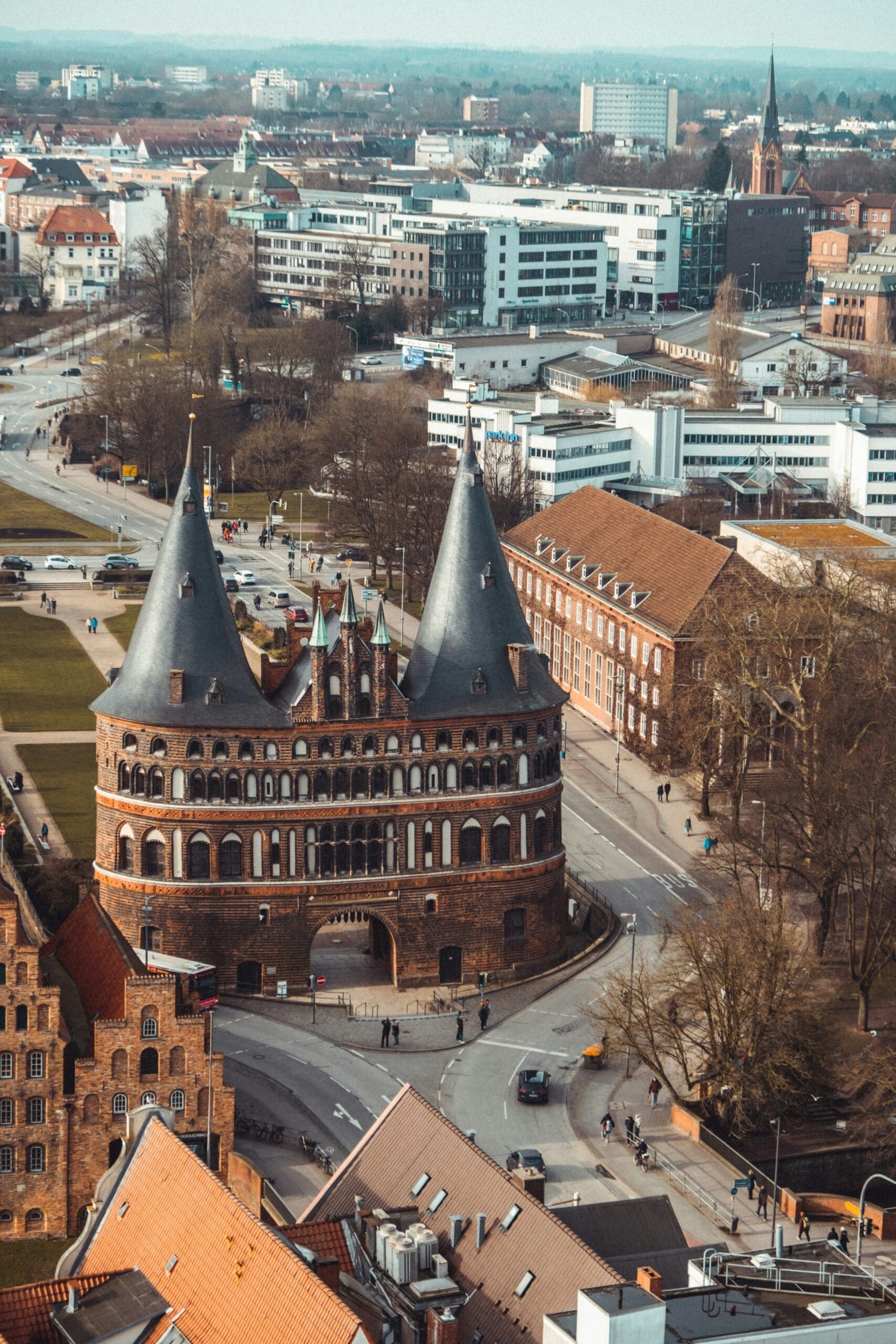
The Holstentor is among Germany's most famous photo opportunities. Its unique architecture and history attract thousands of tourists every year. Many visitors capture the majestic sight with cameras, and the gate is frequently featured in travel guides and on postcards.
by Moritz Kindler (https://unsplash.com/@moritz_photography)
It serves as an ideal starting point for exploring the old town of Lübeck. Its proximity to other attractions makes it particularly appealing. Whether by day or night, the Holstentor always presents itself impressively and invites visitors to linger. Tourists appreciate the opportunity to take unforgettable souvenir photos here.
Further attractions in Lübeck's Old Town
The Lubeck Old Town offers a wealth of cultural and historical treasures. In addition to the Holstentor, there are numerous other attractions to discover. The famous market square with the impressive Lubeck Town Hall is just one of many highlights.
Some sights you can explore in Lübeck's Old Town include:
- The Church of St. Mary with its impressive architecture
- The Buddenbrook House, made famous by Thomas Mann's novel
- The St. Anne's Museum with its extensive art collection
- The alleys and courtyards that give you insights into medieval Lübeck
These places make the old town an exciting and educational destination for history buffs and culture lovers. A visit to Lübeck's sights promises impressive experiences and new insights.
Restoration and Preservation of the Holsten Gate
The Holstentor has undergone several restorations over the centuries. Particularly in the 19th century, it was extensively renovated to preserve it from decay. These restoration works were crucial in maintaining the historical structure and integrity of the building.
Today, the Holstentor is regularly maintained to preserve its impressive appearance. Modern preservation measures ensure that this symbolic structure can endure for many generations to come. The ongoing care protects both the building fabric and the cultural significance of this unique monument.
by Alexander Ruiz (https://unsplash.com/@rivailruiz)
The Holstentor Today: Significance for Lübeck and Visitors
Today, the Holstentor is more than just a historical monument; it is a vibrant symbol of Lübeck. Its presence attracts visitors from all over the world, who are fascinated by its impressive architecture.
For the residents of Lübeck, the Holstentor is a proud landmark of their city and an important part of their identity. Both tourists and locals appreciate it as a meeting point and as a cultural backdrop for events and celebrations.
Conclusion: The Holstentor as a landmark and cultural heritage
The Holstentor is not only an architectural masterpiece but also an important symbol of Lübeck's historical significance. It embodies the rich history of the Hanseatic city and its influence in the Middle Ages.
Its unique architecture and historical significance attract thousands of visitors annually. It remains a vibrant part of Lübeck's cultural heritage and a testament to times gone by.