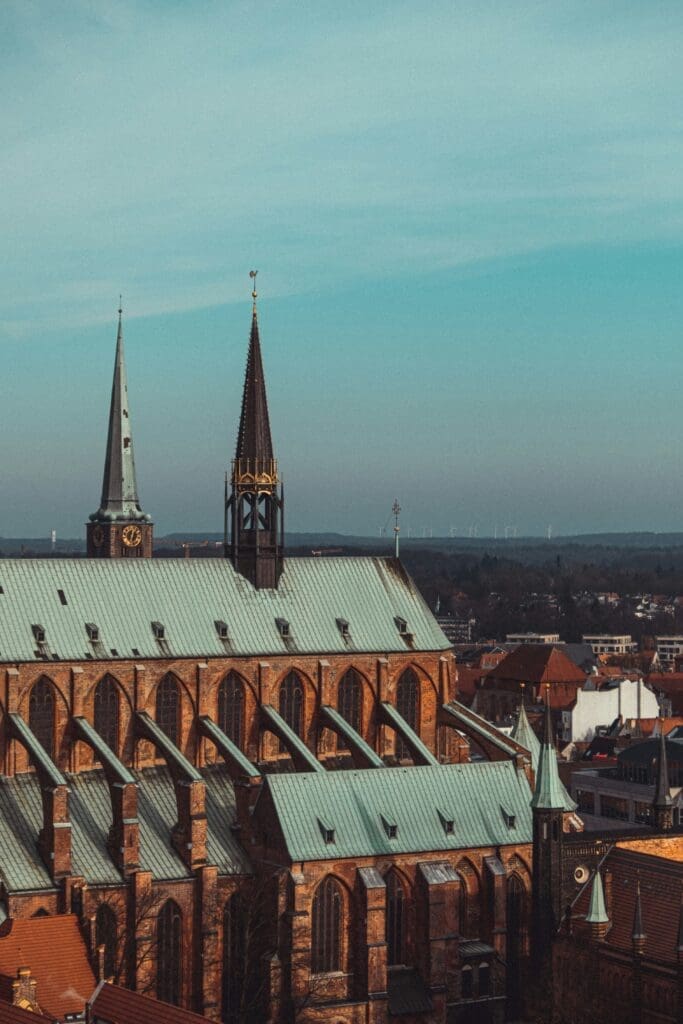
St. Mary's Church in Lübeck is an impressive example of Gothic architecture. It sits majestically in the heart of Lübeck's Old Town. This Old Town is a UNESCO World Heritage site.
The church is a symbol of the power and wealth of the Hanseatic city of Lübeck in the Middle Ages. Its construction began in 1250 and was completed in 1350. The church's towers reach 125 meters into the sky.
St. Marien is known for its impressive towers and the largest mechanical organ in the world. This organ attracts music lovers from all over the globe. The church is a popular destination for tourists and pilgrims.
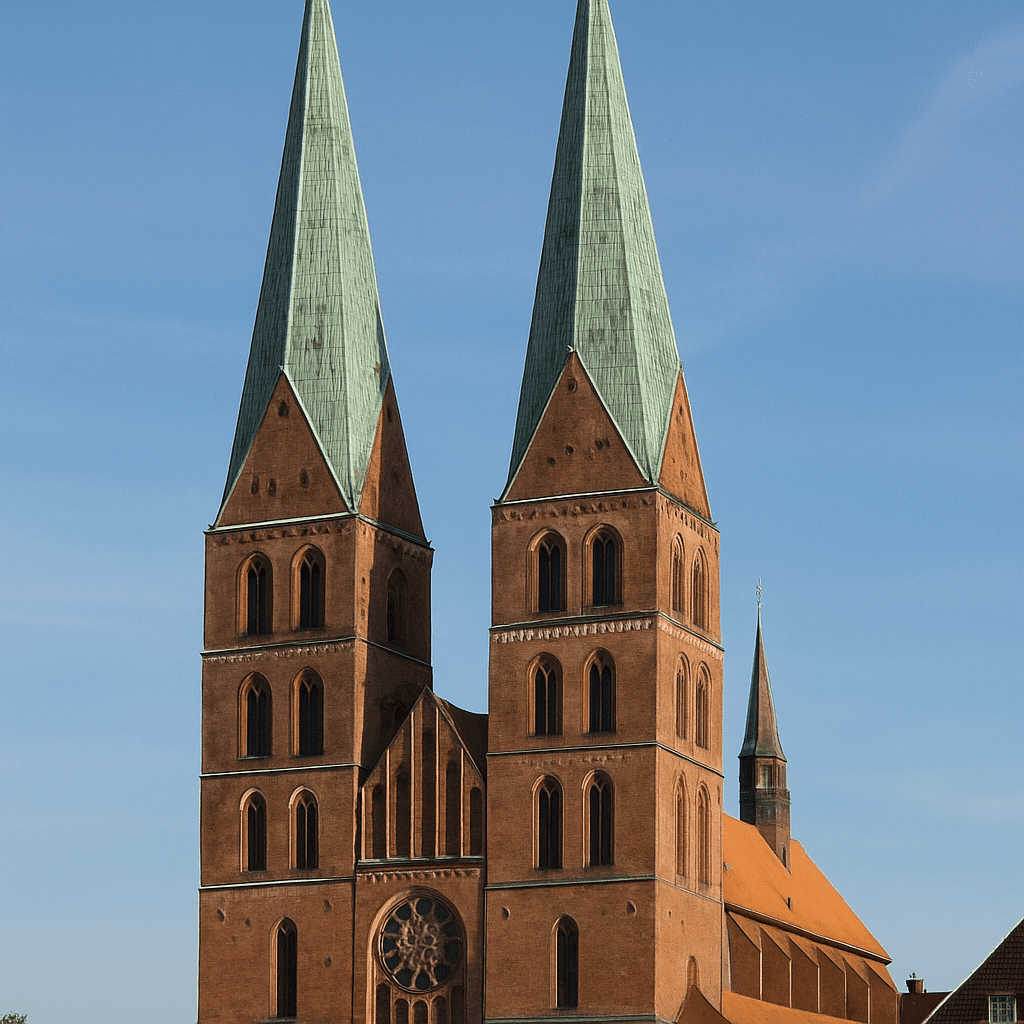
During World War II, the church was heavily damaged. Reconstruction took several decades. Today, it shines in new splendor.
The Church of St. Mary is a place of devotion and prayer. It is also a place for gathering and cultural exchange. Concerts and cultural events are regularly held here.
The church's architecture shows the influence of French cathedrals. It is a masterpiece of Brick Gothic. Many churches in the Baltic Sea region took St. Mary's as a model.
The church houses a significant collection of medieval art. The interior is richly decorated with artworks and altars. The astronomical clock, dating from 1561, is another highlight.
St. Marien is an important part of the Lübeck skyline. It is a place of peace and reflection in the bustling city. The church is a significant part of Lübeck's cultural heritage.
The History of St. Mary's Church, Lübeck
The history of St. Mary's Church in Lübeck dates back a long time. It began in the 13th century when Lübeck was one of the most important cities of the Hanseatic League. Construction started in 1250 and took a whole century.
From the very beginning, the church was a symbol of economic success and strength. The Hanseatic merchants invested generously in its construction. They wanted to show the world their prosperity.
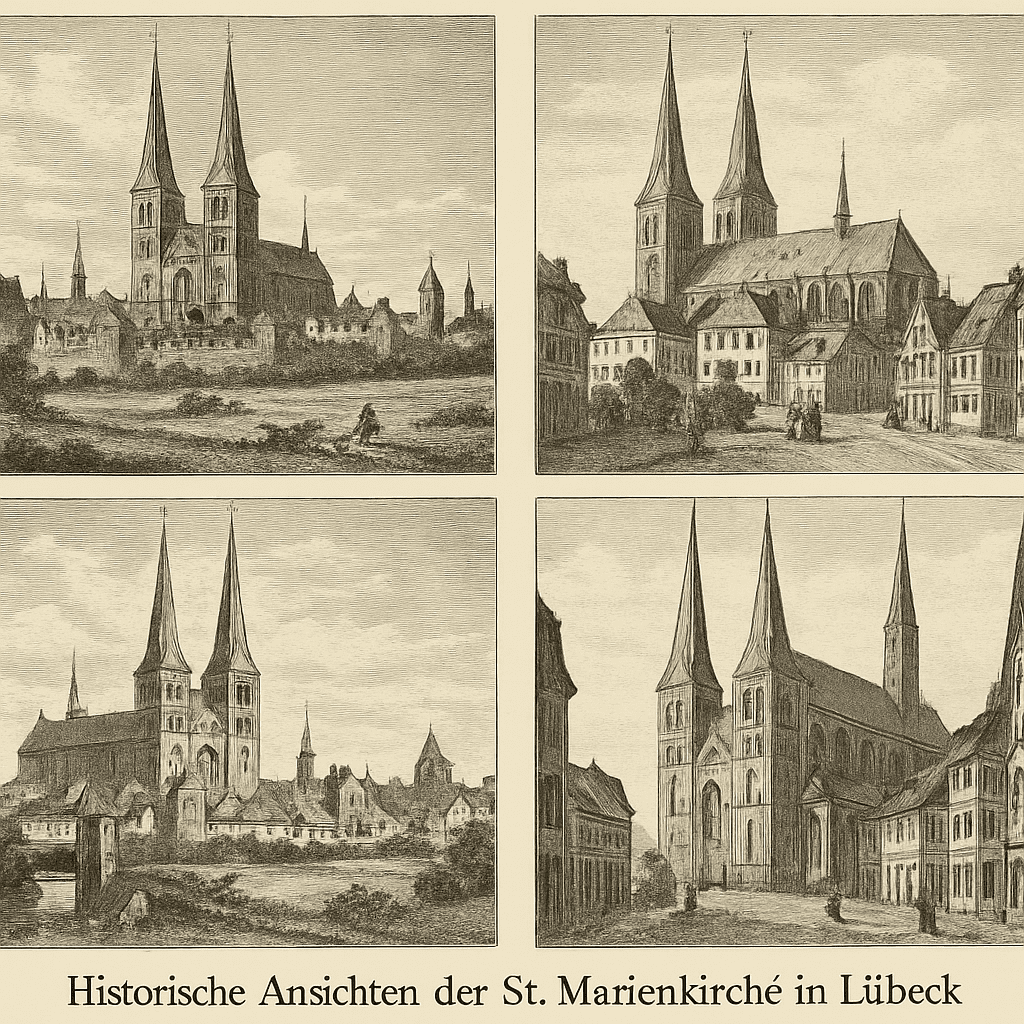
Over the centuries, the church served multiple purposes. It was not just a place of worship. Political gatherings and trade agreements also took place here.
During the Reformation, St. Mary's Church played a significant role. It reflected the religious changes in Northern Germany. New denominations found a platform here.
The history of St. Mary's Church is also marked by destruction. In 1942, during World War II, it was heavily bombed. Many valuable works of art and structures were lost.
But reconstruction began soon after the war. It was a comprehensive undertaking that lasted for decades. These efforts kept the church's original splendor alive.
Today, the church stands as a testament to past times. It tells stories of power, change, and rebirth. Historians and visitors find a treasure trove of information here.
Architecture and Building Art: Masterpiece of Brick Gothic
The architecture of St. Mary's Church in Lübeck is an impressive example of Brick Gothic. This architectural style is characteristic of the Baltic Sea region. Its majestic towers rise 125 meters into the sky, dominating the city skyline.
The church inspired the construction methods of many other churches in the Baltic Sea region. It served as a model for numerous later buildings. These connections are visible in its structural elegance and functionality.
Brick was the preferred building material in Lübeck. It enabled the construction of large structures despite limited natural resources. The craftsmanship in the details of the church is impressive.
Notable architectural features of St. Mary's Church include:
- The two tall towersYou are a city landmark.
- Rib vaultMasterfully designed and technically outstanding.
- The west facadeYour size and precision still impress today.
- The windowsAmazing examples of medieval stained glass.
The influence of French cathedrals can be seen in the construction. The Lübeck Marienkirche combines classical Gothic elements with local traditions. This fusion creates a unique architectural experience.
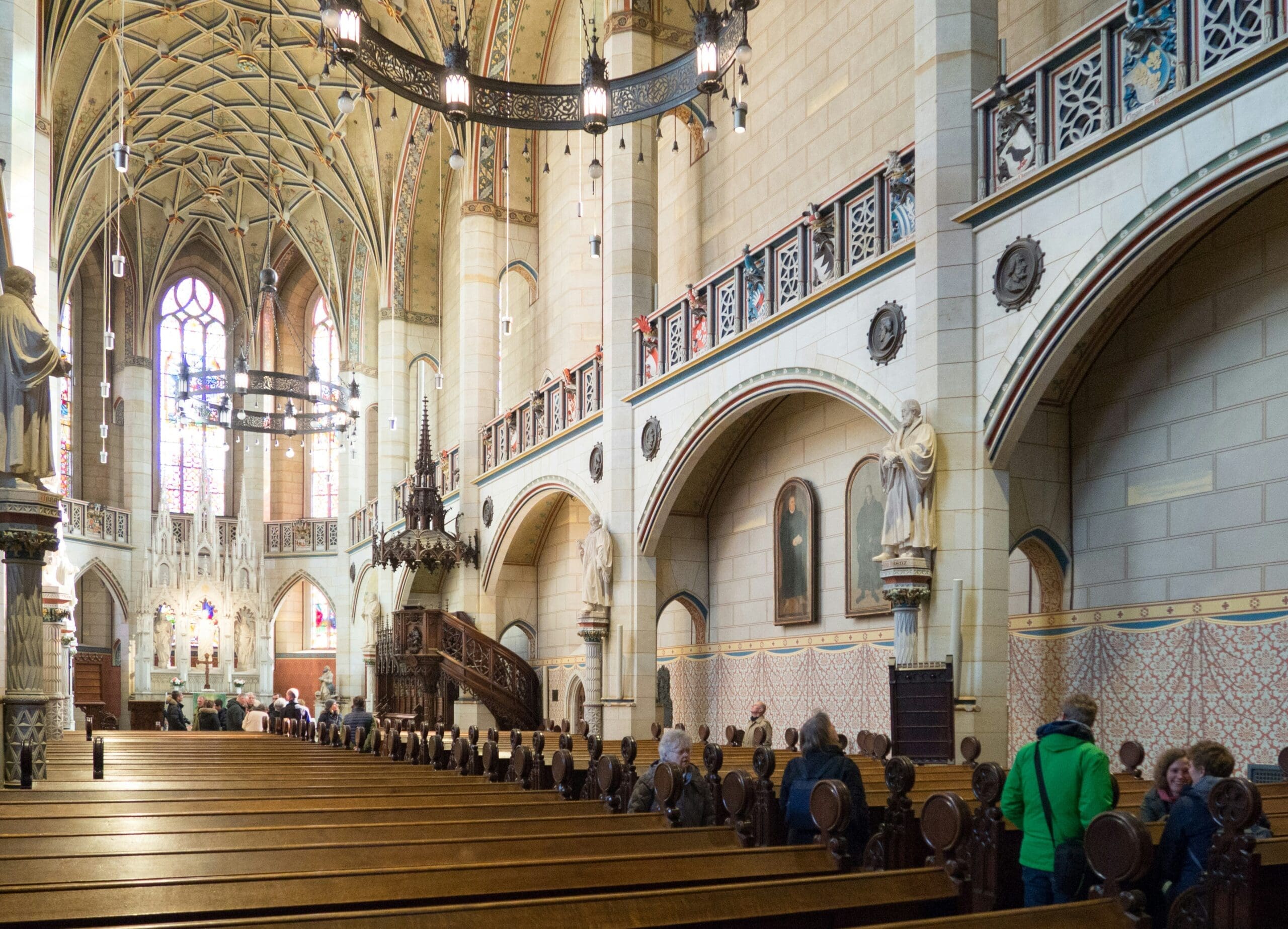
Inside the church, impressive vaults and decorations draw attention. They demonstrate the high technical and artistic skill of the medieval builders. These details invite visitors to explore the complexity and beauty of the church.
The architecture also contributes to the excellent acoustics of the church. This property makes it an outstanding place for musical performances. Concerts and events greatly benefit from the carefully planned spatial acoustics.
In summary, St. Mary's Church is not just a masterpiece of Brick Gothic architecture. It is also a testament to craftsmanship and religious faith. Its architecture attracts admirers from all over the world.
Art treasures and special features inside
Inside St. Mary's Church, a wealth of art treasures and historical features is revealed. The church houses a significant collection of medieval artworks. These works tell of Lübeck's rich history and cultural heritage.
A particularly impressive highlight is the Astronomical Clock from 1561. This Renaissance masterpiece not only shows the time but also astrological constellations. It captivates visitors with its mechanical sophistication.
The altars in St. Mary's Church are also of great art historical significance. The high altar is magnificently designed and one of the most beautiful examples of North German wood carving. It is a testament to the devotion and faith of the Lübeck citizens in the Middle Ages.
In addition, the church's colorful stained glass windows are true works of art. These windows illuminate the interior with their rich play of light. They are an expression of the craftsmanship of past centuries.
Inside the St. Mary's Church, special highlights include:
- The Astronomical ClockA functioning work of art from 1561.
- The High AltarA fantastic example of medieval wood carving.
- The historical tombs and epitaphsThey offer deep insights into history.
- The impressive glass windowsColorful depictions of biblical scenes.
- The organOne of the largest mechanical organs in the world.
These treasures make St. Mary's Church a living museum of art history. Every corner of the church holds a fascinating discovery. This attracts art lovers from all over the world and inspires many.
The beauty and complexity of these artworks show the deep influence of the church on Lübeck's culture. It is not only a place of prayer, but also a repository of history and creativity. Visitors can learn more about this fascinating art and history through guided tours.
The Marienkirche in World War II and Reconstruction
The St. Mary's Church in Lübeck stands not only for architectural beauty but also for a turbulent history. It suffered severe destruction in World War II. These historical wounds still shape the appearance of the church today.
In 1942, the church was severely damaged in an air raid. The magnificent towers and roof collapsed, and many art treasures were lost. This destruction left deep scars on both the church and the community of Lübeck.
After the war, the long process of reconstruction began. It took decades to restore the church to its former glory. The dedication of numerous craftsmen and artists made the reconstruction possible. They ensured that traditions and craftsmanship were preserved.
Modern techniques were combined with historical knowledge in the restoration to reconstruct the structure and artworks. This allowed the beauty of St. Mary's Church to be preserved for future generations. The restoration of the church is now considered a symbol of reconciliation and the will for reconstruction.

by Luis Fernando Felipe Alves (https://unsplash.com/@lnandofelipe)
The Marienkirche has not only been restored to its original state. It has also been enriched with modern elements that underscore its spiritual and cultural significance. Thus, the church today is a living testament to the power of hope and faith.
The reconstruction process became a symbol of renewal and peace. It reflects the community's ability to forge new paths after loss. Today, St. Mary's Church attracts visitors who are moved by both its history and its beauty.
The Significance of St. Mary's Church for Lübeck and the Hanseatic League
St. Mary's Church in Lübeck is not just an outstanding architectural masterpiece; it is also a symbol of the city's historical significance in the Middle Ages. Lübeck was the center of the Hanseatic League, a powerful trading alliance in the Baltic region. St. Mary's Church reflects this era of prosperity.
During the Hanseatic period, St. Mary's Church was a landmark of Lübeck's prosperity and power. The church's impressive Brick Gothic architecture symbolized the city's economic and cultural influence. This connection between religion and trade is evident in its monumental architecture.

by Moritz Kindler (https://unsplash.com/@moritz_photography)
But the Marienkirche was not just an architectural gem. It also played a central role in the religious and social life of the city. Important ceremonies and meetings took place here, shaping the lives of the Lübeck community.
Today, the church is a significant cultural heritage site and a magnet for tourists from all over the world. It serves as a reminder of Lübeck's glorious past, while simultaneously remaining a place of prayer and reflection. Its enduring importance for the city and beyond lies in the connection between history and the present.
Music, Organs, and Acoustics: Sound Worlds in St. Marien
St. Mary's Church is famous not only for its architecture but also for its soundscapes. The church's musical tradition dates back to the Middle Ages. Its impressive acoustics make it an ideal venue for concerts and musical performances.
A highlight of the musical equipment is the impressive organ. The Marienkirche houses the largest mechanical organ in the world. Its immense sound fills the nave and attracts music lovers from all over the world.
Important musical characteristics
- World's Largest Mechanical Organ
- Impressive acoustics for concerts
- Regular musical events
The church has made a name for itself as a venue for numerous musical events. From classical concerts to modern performances, the variety is impressive. The combination of acoustic brilliance and historical backdrop attracts artists and audiences alike.
In addition to organ music, traditional and contemporary pieces are often performed in St. Mary's Church. This musical heritage is an essential part of the church's identity. It adds an extra, impressive dimension to the spiritual experience at St. Mary's.
The St. Mary's Church as a Place of Encounter and Culture
St. Marien is far more than an impressive structure; it is a vibrant place of encounter. The church offers space for cultural exchange and community events. People from diverse backgrounds gather here to learn from each other and share experiences.
The cultural role of St. Mary's Church is deeply rooted in the history of Lübeck. Art, music, and religious ceremonies unite locals and tourists alike here. Regular events and exhibitions enrich the city's cultural life, making the church a significant cultural center.
by Wim van ‚t Einde (https://unsplash.com/@wimvanteinde)
The church also serves as a platform for dialogue between cultures and generations. Its walls host not only religious services but also intercultural dialogues and educational programs. Through these diverse activities, St. Marien remains a vibrant and vital part of the Lübeck community.
Visits and Guided Tours: Tips for Tourists
A visit to St. Mary's Church in Lübeck is an unforgettable experience. The church is open daily, and visitors can explore both the impressive architecture and its rich history. Various guided tours are available, offering deeper insights into the church's significance.
The tours of St. Marien are informative and diverse. Visitors can choose whether they want to participate in a general tour or a themed tour. During the tours, you will learn more about the architecture, the famous astronomical clock, and the church's fascinating artworks.
Here are some tips for your visit:
- Plan enough time: A visit can last an hour or more.
- Check lead times in advance Special guided tours are often limited in time.
- Note special events: Church cultural events offer additional experiences.
Get informed about the current opening hours and possible restrictions. Participating in a guided tour will deepen your understanding of the historical and cultural significance of St. Mary's Church and maximize your visitor experience in Lübeck.
St. Marien as part of the UNESCO World Heritage Site
St. Mary's Church is an integral part of the Lubeck Old Town. This Old Town was declared a UNESCO World Heritage Site in 1987. As an outstanding example of Brick Gothic architecture, St. Mary's embodies Lubeck's architectural and cultural heyday. The church reflects the historical significance of the Hanseatic city. This makes it an indispensable point of contact for visitors from all over the world.
As part of UNESCO World Heritage, St. Mary's Church demonstrates the importance of preserving our cultural heritage. The church offers a remarkable insight into the history and architecture of the region. Its World Heritage status emphasizes the need to conserve and promote the unique characteristics of these historic buildings. Visitors are invited to experience the church and discover the rich culture and history of Lübeck.

by Nina Schneider (https://unsplash.com/@ninaschneider)
Conclusion: St. Marien – A Symbol of Lübeck's History and Future
St. Mary's Church in Lübeck is far more than an architectural masterpiece. It is a living symbol of Lübeck's history and wealth. Its roots in the Middle Ages and its post-war reconstruction are a testament to its resilience. This makes it an important cultural reference for the city and its citizens.
The church is not just a place of worship, but also a center for art and music. Its acoustics attract musicians and enthusiasts from all over the world. The rich art treasures inside tell of centuries of faith and craftsmanship. These elements make St. Marien a place of inspiration for artists and history buffs.
As part of UNESCO World Heritage, the church serves as a bridge between the past and the future. It reminds us of the importance of protecting and preserving cultural sites. For tourists and locals alike, St. Marien is a place of insight and contemplation. It symbolizes the continuity of Lübeck's history in the modern world.