
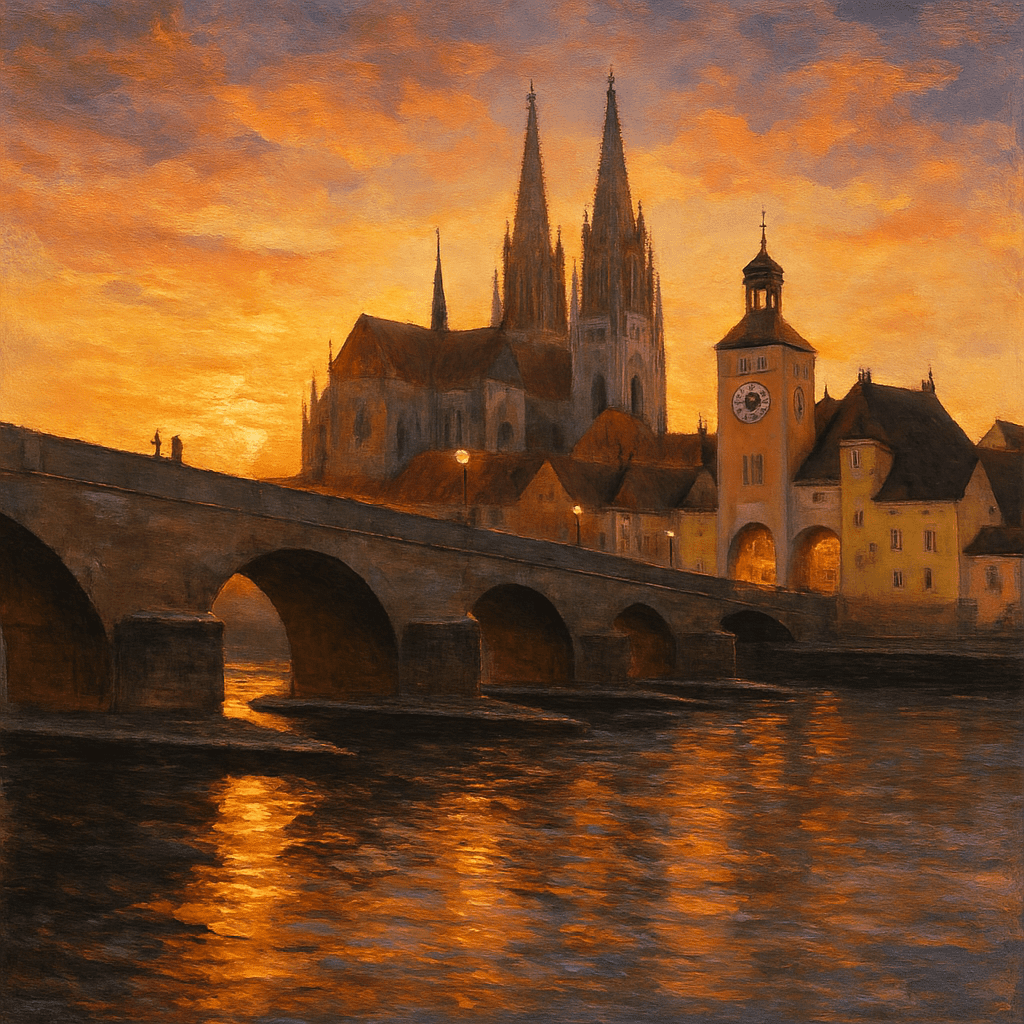
The Stone Bridge in Regensburg is an impressive testament to medieval architecture. It was built in the 12th century and is one of the oldest surviving bridges in Germany. This bridge is not only an architectural masterpiece but also a significant landmark of the city.
Regensburg, a city full of history and culture, offers numerous sights. The Stone Bridge is undoubtedly one of the most outstanding. It connects the old town with the district of Stadtamhof, majestically spanning the Danube. Its 16 arches and length of approximately 310 meters make it an imposing structure.
The bridge was once an important trade route and contributed significantly to Regensburg's economic prosperity in the Middle Ages. Its strategic location made it a central point for trade in the region. Today, it is a popular place for strolls and offers a breathtaking view of the old town and the Danube River.
Since 2006, the Stone Bridge, as part of Regensburg's Old Town, has been a UNESCO World Heritage site. This designation underscores its historical and cultural significance. The bridge is a living monument that preserves the history and heritage of Regensburg.
The Stone Bridge has undergone many changes and restorations over the centuries. These measures were necessary to preserve its stability and historical value. Despite the challenges time brought, the bridge remained largely undamaged.
A visit to the Stone Bridge is a must for anyone exploring Regensburg. It's not only an architectural marvel but also a place of peace and contemplation. Here, visitors can experience the connection between past and present.
The bridge is a symbol of Regensburg's medieval power and wealth. It has inspired artists for centuries and is a popular motif in art and literature. Its unique construction and the combination of functionality and aesthetics make it a masterpiece of the Middle Ages.
The Stone Bridge is more than just a bridge. It is a place of encounter and exchange, bringing people from different cultures together. Its significance for the city and its residents is immeasurable. It is a living testament to the history and culture of Regensburg.
The Stone Bridge in Regensburg: An Overview
The Stone Bridge in Regensburg is a masterpiece of medieval engineering. With its construction, which took place between 1135 and 1146, it set standards for bridge building in Europe. Its construction was an outstanding technical achievement of the era. The bridge not only connects two city districts but also symbolizes the spirit of progress at the time.
Originally, the bridge served as a strategic trade route. The connection across the Danube was crucial to Regensburg's role in medieval trade. The bridge made Regensburg a hub of European trade routes. Its presence gave the city economic momentum and influence.
The architecture of the Stone Bridge impresses with its simple elegance and robustness. The 16 arches and the mighty substructure are evidence of thoughtful engineering. The length of 310 meters was almost revolutionary for its time. The bridge survived many centuries and remained remarkably unchanged.
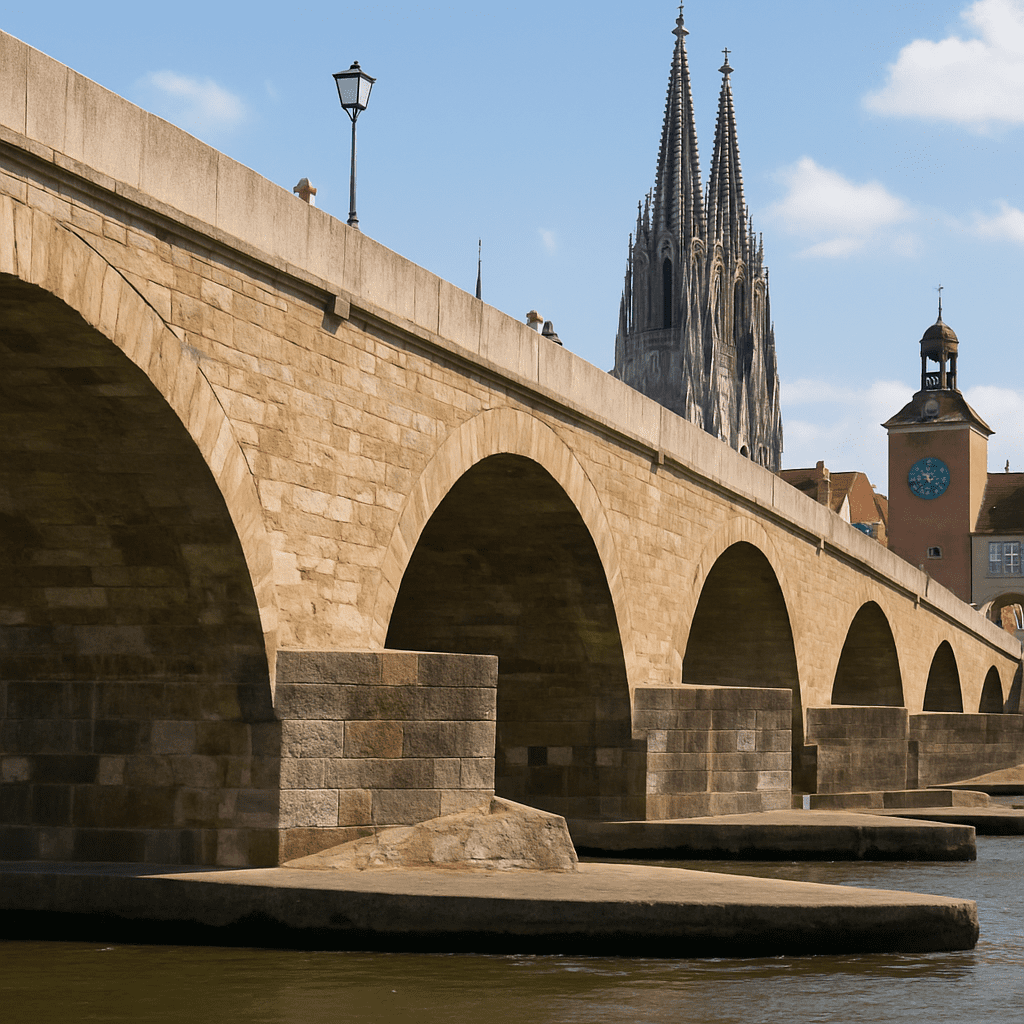
The Stone Bridge is a defining feature of the cityscape. It not only attracts tourists but is also a place of inspiration for artists. The bridge has been immortalized in many paintings and literary works. Today, it is a magnet for visitors who wish to enjoy the historic flair and the view of the Danube.
History of the Stone Bridge
The history of the Stone Bridge in Regensburg is as fascinating as it is complex. Its construction began in the year 1135 and was completed within eleven years. It replaced an old wooden bridge and demonstrated the advancements in medieval construction at the time. This stone structure was a technical masterpiece for its era.
The bridge played a central role in the Middle Ages as an important trade route. Trade routes from Italy to Scandinavia ran across it. This contributed significantly to the economic importance of Regensburg. The city flourished and became a major trading center in Europe.
Over the centuries, the bridge has witnessed many historical events. During the Thirty Years' War, it was used as a strategic route but remained unharmed by destruction. The bridge also survived World War II largely undamaged. Its robust construction has proven its worth in times of crisis.
In addition to its function, the bridge was witness to many local stories and legends. One of the best known is that of the Bruckmandl, a statue that still stands today on one of the bridge piers. It is said that the master builder lost a bet with his apprentice and, in despair, erected the statue.
The bridge's architecture, with its massive arches and stable substructure, became a model for many other structures. The famous Charles Bridge in Prague also took the Stone Bridge as its model. Its construction was a breakthrough in engineering and a pioneering achievement for subsequent generations.
Today, the history of the bridge stands as a living testament to the past. It is considered part of the UNESCO World Heritage and tells of Regensburg's rich and diverse history. A walk across the bridge is like a journey through many centuries.
Important historical milestones
- 1135-1146Construction period of the Stone Bridge
- 17th centuryUse in the Thirty Years' War
- 2006Admission to UNESCO World Heritage Site
- PresentOngoing restoration measures to ensure preservation
With this rich history, the Stone Bridge in Regensburg remains not just an architectural, but also a cultural heritage, influencing the city's fortunes to this day. Its timeless permanence highlights it as one of Regensburg's outstanding attractions.
Architecture and Building Art: A Masterpiece of the Middle Ages
The Stone Bridge in Regensburg is considered a masterpiece of medieval engineering. With its construction in the 12th century, it represented an outstanding achievement. The structure with 16 arches and a length of approximately 310 meters is still impressive today.
The bridge is made mostly of local sandstone materials. Its robust piers were anchored deep into the riverbed of the Danube. This stable construction method was necessary to withstand the strong water currents. Every detail was carefully planned to guarantee longevity.
A remarkable feature of the Stone Bridge is its Romanesque architecture, which combines functionality with aesthetics, a rare characteristic of that era. The design of the piers showcases intricate stonework that harmoniously blends into the overall appearance.
The architectural design of the bridge influenced many other significant structures in Europe. It served not only as a model for subsequent bridge construction but also inspired architects in terms of material selection and design. Today, it stands as an example of the technical skill and ingenuity of medieval master builders.
Outstanding architectural features
- Bow construction16 wide arches that combine stability and aesthetics.
- Material selectionLocal sandstone ensures stability and longevity.
- Pillar constructionDeeply anchored piers for stability in high water levels.
- DesignCombination of functionality and Romanesque aesthetics.
The Stone Bridge is a prime example of the connection between engineering and beauty. Its innovative construction sets it apart from other bridges of its time and emphasizes its role as a technical monument. This architectural gem attracts architecture enthusiasts from all over the world.
The Stone Bridge as a UNESCO World Heritage Site
In 2006, the Stone Bridge, together with the Old Town of Regensburg, was included in the prestigious UNESCO World Heritage List. This award underscores the historical and cultural significance of the bridge, which has gained recognition far beyond the borders of Bavaria. The designation as a World Heritage site aims to preserve and highlight the exceptional architectural and cultural heritage of this medieval structure.
The significance of the Stone Bridge extends far into the past. It was a crucial hub in medieval Europe and contributed significantly to the economic prosperity of Regensburg. Centuries later, the bridge remains a symbol of medieval progress and technical innovation. It is particularly fascinating how this ancient structure has managed to face the challenges of modernity without losing its historical charm.
UNESCO World Heritage Criteria
Recognition as a UNESCO World Heritage Site is tied to strict criteria. The Stone Bridge met these with flying colors:
- Outstanding Universal ValueIts significance as a masterpiece of medieval architecture.
- Authenticity and IntegrityThe preservation of its original building substance and structure.
- Significance as a historical monumentYour role as a key position in the medieval trade network.
The UNESCO award is not just an honor, but also a commitment. It ensures that the bridge will be preserved for future generations. Its maintenance and protection from the pressure of modernization are essential to preserve its cultural integrity. This way, the Stone Bridge remains not only a monument of history, but also a living testament to the continued human appreciation and preservation of our cultural heritage.
Significance for Regensburg: Economy, Culture, and Identity
The Stone Bridge is far more than an architectural marvel. It is an integral part of Regensburg's economic, cultural, and social fabric. Since its construction in the 12th century, it has been indispensable for the city's development and success. The connection across the Danube was crucial for trade and thus for the prosperity of the region.
Economic Significance
In the Middle Ages, the bridge was one of the few crossings of the Danube River. This made it a central trade route for goods and travelers. As a result, Regensburg became a flourishing center of trade. The city's central location and access to waterways contributed significantly to its economic prosperity. Today, it continues to be a major tourist destination, attracting hundreds of thousands of visitors annually, who contribute significantly to the local economy.
Cultural Heritage
Regensburg, with its remarkably well-preserved old town, thrives on the richness of its history. The Stone Bridge is an indispensable part of this. It symbolizes the city's cultural exchange and progress over centuries. Historical events and guided tours make it a living history book, offering visitors and locals insights into past times.
Identity and Community
For the citizens of Regensburg, the bridge is more than just a structure. It is a symbol of permanence and a strong identifier of the city. The bridge connects, both literally and figuratively, geographically as well as culturally. It serves as a meeting point for community events and contributes to the creation of strong local cohesion.
The significance of the Stone Bridge for Regensburg can be summarized as:
- Economic recovery through trade and tourism
- Cultural identity and historical awareness
- Social connection and sense of community
The bridge's role in Regensburg extends far beyond its physical presence. It influences the city's identity, supports its cultural dynamism, and contributes to its economic vitality.
The bridge today: a sight to see and an experience
The Stone Bridge in Regensburg has established itself as far more than just a historic structure. It attracts travelers from all over the world, fascinated by its majestic structure and rich history. The bridge offers a unique opportunity to view the city and its surroundings from a special perspective.
Attraction for travelers
The bridge is one of Regensburg's main attractions and a must-see for every visitor. As part of the UNESCO World Heritage, it offers a unique glimpse into the city's fascinating history and impressive architecture. From the bridge, you have a magnificent view of the old town and the Danube River, which is particularly breathtaking at sunset. This panorama attracts photographers and artists alike, who want to capture the beauty of the bridge.
Experiences for Visitors
Visitors can do more than just cross the bridge. There are numerous guided tours that tell exciting stories and legends about the structure. These tours offer historical and cultural insights that deepen the understanding and appreciation for the bridge. Additionally, local artists and musicians regularly host events and performances on the bridge, making it a vibrant meeting place.
The bridge as a cultural meeting point
The bridge is also a place of meeting and interaction today. It is a popular meeting spot for both locals and tourists. From leisurely strolls to spontaneous picnics, there are numerous ways to enjoy the bridge. People often meet here to exchange ideas or simply enjoy the view.
Here are some of the experiences you can have on the Stone Bridge:
- Guided historical tours and legend storytelling
- Photographing and painting landscapes and architecture
- Participate in local art and music events
- Sunset walks with a magnificent view
- Opportunity for picnics and social gatherings
The Stone Bridge of Regensburg is not just a testament to past times. Today, it is a living part of city life, a source of inspiration, and a platform for cultural experiences. Whether in daylight or at dusk, the bridge is always an unforgettable experience for all who cross it.
Sayings, Legends, and the Bruckmandl
The Stone Bridge in Regensburg is not just a structure of impressive architecture. It is also steeped in numerous myths and legends. One of the most famous stories revolves around the so-called „Bruckmandl“ (Bridge Man), a small figure that sits enthroned on a central pier of the bridge. According to legend, the builder of the bridge was a young, ambitious architect who was in competition with his teacher. The teacher was building Regensburg Cathedral at the same time. Both tried to be faster than the other.
The Legend of the Bruckmandl
The student who designed the bridge is said to have allied with a dark entity in his despair that his master might win. The devil promised to help him complete the bridge faster. In return, the soul of the first being to cross the bridge would belong to him. When the bridge was indeed completed faster, the clever architect drove a herd of animals across it, thereby tricking the devil. Angered at being deprived of his victory, the devil vowed that the bridge would never be fully stable. The Bruckmandl has embodied this triumphant moment ever since. Today, it has established itself as a good luck charm.
Fascinating legends
Besides the Bruckmandl, there are other fascinating stories that enrich the bridge. The mystique of the bridge shows how closely architecture and mythology were interwoven in the Middle Ages. Such tales attract both history buffs and tourists looking for a deeper experience. Here are some of the most well-known legends and sagas associated with the Stone Bridge:
- The Race with the DomeThe builder of the bridge against his master.
- The pact with the devilThe convention and the most sophisticated trick.
- The eternal curseThe bridge and the unstable foundation.
These stories lend the bridge an almost magical aura. They bear witness to the culture and ideas of that time. Visitors who walk across the Stone Bridge are doing more than just taking a stroll. They are embarking on a timeless journey through Regensburg's myths and history.
Restoration and Preservation: The Bridge Through the Ages
The Stone Bridge in Regensburg has endured several renovation phases over the centuries. Despite its impressive construction, restorations are essential to preserve the historical character and stability of the structure. The challenge lies in maintaining the bridge in its original form while introducing modern techniques to reduce wear and tear.
Important restoration phases
Since its construction in the 12th century, the bridge has undergone numerous changes. Each restoration places great emphasis on preserving the original substance. Particularly significant phases in the history of bridge maintenance include work in the 20th and 21st centuries focusing on structural stability. The restoration processes are often complex to ensure a balance between preservation and usage.
- Previous repairsRegular maintenance since the Middle Ages.
- 20th centuryIntroduction of Modern Conservation Techniques.
- 21st centurycomprehensive restoration projects for structural security.
Sustainable Conservation Strategies
The modern restorations of the Stone Bridge rely on sustainable techniques and materials. The aim is to minimize pollutant loads from current environmental conditions and preserve the bridge for future generations. This requires careful planning and continuous research. Preservation strategies include the use of innovative materials that harmonize with historical methods to ensure the longevity of the structure.
Efforts to preserve Regensburg's historical and cultural heritage align with its significance as a UNESCO World Heritage site. This commitment to preservation reflects not only historical awareness but also the pursuit of a sustainable future where the past and present coexist.
The Stone Bridge as a photographic subject and source of inspiration
The Stone Bridge in Regensburg is not only an architectural masterpiece but also an inexhaustible source of inspiration for artists and photographers. Its imposing structure and historical charm attract creative minds from all over the world. The intricate construction and harmonious integration into the surroundings offer diverse perspectives and moods. Especially during the golden hour, when the sun bathes the Danube in a warm light, the bridge shines with a special glow and is often immortalized on canvases and in photo books.
by Wolfgang Weiser (https://unsplash.com/@hamburgmeinefreundin)
Over the centuries, the bridge has inspired numerous artists, from painters to writers. Its presence in literature and art highlights how deeply it is interwoven with the culture and identity of Regensburg. Visitors use the bridge not only as a photo opportunity but also as a place for reflection and contemplation. Here, one can feel the connection between history and modernity, leaving a lasting impression. Regardless of the season, the Stone Bridge always offers new sights that captivate the viewer and encourage contemplation.
Practical Tips for Visitors
A visit to the Stone Bridge in Regensburg is a highlight of any trip to the city. To help you make the most of your excursion, here are a few practical tips. The bridge is accessible year-round, but the best time to visit is in spring or autumn when the weather is pleasant and the crowds are moderate. A walk across the bridge offers not only a wonderful view of the old town and the Danube River but also an insight into the region's history.
Allow ample time for your visit so you can explore the bridge at your leisure. There are many photo opportunities along the bridge where you can capture the picturesque views. For those who wish to learn more about the bridge's history and significance, there are numerous guided city tours available. These tours offer deeper insights and interesting anecdotes. For an all-around enjoyable experience, consider the following points:
- Opening hours and accessThe bridge is open to pedestrians 24 hours a day.
- Best visiting timesEarly morning or late afternoon to avoid crowds.
- Guided toursAvailable in multiple languages, they offer valuable background information.
- ParkingUse public transportation or nearby parking garages to avoid traffic jams.
- Combine your visitExplore the old town as well to enjoy the full experience.
These tips will help you make the most of your visit to the Stone Bridge and discover its many facets as a historical landmark.
Conclusion: The Stone Bridge – A Must-See in Regensburg
The Stone Bridge in Regensburg is far more than just a relic of the Middle Ages; it is a living testament to the engineering masterpieces of that era. This bridge embodies the connection between past and present, offering not only unique insights into 12th-century construction techniques but also breathtaking panoramas of the surrounding cityscapes. A walk across the bridge is a journey through history, immersing you in the vibrant heart of the city.
The bridge's significance extends beyond its architectural value; it is a symbol of the economic and cultural prosperity that Regensburg experienced at the time of its construction. Its inclusion on the UNESCO World Heritage list underscores its global importance and attracts thousands of visitors annually. Whether you are a history buff or an architecture enthusiast, a visit to the Stone Bridge enriches your stay in Regensburg and is undoubtedly one of the unforgettable experiences the city has to offer. Prepare for a lasting impression that will draw you back to Regensburg again and again.