
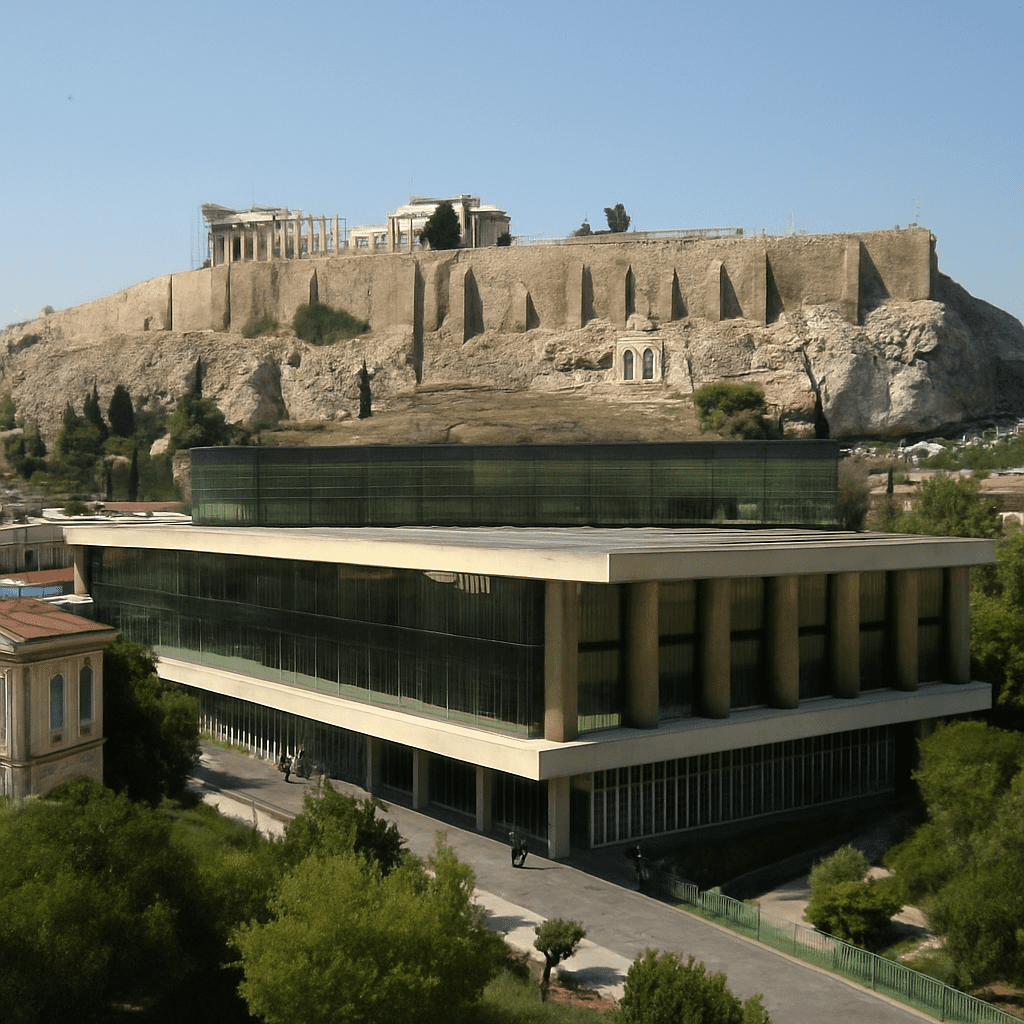
The Acropolis Museum in Athens is a jewel of Greek culture. It attracts millions of visitors annually. Since its opening in 2009, it has established itself as one of Greece's most important museums. With over 4,000 artifacts, it offers a comprehensive insight into the rich history of the Acropolis and its surroundings. The collection includes impressive sculptures, such as the famous Caryatids and the Parthenon frieze. These masterpieces of classical Greek art are a must-see for anyone interested in art and culture.
The museum itself is an architectural masterpiece. Designed by Bernard Tschumi, it blends modern architecture with ancient history. The clean lines and expansive glass surfaces offer a spectacular view of the Acropolis and the Parthenon. This harmonious connection of old and new makes the museum a unique experience. Visitors can explore the exhibits in a chronologically arranged display, ranging from the Archaic to the Roman and early Christian periods.
A highlight of the museum is the Parthenon Gallery. Here, the sculptures from the Parthenon temple are presented in all their glory. The Caryatids on display in the museum are originals, while those on the Acropolis are copies. These majestic figures attract many visitors and are a symbol of the artistic mastery of the ancient Greeks. The exhibition is complemented by interactive displays and multimedia presentations that bring the history of the Acropolis to life.
The Acropolis Museum is not only a place of preservation, but also of education and exchange. It offers special programs and workshops for children and families. These events are designed to awaken and deepen interest in ancient Greece. The museum is accessible and offers tours in multiple languages to appeal to a wide audience. The entrance fee is moderate, and there are discounted tickets for students and seniors.
A visit to the Acropolis Museum is an experience for all the senses. The lighting is designed to showcase the exhibits optimally. The museum café offers a breathtaking view and is a popular spot for a break. Here, visitors can reflect on their museum visit over a coffee or a light snack. The museum shop offers a variety of souvenirs and specialized literature to round off the experience.
The museum plays an important role in preserving and presenting the cultural heritage of Greece. It is a center for research and education, attracting scholars from all over the world. The preservation and restoration of the exhibits is an ongoing process, which maintains the beauty and significance of these artifacts. The museum is a symbol of Greece's cultural rebirth in the 21st century and a vital part of Athens' tourist infrastructure.
The museum's location near the Acropolis highlights its importance as a cultural center. It is easily accessible by public transportation and is located near the Acropoli metro station. Visitors should plan for at least two to three hours to explore the exhibitions at their leisure. The museum also offers a smartphone app that can be used as an audio guide. These digital tools enrich the visitor experience and provide additional information about the exhibits.
The Acropolis Museum is a must-see for anyone visiting Athens. It is a place of discovery and wonder, taking visitors on a journey through history. The museum's collection is unique, offering a comprehensive overview of ancient Greece. It is a place of inspiration and awe for all who visit. A visit to the Acropolis Museum is an unforgettable experience that brings Greece's rich history and culture to life.
The Acropolis Museum Athens: An Overview
The Acropolis Museum in Athens is more than just a museum; it's a cultural landmark. It officially opened in 2009 and has since secured a firm place among Athens' most important attractions. It offers not only an impressive collection for visitors interested in art and culture but also a deep insight into Greece's rich past for history enthusiasts. The museum is renowned for its comprehensive collection, which forms the centerpiece of the exhibition: over 4,000 artifacts from the era of the ancient Acropolis.
The building itself is a landmark, complementing the splendor of its exhibits. Designed by the renowned architect Bernard Tschumi, the design reflects a harmonious blend of modern architecture and classical antiquity. Numerous glass surfaces allow an unobstructed view of the Acropolis, thus creating a direct visual connection to history. The museum's clean and simple design is ideal for directing visitors' attention to the intrinsic details of the treasures on display.
A special feature of the museum is its chronological exhibition. This arrangement allows visitors to experience a journey through time from the archaic period to the Roman and early Christian eras. The chronological structure is not only educationally valuable but also aesthetically pleasing. Thus, the developments and transformations of Greek art are clearly presented. The exhibits are impressively curated to fully showcase the artistic achievements of the ancient Greeks.
The Parthenon Hall is the heart of the museum. This gallery impressively showcases the sculptures from the famous Parthenon temple. Visitors are guided through masterfully crafted reproductions, intended to substitute the historical originals in Great Britain. This gallery serves as a vibrant testament to the ongoing debate surrounding the repatriation of the Elgin Marbles, offering an immersive experience of the ancient artworks. The sculptures are meticulously positioned to illustrate the temple's original context.
In addition to the permanent exhibitions, the museum regularly features rotating special exhibitions. These thematic presentations not only attract art enthusiasts but also pique the interest of the general public. They offer deeper insights into specialized topics and encourage scientific research. These exhibitions help establish the Acropolis Museum as a dynamic institution that is constantly evolving and offering new experiences to visitors. The museum is more than just an exhibition space; it is a living part of the Greek cultural world.
Architecture and Location: Modern Meets Ancient
The Acropolis Museum in Athens stands out with its fascinating fusion of architecture and history. Located just a few minutes' walk from the Acropolis itself, it offers a unique connection between ancient history and contemporary design. Bernard Tschumi's architecture is modern and minimalist, providing an optimized backdrop for the ancient artworks. Through the generous use of glass and open spaces, a direct visual connection to the Acropolis is achieved, making the experience even more intense and meaningful.
This architectural masterpiece blends perfectly with its surroundings, creating a wonderful contrast to the old fortress it protects and showcases. The museum's strategic location allows visitors to easily integrate a walk to the ancient site into their visit. At the same time, the building's design protects the precious artifacts by meeting conservation standards thanks to advanced climate control and lighting. This is particularly important for preserving the over 4,000 exhibits on display in their best condition.
The museum's external structure and internal design are crafted to be not only functional but also educational. Visitors experience not just an exhibition, but a symphony of light and space. Among its most impressive features are the generous glass surfaces and galleries, which allow in natural light and offer a breathtaking view of the Acropolis. The architecture of the Acropolis Museum is therefore not merely a shell for ancient treasures, but an active participant in conveying history.
Key features of the architecture and location:
- Panoramic viewsThe stunning glass facade offers spectacular views of the Acropolis and the city of Athens.
- Cultural coexistenceModern architecture complements and emphasizes the ancient elements of the collection.
- Central locationEasy access for visitors, with proximity to the Acropolis and the Akropoli metro station.
- Technological IntegrationAdvanced climate control and lighting for artifact preservation.
- Architectural AwardsAward-winning and recognized structure celebrated for its innovative design.
These architectural decisions are not only aesthetically pleasing but also functional, as they create a comfortable and educational environment for the display of ancient treasures. Tschumi's vision of a modern structure that harmonizes perfectly with the classical landscape has been successfully realized. The museum thus embodies the fusion of tradition and modernity, which accompanies and fascinates visitors on their journey through the epochs.
The most important exhibits: From the Caryatids to the Parthenon Frieze
The Acropolis Museum in Athens houses some of the most significant artifacts from ancient Greece. Among its most important exhibits are the Caryatids, which once adorned the porch of the Erechtheion temple. These majestic female figures gracefully bear the weight of the building, exemplifying ancient innovative architecture and sculpture. After their long and arduous history, they are finally in a place that honors their cultural value.
Another outstanding exhibit is the Parthenon Frieze. This artistic masterpiece once adorned the outer walls of the famous Parthenon temple. The frieze depicts mythological scenes and representations of gods and mortals in a unique relief. Visitors to the museum can experience the detailed craftsmanship and deeply rooted stories of the ancient Greeks in these sculptures. Each piece tells its own story and brings the viewer closer to Greek culture.
Equally significant are the sculptures and finds from the archaic period. These works offer insight into the artistic development and societal changes of that era. The heads and bodies of gods and heroes provide visitors with a vivid picture of the conceptions and ideals of the time. These exhibits make it possible to trace the changes in representation and technique over the centuries and to recognize the influences that led to classical Greek art.
The Mycenaean artifacts in the museum are also of great historical value. They date from a period long before classical antiquity and show the earliest forms of Greek culture. These include jewelry, vases, and everyday objects that illustrate early craftsmanship and ways of life in Greece. These finds are not only beautiful to look at but also offer valuable insights into the development of art and society.
Highlights of the collection:
- CaryatidsImpressive sculptures that once adorned the Erechtheion.
- Parthenon FriezeDetailed reliefs with mythological scenes and depictions.
- Archaic and ClassicalSculptures and relics demonstrating the transition to classical Greek art.
- Mycenaean artifactsEarly historical finds documenting Greek cultural development.
- Roman Period: Expanded collection showcasing the evolution of Greek art.
The Roman period is well-represented in the museum by numerous finds, which demonstrate the strong influence of Greek culture even in later times. These exhibits represent the adaptation and integration of Greek art forms into the Roman world and illustrate the continuity of Greek aesthetic principles. These works are not only artistically appealing but also valuable historical documents.
In addition to these famous exhibits, the museum boasts numerous other treasures that illuminate every period of Greek history. These include vases, jewelry, and everyday objects that reflect Greece's rich cultural and artistic landscape. The Acropolis Museum's collection allows visitors to trace the continuous development of art and culture from the Archaic to the Roman periods and to grasp the profound influences of Greek art.
Through the careful presentation and preservation of these masterpieces, the Acropolis Museum helps to preserve and make accessible Greece's cultural heritage. These artifacts are not only witnesses to the past, but also an essential part of the present. The museum plays a central role in documenting and preserving these treasures, ensuring they remain for future generations. Therefore, every visit to the museum is not just a journey into the past, but also an opportunity to experience and appreciate the legacy of ancient Greece in the modern world.
The exhibition: A tour through the epochs
The Acropolis Museum in Athens invites you on a unique tour through different eras of Greek history. The exhibition is carefully curated and chronologically ordered to provide visitors with a deep understanding of Greek art and culture. This structure allows you to trace the development of Greek art over centuries and recognize the significance of individual works within their historical context.
Let's begin our journey in the Archaic period, which lasted from approximately 800 to 500 BCE. During this time, Greek artists began to develop their characteristic styles and techniques. The museum showcases impressive examples of early Greek sculptures, whose rigid, forward-facing bodies and symmetrical facial features are typical of this period. Notable pieces like the male statue, the so-called Kouros, offer a glimpse into the beginnings of Greek sculpture.
Chronological Highlights of the Exhibition:
- Archaic PeriodStiff, stylized figures; first painted ceramics.
- Classical PeriodNatural proportions; masterpieces like the Parthenon frieze.
- Hellenistic PeriodDramatic poses and facial expressions.
- Roman timesAdaptation and preservation of Greek styles.
- Early Christian FindsTransition from pagan to Christian motifs.
As the exhibition progresses, you reach the classical period, considered the pinnacle of Greek art. During this time, masterpieces were created whose influence is still felt today. The Parthenon frieze and the famous statues of gods and heroes are central components of this collection. It is here that art begins to capture natural proportions and dynamic movement, making the works iconic representatives of this era.
The Hellenistic period is characterized by more dramatic poses and livelier facial expressions. This period, which began after the death of Alexander the Great, represents a fusion of Greek and Eastern influences. Sculptures from this era display greater emotional depth and complexity, offering visitors an opportunity to experience the shift in artistic expression.
Some of the most fascinating finds in the museum come from the Roman period. The Romans were great admirers of Greek art and imported as well as copied many Greek works. These adaptations are a tribute to the original Greek craftsmanship while also offering insights into the Roman interpretation of this art.
A visit to the early Christian sections of the museum shows how art continued to evolve with the rise of Christianity. Motifs and themes change, religious symbols come to the forefront, and pagan depictions give way to Christian ones. This stage of development marks a significant cultural shift, which also found expression in art.
To conclude the exhibition, the museum offers a wealth of interactive elements. These help to understand the history of the exhibits. Touchscreens and multimedia presentations illuminate the techniques used to create these timeless works of art. This provides visitors with a comprehensive learning experience that brings the exhibition to life and underscores the importance of the artifacts for Greek culture and beyond.
Experience Art and Culture: Programs, Workshops, and Events
The Acropolis Museum in Athens offers more than just exhibitions of ancient artifacts. It is a vibrant center for art and culture, allowing visitors to immerse themselves in Greek history in a variety of ways. With its extensive programs and events, the museum caters to a broad audience, from history enthusiasts to families with children.
Regularly scheduled programs include guided tours offered in multiple languages. These tours provide in-depth insights into the exhibited works and their historical significance. Thematic tours, which highlight specific aspects of ancient Greece and are often combined with a practical workshop to reinforce what has been learned, are particularly popular.
Highlights of the cultural offerings:
- Thematic toursExplore specific topics of ancient Greece.
- Creative WorkshopsLet your creativity run wild.
- Children's programsPlayful learning for the youngest visitors.
- Special exhibitionsDiscover new findings and topics regularly.
- Lectures and SymposiaDeepen your knowledge through expert lectures.
In addition, the museum offers creative workshops that are open to all age groups. These workshops allow participants to try out the ancient techniques of Greek art for themselves. Whether it's clay modeling, mosaic laying, or painting replicas of ancient vases – history comes alive and can be experienced firsthand here. Such practical experiences not only promote an understanding of ancient craftsmanship but also leave participants with lasting memories.
For children and families, there are special programs designed to introduce the youngest visitors to the topic in a playful way. Through interactive tours and age-appropriate workshops, children can learn about life in ancient times. These child-friendly experiences are designed to be both educational and entertaining, giving parents the opportunity to enjoy the exhibition in a relaxed atmosphere.
The Acropolis Museum also regularly organizes special exhibitions and events. These events often shed light on less-known aspects of Greek history or present new archaeological finds. Lectures and symposia by experts offer an additional forum for educational purposes and enrich the cultural life of visitors. Such events are not only interesting for history buffs but also appeal to anyone who wants to learn more about the multifaceted Greek antiquity.
Practical Information for Visitors
A visit to the Acropolis Museum in Athens is a rewarding experience, but it requires some planning. The museum is strategically located in the heart of Athens, in close proximity to the Acropolis. Public transport links are excellent; the Acropoli metro station is just a short walk away.
For many, the first step is asking about the entrance fee. The museum has a moderate entrance fee, offering discounts for students, seniors, and children. This allows a wide range of visitors to experience the fascinating exhibits without breaking the bank. Discounts are also available for group visits, making it ideal for school classes and educational trips.
The museum's opening hours are designed to be flexible to accommodate both early birds and night owls. Typically, the museum is open daily, with the exception of major holidays. However, visitors should always check the museum's official website for current opening hours before their visit, as seasonal adjustments may occur.
Important information at a glance:
- Admission PricesModerate, with discounts for students and seniors.
- Operating hoursOpen daily, except for a few holidays.
- ArrivalRight next to the Acropoli metro station.
- AccessibilityFully wheelchair accessible with elevators and ramps.
- ToursMultilingual offerings available.
- CateringCafe with a view of the Acropolis.
The museum is fully accessible and designed to facilitate access for all visitors. Elevators, ramps, and wide corridors allow for comfortable exploration of the collections. For visitors with hearing and visual impairments, the museum offers special audio guides and tactile exhibits. This inclusivity makes the Acropolis Museum a popular destination for people with diverse needs and abilities.
For a more comprehensive exploration, guided tours are available in multiple languages at the museum. These tours offer deep insights into the collections and ancient Greece. For many visitors, this type of guided tour is a valuable opportunity to learn more about the exhibits from an expert perspective. These services make a visit to the museum particularly informative.
The museum café is a highlight for many. It not only offers refreshments and Greek specialties but also a spectacular view of the Acropolis. A visit there is the perfect end to an inspiring day at the museum. Visitors enjoy trying the local cuisine while taking in the breathtaking view.
For an optimal museum visit, visitors should inform themselves in advance about current exhibitions and events. The museum shop also offers a wide selection of souvenirs and specialized literature. It is advisable to plan at least two to three hours to explore all areas of the museum at leisure and fully experience all the cultural treasures.
Tips for the perfect museum visit
A visit to the Acropolis Museum in Athens can be a deeply impressive experience if you keep a few tips in mind. Plan your visit in advance to make the most of your day at the museum. By making some preparations and considering essential details, you can ensure your visit is both enjoyable and informative.
First, early morning or late afternoon is an ideal time to visit. At these times, the museum is often less crowded, making it easier to enjoy the exhibits without having to push through crowds. This is especially important if you want to view the significant collections at your leisure.
Another valuable tip is to use the audio guide. This can offer you deeper insights and background information on the artifacts. Knowing the historical contexts of the exhibits enriches your understanding and appreciation. If you have more time, participating in a guided tour could be a rewarding addition.
Your perfect museum visit:
- Plan visiting hoursEarly morning or late afternoon are ideal.
- Use the audioguideHe offers valuable information on each exhibit.
- Wear comfortable shoesYou will be standing and walking a lot.
- Prioritize exhibitionsFirst, take a look at the main exhibits.
- Schedule breaksRelax in the museum cafe with a magnificent view.
Make sure to wear comfortable footwear. The museum's large size can lead to spending a lot of time on your feet. Comfortable shoes are crucial to avoid fatigue and ensure you enjoy your visit thoroughly. If you need a short break, the café is an excellent option to recharge.
Finally, you should prepare to set your own priorities. Some of the most significant exhibits are in the Parthenon Gallery. Don't miss the opportunity to see these iconic works as part of your tour. Start your exploration with the highlights so you ensure you don't miss the most important sights.
The Acropolis Museum as a symbol of Greece's cultural heritage
The Acropolis Museum in Athens stands as a shining symbol of Greece's rich cultural heritage. Since its opening in 2009, it has established itself as a central institution for the preservation and presentation of Greek antiquity. The museum's collection offers a comprehensive insight into the impressive art and culture of ancient Greece. Visitors have the opportunity to experience the artistic achievements and historical developments firsthand.
Through its careful exhibition of artifacts, the museum tells a cohesive story of the ancient civilizations found on the Acropolis. The outstanding works in the Acropolis Museum not only offer visitors a glimpse into the masterpieces of Greek art, but also emphasize Greece's significance in world history. This exhibition is an impressive example of how modern technologies can enhance the presentation of historical artworks, reinforcing an understanding of ancient innovations and artistic processes.
The museum is not just a cultural treasure, but also a vibrant place of dialogue and education. It contributes to strengthening cultural identity and national pride by honoring the history and achievements of the ancient Greeks. The scientific research projects and educational initiatives that regularly take place here promote international cooperation and understanding of humanity's shared cultural heritage. In this regard, the Acropolis Museum serves as a bridge between past and present, an anchor for memory, and a repository of knowledge for future generations.
Conclusion: A must-see among the attractions of Athens
A visit to the Acropolis Museum in Athens is an absolute must for anyone interested in ancient Greece. It offers a unique access to artifacts that are crucial to understanding the history and culture of Greece. The exhibits, including masterpieces like the Parthenon Frieze and the Caryatids, provide deep insights into the artistry and cultural richness of antiquity. These impressive works highlight the significant position Athens holds in history.
The modern architecture of the museum harmonizes surprisingly well with the ancient treasures it houses. Bernard Tschumi's design demonstrates how contemporary construction can complement historical art without diminishing its antique charm. Furthermore, the museum's location offers breathtaking views of the Acropolis and the city of Athens, making the visit a thoroughly impressive experience. This combination of modern aesthetics and historical context attracts numerous visitors from all over the world each year.
For art and culture enthusiasts, as well as history buffs, the Acropolis Museum is an indispensable aspect of any trip to Athens. The well-curated exhibits and interactive multimedia features ensure visitors can embark on a captivating journey through the epochs of Greek civilization. This dynamic setting makes it easy for visitors of all ages to connect with Greece's past in an accessible and enjoyable way.
In conclusion, it can be said that the Acropolis Museum is far more than just a museum. It is a vibrant place of education, a center for cultural exchange, and a source of inspiration for all visitors. The Acropolis Museum is rightly one of the top attractions in Athens, not only because of its extensive collection and artistic significance, but also because of its role in preserving Greece's cultural heritage. Anyone who has the opportunity to visit this remarkable site should definitely include it in their plans for a trip to Athens.