
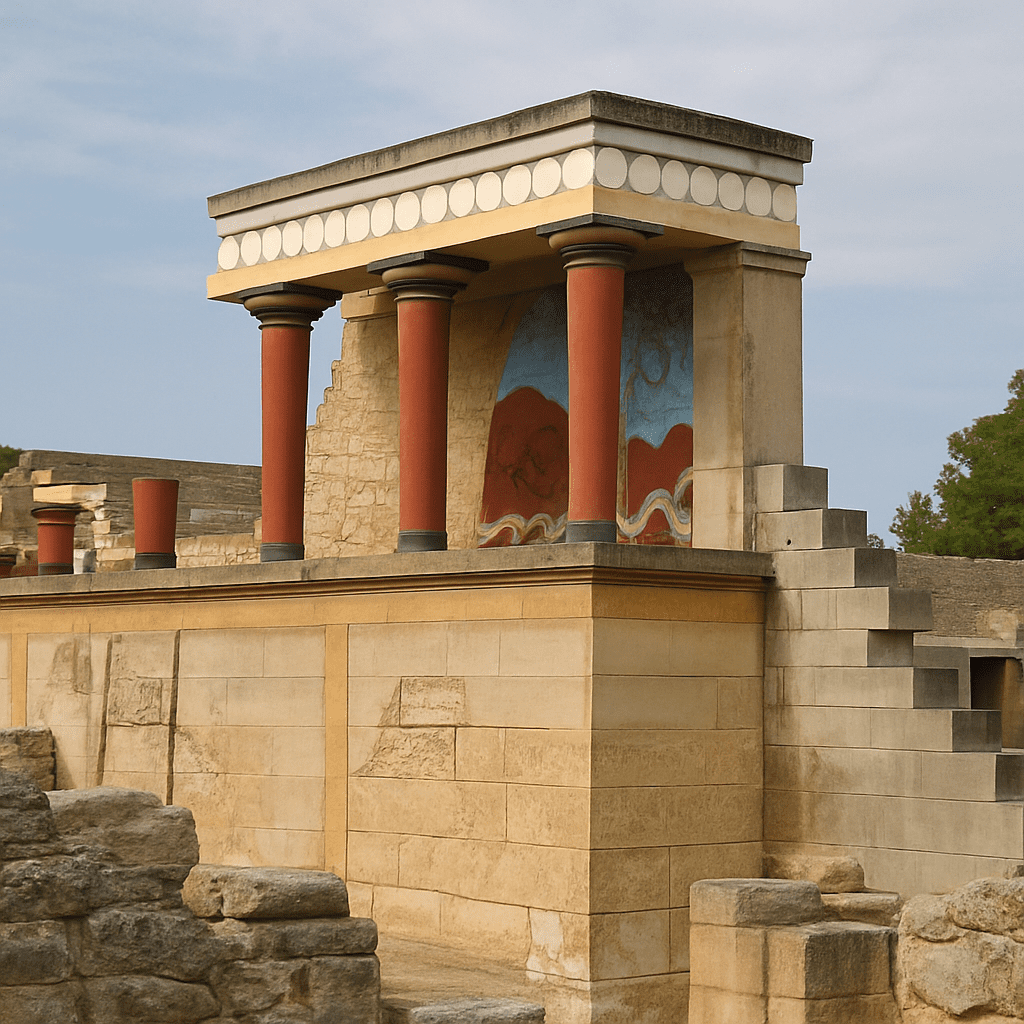
The Palace of Knossos in Heraklion is a fascinating testament to the ancient world. Located on the island of Crete, it is the largest Bronze Age archaeological find in the region. The palace is considered the heart of Minoan civilization, one of Europe's oldest civilizations.
The Minoan culture flourished over 4,000 years ago and left behind impressive traces. The Palace of Knossos is a symbol of this cultural golden age. It was built around 1900 BC and was destroyed and rebuilt several times. Its history is closely linked to the legend of King Minos and the Minotaur.
British archaeologist Arthur Evans discovered the palace in the early 20th century. His discovery revolutionized the understanding of early European history. The palace covers an area of approximately 20,000 square meters and showcases advanced architectural techniques.
The palace's architecture is complex and impressive. Light wells and ventilation systems attest to the advanced building techniques of the Minoans. The palace was a political, religious, and economic center of Minoan civilization. Frescoes in the palace depict scenes from daily life and religious rituals.
The Minoan culture was known for its advanced art and trade relations in the Mediterranean region. The Palace of Knossos was an important trading post and a center for art and crafts. The Minoan script, Linear A, was found in the palace but has not been fully deciphered to this day.
The Palace of Knossos is one of the most visited archaeological sites in Greece. It offers insights into the religious practices of the Minoans, including the worship of goddesses. Minoan art is known for its nature motifs and realistic depictions.
Today, the Palace of Knossos is a significant tourist destination in Crete. It is a symbol of the cultural and historical importance of the Minoan civilization. Visitors can explore the impressive ruins and experience the rich history of the Minoans.
The History of the Palace of Knossos
The Palace of Knossos has a history that spans many centuries. Its origins date back to the Early Bronze Age, around 1900 BC. It was built on the ruins of older structures. Originally, it served as a residence and ceremonial center for the Minoan kings. However, the palace was not characterized by permanent stability. It was destroyed several times by earthquakes and fires. Nevertheless, it was repeatedly rebuilt and expanded, highlighting its resilience and importance in the Minoan world.
British archaeologist Arthur Evans played a central role in the modern rediscovery of the palace. In 1900, Evans began extensive excavations at the site. His work was groundbreaking and made a significant contribution to reshaping our understanding of Minoan civilization. Although his reconstructions of the palace are controversial today, we owe much of our current knowledge about the palace and its inhabitants to him. Evans‘ insights into the architecture and artwork of the palace opened a window into a long-forgotten world.
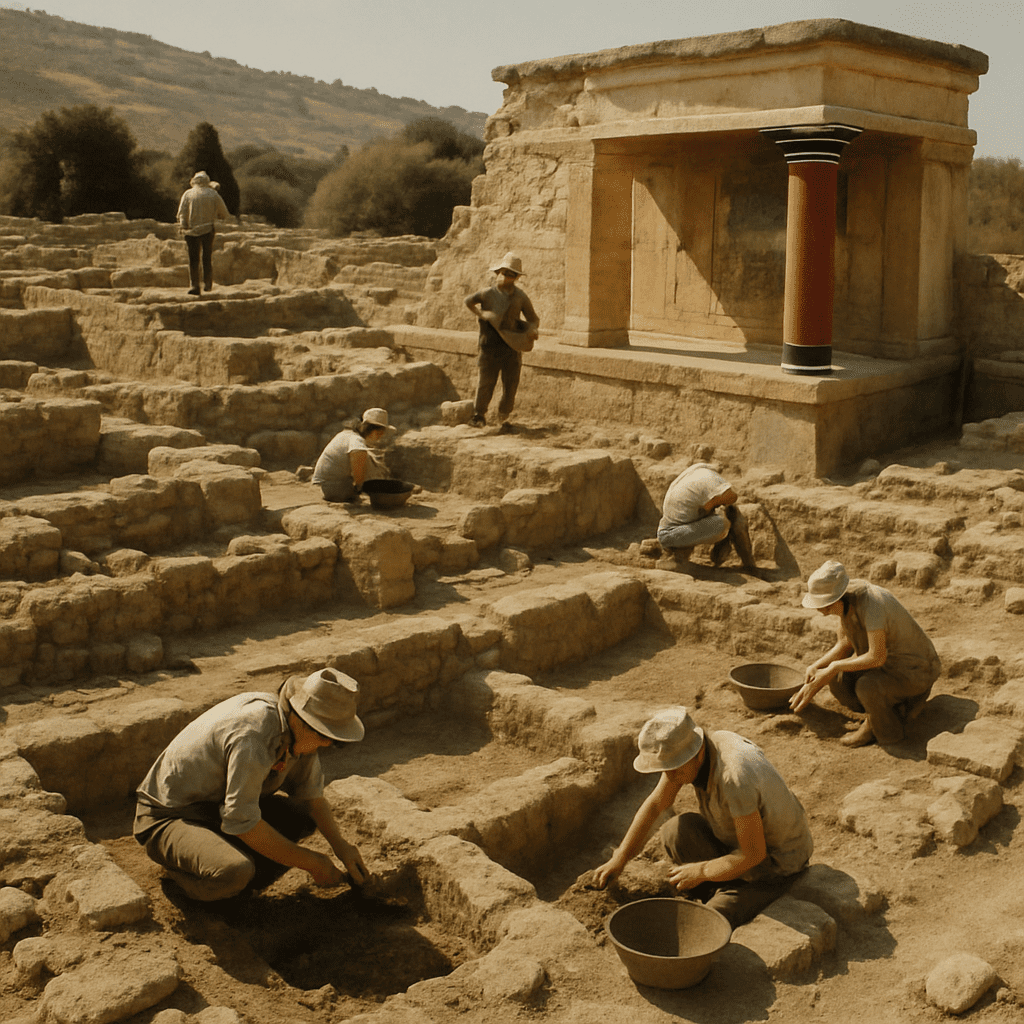
The architecture of the Palace of Knossos was advanced and innovative. With an area of approximately 20,000 square meters, the complex spans several levels. The sophisticated water supply system is noteworthy, and parts of it are still intact today. This system, along with the light shafts and ventilation techniques, demonstrates the high level of engineering skill of the Minoan builders. The palace was more than just a residence. It served as the political and spiritual center of the Minoans, a place of trade and administration.
While the palace is inextricably linked to Minoan culture, its history also shows the influence of other Mediterranean cultures. Archaeological findings indicate trade relations with Egypt and the Near East. These connections enriched Minoan culture and contributed to its development. The Palace of Knossos is therefore not only a monument of Minoan civilization but also a testament to the diverse cultural interactions of the Bronze Age. Through its history and rediscovery, the Palace of Knossos remains a significant symbol of the resilience and complexity of the ancient world.
The Minoan Civilization: Origin and Significance
The Minoan civilization is considered the cradle of European civilization. It developed around 3000 BCE on Crete and reached its peak between 1700 and 1450 BCE. The Minoans were known for their maritime strength and their extensive trade networks. These trade relations extended throughout the Mediterranean to Egypt and the Middle East. The economic returns enabled the Minoan civilization a remarkable cultural flourishing.
The social structure of the Minoans was complex and advanced. Interestingly, the society has been described as matriarchal, meaning women played a significant role in religion and politics. Minoan culture was characterized by a variety of artistic and architectural innovations. Frescoes discovered in Knossos bear witness to their lively daily life and religious practices. The artworks are known for their expressiveness and the use of vivid colors.
The significance of Minoan culture can be found in several aspects of civilization:
- Trade networksThe Minoans established extensive trade networks.
- Artistic InnovationsYour art is unique and rich in detail.
- Religious PracticesThe worship of goddesses shows their matriarchal structure.
- Writing and LanguageThe development of Linear A represents an earlier form of writing systems.
- Architectural masterpiecesThe structures show technical sophistication.
Linear A, the written language of the Minoans, remains largely undeciphered to this day, making its legacy mysterious. Nevertheless, excavations have provided many insights into their daily and spiritual practices. Minoan culture significantly influenced the Mycenaeans on the Greek mainland, thus shaping later Greek civilization as well. Today, scholars continue to study Minoan culture intensively to learn more about their achievements and the causes of their sudden decline.
Architecture and Structure of the Palace of Knossos
The Palace of Knossos is an impressive example of the architectural sophistication of Minoan civilization. The palace covers an area of approximately 20,000 square meters and comprises several floors. Its architecture reflects advanced technologies that were unique for their time. The use of light shafts and ventilation systems demonstrates the high technical skill of the Minoans. These systems made it possible to keep the interior of the palace cool and well-lit.
The Palace of Knossos was built from local limestone and gypsum, materials that made the structure both stable and aesthetically pleasing. The walls were often covered with frescoes depicting scenes from daily life or religious rituals. A remarkable aspect of the architecture is the sophisticated water supply system. It included both freshwater pipes and channels for wastewater disposal, representing advanced technology for its time.
The palace's construction is complex and consists of various areas that served different purposes. The structure included throne rooms, workshops, storage areas, and living quarters. The labyrinth-like design of the palace may have inspired the legend of the Minotaur. The spatial arrangement not only symbolized social and religious status but also served administrative and economic purposes.
In summary, the architecture of the Palace of Knossos can be characterized as follows:
- Complex structuresVarious functional areas that are harmoniously connected.
- Innovative SystemsAdvanced ventilation and water supply.
- Aesthetic ElementsUse of frescoes and decorative materials.
- Flexibility of spacesAdaptability for various social and economic activities.
These architectural features reflect the achievements of a civilization that masterfully combined culture, technology, and aesthetics. The Palace of Knossos remains a fascinating subject of study, continuing to amaze architects and archaeologists to this day. The Minoans' innovative approach to construction and the use of space exemplifies their advanced ideas and their profound influence on subsequent cultures in the Mediterranean region.
Myths and Legends: The Minotaur and King Minos
The Palace of Knossos is not only an archaeological masterpiece but also the setting for one of antiquity's most famous myths. At the center of this myth are the Minotaur and King Minos. The Minotaur, a creature with the body of a human and the head of a bull, was said to be imprisoned in a labyrinth beneath the palace. This labyrinth narrative may have been inspired by the complex architecture of the Palace of Knossos. The Minotaur was considered a terrifying creature that had to be fed annually with seven virgins and seven young men, who were sacrificed to it from Athens.
King Minos, the legendary ruler of Crete, is a central figure in this legend. As the son of Zeus and Europa, he became known for his wise, yet also strict, reign. Minos is said to have commissioned the famous artist and inventor Daedalus to build the Labyrinth in order to safely imprison the Minotaur. This legend not only reflects the power and wealth of Minos but also the importance that the Palace of Knossos held in the ancient world.
The story of Theseus, who defeated the Minotaur, complements the myth and further highlights the palace. Theseus, a prince from Athens, volunteered to slay the monster, thus saving his city. With the help of Ariadne, the daughter of Minos, who gave him a ball of yarn, Theseus found his way back out of the labyrinth after defeating the Minotaur. This thrilling tale lends a mythological dimension to the Palace of Knossos, complementing its archaeological and historical significance.
The Palace of Knossos remains a fascinating place where history and legend meet. The myths surrounding the Minotaur and King Minos are deeply ingrained in European culture, telling tales of courage, cunning, and the inseparable connection between man and deity. Today, the Palace of Knossos attracts many visitors, not only for its archaeological treasures but also for these captivating myths. The palace is a symbol of the cultural depths that can be reached through the fusion of history and myth.
Archaeological Discoveries and Arthur Evans
At the beginning of the 20th century, British archaeologist Arthur Evans shed light on what is now considered one of the most significant archaeological finds in Europe. In 1900, he began excavations at the Palace of Knossos, uncovering a multitude of artifacts. These discoveries transformed the understanding of early European history. Arthur Evans was fascinated by the Minoan civilization, one of the oldest in Europe, and was determined to learn more about their society and culture.
Evans‘ work on-site was groundbreaking, bringing to light the complex network of palace rooms, intricate frescoes, and advanced architecture. Through his careful and systematic excavations, he uncovered the treasures of the Minoan culture, including the famous bull's-head rhytons and unique frescoes. These depictions illuminate the colorful and vibrant world of the Minoans, whose art and culture flourished during the Bronze Age. Evans also coined the term „Minoan“ to describe this civilization, named after the legendary King Minos.
His excavations made Knossos the most famous palace of Minoan culture. Evans also undertook a controversial but remarkable restoration, using concrete as a building material to reconstruct the image of the palace. This methodology has been criticized by some, as they believe it distorted the ancient heritage. Nevertheless, Arthur Evans's influence on the understanding of Minoan civilization remains undeniable. His discoveries are an integral part of our knowledge of Crete's prehistoric era and its cultural heritage. Today, the remaining structures and artifacts bear witness to his tireless work and his passion for archaeology.
Frescoes, Art, and Religious Symbols
The Palace of Knossos is a true gem of Minoan art. The walls of many rooms are adorned with impressive frescoes. These vibrant artworks offer fascinating insights into the daily life and religious practices of the Minoans. The frescoes are famous for their dynamic representations and the use of vivid colors. Both nature motifs and scenes from social and religious life can be discovered in the palace.
Minoan artworks are known for their unique aesthetic and symbolic meaning. They reflect a matriarchal culture in which women often appear as central figures. The depiction of bull-leapers is an iconic example. It shows men and women leaping athletically over bulls, a ritual that may have had religious significance. These images also show the advanced artistic skills of the Minoans and their preference for realistic depictions.
Key elements of Minoan art:
- Nature motifsScenes with plants, animals, and marine life.
- Religious ritualsRepresentations of gods, goddesses, and sacred symbols.
- Sporting scenesFrescoes of sporting activities such as bull-leaping.
- splendor of colorsUse of bright colors, such as red, blue, and gold.
- People and Everyday LifeEveryday scenes that depict social life.
The religious symbols in the artworks of the Palace of Knossos are diverse and profound. The Minoans apparently worshipped a number of deities, including a central female deity who could be considered a goddess of fertility. The bull also played a significant religious role, as evident in the many depictions of bulls and bullfights. This symbolism shows a close connection to nature and the cyclical processes of life. The artistic diversity and richness of symbolic representations in Knossos bear witness to the cultural flourishing and artistic ingenuity of the Minoans.
The Palace of Knossos Today: Visiting and Practical Tips
Today, the Palace of Knossos is the focus of many tourist plans. It is one of Crete's main attractions, drawing visitors from all over the world. Visiting the palace offers a vibrant glimpse into the magnificent Minoan culture. To enjoy the impressive ruins and frescoes, it is recommended to arrive early in the morning or late in the afternoon. This will allow you to avoid the largest crowds and the heat of the day.
A tour of the palace brings you closer to the world of the Minoans. You can wander through the ancient rooms and marvel at the masterful architecture. Numerous information boards provide facts and stories about the exhibited areas. These details enrich your experience and bring history to life. Take your time to admire the frescoes in all their glory and grasp their symbolic meaning.
Practical tips for visiting the palace include some useful advice. Plan ahead and book your tickets online to avoid queues. Wear comfortable shoes, as the grounds are extensive and you'll be doing a lot of walking. Don't forget to bring plenty of water and sunscreen, as the Greek sun can be intense. A guidebook or a guided tour can help you better understand and appreciate the complexity of the palace.
Useful tips for visitors:
- Operating hoursVary depending on the season; visit in the early morning or late afternoon.
- Admission PricesBook online to save time.
- EquipmentBring comfortable shoes, sunscreen, and a water bottle.
- ToursRecommended for deeper insights.
- PhotographyAllowed, but with respect for the artful frescoes and structures.
For travelers who wish to spend more time in the region, other nearby attractions are also available. A visit to the Heraklion Archaeological Museum can be a wonderful addition, as it houses many artifacts from Knossos. Detailed models and exhibits in the museum help to better visualize and understand what was experienced at the palace. Combining both experiences offers a comprehensive perspective on the fascinating Minoan culture and its rich history.
Surroundings and other sights near Heraklion
The area around Heraklion offers a variety of sights to explore. Besides the famous Palace of Knossos, the region also boasts some impressive cultural and natural attractions. The lively city of Heraklion itself is rich in history and charm. With its narrow streets, Venetian fortress, and bustling markets, it attracts many visitors. The city is ideal for those who enjoy local traditions and want to taste authentic Cretan cuisine.
A visit to the Heraklion Archaeological Museum is a must. It houses one of the most significant collections of Minoan artifacts in the world and perfectly complements a visit to the palace. The museum offers deeper insights into the history and culture of the Minoans, allowing you to admire the exhibited treasures up close. Beyond the cultural heritage, the surroundings of Heraklion also invite you to enjoy scenic experiences, such as hikes in the nearby mountains or relaxing days on the sun-drenched beaches of Crete.
Attractions around Heraklion:
- Archaeological Museum of HeraklionImportant Minoan artifacts and exhibits.
- Venetian Fortress (Koules)Historic defensive structure overlooking the harbor.
- Heraklion Old TownNarrow alleys and local markets.
- Amoudara BeachesBeautiful beaches for relaxation and water sports.
- Dikteon CaveMythological site, known as the birthplace of Zeus.
These attractions around Heraklion offer a rich blend of history, culture, and natural experiences. A visit to this region is not just a journey into the past, but also an opportunity to experience the vibrant traditions and warm hospitality of Crete. Whether you are a history buff or a nature lover, Heraklion has something to offer everyone.
Conclusion: The Significance of the Palace of Knossos for Crete and Europe
The Palace of Knossos is more than an impressive archaeological relic. It symbolizes the cultural golden age of the Minoan civilization. Its sophisticated architecture and stunning artworks bear witness to technological advancement and artistic genius. Knossos offers a unique glimpse into one of Europe's earliest civilizations and enriches our understanding of early European history. This site is key to understanding the mythological, cultural, and historical identity of Crete.
Crete's role as a melting pot of different cultures is exemplified by Knossos. The advanced construction and intricate frescoes show influences from Egypt and the Near East. They illustrate the Minoans' trade relations with other civilizations. The palace is a testament to the rich heritage and innovative power of the Minoan culture. For Europe, Knossos is living proof of cultural and technological development in the Bronze Age. The site remains a place of discovery and inspiration for archaeologists and history enthusiasts worldwide.