
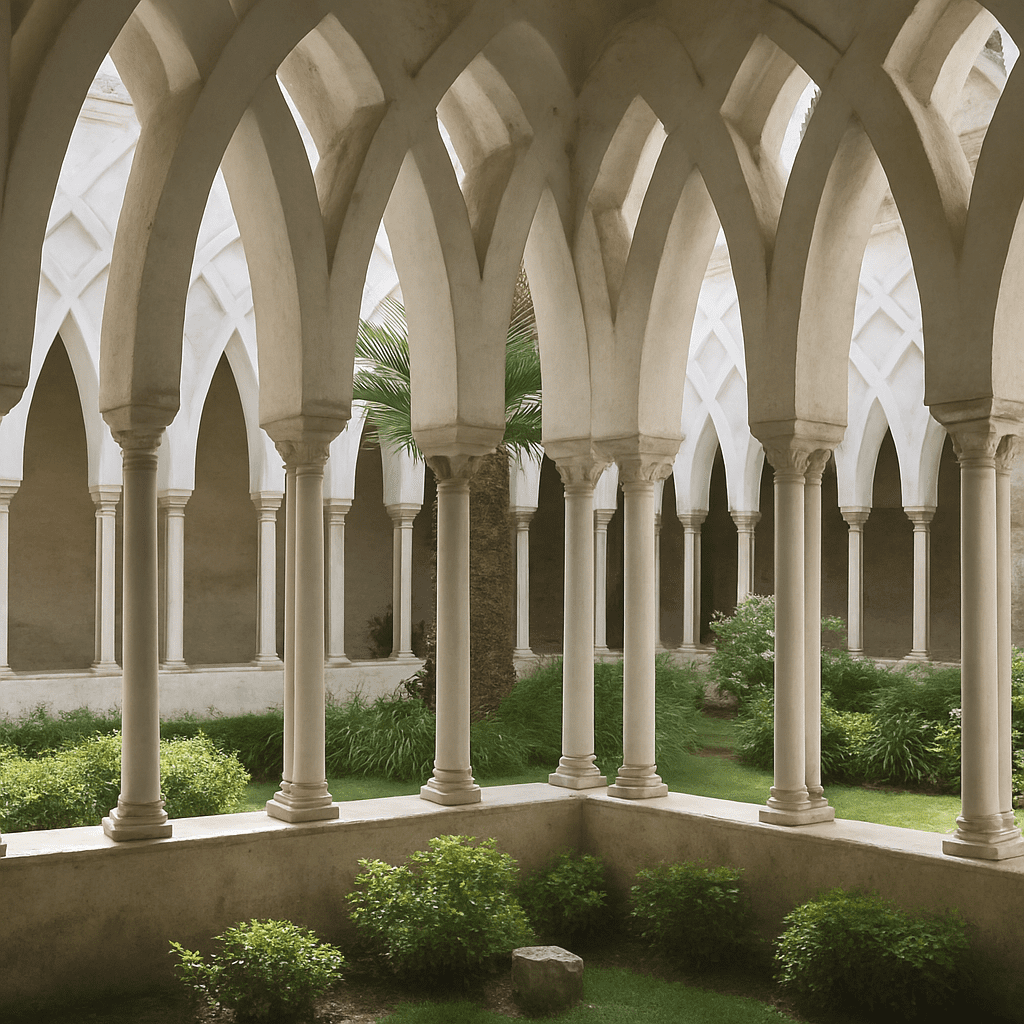
The Cloister of Paradise, also known as the Paradise Cloister, is a hidden gem in Amalfi. This historic site attracts visitors from all over the world. It is a part of the famous Amalfi Cathedral.
The cloister was built between 1266 and 1268. Originally, it served as a cemetery for the nobles and citizens of Amalfi. Today, it is a place of peace and reflection.
The architecture of the Cloister of Paradise is impressive. It shows influences from Arab and Norman styles. The 120 slender marble columns are a highlight.
The cloister is rectangular and measures approximately 26 x 28 meters. It is surrounded by a garden with palm trees and Mediterranean plants. This green oasis offers a peaceful retreat.
14th-century frescoes adorn the walls. They depict biblical scenes and bear witness to Amalfi's artistic golden age. These artworks attract many photographers and art lovers.
The Cloister of Paradise is part of the UNESCO World Heritage site of the Amalfi Coast. It reflects Amalfi's maritime history and cultural richness. Visitors can admire the harmonious symmetry and intricate details.
A visit to the Chiostro del Paradiso is a must for anyone exploring the Amalfi Coast. It offers a glimpse into the region's history and heritage. Let yourself be enchanted by the beauty and spiritual atmosphere.
History of the Cloister of Paradise
The Cloister of Paradise was built in the late 13th century, specifically between 1266 and 1268. It was erected under the patronage of the Bishop of Amalfi to underscore the influence and importance of the Amalfi Cathedral. The cloister initially served as a cemetery, specifically for the elite of Amalfi. This magnificent burial site illustrated the power and wealth of the city at that time.
Amalfi was a major maritime republic in the Middle Ages. Its trade relations brought cultural and economic prosperity. In this context, the cloister is a perfect example of the merging of different cultures. The construction combines Norman and Arab influences, showing the openness of society at the time to foreign influences.

Over the centuries, the Chiostro del Paradiso has undergone numerous changes. Restorations were necessary to preserve and protect its original splendor. These efforts ensure that visitors today can experience the historical ambiance. The preservation is a tribute to the craftsmanship and architectural style of the Middle Ages.
The Amalfi Coast, including the cloister, was added to the UNESCO World Heritage List in 1997. This recognition honors the region's cultural and historical significance. The Chiostro del Paradiso is key to Amalfi's rich heritage and its role as a spiritual center in the Middle Ages.
Today, the Chiostro del Paradiso is valued as a symbol of continuity and progress. It is not merely a historical relic but also a vibrant part of the contemporary community. Local traditions and historical events are held here, allowing the site to preserve its historical significance while remaining rooted in the present.
Architecture and Design
The architecture of the Chiostro del Paradiso is a fascinating testament to medieval building art. The cloister captivates with its harmonious symmetry and intricate details. Particularly impressive are the 120 slender columns, crafted from flawless white marble. These lend the cloister a light and elegant appearance.
The columns are not only load-bearing elements of the building but also works of art. Each capital features intricate ornamentation. These details represent the artistic golden age of the region. The capitals vary in their design, lending the entire structure a varied appearance.
Various styles converge in the design of the Chiostro del Paradiso. The influence of Arab architecture is evident in the arches of the arcades. These arches are multi-tiered and lend the cloister a fascinating depth. This points to Amalfi's maritime connections with the Arab world.
In addition to Arabic influences, Norman elements are also clearly visible. The strong structures and clear lines bear witness to Norman power architecture. This mixture of different styles is characteristic of Mediterranean architecture.
A list of architectural features includes:
- Columns of white marble
- Arabic arches in the arcades
- Norman structural features
- Filigree capital letters
- Artistic Frescoes
The entire cloister is approximately 26 x 28 meters and is framed by a lush garden. This garden is planted with palm trees and other Mediterranean flora. The plants offer a remarkable contrast to the radiant marble of the columns. This interplay of architecture and nature creates an oasis of tranquility and contemplation.
The Cloister of Paradise is not only an architectural masterpiece but also a symbol of the region's cultural diversity. The fusion of different styles and influences showcases the openness and cultural richness of the Amalfi Coast. The cloister is a living example of the harmony between art and nature, past and present.
Cultural and spiritual significance
The Cloister of Paradise is not only architecturally impressive but also holds profound cultural and spiritual significance. As part of the Amalfi Coast, the cloister is a UNESCO World Heritage site, symbolizing the region's rich history. Due to its strategic position on the Mediterranean Sea, Amalfi was a hub of cultural and economic activity. This cultural diversity is reflected in the cloister's design and functions.
The cloister originally served as a cemetery for the nobility and respected citizens of Amalfi. It was a place of eternal rest and prayer. Even today, the Chiostro del Paradiso attracts people who wish to contemplate in quiet seclusion. This function as a place of reflection has endured for centuries, making it a spiritual oasis away from the hectic tourist atmosphere of Amalfi.
The sacredness of the place is also enhanced by the religious artworks. The 14th-century frescoes on the walls of the cloister tell biblical stories and offer visitors an opportunity to reflect on the deeper meanings of these depictions. These artworks are not only historical treasures but also a testament to Amalfi's former religious power and significance.
Beyond that, the Cloister of Paradise is a symbol of the region's cultural exchange and religious heritage. The interplay of art and architecture in the cloister demonstrates how spiritual life has shaped Amalfi's culture and identity. It connects people across centuries, serving as a witness to the past and a source of inspiration for the present. Here, visitors experience not only the beauty of the structure but also the spiritual depth of a place that embodies the essence of the Amalfi Coast.
The cloister as part of the Amalfi Cathedral
The Cloister of Paradise is located right next to the majestic Amalfi Cathedral. This impressive cathedral is dedicated to Saint Andrew and is considered one of the most important religious buildings in the region. The cloister forms an integral part of this sacred complex, significantly contributing to the cathedral's aesthetic and spiritual value.
A visit to the Cloister of Paradise offers visitors the opportunity to gain a deeper insight into the rich history of the Amalfi Cathedral. The cloister and the cathedral together reflect the religious devotion of the people of Amalfi. They are a testament to the impressive power and influence of the medieval Republic of Amalfi. The influence of Gothic and Romanesque architecture can be felt in both the cloister and the cathedral.
The harmonic symmetry of the cloister enhances the architectural experience offered by the Amalfi Cathedral. While the cathedral captivates with its magnificent main portal and elaborate mosaics, the cloister serves as a serene retreat. In past centuries, the Chiostro del Paradiso offered clergy and nobility a place for meditation and peace.
Today, the combination of the cathedral's beauty and the cloister's serenity attracts numerous visitors. Visiting the cloister offers not only architectural surprises but also a connection to the spiritual and religious past of the region. The Chiostro del Paradiso is thus more than just a beautiful sight; it is an important part of the Amalfi Cathedral's heritage and a place that impressively preserves the history and faith of this ancient coastal town.
Artworks and frescoes in the Cloister of Paradise
The Cloister of Paradise in Amalfi is not only architecturally impressive but also houses significant works of art. These treasures offer visitors a glimpse into the region's artistic golden age. Particularly noteworthy are the 14th-century frescoes depicting biblical scenes. These artworks bear witness to the deep religious roots of Amalfi's inhabitants and are an impressive expression of medieval artistry.
The interplay of the frescoes and the architectural elements of the cloister creates a unique aesthetic experience. Visitors can wander through the artistic depiction of stories from the Old and New Testaments. These works lend a spiritual depth to the Chiostro del Paradiso, evoking the religious fervor of past eras. The frescoes are in varying states of preservation, which lends them an authentic character.
Further notable artworks in the Chiostro del Paradiso include:
- Classic mosaics illustrating historical and religious themes.
- Sculptures that reflect both secular and sacred themes.
- Filigree stonework on the columns and arches of the cloister.
Each of these artworks contributes to the cultural significance of the Chiostro del Paradiso. The artworks are not only a visual delight but also a source of inspiration for artists and historians alike. They allow visitors to marvel at the artistic achievements of the past and offer a deep insight into the artistic diversity that has shaped the Amalfi region for centuries. The visit to the cloister becomes an unforgettable experience through the contemplation of these artworks.
The Garden of the Paradise Cloister: Nature and Tranquility
The garden of the Chiostro del Paradiso is an important part of the overall experience in Amalfi. It offers visitors a space for peace and reflection amidst the impressive architecture. Surrounded by tall marble columns and ornate arcades, the garden extends the entire length of the cloister. The carefully designed landscape with palm trees and Mediterranean plants harmonizes the beauty of nature with human creations.
Here, visitors will find a variety of plant species typical of the region, such as olive trees, citrus fruits, and fragrant herbs. These plants contribute to the peaceful atmosphere of the cloister, creating a harmonious connection between the architecture and the natural surroundings. The gentle scent of the plants and the occasional chirping of birds make this place a perfect retreat, ideal for meditation and contemplation.
The Chiostro del Paradiso garden also offers photographers and nature lovers a wealth of inspiration. The interplay of light, shadow, and nature in the garden opens up countless possibilities for atmospheric shots. The garden is not just a place of rest, but also a vivid expression of the connection between culture and nature that shapes the essence of the Amalfi Coast. A walk through this idyllic garden is an enriching experience that refreshes the spirit and soothes the senses.
The Cloister of Paradise Today: Visit and Experience
The Cloister of Paradise is today one of the most popular destinations for visitors to the Amalfi Coast. Despite its historical significance, the cloister remains an accessible place of peace and reflection. Visitors can experience the charm and serenity of this unique monastery. The cloister not only attracts history buffs but also inspires art lovers and architecture admirers.
A visit to the Chiostro del Paradiso allows you to admire the intricate details of the marble columns and the harmonious symmetry of the complex up close. The atmosphere in the cloister is characterized by a sublime silence that captivates every guest. This tranquility forms a stark contrast to the hustle and bustle of the busy streets of Amalfi. It is an ideal place to relax and travel back in time.
Visiting the Chiostro del Paradiso enriches any Amalfi experience. Visitors gain insights into the multicultural influences that have shaped the architecture. They also learn more about Amalfi's historical role as an important trading point in the Middle Ages. This cultural diversity makes experiencing the cloister of paradise an exceptional journey through time. The site offers a mix of art, history, and nature that deeply impresses every visitor.
Practical experience opportunities at the Chiostro del Paradiso include:
- ToursDiscover history and architecture with an experienced guide.
- PhotographyUtilize the natural light and the uniqueness of the structures for breathtaking photos.
- MeditationFind inner peace in the tranquil surroundings of the garden.
- Art appreciationEnjoy the frescoes and sculptures that represent the artistic golden age of Amalfi.
A visit to the Chiostro del Paradiso is more than just a historical exploration; it is a personal experience that touches and inspires the soul.
Practical Tips for Visitors
A visit to the Chiostro del Paradiso offers a unique opportunity to immerse yourself in the history and culture of Amalfi. To make the most of your visit, it's advisable to take advantage of the less crowded times, ideally early in the morning or late in the afternoon. This way, you can experience the tranquility and beauty of the cloister undisturbed. For a comprehensive insight into the significance and history of the Chiostro del Paradiso, guided tours are recommended. These provide valuable information and bring the structure into a new light.
When planning your visit, it's important to pack weather-appropriate clothing. The cloister is outdoors and surrounded by a garden that is particularly beautiful in sunny weather. Don't forget to bring your camera to capture the impressive architectural details and the picturesque garden.
Here are some practical tips for your visit to the Chiostro del Paradiso:
- Check opening hoursPlease ensure you know the current opening hours to avoid disappointment.
- Buy tickets in advanceOnline tickets can reduce wait times.
- Book a guideExpand your knowledge with a guided tour.
- Allow plenty of timeTake your time to enjoy the peace and quiet and take in all the details.
- Garden tourSpend time in the garden to explore the Mediterranean flora.
These tips will help make your visit an unforgettable experience and make the most of the remarkable history of the Chiostro del Paradiso.
Conclusion: A must-see on the Amalfi Coast
The Cloister of Paradise in Amalfi is undoubtedly a cultural treasure of immeasurable value. As part of the impressive Amalfi Cathedral, it attracts numerous visitors who appreciate its historical significance. The Cloister of Paradise offers a fascinating journey through time, reflected in its unique architecture and preserved artworks. It is a place that makes the encounter of cultures and eras a tangible experience.
The experience at the Chiostro del Paradiso goes beyond a simple visit. It is an invitation to explore and reflect on centuries of history and serene beauty. The harmonious blend of nature and architecture creates an atmosphere of contemplation and tranquility. For travelers on the Amalfi Coast, the Chiostro del Paradiso is not just a destination to visit, but an integral part of discovering the region's rich cultural and spiritual identity. Don't miss the opportunity to immerse yourself in the deep-rooted traditions and wonderful architecture of Amalfi.