

The Sagrada Familia Basilica is an architectural marvel that dominates Barcelona's skyline. This impressive structure attracts millions of visitors annually. It is a symbol of the city and a masterpiece by the renowned architect Antoni Gaudí.
The construction of the Sagrada Familia began in 1882 and remains unfinished to this day. This unfinished cathedral is a UNESCO World Heritage Site and a prime example of the fusion of art, architecture, and religion. Gaudí dedicated the last 15 years of his life solely to this project.
Gaudí's vision for the Sagrada Familia was revolutionary. He combined Gothic and Art Nouveau styles to create a unique architectural experience. The basilica is renowned for its impressive facades and towers, which are both artistically and symbolically significant.
The Sagrada Familia Basilica is not only an architectural masterpiece but also a spiritual place. The use of light and color inside creates an atmosphere of contemplation and prayer. Gaudí was inspired by nature, which is reflected in the organic shapes and structures.
The basilica has three main facades: the Nativity facade, the Passion facade, and the Glory facade. Each facade tells a different biblical story and contributes to the spiritual significance of the structure. The Nativity facade is the only one completed during Gaudí's lifetime.
The Sagrada Familia will have 18 towers, representing Jesus, the Virgin Mary, the four Evangelists, and the twelve Apostles. The tallest tower will be 172.5 meters high and dedicated to Jesus Christ. These towers are not just architectural masterpieces, but also symbols of faith.
The construction of the Sagrada Familia is financed by donations and entrance fees. Completion is planned for 2026, the 100th anniversary of Gaudí's death. Despite the long construction period, the basilica remains a vibrant testament to the connection between tradition and innovation in architecture.
The Sagrada Familia is a significant example of Catalan Modernism and a symbol of Catalan identity. It is a place of contemplation, art, and history. This architectural masterpiece is a must-see for anyone visiting Barcelona.
The history of the Sagrada Familia Basilica
The history of the Sagrada Familia Basilica's creation is fascinating and complex. The initial idea for the structure dates back to 1866. At that time, Josep Maria Bocabella, a bookseller, founded the „Association of the Spiritualists of Saint Joseph.“ His goal was to build a church dedicated to the Holy Family.
After several decades of fundraising and planning, the project took shape in 1882. The original architect, Francisco de Paula del Villar, laid the first stone in 1882. He planned a Neo-Gothic cathedral but soon resigned. Then, the visionary Antoni Gaudí took over, leading to a drastic change in direction.
Gaudí not only changed the plans but revolutionized the execution of the building. He integrated innovative techniques and organic forms, inspired by nature, into the design. He introduced elements that represent a spiritual journey from the birth to the glory of Christ. His approach was deeply spiritual and symbolic.
This realignment did not meet with everyone's approval. There were financial difficulties and wars that delayed construction. The Spanish Civil War in 1936 even led to the destruction of the original models and plans. However, the post-war period brought new hope and financial support through tourism.
The history of the Sagrada Familia is characterized by:
- Original plan under Francisco de Paula del Villar (Neo-Gothic style)
- Takeover by Gaudí and introduction of modern, nature-inspired forms
- Financial difficulties and wars as challenges
- Destruction of Gaudí's Plans in the Spanish Civil War
- Resumption of construction through donations and tourism financing
Since Gaudí's death in 1926, the basilica has been continued by various architects. Each successor remained true to his visions while integrating modern technologies. The Sagrada Familia is today a living project that reflects the history, culture, and faith of Barcelona. It is the landmark of a city that combines tradition and modernity.
Antoni Gaudí and his Vision
Antoni Gaudí, a visionary architect and master of Catalan Modernism, left a lasting legacy with the Sagrada Familia basilica. Born in Reus in 1852, he dedicated himself to studying architecture in Barcelona, a city he would later shape with his works. Gaudí viewed architecture not merely as a craft, but as an art form that harmoniously blends nature, faith, and engineering. His passion and dedication to the Sagrada Familia project are reflected in every detail.
Gaudí's vision for the Sagrada Familia was far more than just a church. He saw it as a „Bible in stone,“ a work of art that tells stories and makes the spiritual tangible. He strove to create an emotional connection through architecture. Gaudí was heavily inspired by nature, which is evident in the building's organic forms and natural play of light. Columns that resemble tree trunks branch out into a ceiling that resembles the canopy of a forest.
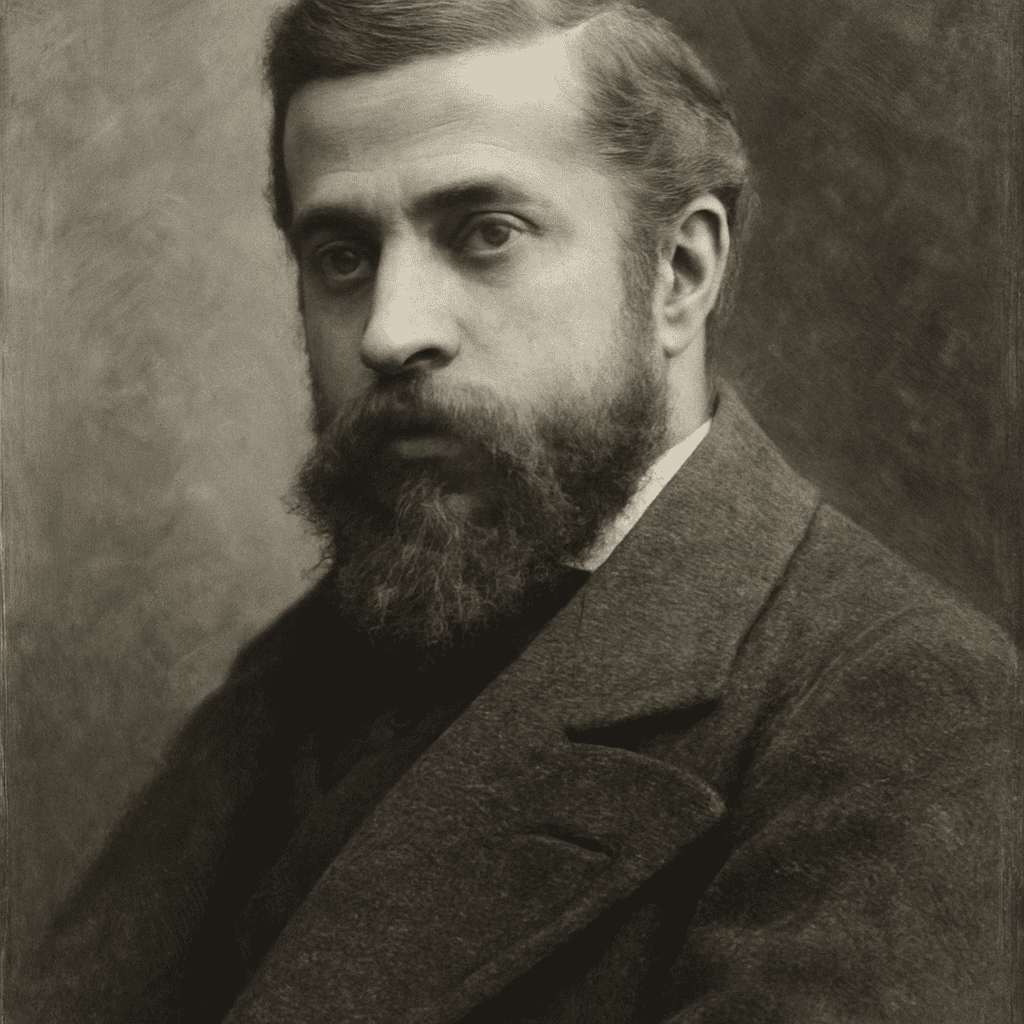
His approach to architecture was revolutionary. Gaudí used color and light as central elements in his designs to create a spiritual atmosphere. He designed stained-glass windows that bathe the interior in a kaleidoscopic play of light, bringing the sacred space to life. For him, these light effects symbolized the divine character of the Sagrada Familia. The colors not only lend aesthetic appeal to the building, but also evoke emotions and invite contemplation and meditation.
Antoni Gaudí dedicated the last 15 years of his life exclusively to working on the Sagrada Familia. Despite financial difficulties and a lack of support, he remained true to his vision. He lived modestly near the construction site, personally overseeing every aspect of the project. His dedication is still palpable today, and the structure stands as a living testament to the fusion of art, technology, and spirituality. Gaudí's unfinished masterpiece, slated for completion in 2026, remains a symbol of his boundless ingenuity and unwavering commitment to realizing his vision.
Architectural Styles: Gothic Meets Modern
The Sagrada Familia Basilica is an impressive example of the fusion of different architectural styles. It combines elements of Gothic architecture with the innovative approaches of Modernism, as interpreted by Gaudí. This unique blend not only reflects Gaudí's creative vision but also his ability to harmoniously unite traditional and contemporary architecture. This resulted in a structure that evokes both admiration and astonishment.
Gaudí was known for his ability to reinterpret classical styles. In the Sagrada Familia, Gothic influences are unmistakable, particularly in the structure of the facades and the use of pointed arches. These not only offer aesthetic appeal but also contribute to the stability of the structure. At the same time, Gaudí breaks away from the severity of Gothic architecture by incorporating Modernist elements characterized by curved lines and organic forms. This contrast creates a dynamic architecture that rises gracefully through space.
Another characteristic feature is the use of nature as a model for design and construction. Gaudí believed that nature offered the most perfect form of architecture, and this mindset is evident in the Sagrada Familia. The columns, which branch out like trees in the interior, are an expression of this philosophy. They not only support the building but also create the impression of standing in a stone forest. This natural metaphor runs through the entire design, enhancing the sense of contemplation and spirituality.
Key architectural features:
- Gothic elementsGothic arches, richly decorated portals, vertical buttresses.
- Modernist ApproachesCurved lines, flowing shapes, innovative structures.
- Natural sources of inspirationTree-like columns, color and light effects, organic forms.
The application of light and color in the Sagrada Familia is equally remarkable. Gaudí used stained glass windows to create a vibrant interplay of colors that changes throughout the day. This technique lends a mystical atmosphere to the interior and sets the building apart from traditional churches. The play of light and shadow is a central element that emphasizes both the spiritual significance and aesthetic appeal of the structure.
The Sagrada Familia Basilica impressively demonstrates how different architectural currents can coexist harmoniously. It is a symbol of Gaudí's inexhaustible creativity and a masterpiece that redefines the boundaries of architecture. By uniting old and new elements, it appears timeless and remains a source of inspiration for generations of architects. This structure is not only an expression of Gaudí's talent but also a tribute to the infinite possibilities of architectural creation.
The three main facades: symbolism and meaning
The Sagrada Familia Basilica is world-renowned for its three distinctive facades, which are deeply rooted in symbolic meaning and artistic expression. Each of these facades represents different aspects of the life of Jesus Christ, showcasing Gaudí's extraordinary ability to tell biblical stories through architecture and art. These facades give the basilica its unique identity and make it one of the most significant religious structures in the world.
The Nativity Facade
The Nativity Facade is the oldest of the three and was completed during Gaudí's lifetime. It is dedicated to the miracle of the birth of Jesus and depicts scenes from Christ's childhood. Gaudí placed great importance on the natural beauty and joy associated with birth. This facade is richly decorated with detailed sculptures portraying scenes such as the Adoration of the Shepherds and the Presentation of Jesus in the Temple. The fine details and vivid depictions are testaments to hope and life.
The Passion Facade
In contrast, the Passion facade conveys a completely different atmosphere. It is simple and understated in its style, symbolizing the tragedy of Christ's Passion. This facade depicts the final days of Jesus, focusing on suffering and sacrifice. Gaudí intended the Passion facade to evoke a sense of sorrow in the viewer, and the dramatic portrayal of the figures underscores this intention. The austere, angular lines and expressive faces are deliberately chosen to make the suffering intensely palpable.
The Facade of Glory
The Glory Facade, currently under construction, will be the largest and most magnificent of the three. It is dedicated to the glory and eternal life of Jesus. This facade is planned as the main entrance to the basilica and will depict scenes of heavenly glory and the return of Christ. The design of this facade is not yet fully completed, but it aims to provide a synthesis of light and space that reflects divine glory. This facade will be the most opulent and spiritual expressive element of the Sagrada Familia.
Symbolic meaning of the facades:
- Birth facadeSymbol of joy and life
- Passion facadeExpression of suffering and sacrifice
- Splendor facadeEmbodiment of Glory and Eternity
Together, these three facades represent the life cycle of Jesus Christ in an architectural form that is both artistically and spiritually challenging. Every aspect of the facades is considered and imbued with symbolic details that prompt visitors to contemplate the religious themes. The combination of art and architecture in this manner makes the Sagrada Familia a unique place of worship and understanding.
In the unique depiction of these facades, Gaudí's mastery in handling symbolism and space is once again evident. He has succeeded in carving spirituality into stone and creating an architectural dialogue through his facades that transcends time and captivates both local and international visitors. The Sagrada Familia Basilica is thus not only a religious but also an artistic milestone.
The Towers of the Sagrada Familia: Architecture and Symbolism
The towers of the Sagrada Familia are one of the basilica's most remarkable features, shaping Barcelona's skyline. In total, the basilica is intended to have 18 towers, each with a special symbolic meaning. These towers represent important religious figures and principles, significantly contributing to the building's spiritual and architectural power.
The 18 towers are designed to symbolize the heavenly Jerusalem. The central tower, dedicated to Jesus Christ, will be the tallest, reaching an impressive height of 172.5 meters. This tower is intended to be crowned with a luminous cross, in keeping with Gaudí's vision of light as a divine element. Surrounding the central Christ tower will be four towers symbolizing the four evangelists, with each pair forming a major axis of the basilica.
Additionally, there are 12 towers dedicated to the Apostles. These towers are arranged in groups of four on each of the three main facades. The tower dedicated to the Virgin Mary will be slightly lower than the Christ Tower, but still majestic in its presence. This symbolic arrangement of towers expresses both the hierarchy and the communion of celestial figures.
Symbolic meaning of the towers:
- Jesus ChristHighest tower, 172.5 meters, shows superiority and divinity.
- Four EvangelistsTowers around the Christ Tower represent the spread of the Good News.
- Twelve ApostlesRepresenting the founders of the church, showing the origin and transmission of the faith.
- Virgin MarySecond highest tower, embodies purity and connection to the Divine.
The towers are not only spiritually significant but also technically innovatively designed. In their design, Gaudí relied on natural forms and geometric principles that combine stability with artistic freedom. They are constructed in such a way that they form a musical work of art: The wind flowing through the openings creates melodies, making the Sagrada Familia a living testament to Gaudí's fusion of art, nature, and spirituality.
The Interior of the Basilica: Light, Colors, and Forms
The interior of the Sagrada Familia is an impressive example of Gaudí's innovative style and his ability to merge architecture with natural elements. Gaudí drew inspiration from nature and designed the basilica's interior as a cathedral full of light, which streams through colorful stained-glass windows, creating a breathtaking display of color.
Unique and unforgettable is how Gaudí used natural light to create a spiritual atmosphere. The colorful windows are positioned to create changing light patterns throughout the day. The colors of the windows intensify the experience by filling the interior spaces with cool blues and greens in the morning, and warm yellows, oranges, and reds in the afternoon. These plays of color symbolize the spiritual journey and the connection between humans and nature.
The interior's column structure further supports this natural design. These pillar-like structures resemble giant trees, creating the feeling of being in a vast forest. Gaudí designed the columns to branch and support, much like tree canopies. This allows them to efficiently distribute weight and create an open, almost boundless spatial structure. This design reflects Gaudí's profound understanding of the laws of nature.
Elements of the Sagrada Familia Interior:
- Light guidanceLarge glass windows allow for dynamic lighting effects and create a festive atmosphere.
- Color designColor-intensive windows are strategically placed to reflect the times of day.
- Column designTree-like columns support the roof like branches of a tree crown.
- GeometryEvery structure uses natural forms for aesthetics and structural stability.
The geometry inside the Sagrada Familia is another architectural masterpiece. Gaudí used hyperbolic paraboloids and other complex forms that create a sense of movement and infinity. These complex forms are not only aesthetically pleasing but also provide amazing acoustics, elevating music and singing to a heavenly level.
The interior of the Sagrada Familia is an impressive example of the symbiosis of architecture, nature, and art. Through the masterful use of light, colors, and shapes, Gaudí manages to create a profound spiritual experience that amazes and inspires visitors. The basilica thus remains an integral example of Antoni Gaudí's vision and genius, extending far beyond mere architectural space.
Building History and Challenges to This Day
The construction history of the Sagrada Familia Basilica is a story of vision, perseverance, and innovation that began over a century ago. Work on this renowned edifice commenced in 1882. Initially, the project was led by Francisco de Paula del Villar, but he was replaced just one year later by Antoni Gaudí. Gaudí radically transformed the construction project, steering it away from its original neo-Gothic design towards a unique work of art that is world-famous today.
The construction of the Sagrada Familia has faced challenges since its inception. One of the biggest difficulties was financing. Gaudí chose an approach that relied solely on private donations. This strategy significantly slowed down progress because construction could only continue within the limits of available funds. Further obstacles arose during the Spanish Civil War in the 1930s. During this period, parts of Gaudí's workshops were destroyed, and many of his plans were lost or damaged.
Construction Challenges of the Sagrada Familia:
- FinancingConstruction still relies heavily on donations.
- Spanish Civil WarDestruction and loss of important plans.
- Technological hurdlesAdaptation to modern architectural techniques.
- Continuation after Gaudí's death: Translating his vision to new architects.
After Gaudí's death in 1926, the great challenge was to implement his vision without existing detailed plans. Although sketches and models were available, subsequent architects had to interpret and continue his unique architecture. This challenge required a deep understanding of Gaudí's innovative ideas and his connection between art and engineering.
Over the years, the introduction of new technologies in construction, such as computer-aided design methods and advanced building techniques, has brought about significant advancements. These innovations have considerably accelerated construction progress, leading to the planned completion of the Sagrada Familia by 2026. Despite the extended construction period, the work remains a testament to the enduring fascination and ongoing pursuit of realizing Gaudí's monumental vision.
The Sagrada Familia as a UNESCO World Heritage Site
The Sagrada Familia Basilica is not only an outstanding example of modern architecture but has also been officially recognized as a UNESCO World Heritage Site since 2005. It shares this honor with other works created by Antoni Gaudí in Barcelona. The UNESCO recognition underscores the cultural and artistic significance of this architectural masterpiece. It highlights how Gaudí's work has shaped 20th-century architecture and continues to be a significant influence to this day.

by Nader Saremi (https://unsplash.com/@nssaremi)
This UNESCO World Heritage status also emphasizes the close connection between culture and architecture that the Sagrada Familia embodies. The basilica impressively expresses Catalan Modernism. Its uniqueness lies in the fusion of natural forms and religious symbolism. These aspects make it an indispensable part of architectural heritage. The World Heritage status also contributes to ensuring the preservation of the structure and its protection for future generations.
The inscription as a UNESCO World Heritage Site has not only solidified the basilica's cultural prestige but has also contributed to the increase in tourism in Barcelona. Millions of visitors flock to Barcelona annually to marvel at Gaudí's unfinished masterpiece. The status helps raise awareness of the importance of conservation efforts. It secures the necessary financial support to ensure the completion of the Sagrada Familia in line with Gaudí's visionary plan.
Significance for Barcelona, Art, and Religion
The Sagrada Familia basilica has become an unmistakable landmark of Barcelona. It represents the city just as much as other significant sites, such as Park Güell or La Rambla. This iconic structure attracts millions of tourists annually, which not only boosts the local economy but also solidifies Barcelona's reputation as a center for exceptional art and architecture. The Sagrada Familia is deeply rooted in Catalan culture and symbolizes the region's creative energy and innovative spirit.
In the art world, the Sagrada Familia basilica has gained widespread recognition as a unique experiment in architectural expression. Gaudí's work breaks away from traditional forms and is a prime example of Modernisme, a movement that redefined the boundaries of art and architecture. The basilica combines artistic freedom with technical sophistication, and has had a lasting impact on perceptions of what is possible in architecture. Its influence extends far beyond the borders of Spain, inspiring architects and artists worldwide.
From a religious perspective, the Sagrada Familia also plays a central role. It is not only an architectural marvel but also an active Roman Catholic place of worship. The construction, which symbolically refers to biblical stories, offers visitors a spiritual experience. Through its detailed facades and the captivating play of light inside, the basilica manages to create an atmosphere of majesty and contemplation. It thus stands as both a place of prayer and admiration for art.
Future and Completion: A Look Ahead
The completion of the Sagrada Familia Basilica is planned for 2026, a significant date that coincides with the 100th anniversary of Gaudí's death. Originally conceived as the audacious dream of a single architect, this monumental project is now being realized through the integration of modern technology and innovative construction practices. These advancements have enabled the efficient execution of Gaudí's intricate vision. The use of digital modeling and sophisticated fabrication techniques has accelerated the process and enhanced the precision in the detailed execution.
The completion of the Sagrada Familia will not only be an architectural milestone but will also add a new dimension to the city and the world. With the finishing of its tallest towers, including the impressive Central Jesus Christ Tower, the basilica's silhouette will appear even more striking. The Sagrada Familia will stand as a completed testament to Gaudí's visionary power, the fusion of tradition and innovation, and as a spiritual anchor point. It will continue to fascinate and inspire visitors from all over the world, while living on as a symbol of the harmony between art and faith.
Conclusion: The Sagrada Familia as a total work of art
The Sagrada Familia Basilica is far more than just a structure; it is a living testament to human creativity and determination. Its genesis spans generations of architects and artisans who brought Gaudí's extraordinary vision to life. The basilica embodies the symbiosis of architecture, art, and spirituality, standing as a symbol of the merging of innovation and tradition. Despite its unfinished sections, the Sagrada Familia personifies a sense of completion in its unique beauty and profound symbolic value.
This structure draws people from all corners of the globe, inspiring them to contemplate the possibilities of architecture and its role in human history. The Sagrada Familia is not just a monument to Antoni Gaudí's legacy, but also an oasis of faith and hope in the heart of Barcelona. It reminds us that the limits of what is possible are defined only by the limits of our imagination. In its unyielding grace and permanence, it serves as a shining example to the world of what can be achieved when human ingenuity, artistry, and devotion converge.