
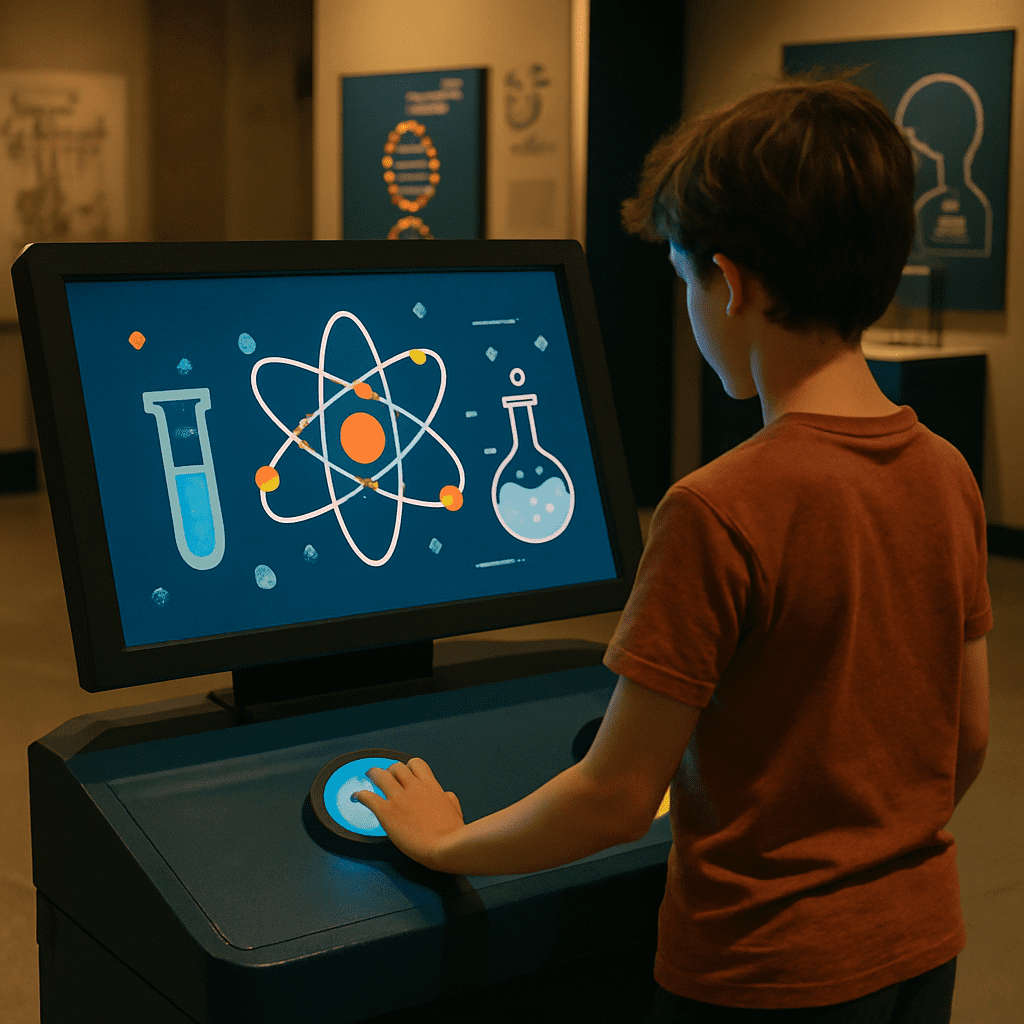
A visit to a science museum is a journey into the world of discovery and wonder. These fascinating places offer a unique opportunity to experience science and technology up close. They are an exciting experience not just for science enthusiasts, but for people of all ages.
Science museums are more than just exhibition spaces. They are interactive learning centers that present complex scientific concepts in an understandable way. Visitors can discover the wonders of science for themselves through hands-on exhibits and interactive displays.
An outstanding example is the Valencia Science Museum, which is part of the impressive City of Arts and Sciences. With its futuristic architecture, designed by Santiago Calatrava, it attracts visitors from all over the world. It offers a variety of exhibitions covering topics such as physics, biology, and chemistry.
Another notable destination is the NEMO Science Museum in Amsterdam, the largest science center in the Netherlands. Here, visitors can explore interactive exhibits across five floors, making science and technology accessible in a playful way. The rooftop terrace also offers a breathtaking view of the city.
Science museums foster critical thinking and problem-solving skills. They offer workshops and demonstrations that illustrate complex scientific concepts. These museums are ideal locations for school trips and educational tours, as they spark curiosity and interest in science and technology.
A visit to a science museum is not only educational but also inspiring. These museums are places where future scientists can discover their passion. They offer special programs and events for children, teenagers, and adults, highlighting the importance of science in the modern world.
Science museums are also important cultural and tourist attractions. They contribute to promoting STEM (Science, Technology, Engineering, and Mathematics) education and provide a platform for the exchange of ideas between scientists and the public. Visitors can learn about the history of science and significant discoveries.
Overall, science museums are places where science comes alive and becomes tangible. They offer a unique opportunity to discover and experience the wonders of science. Whether you are a science enthusiast, a curious tourist, or a teacher looking for inspiring learning opportunities, a visit to a science museum will surely delight you.
What is a science museum? – Meaning and Role
Science museums are unique institutions dedicated to making science and technology accessible to the general public. They differ from traditional museums through their interactive approach, which actively involves visitors in learning. These museums offer an environment where people of all ages and backgrounds can explore complex scientific concepts in an understandable and engaging way.
The importance of science museums lies in their ability to disseminate knowledge and spark curiosity. Through hands-on exhibits and interactive experiences, learning becomes an exciting and engaging adventure. Science museums help to bring science and technology out of their often perceived abstract context and make them accessible to everyone. In an era of rapid technological advancements, they play a crucial role in promoting education and understanding.
A key aspect of science museums is their role as educational platforms. They offer programs and resources tailored specifically for schools, teachers, and students. These programs support the curriculum and supplement classroom instruction with hands-on experiences that deepen learning. Science museums also contribute to promoting STEM (Science, Technology, Engineering, and Mathematics) as a field of study by encouraging students to explore careers in these promising fields.
The role of science museums goes beyond education. They are cultural institutions that contribute to the dialogue on scientific topics between scientists and the public. Through special exhibitions and events, they illuminate current scientific developments and societal challenges. These museums act as a bridge between science and society by presenting complex topics in an understandable and engaging way.
Science museums offer a variety of experiences:
- Interactive exhibitions that invite visitors to experiment themselves.
- Workshops and demonstrations that illustrate fundamental scientific concepts.
- Special programs for children that spark an interest in science through play.
- Lectures and discussions on current scientific topics by experts.
- Temporary exhibitions that focus on new developments and discoveries.
In summary, science museums are indispensable institutions that contribute to fostering a scientifically literate society. They inspire the next generation of scientists and encourage the general public to explore and understand the wonders of science. By making science accessible and understandable, they play a crucial role in modern education and culture.
The Fascination of Interactive Exhibitions
Interactive exhibits are the heart of any science museum. They break down the traditional barrier between exhibits and visitors by encouraging active engagement. In these exhibits, visitors can understand complex scientific concepts through their own experiments and investigations. This type of learning allows visitors to apply theories directly and see science in action. It is an immersive experience that makes learning vibrant and exciting.
Visitors can discover numerous scientific phenomena in the exhibitions, from gravity and magnetic fields to chemical reactions. This direct experience and experimentation fosters a deep understanding and sparks curiosity. The opportunity to experience science firsthand makes these museums a place of inspiration. Children are introduced to science in a playful way, while adults have the opportunity to deepen their knowledge. This interactive approach opens up new ways of learning.
A special highlight of many science museums are the interactive exhibits. Here, visitors can become scientists themselves by conducting experiments and drawing their own conclusions. These practices foster critical thinking and problem-solving skills. Through active exploration, visitors learn to ask questions and find creative solutions. This is particularly important for developing an understanding of how science works and for grasping the significance of errors and adjustments in the scientific process.
Interactive exhibitions often feature various thematic stations:
- Physical Experiments: From Vibrations and Waves to Electricity.
- Chemical laboratories where simple reactions can be visualized.
- Biological discovery centers for exploring DNA, cells, and microorganisms.
- Technological innovations that demonstrate the development of computers and robotics.
- Environmental stations that promote understanding of sustainable practices.
Through such experiences, science and technology are not kept abstract. They become tangible and understandable for visitors, regardless of their prior education. Science museums thus offer a platform to share and expand the knowledge of the modern world. This form of education is not only instructive, but also encouraging and entertaining. It is an invitation to see the world from a scientific perspective and to experience the fascination of discovery.
Science Museum Valencia: An Architectural and Scientific Highlight
The Valencia Science Museum is a remarkable example of the fusion of architecture and science. It is part of the famous City of Arts and Sciences, designed by Santiago Calatrava. The architecture itself is impressive and futuristic, a symbol of the connection between art and science. The building attracts visitors not only for its exhibits but also for its unique design.
Inside the museum, visitors can expect a wealth of interactive experiences. The Valencia Science Museum offers a wide range of exhibits that explore the principles of physics, biology, and chemistry. Visitors can learn about the evolution of life on Earth or explore interactive models of space travel. These exhibits are designed to appeal to both children and adults.
A special attraction is the largest aquarium in Europe, L'Oceanogràfic, which is also located in the City of Arts and Sciences. Although technically not part of the science museum, it perfectly complements the educational purpose of the entire complex. Here, visitors can explore the fascinating underwater world and learn more about ocean ecology.
The Valencia Science Museum also offers special programs and events for families and schoolchildren. These programs are designed to deepen understanding of scientific phenomena and foster interest in STEM (Science, Technology, Engineering, and Mathematics) subjects. Workshops and demonstrations allow participants to delve deeper into the subject matter and become researchers themselves.
In addition to interactive experiences, the Valencia Science Museum also features temporary exhibits that highlight current scientific topics. These exhibits offer a glimpse into the latest discoveries and technological advancements, keeping the content fresh and engaging, and attracting repeat visitors.
The museum's surroundings also offer amenities such as cafés and souvenir shops to round off your visit. These facilities are well-integrated and provide opportunities for relaxation and refreshment. There are many other cultural highlights to discover in the City of Arts and Sciences that perfectly complement a museum visit.
Markdown list of attractions at the Valencia Science Museum:
- Interactive Exhibitions on Physics, Biology, and Chemistry
- Presentations on the Evolution of Life
- Space exhibitions and models
- Workshops and educational programs for families and schools
- Temporary exhibitions on current scientific topics
- Access to L'Oceanogràfic, Europe's largest aquarium
NEMO Science Museum Amsterdam: Hands-on Science
The NEMO Science Museum in Amsterdam is a true treasure for anyone interested in science and technology. As the largest science center in the Netherlands, it attracts an impressive number of visitors each year. The unique ship-shaped building is located by the water and impresses with its striking architecture, designed by Renzo Piano.
Inside NEMO, visitors can expect five exciting floors filled with interactive exhibits that convey scientific concepts in an entertaining way. Particularly impressive is the exhibition on human perception, which allows visitors to explore the functions of the brain in a playful manner. This exhibition offers valuable insights into the complexity of human sensory perception.
NEMO Amsterdam places great importance on making science accessible to all ages. The exhibitions are designed to invite visitors to participate and experiment. A special highlight is the exhibition on the energy of the future, which illuminates sustainable technologies and their importance to our world. Such topics are not only current but also essential for a sustainable future.
NEMO's rooftop terrace not only offers a breathtaking panoramic view of Amsterdam but also serves as an open-air laboratory. Here, visitors can conduct scientific experiments themselves and observe the sky. This unique experience combines urban flair with scientific discovery and is a must for every visitor.
In addition to the permanent exhibitions, NEMO offers a wide range of temporary exhibitions and events. These are often focused on current scientific discoveries and provide a platform for discussion and exchange. Workshops and lectures are also held regularly, deepening and inspiring visitors' knowledge.
NEMO is more than just a museum; it's a place that sparks curiosity and inspires the next generation of scientists and engineers. There are special programs for schools aimed at bringing the world of science closer to young people. Educational institutions utilize the museum's diversity to move the classroom outdoors.
Markdown-Liste der Attraktionen im Wissenschaftsmuseum NEMO Amsterdam: * Entdecken Sie, wie die Welt funktioniert * Erkunden Sie wissenschaftliche Phänomene * Probieren Sie interaktive Exponate aus * Erfahren Sie mehr über Technologie und Wissenschaft * Genießen Sie die Aussicht von der Dachterrasse
- Exhibitions on human perception and the brain
- Energy of the Future – Discover Sustainable Technologies
- Everyday Physics – Understanding Science in Daily Life
- Rooftop terrace with panoramic views and open-air laboratory
- Temporary exhibitions and scientific events
- Workshops and lectures for in-depth learning
Education and inspiration for all generations
Science museums aren't just for kids; they offer fascinating educational opportunities for people of all ages. Their interactive exhibits make learning fun and easy to understand. These museums encourage visitors to grasp complex concepts through hands-on experiences and experiments.
Science museums have an unparalleled ability to make learning tangible. They use playful approaches to explain scientific principles. Visitors of all ages can become part of the discovery process and spark their curiosity. These institutions offer unique opportunities to connect theoretical knowledge from school with practical experiences.
Through specialized programs and events, adults and seniors are also targeted. Many museums offer lectures and discussions that deal with current scientific topics. These events promote critical thinking and invite attendees to dive deeper into various scientific disciplines. Museums succeed in presenting relevant topics such as technology, environment, and health in an understandable way.
Markdown list of programs for different age groups:
- Children: Interactive Games and Workshops
- Teenagers: Special Programs in Robotics and Technology
- Adults: Lectures and discussions on scientific trends
- Seniors: Tours and discussions about the history of science
Workshops, Demonstrations, and Special Programs
Science museums offer a variety of activities beyond regular exhibitions. Workshops allow participants to dive deeply into specific topics. They provide a hands-on learning environment where visitors can experiment and solve real-world scientific problems.
Demonstrations showcase science in an impressive way. These presentations offer insights into fascinating phenomena and complex concepts, illustrated through exciting experiments. Such events are not only educational but also stimulate the creative thinking of the audience.
Many science museums design special programs on current scientific topics. These include events that are seasonal or theme-specific and promote an understanding of important societal and scientific developments. These programs often bring together guest speakers and specialists who share their knowledge with visitors.
Markdown list of typical special programs:
- Themed WeeksFocused on specific scientific disciplines such as astronomy or biology.
- Guest lecturesExperts present current research findings and discoveries.
- Seasonal EventsSpecial programs for occasions such as Science Day.
Museums also offer entertaining, interactive events that make learning an experience. Children and adults can participate in experimental adventures and learn new skills in science and technology. Families, in particular, appreciate the combination of play and education that these events provide.
Science Museums as Tourist and Cultural Attractions
Science museums are far more than just educational institutions. They are central tourist attractions in many cities worldwide. Their unique combination of education and entertainment attracts visitors of all ages. These museums offer both tourists and locals the opportunity to experience science in an exciting way.
The fascinating architecture of many science museums is another reason for their appeal. The Valencia Science Museum is a prime example, with its iconic design by Santiago Calatrava. The architecture and interior design are often artistic works in themselves, reflecting creative and innovative techniques. This visual appeal makes them essential components of a city break.
* **Bildung und Wissensvermittlung:** Wissenschaftsmuseen machen komplexe wissenschaftliche Konzepte zugänglich und verständlich für ein breites Publikum, von Schulkindern bis zu Erwachsenen. * **Inspiration und Neugier:** Sie wecken die Neugier, fördern das Interesse an Wissenschaft und Technologie und inspirieren möglicherweise zukünftige Wissenschaftler und Erfinder. * **Interaktives Lernen:** Viele Wissenschaftsmuseen bieten interaktive Ausstellungen, die es den Besuchern ermöglichen, durch Ausprobieren und Erleben zu lernen. * **Aktualität und Relevanz:** Sie präsentieren aktuelle wissenschaftliche Entdeckungen und technologische Entwicklungen und zeigen deren Relevanz für unseren Alltag. * **Erlebnis und Unterhaltung:** Wissenschaftsmuseen bieten ein unterhaltsames und ansprechendes Erlebnis, das Bildung mit Freizeitvergnügen verbindet. * **Förderung des kritischen Denkens:** Durch die Konfrontation mit wissenschaftlichen Phänomenen und Problemen werden Besucher ermutigt, kritisch nachzudenken und eigene Schlüsse zu ziehen. * **Zugang zu Fachwissen:** Sie bieten oft die Möglichkeit, von Experten zu lernen, sei es durch Führungen, Vorträge oder spezielle Workshops. * **Vielfalt und Inklusivität:** Wissenschaftsmuseen streben danach, ein breites Spektrum an Themen abzudecken und für Menschen aller Altersgruppen und Hintergründe zugänglich zu sein. * **Kultureller Beitrag:** Sie tragen zur Bildung und kulturellen Entwicklung einer Gesellschaft bei, indem sie wissenschaftliche Errungenschaften präsentieren. * **Wirtschaftlicher Faktor:** Als touristische Attraktionen ziehen sie Besucher an und tragen so zur lokalen Wirtschaft bei.
- Promoting local tourismIncreases the city's visitor numbers.
- Cultural enrichmentOffers deeper insights into science and technology.
- Architectural masterpiecesMany museums are visually impressive structures themselves.
- Interactive ExperiencesVisitors can actively experience and shape science.
Besides education, science museums also offer entertainment through interactive experiences. The hands-on exhibits and activities invite participation and exploration, which deepens what is learned. This interactive component makes a visit to science museums particularly memorable and encourages repeat visits.
Finally, these museums serve as important cultural centers. They promote understanding and appreciation for science and its role in society. Through events, special exhibitions, and international collaborations, they contribute to fostering innovation and creativity. Science museums are thus indispensable places of inspiration and discovery, highlighting knowledge and fascination with science and technology.
Tips for the Perfect Visit to the Science Museum
A visit to the science museum can be an enriching experience for the whole family. To make the most of your visit, good planning is essential. Find out in advance about the opening hours and any special events or workshops that are offered. Some museums offer discounts for online bookings or groups, which you should take advantage of.
Plan ample time to explore the exhibits at your leisure. Many museums are larger than they appear and offer numerous interactive stations that are worth exploring in detail. Start your visit early in the day to avoid larger crowds and enjoy an undisturbed experience. Don't miss the guided tours or demonstrations, as these often provide additional insights and information.
Markdown list for tips for a successful museum visit:
- Research beforehandCheck opening hours and special exhibitions.
- Arrive earlyTo avoid crowds and make the most of the day.
- Participating in toursTours offer additional insights and information.
- Allow enough timeTo explore all areas and activities.
- Using interactive exhibitsParticipating makes the visit unforgettable and educational.
Don't forget to schedule breaks, especially when traveling with children. Many science museums offer cafés and quiet zones where you can relax with a drink. Take advantage of shopping opportunities in the gift shops to pick up souvenirs or educational materials as a memento of your visit. A well-planned visit to the science museum is not only entertaining but also inspires further exploration of the world of science.
Conclusion: Discover the Wonders of Science
A visit to a science museum offers a unique opportunity to view the world through the lens of science. These institutions open doors to new insights and foster an understanding of complex topics in a playful and interactive way. Science becomes tangible, and even the youngest explorers begin to grasp the fundamental principles of our world, transforming abstract concepts into visible and understandable experiences.
Science museums like the Valencia Science Museum and NEMO in Amsterdam enrich their visitors through innovative exhibitions and exciting programs. These museums are not just places of learning, but also platforms of inspiration that spark joy and a thirst for knowledge. They offer deep insight into the connections between science, technology, engineering, and mathematics. The offerings are so diverse that there is something for every taste and interest.
In a time when science and technology profoundly impact our daily lives, fostering scientific curiosity is essential. Science museums play a vital role by bridging the gap between science and society. They are places of wonder and discovery where visitors, regardless of age or background, can experience the marvels of science in an inspiring environment. Each visit is a step into a world of new questions and endless discoveries.