
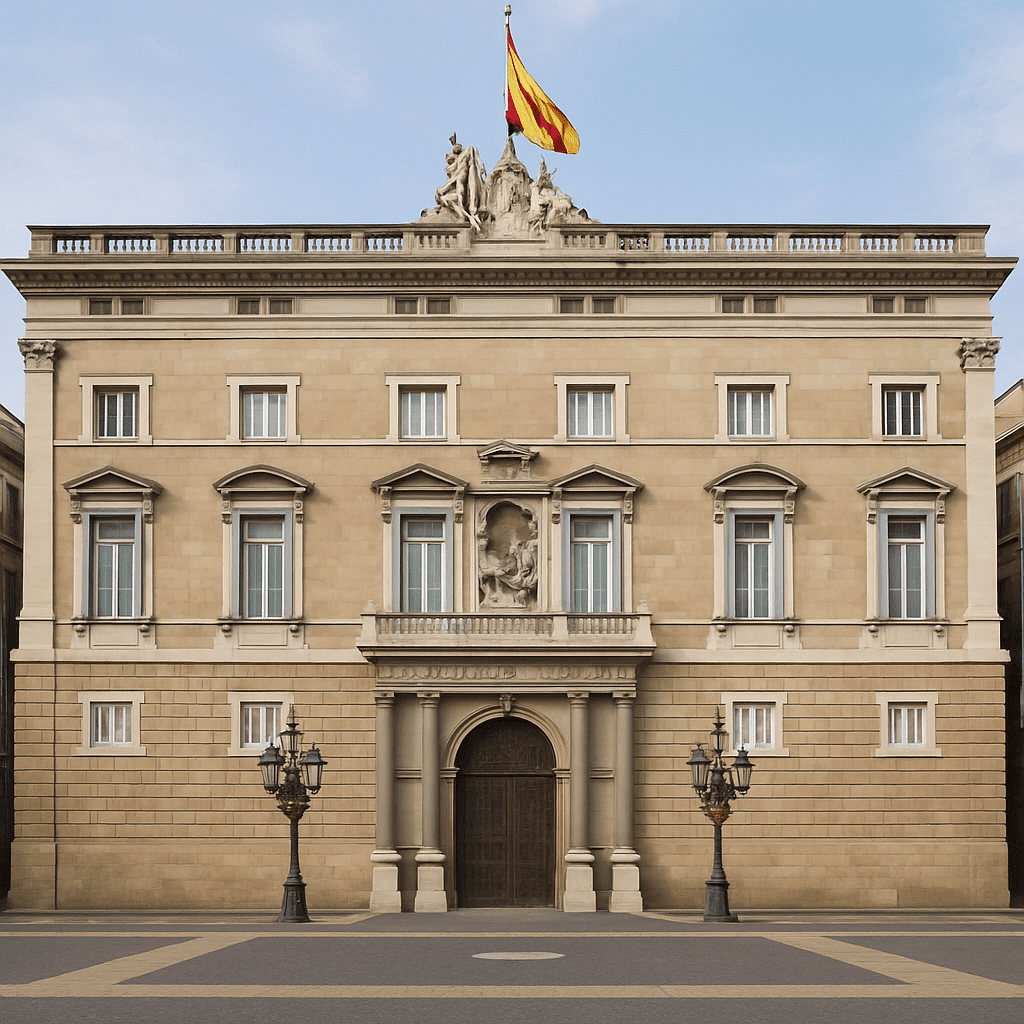
When thinking of the Catalan capital, most visitors immediately conjure up images of the unfinished Sagrada Familia, colorful tapas bars, and miles of sandy beaches. However, hidden right in the heart of the city's historic center lies a political and architectural gem that is often overlooked: the Palace of the Generalitat (Palau de la Generalitat de Catalunya). As an integral part of Barcelona's most significant attractions, this building draws not only those interested in politics but also architecture enthusiasts from all over the world. It is a living cultural heritage that impressively unites Catalonia's rich past and dynamic present.
In this comprehensive guide, you'll learn everything you need to know about this masterpiece – from its centuries-old construction history to practical tips for your visit.
A Look into History: The Political Heart of Catalonia
The administrative history of the Gothic Quarter (The administrative history of the Gothic Quarter) is inextricably linked to this place. Since the early 15th century, the palace has been the epicenter of power in the region. Anyone interested in the The medieval origins of Catalan political institutions interested, will find the perfect starting point here. Originally, the Generalitat was founded to collect taxes for the Crown, but it quickly developed into Catalonia's independent political representation.
A common question from tourists standing in the main square concerns the The Generalitat de Catalunya is the autonomous government of Catalonia. The Ajuntament de Barcelona is the local government of the city of Barcelona.. The explanation is simple: the Generalitat is the regional government responsible for the entire Autonomous Community of Catalonia. The Ajuntament (City Hall), housed in an equally magnificent building directly opposite, exclusively handles Barcelona's municipal matters. The prominent Palau de la Generalitat This makes this square the most important political hub in the region. Historic speeches were made here, republics proclaimed, and FC Barcelona championships celebrated.
Architectural Masterpieces and Stylistic Diversity
International art and travel guides regularly praise the outstanding architecture of the Catalan government seat, as the structure fascinatingly blends Gothic, Renaissance, and Baroque styles. The building grew over centuries, with continuous additions, which give it its unique character.
The magnificent main facade is particularly striking. This famous Renaissance facade on Plaça de Sant Jaume was designed at the end of the 16th century and dominates the entire square. It impressively shows the Architect Pere Blai's influence on Catalan buildings.. Pere Blai was instrumental in bringing the classical, symmetrical proportions of the Italian Renaissance to Catalonia. With his Doric columns, striking busts, and a strict yet elegant design, he created a masterpiece that remains unsurpassed in the region to this day.
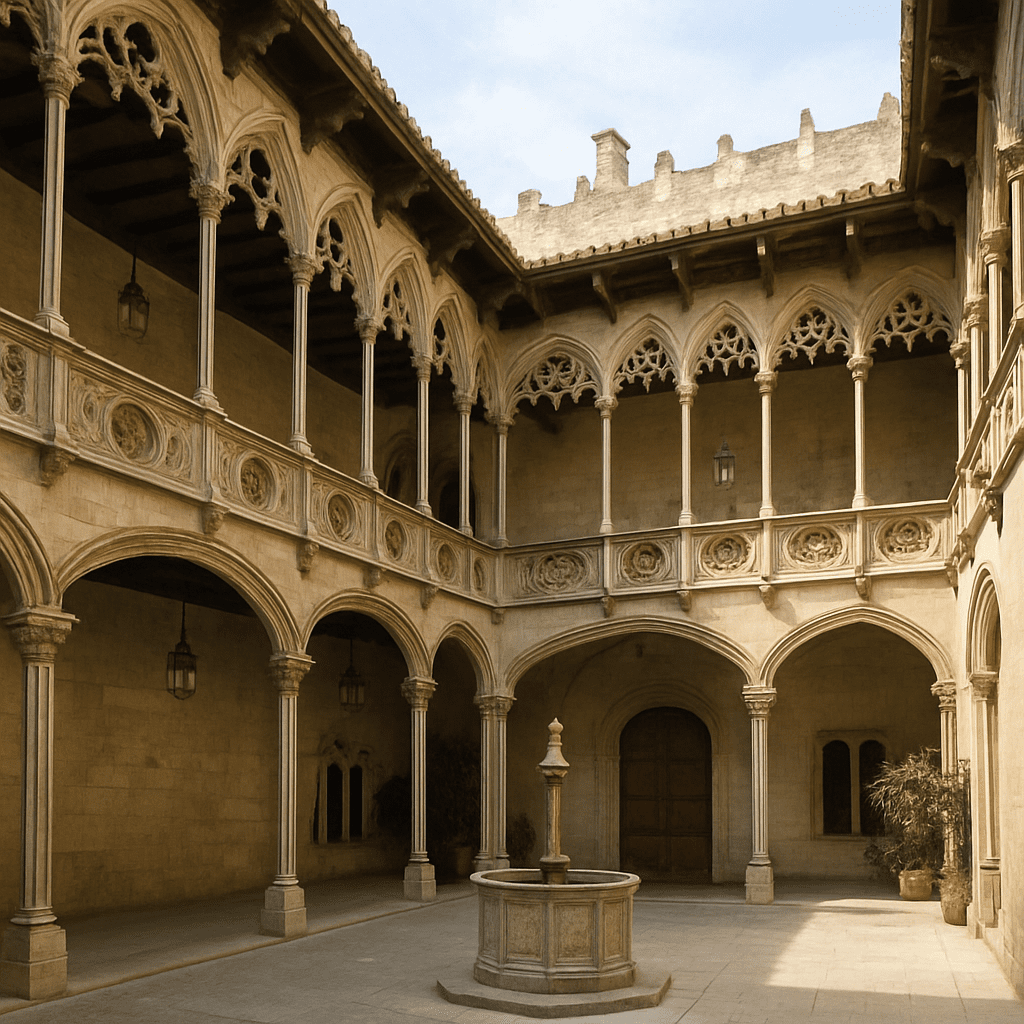
As one steps into the palace, the fascinating History of the Gothic Courtyard in Barcelona. This central courtyard, with its elegant staircase, fine tracery galleries, and water-spouting gargoyles, is a prime example of Flemish-influenced Catalan Gothic architecture.
Another absolute highlight of the building's interior is the small, but exceedingly magnificent chapel. The unique Sant Jordi Chapel architectural style fascinated with its fine star vaults and delicate decorations. It is dedicated to Saint George (Sant Jordi), the patron saint of Catalonia, and represents a masterpiece of Late Gothic.
The Orange Farm and Festive Traditions
When international travelers learn about the building's highlights, they inevitably come across the term Visiting the Orange Tree Courtyard. This visit to the so-called Orange Courtyard (Pati dels Tarongers) is a magical experience. The courtyard, located on the upper floor, was created in the 1530s and is indeed planted with real orange trees. It offers an unexpected, quiet oasis in the middle of the bustling government building. The gentle splashing of the central fountain and the sweet scent of citrus fruits invite you to linger.
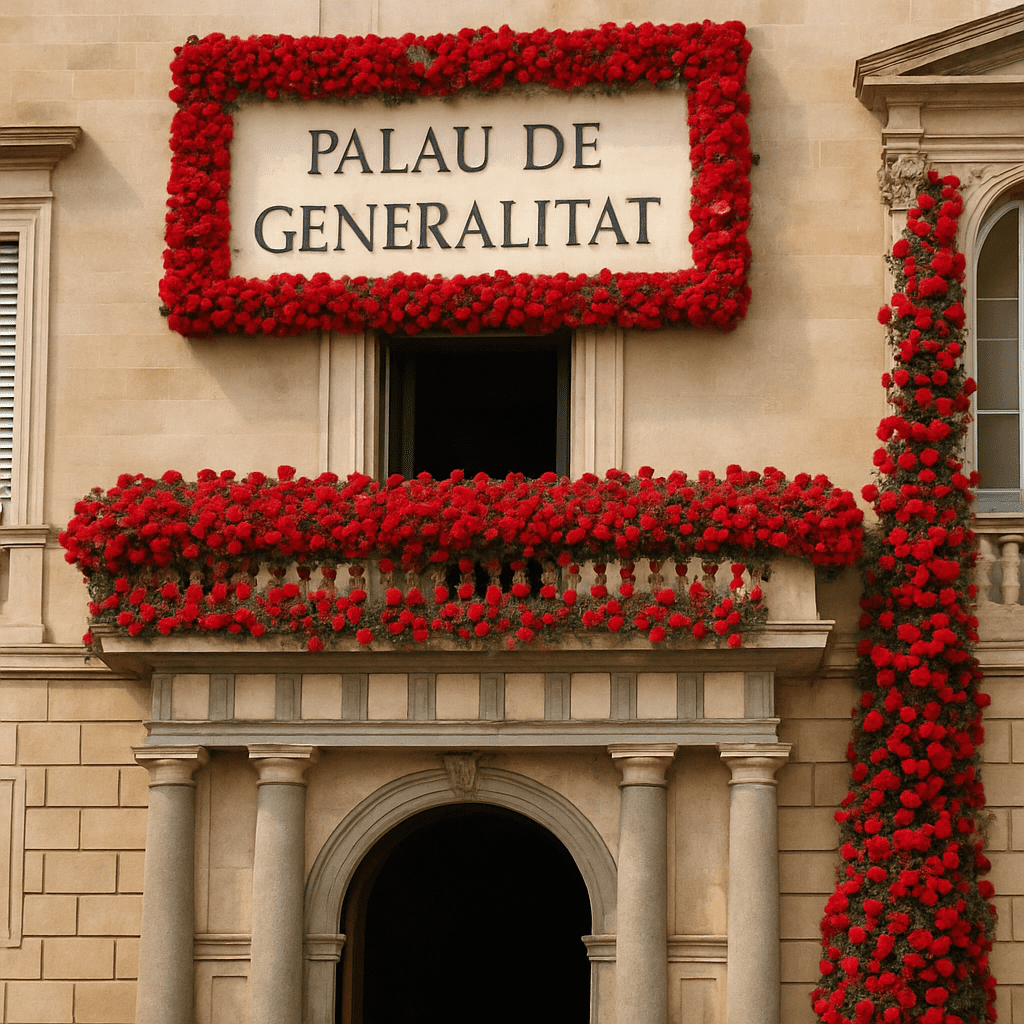
The palace becomes particularly lively in spring. Saint George's Day celebrations at the seat of government April 23rd is simply legendary. On this holiday, Diada de Sant Jordi, the entire palace is traditionally adorned with thousands of red roses. It's the day of the book and the rose – a kind of Catalan Valentine's Day. The palace often opens its doors to the public on this day, leading to an unforgettable and colorful spectacle.
Practical tips for planning your tours
Since the Palau de la Generalitat is an active political building, visiting it requires some planning. Many tourists ask in travel forums: Is the Catalan government building open to the public?The answer is: Yes, but not every day and usually only under certain conditions.
Here are the most important tips for your visit:
- Book guided tours in advance: One often reads the search query How can I book a guided tour of the Government Palace?. Bookings are best made through the official website of the Generalitat de Catalunya. The guided tours (often on weekends, the 2nd and 4th weekend of the month) are usually free of charge but must be reserved online well in advance due to high demand and safety regulations.
- Choosing the right time: The Best time to visit Barcelona's Gothic Quarter landmarks is undoubtedly early morning (between 8:30 and 10:00 AM). At this time, you'll avoid the large tourist crowds, and the soft morning light casts a beautiful golden glow on the historic facades around the palace.
- Explore the surroundings: Ideally, combine your visit with a Walking tour of Plaça de Sant Jaume historic sites. Start at the magnificent Barcelona Cathedral, walk under the famous neo-Gothic Bridge of Sighs (Pont del Bisbe), and end your stroll in Plaça de Sant Jaume.
Important Checklist for Your Visit
To ensure everything runs smoothly on the day of your tour, please keep the following points in mind:
- Identification documents Don't forget your ID card or passport. Without an official, valid document, security will deny you entry.
- Appropriate clothing As this is the seat of the President and a formal government building, appropriate attire is expected. Please avoid beachwear or extremely short shorts.
- Photography Photography for private purposes is permitted in most areas, especially in the Orangery courtyard and the Gothic courtyard. However, please follow your guide's instructions, as cameras are not welcome in some sensitive work areas.
Conclusion
The Palau de la Generalitat is far more than just an administrative center. It is the testament to a proud nation carved in stone and one of the city's most fascinating monuments. Whether you want to admire the intricate Gothic architecture, understand the complex historical background of Catalonia, or simply revel in the scent of orange trees in the courtyard – a visit to this building greatly enriches any trip to Barcelona. Secure your guided tour in advance and dive deep into the true, historical heart of Catalonia!