
When one thinks of a trip to Spain, the world-famous sights of Madrid or the beaches of Andalusia are usually at the top of most travelers' lists. But those who want to experience authentic, historically deep Spain off the beaten tourist path should look north: to Zaragoza. The capital of the Aragon region holds true architectural and historical treasures. One of the city's most fascinating tourist attractions is the Basilica of Saint Engracia.
This church is far more than just a place of worship. It's a stone history book that tells tales of Roman persecution of Christians, magnificent Renaissance art, and destructive wars. In this article, we'll take you on a journey through the centuries and show you why the Basilica of Santa Engracia is a must-see on your next Spanish vacation.
Who was the martyr Saint Engracia?Saint Engratia was a Christian martyr who lived in the 4th century. She is venerated in both the Catholic and Orthodox Churches. According to tradition, she was a young woman from Saragossa, Spain, who was tortured and executed for her faith during the persecution of Christians under Emperor Diocletian. Her relics are enshrined in the Basilica of Santa Engracia in Saragossa.)
To understand the significance of this place, we must travel far back in time. Many visitors standing before the church gates ask themselves the question: Who was the martyr Saint Engracia?Saint Engratia was a Christian martyr who lived in the 4th century. She is venerated in both the Catholic and Orthodox Churches. According to tradition, she was a young woman from Saragossa, Spain, who was tortured and executed for her faith during the persecution of Christians under Emperor Diocletian. Her relics are enshrined in the Basilica of Santa Engracia in Saragossa.)?
Legend has it that Engracia was a young Portuguese noblewoman who was on her way to southern France to get married in the early 4th century (around 303 AD). While passing through Caesaraugusta (modern-day Zaragoza), she witnessed the cruel persecution of Christians under the Roman Emperor Diocletian and his governor Dacian. Bravely, she stepped forward before the governor to protest this injustice.
Her civil courage cost her dearly: Engracia was subjected to terrible torture and finally executed. Many of her followers died with her. This group went down as the early Christian martyrs of Zaragoza.Early Christian martyrs of Zaragoza) into history. According to legend, the church was built exactly on the spot where these martyrs died and were buried.
Architecture and History: A Testimony of the Centuries
The architectural development of Spanish basilicasArchitectural evolution of Spanish basilicasThis can be seen in few other buildings as well as in Santa Engracia. The origins of the current building date back to the Catholic Monarchs, especially Ferdinand II of Aragon. He founded a magnificent monastery at the end of the 15th century, which was handed over to the Order of the Hieronymites. Anyone interested in the history of the Hieronymite Order in SpainThe Jeronymite Order, officially known as the Order of Saint Jerome (Ordo Sancti Hieronymi), has a significant history in Spain, deeply intertwined with the country's religious and cultural development. **Origins and Early Development:** The order traces its origins to the 14th century. While traditionally believed to have been founded by Cardinal Juan de Torquemada in the mid-15th century and named after Saint Jerome, historical scholarship suggests a more complex evolution. The movement of eremitical communities inspired by Saint Jerome had been present in Italy and parts of Spain earlier. The formal establishment of the order in Spain is often linked to the unification of various eremitical groups under a common rule. By the late 14th century and early 15th century, these communities began to coalesce, adopting the Rule of Saint Augustine and incorporating elements of the eremitical life of Saint Jerome. They were known for their devotion to scholarship, prayer, and contemplative life. **Key Monasteries and Patrons:** Several key monasteries became the heart of the Jeronymite presence in Spain, fostering religious vocations and intellectual pursuits. Some of the most prominent include: * **Monastery of San Jerónimo de Yuste (Cáceres):** This is arguably the most famous Jeronymite monastery, largely due to its association with Emperor Charles V. After abdicating his throne in 1556, Charles V retired to Yuste, where he lived until his death in 1558. His presence highly elevated the prestige of the order. * **Monastery of El Escorial (near Madrid):** While a royal palace and pantheon, El Escorial also housed a significant Jeronymite community. The monks were responsible for its vast library and for many of the religious services within the complex. The construction and administration of El Escorial were deeply tied to the Spanish monarchy. * **Monastery of Santa María de Guadalupe (Cáceres):** Although primarily a Marian shrine and a center of pilgrimage, the Jeronymites played a crucial role in its administration and spiritual direction for centuries. * **Monastery of San Jerónimo el Real (Madrid):** This monastery, located in the heart of Madrid, was once a significant religious institution and a favored site for royal ceremonies. **Role and Influence:** The Jeronymites were respected for their intellectual rigor and their commitment to pastoral care. They contributed to Spanish culture through: * **Scholarship and Art:** Jeronymite monks were often learned scholars, contributing to theology, philosophy, and history. They also commissioned and were patrons of significant artworks, adorning their monasteries with masterpieces from prominent artists. * **Manuscript Illumination and Libraries:** The order was known for its meticulous work in copying and illuminating manuscripts, preserving valuable texts. Their libraries became repositories of knowledge. * **Spiritual Guidance:** They offered spiritual direction to nobility and the general populace, serving as centers of religious devotion and reform. * **Connection to the Monarchy:** The Jeronymites enjoyed significant favor from the Spanish monarchs, who often donated lands and resources to their monasteries and sought their spiritual counsel. This royal patronage was instrumental in the order's growth and influence. **Decline and Suppression:** Like many religious orders in Spain, the Jeronymites faced challenges during periods of political and social upheaval. The Napoleonic invasion and subsequent French occupation in the early 19th century led to the confiscation of church properties and the suppression of many religious orders. The desamortización (disentailment) laws of the 19th century, aimed at redistributing church lands, further diminished the order's holdings and influence. While the Order of Saint Jerome continues to exist in various forms and locations today, its historical prominence in Spain waned significantly after the 19th century. However, the legacy of the Jeronymites remains visible in the magnificent monasteries they built and inhabited, which stand as testaments to their enduring contribution to Spanish history and culture.Those interested will find here one of the most important bases of this influential community.
The Masterful Facade
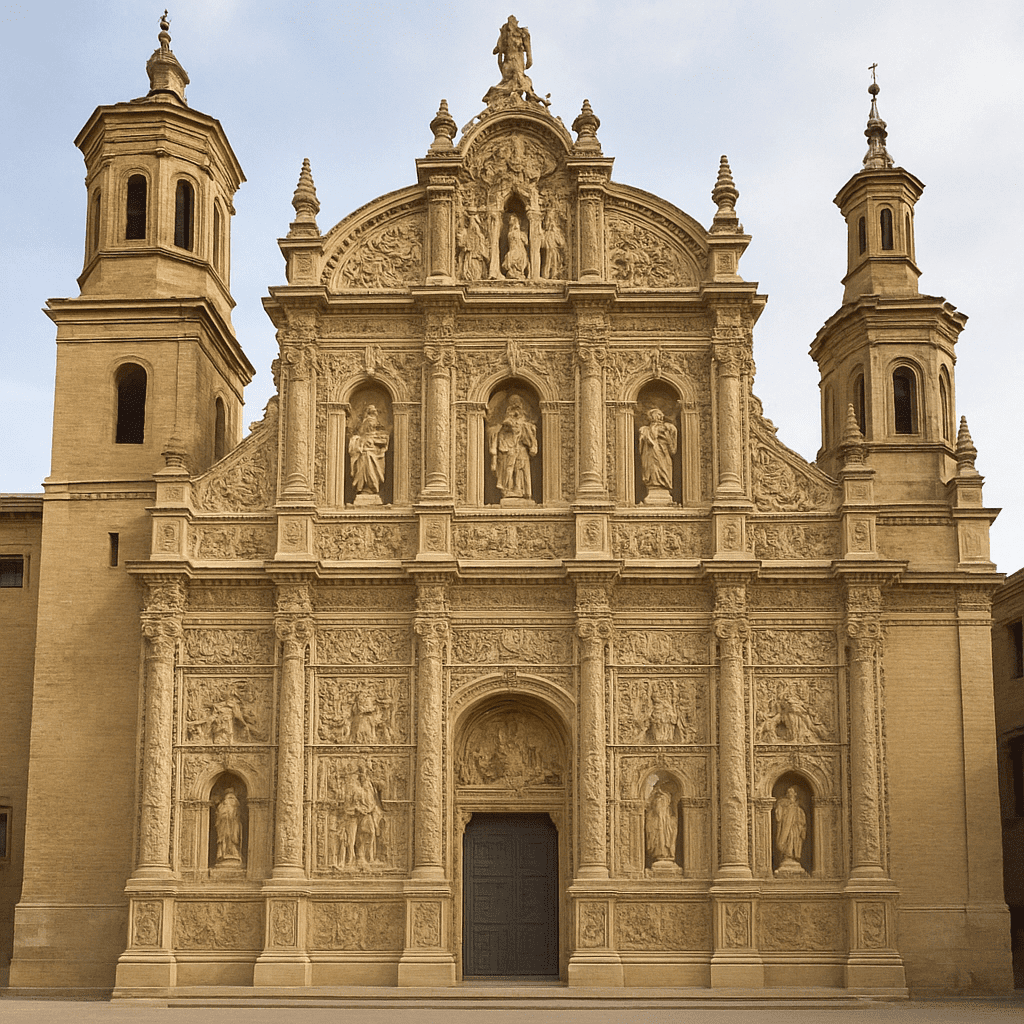
The absolute architectural highlight and what first captivates visitors is the spectacular main facade. It is considered one of the earliest and most significant examples of the Renaissance in Spain. Experts from all over the world travel to see the Plateresque facade by Gil de Morlanes the Elder.Plateresque facade of Gil de Morlanesto study.
The Plateresque style (from the Spanish word Platero (for silversmith) is characterized by extremely detailed, fine, and delicate embellishments reminiscent of the fine work of silversmiths.
- Detail richness The facade displays sculptures of the Catholic Monarchs kneeling before the Virgin Mary, surrounded by patron saints and martyrs.
- Historical Value It was begun in 1511 by Gil de Morlanes the Elder and later completed by his son.

Plateresque Style vs. ChurrigueresqueComparison of Plateresque and Churrigueresque Styles)
For those interested in architecture, Spain offers a rich variety. An exciting topic is the comparison between the Plateresque and Churrigueresque styles.Comparison of Plateresque and Churrigueresque StylesWhile the Plateresque style (as seen on the facade of Santa Engracia) is heavily inspired by the early Italian Renaissance, and despite its rich ornamentation, it maintains a clear structure and symmetry, the later Churrigueresque (Spanish late Baroque) is wilder, more asymmetrical, and often overloaded with dramatic, curving forms. Santa Engracia remains a masterful, disciplined example of the Plateresque era.
Destruction and Reconstruction: The French Siege
The history of the structure, however, is also marked by a tremendous tragedy. In the early 19th century, Zaragoza was besieged by Napoleonic troops during the Spanish War of Independence.
The effects of the Siege of Zaragoza on the monumentsThe Siege of Zaragoza had a significant impact on its monuments. The city suffered extensive damage, with many buildings and structures being destroyed or severely altered by the prolonged bombardment and fighting. **Key Impacts:** * **Destruction and Damage:** Numerous churches, convents, and palaces were damaged or completely leveled. Artillery fire and deliberate destruction by invading forces left many historical buildings in ruins. * **Changes to Fortifications:** The city's defenses were heavily impacted, leading to modifications and reconstructions of walls and gates. * **Loss of Cultural Heritage:** The material damage represented a significant loss of architectural and cultural heritage. Many works of art, religious artifacts, and historical records housed within these monuments were also lost or damaged. * **Symbolic Significance:** Despite the destruction, the resilience of Zaragoza and its defenses became a symbol of Spanish resistance. After the siege, efforts were made to restore and rebuild many of the damaged monuments, often with a renewed sense of national pride. While many buildings were lost, the memory of the siege and the reconstruction efforts that followed have also contributed to the historical narrative and importance of Zaragoza's remaining monuments.) were devastating. The once immense and splendid Hieronymite Monastery of Santa Engracia was severely damaged in 1808 and almost completely blown up by the retreating French troops in 1809.
Miraculously, only two parts of the complex survived this massive destruction:
- The wonderful Plateresque main facade.
- The deep crypt with the ancient treasures.
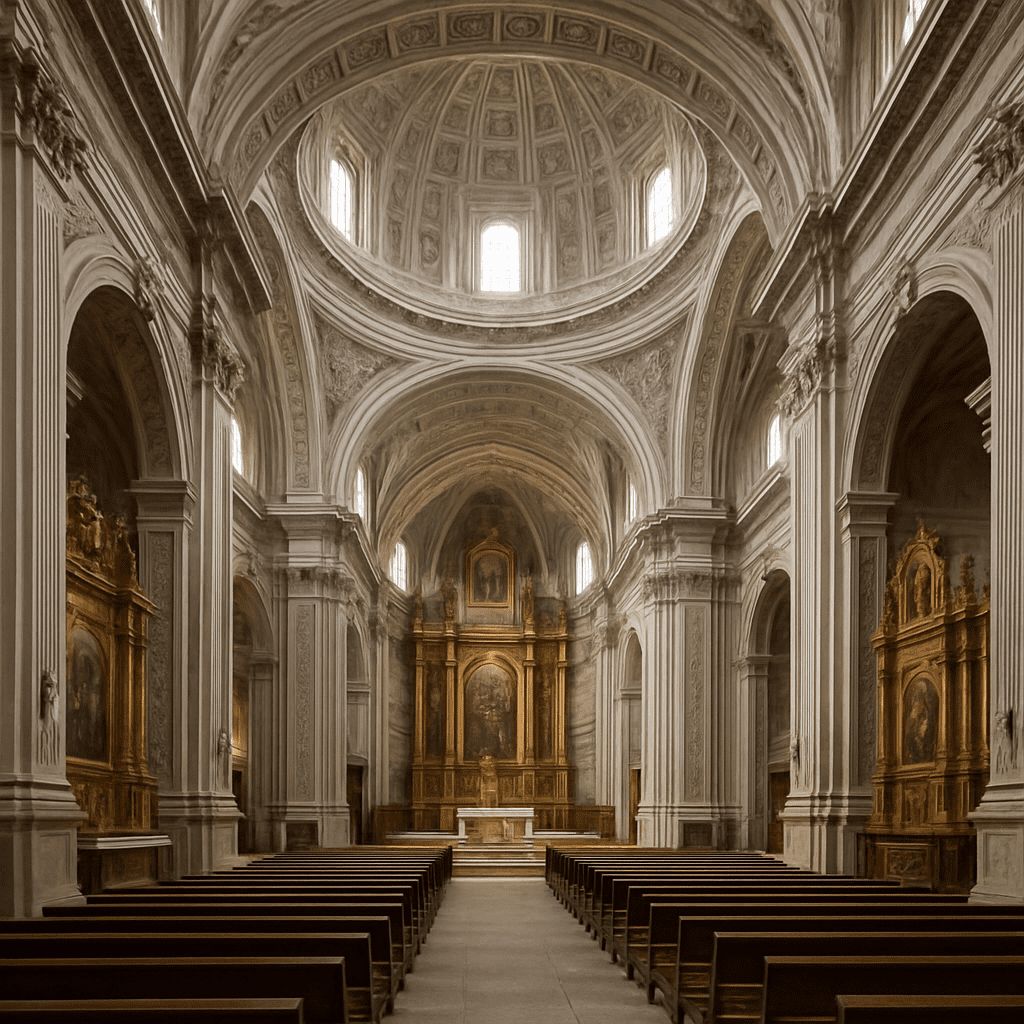
The current basilica, which rises behind the historical facade, is a reconstruction from the late 19th and early 20th centuries, designed by architect Ricardo Magdalena.
The Underground Treasures: Crypts and Sarcophagi
The true historical core of the Basilica of Santa Engracia lies underground. As you descend the stairs, you enter another world and one of Zaragoza's most fascinating underground archaeological sites.Subterranean archaeological sites in Zaragoza).
Below are the ancient early Christian burial chambersAncient Paleo-Christian burial chambers), the so-called „Santas Masas,“ where the remains of early martyrs rest. The absolute centerpiece of this underground area is the Romanesque crypt and sarcophagi (Romanesque crypt and sarcophagi).
Two masterfully preserved early Christian marble sarcophagi from the 4th century AD captivate historians and pilgrims alike:
- The Sarcophagus of the „Receptio Animae“ This sarcophagus displays impressive biblical scenes, including the healing of the woman with the issue of blood and the Good Shepherd.
- The Sarcophagus of the Trilogy (or the Sarcophagus of Peter): He is famous for his depictions of the miracles of Christ and scenes from the life of the Apostle Peter.
In addition to Roman relics, a closer look also reveals Visigothic remains in religious sites in Aragon (Visigothic remains in Aragon: Religious sitesunderstandable, as this sacred place has been used for worship uninterruptedly by various cultures and epochs over the centuries.
Artworks inside the Basilica
Even though the original monastery was destroyed, the restored interior of the basilica still houses impressive art treasures today, showcasing the religious art of the Renaissance in Northern Spain.Renaissance religious art in northern Spainreflect.
Particularly noteworthy is the masterful altarpiece, which is partly made of alabaster. Aragon and especially Zaragoza are famous for their alabaster carvings in Spanish cathedralsAlabaster carvings in Spanish cathedralsThe material quarried in the region allows for extremely fine craftsmanship and lets light shimmer through the sculptures in an almost mystical way. These works of art lend the church's main altar a sublime, dignified atmosphere.

Practical tips for your visit
A visit to the Basilica of Santa Engracia can be wonderfully integrated into a city trip. Here are some practical tips to ensure your excursion goes smoothly:
Arrival and combination with other destinations
Since Zaragoza is directly on the AVE high-speed train line, the city is reachable from the capital in less than 90 minutes. So, if you have thoroughly explored the sights of Madrid, Zaragoza is the perfect day trip or weekend getaway.
City tour of Zaragoza
To fully grasp the historical context of the church, we recommend a guided city tour. Specifically, a walking tour through Mudejar and Renaissance Zaragoza (Walking tour of Mudejar and Renaissance Zaragozais absolutely worthwhile. It leads you from the Islamic-influenced Aljafería through the Plateresque Santa Engracia to the Baroque Basilica del Pilar and showcases the city's enormous architectural diversity.
Service times and visitor rules
Since Santa Engracia is an active parish church and an important pilgrimage site, you should check the Catholic Mass times and visitor rules before your visit.Catholic mass times and visitor rulesCheck.
- Visiting hours: Sightseeing tours are generally possible outside of exhibition hours in the morning (approx. 10:00 AM to 1:00 PM) and in the late afternoon (from 5:30 PM).
- Crypt Access to the crypt is usually granted for a small donation or a nominal fee. Please be aware of the opening hours, as they may differ from those of the main church.
- Dress code: As in most Spanish churches, appropriate dress is requested (covered shoulders, no too short pants or skirts).
- Photography Photography is often permitted in the main church without flash, but is strictly forbidden during services. Please be respectful of the praying congregation.
Conclusion: A hidden gem of Spanish history
The Basilica of Santa Engracia is far more than just a pretty photo opportunity. It's a monument to resilience. From the first brave Christians who gave their lives here, through the splendor of the Catholic Monarchs, to the heroic (and tragic) period of the French siege – this place breathes history.
The combination of the masterful Plateresque facade and the mystical, centuries-old early Christian sarcophagi in the depths makes this place one of Spain's most profound tourist attractions. On your next visit to Zaragoza, take the time to descend the stairs into the crypt and let the legacy of Santa Engracia wash over you. It's a journey into the soul of Aragon that you won't soon forget.