
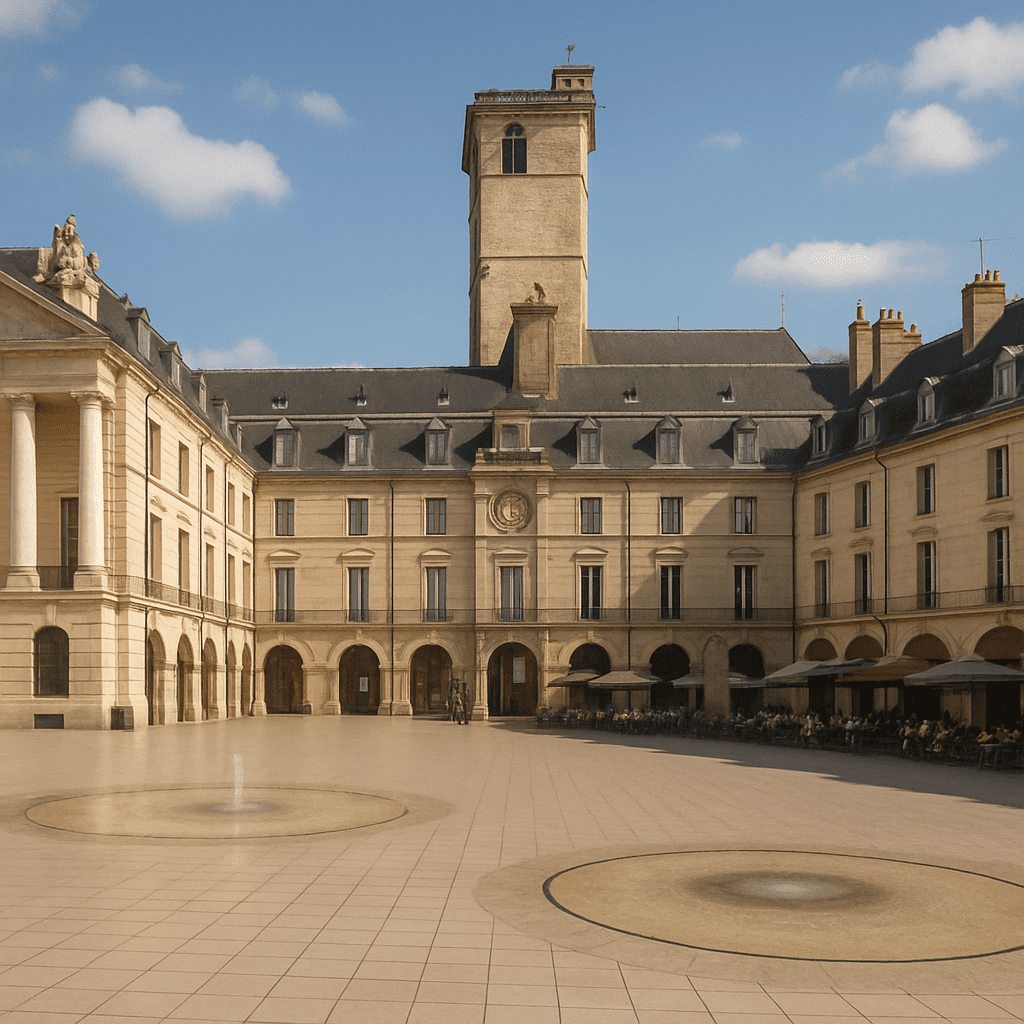
In the heart of the picturesque old town of Dijon, the proud capital of Burgundy, a structure rises into the blue sky that, like few others, embodies the power, wealth, and cultural flourishing of the former duchy. Philip the Good Tower in French: Philip the Good Tower) is far more than just a viewpoint. As one of the most distinctive Dijon Attractions is this pulling historic tower annually attract tens of thousands of visitors from all over the world.
It majestically towers over the sprawling Palace of the Dukes and Estates of Burgundy and offers an unparalleled view over the city's terracotta roofs. Dijon is world-renowned for its mustard, its first-class wines, and its impressive architecture. However, to grasp the true dimension and structure of this historic metropolis, one must view it from above. Whether you are interested in architectural history, European dynasties, or simply spectacular photographic opportunities – this comprehensive travel guide will show you why this monument should not be missed on your bucket list and how to best plan your visit.
A masterpiece in the heart of Dijon: Architecture and History
The construction of the tower began in the mid-15th century (between 1436 and 1460) under the reign of Philip the Good (Philippe le Bon), one of the most powerful Dukes of Burgundy. During this era, the region experienced an unprecedented economic and cultural boom. International historians repeatedly emphasize the The Valois dukes of Burgundy, ruling from the mid-14th to the late 15th century, wielded immense power and influence, leaving a profound and multifaceted historical legacy. Their significance can be understood through several key lenses: **1. Centralizing Force in a Fragmented Empire:** In an era where the Holy Roman Empire was largely decentralized, the Dukes of Burgundy, particularly during their peak, created a powerful and semi-independent state that rivaled the French monarchy. They governed a vast and wealthy territory encompassing Burgundy, Flanders, Brabant, Holland, Hainault, and other regions, bridging the gap between the Kingdom of France and the Holy Roman Empire. This consolidation of power and territory was a significant anomaly in the political landscape of late medieval Europe. **2. Patrons of Art, Culture, and Learning:** The Burgundian court was renowned for its opulence, sophistication, and patronage of the arts. The dukes, especially Philip the Bold, John the Fearless, Philip the Good, and Charles the Bold, fostered a vibrant cultural environment. They commissioned magnificent illuminated manuscripts, groundbreaking altarpieces, elaborate tapestries, and impressive architectural projects. The School of Burgundian music, with composers like Guillaume Du Fay and Johannes Ockeghem, achieved international fame. This cultural flourishing contributed significantly to the development of Northern Renaissance art and music, influencing subsequent generations of artists. **3. Economic Powerhouse:** The Low Countries, under Burgundian rule, were at the forefront of European commerce and industry. Bruges, Ghent, and Antwerp became major centers for trade, banking, and textile production. The dukes actively promoted economic growth through policies that encouraged trade, protected merchants, and improved infrastructure. This economic prosperity provided the dukes with substantial wealth, which they used to fund their military campaigns and maintain their lavish courts. **4. Military Innovators and Power Brokers:** The Burgundian armies were among the best-equipped and most disciplined in Europe. The dukes were skilled military strategists who engaged in numerous conflicts, often challenging the French crown. Their involvement in the Hundred Years' War, particularly during the reigns of John the Fearless and Philip the Good, had a decisive impact on the war's trajectory. Philip the Good's alliance with England was instrumental in the English conquest of much of France. **5. Unifying and Dividing Force for Europe:** * **Unifying:** The dukes, through their extensive territories and alliances, served as a crucial link between different European regions. Their courts attracted diplomats, merchants, and artists from across the continent, fostering a degree of cultural and economic integration. * **Dividing:** Their independent power and ambitions, however, also created significant political instability. The rivalry between Burgundy and the French monarchy was a constant source of tension and conflict. The eventual conquest of the Duchy by France after the death of Charles the Bold marked a major shift in the European balance of power, consolidating French royal authority and influencing the subsequent development of the nation-state. **6. Forerunners of Modern Statehood:** While not a modern nation-state in the strictest sense, the centralized administration, legal systems, and fiscal policies of the Burgundian state displayed some characteristics that foreshadowed later developments in state-building. The dukes' efforts to rationalize governance and assert their authority over their diverse territories laid some groundwork for the more centralized monarchies that would emerge later. **7. A Romanticized and Influential Legacy:** The dramatic rise and fall of the Burgundian state, with its rich court life and tragic last duke, has captured the imagination of historians and the public for centuries. Their story has been retold in literature, art, and popular culture, often evoking a sense of lost grandeur and romantic heroism. In conclusion, the Valois dukes of Burgundy were more than just medieval rulers. They were instrumental in shaping the political, economic, and cultural landscape of late medieval Europe. Their reign represents a unique period of consolidation, immense wealth, and sophisticated patronage, leaving an indelible mark on the history of France, the Low Countries, and the wider continent. (the historical significance of the Valois Dukes of Burgundy), who were at times more powerful and richer than the Kings of France. The tower was erected to literally chisel this claim to power and prestige in stone.
The architecture of the building is a real highlight. The tower is often cited as a prime example in international art and architecture forums of Fifteenth-century Burgundian Gothic architecture (15th-century Burgundian Gothic) has been celebrated. With its richly decorated facade, intricate gargoyles, and elegant lines, it reflects the transition from fortified structures to representative palace architecture. Anyone who looks at the tower from the outside can see the The architectural evolution of the medieval watchtower (the architectural development of the medieval watchtower) can be wonderfully understood: although it offered a strategic overview of the city, its actual purpose was to demonstrate the wealth of the court and the magnificence of the duke.
The climb to the terrace: A sporting and historical experience
Before you can enjoy the magnificent view, a small sporting challenge awaits. One of the most frequently asked questions by international tourists in Dijon is: „How many steps are in the spiral staircase?“ How many steps does the spiral staircase have? The answer: There are exactly 316 steps, winding upwards in a narrow, stone spiral.
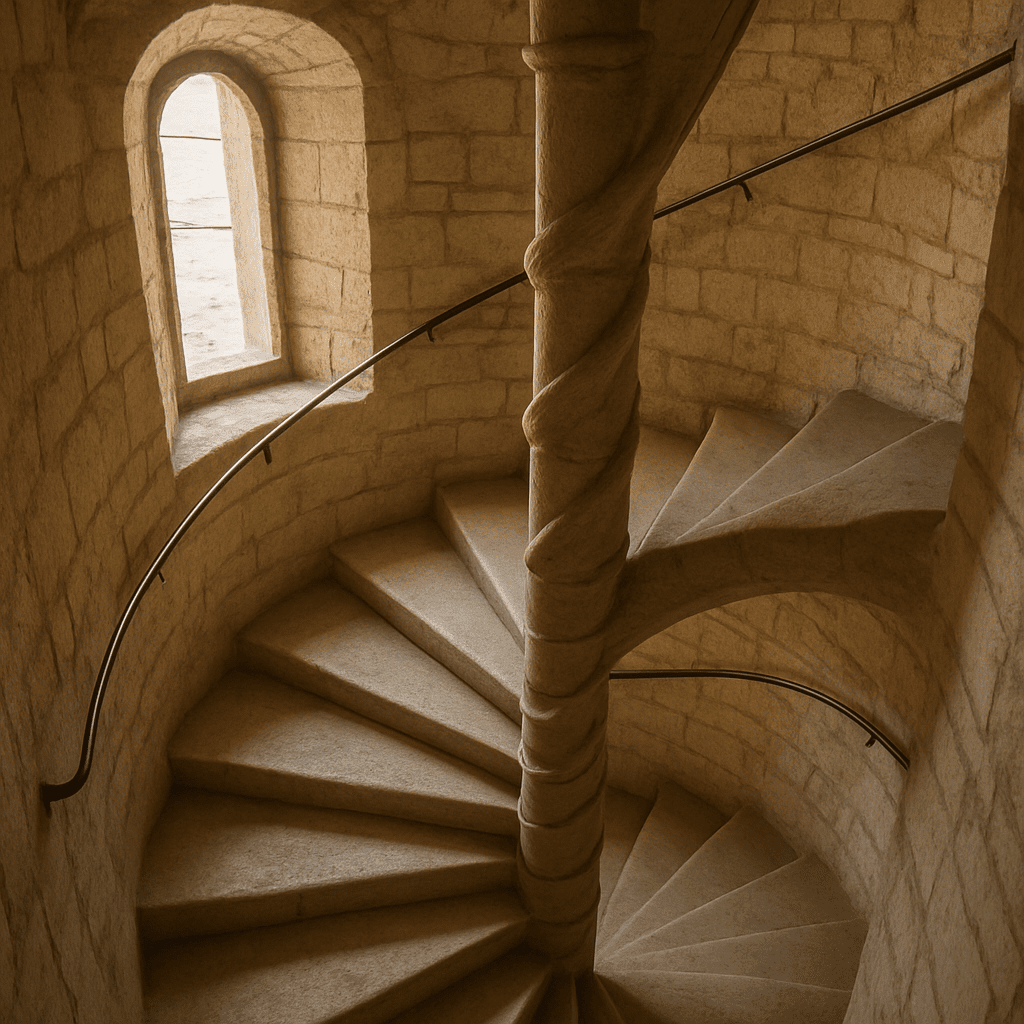
The climbing to the terrace of the dukes palace (The ascent to the terrace of the ducal palace) is, however, worth every effort. As you climb step by step, you can literally feel the breath of history. The thick, cool stone walls, the artfully vaulted ceilings on the landings, and the small slit windows that sparsely illuminate the space give you a sense of how the guards and courtiers must have walked this path over 500 years ago.
A trip up the tower can also be perfectly combined with Visiting the Palace of the States of Burgundy connect. Once you're back on solid ground after your descent, you can explore the magnificent halls of the Palace of the Dukes and Estates of Burgundy explore, which today houses, among other things, the fantastic Museum of Fine Arts (Musée des Beaux-Arts). Here you will also find the magnificent tombs of the Dukes of Burgundy.
The breathtaking view from the Philippe Le Bon Tower
Once you've reached the terrace at a height of 46 meters, one of the most impressive backdrops in the entire region opens up. Tour guides rightly rave about the panoramic views of the Dijon city center (Panoramic views of Dijon city center). From this bird's-eye perspective, you get a seamless 360-degree view. You'll look directly down onto the semi-circular Place de la Libération, see the colorful glazed tile roofs so typical of Burgundy, and overlook the countless church towers that have earned Dijon the nickname „city of a hundred bell towers.“.
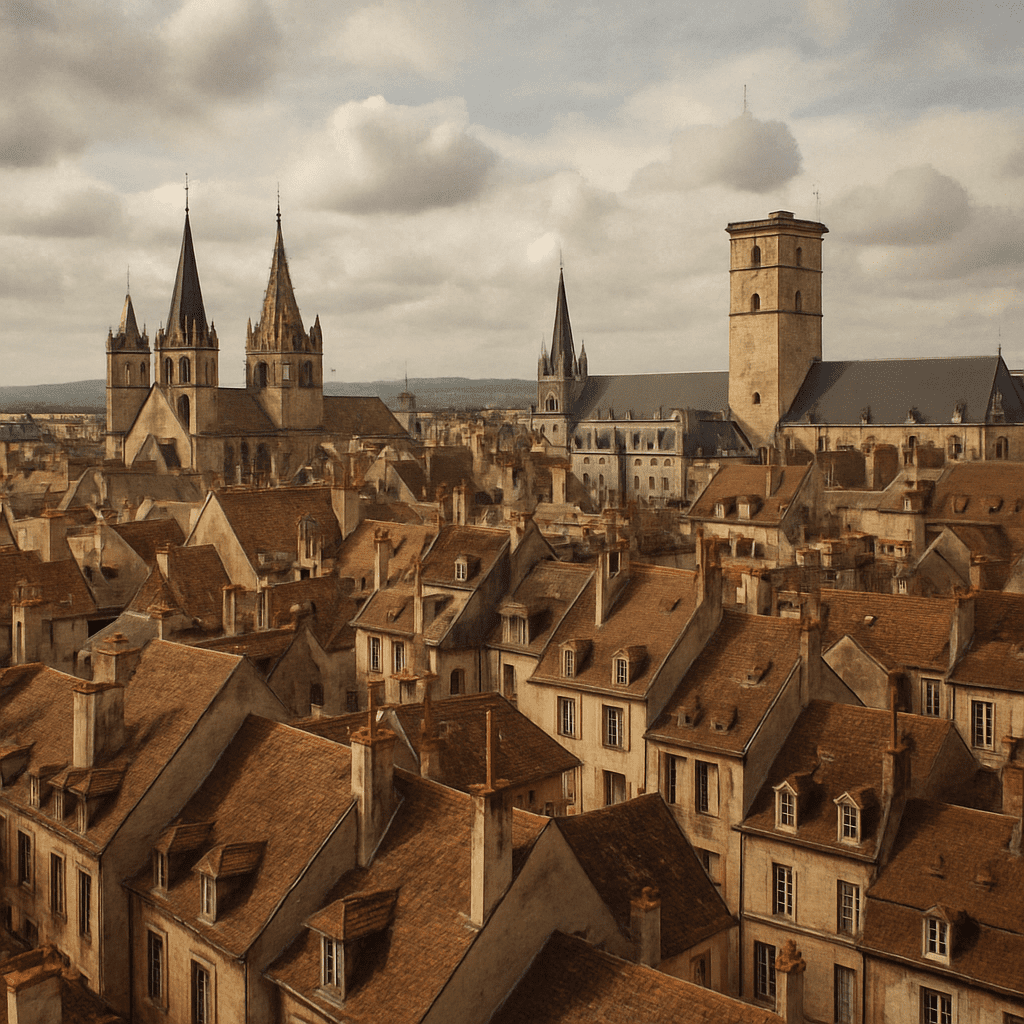
The Philippe Le Bon Tower is considered one of the most spectacular Medieval lookout points in eastern France (Medieval viewpoints in Eastern France). On clear days, the view extends far beyond the city limits and the gentle vineyards of the Côte d’Or. A very special highlight for landscape observers is the visibility of the Vosges mountains from Dijon (Visibility of the Vosges Mountains from Dijon). When weather conditions and humidity are optimal, the peaks of the Vosges Mountains and sometimes even the snow-capped summits of Mont Blanc can be seen on the eastern horizon – a magical sight that rewards every climb.
Tour vs. Owl Path: Two Perspectives on Dijon's Attractions
Dijon can be discovered in many ways. An interesting consideration when planning your trip is to compare perceptions: Tower views versus the Owl Trail landmarks (Class prospects compared to the landmarks of the Owl Way).
The „Parcours de la Chouette“ (Owl Trail) is a famous circular route marked by brass arrows embedded in the ground, which takes you on foot through the old town. It leads you past charming half-timbered houses, the market district (Les Halles), and to the famous stone owl on the Notre-Dame church, considered the city's good luck charm. While the Owl Trail shows you the Dijon Attractions Presented at eye level, full of life, and with great attention to detail, the Philippe Le Bon Tower offers the macro perspective. Only by looking from above do you understand the medieval urban planning and the protective structure of the former city walls. The combination of both—first viewing the city from above and then exploring it on foot—will give you the best understanding of Dijon's history.
The Heritage of Burgundy: A Monument of European Standing
The importance of this place cannot be overstated. The tower and its adjoining palace are among the most significant monuments of the Grand Duchy of the West (Monuments of the Grand Duchy of the West). In the 14th and 15th centuries, Burgundy was an independent realm that stretched from Flanders in modern-day Belgium deep into modern-day Switzerland. The dukes maintained a court that often surpassed the splendor and luxury of the French king's.
Anyone taking a trip through France will quickly notice that the tower is definitely one of the Must-see historical sites in the Côte d'Or (historic landmarks in the Côte-d'Or department). It stands as a proud, stone witness to this great European era. The ascent is therefore not just a visual, but also a deeply historical experience.
Practical tips for your visit and the best photography
To ensure your visit to the tower is smooth and becomes an unforgettable experience, here are some practical aspects to keep in mind:
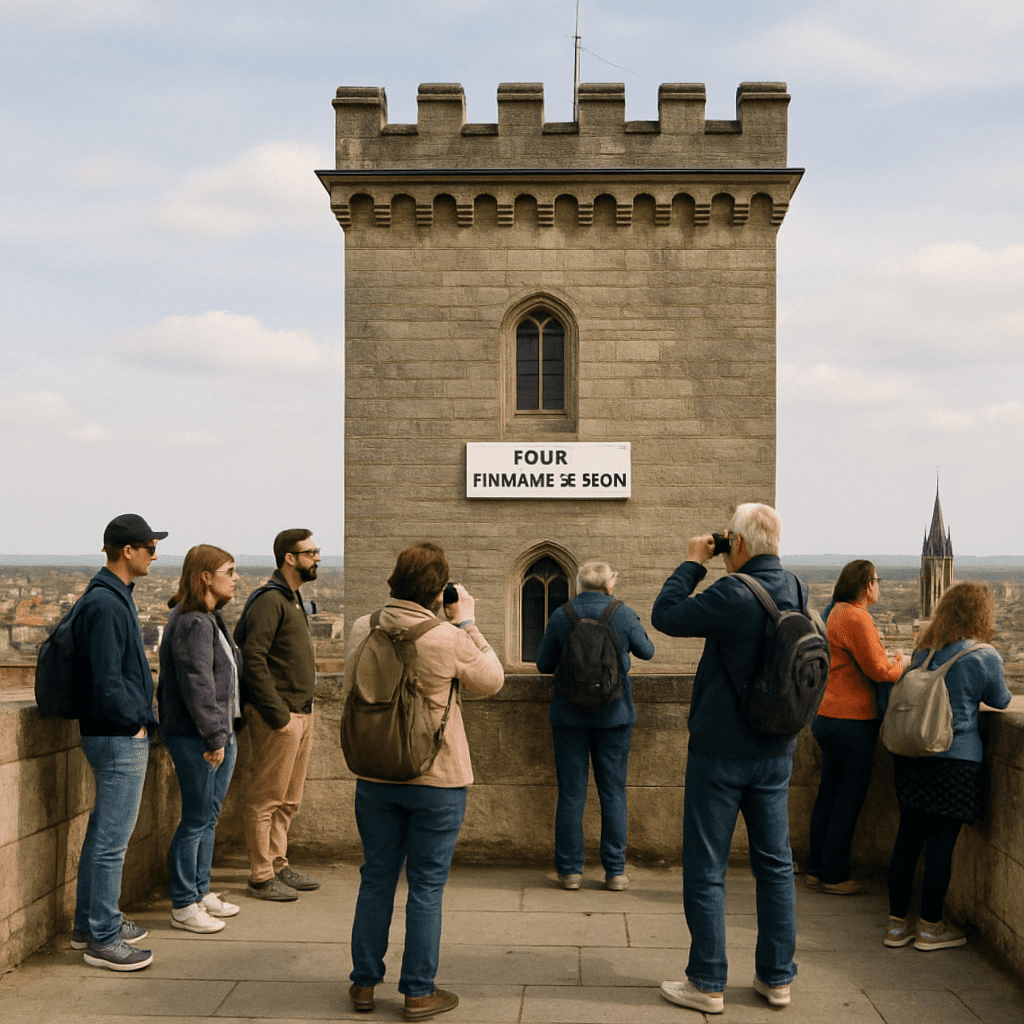
- Tickets and reservation Due to limited capacity on the viewing platform for safety reasons and the narrow historic staircases, advance booking is highly recommended. Book a guided tour of the Ducal Palace You can conveniently book a guided tour of the Ducal Palace, including the tower climb, online through the official website of the Dijon Tourist Office (Destination Dijon). The office itself is conveniently located right next to the palace.
- The perfect time for photos: For ambitious photographers, the question inevitably arises about The best times of day for tower photography are generally during the **golden hours**, which are: * **Sunrise:** The soft, warm light just after the sun has risen can create beautiful shadows and highlights, revealing the textures of the tower. * **Sunset:** Similar to sunrise, the setting sun casts a warm glow and long shadows, adding depth and drama to your shots. **Other times to consider:** * **Blue Hour:** This is the period just before sunrise or just after sunset when the sky has a deep blue hue. It's fantastic for capturing cityscapes with illuminated towers. * **Midday (with caution):** While midday sun can be harsh and create strong shadows, it can be effective if you're looking for a stark, graphic look or if the tower is predominantly in shade. Overcast days can also provide diffused, even lighting. (the best time of day for tower photography). The answer is clear: the „golden hour“ in the late afternoon or early evening. At this time, the low-lying sun bathes the roofs of Dijon in a warm, reddish-gold light that makes the Burgundian tiles glow. Alternatively, the early morning offers clear air, which drastically increases the chance of seeing the Vosges Mountains.
- Physical condition: Remember that the climb up the 316 steps can be strenuous. There is no elevator. Wear comfortable, flat shoes and take your time. Fortunately, the guides often make short breaks along the way up to explain historical details.
- Combine your tours: Use the „Dijon City Pass“ if you plan on visiting multiple museums and taking tours. This often includes climbing the tower as well as discounts for wine tastings and other attractions.
Conclusion: Dijon's Unforgettable Heart
The Philippe Le Bon Tower is much more than just a historic tower from long-past times. It is the heart of Dijon, an architectural jewel of the late Gothic period, and undoubtedly the best place to capture the beauty of the capital of Burgundy in all its glory.
Whether you want to explore the rich and complex history of the region, admire the architectural masterpieces of the ducal builders, or simply capture spectacular panoramic views for your photo album – this place will leave a lasting impression. Book your ticket in advance, take on the challenge of the 316 steps, and let yourself be enchanted by the wide view over Burgundy once you reach the top. A visit to Dijon is simply not complete without having stood on the Philippe Le Bon Tower.